
Sequencing Skills Plants and Animals Worksheets for 6-Year-Olds
3 filtered results
Difficulty Level
Grade
Age
-
From - To
Subject
Activity
Standards
Welcome to our Sequencing Skills Plants and Animals Worksheets designed specifically for 6-year-olds! These engaging worksheets help young learners develop essential sequencing skills through fun and interactive activities focused on the natural world. Children will explore the life cycles of plants and animals, learning to arrange sequences from planting a seed to growing a flower, and from hatching an egg to a fully grown creature. Our worksheets encourage critical thinking, reinforce scientific concepts, and cultivate observational skills, making learning enjoyable. Perfect for classroom or home use, these resources enhance early education in a playful and educational manner. Discover the wonders of nature today!
Favorites
With answer key
Interactive
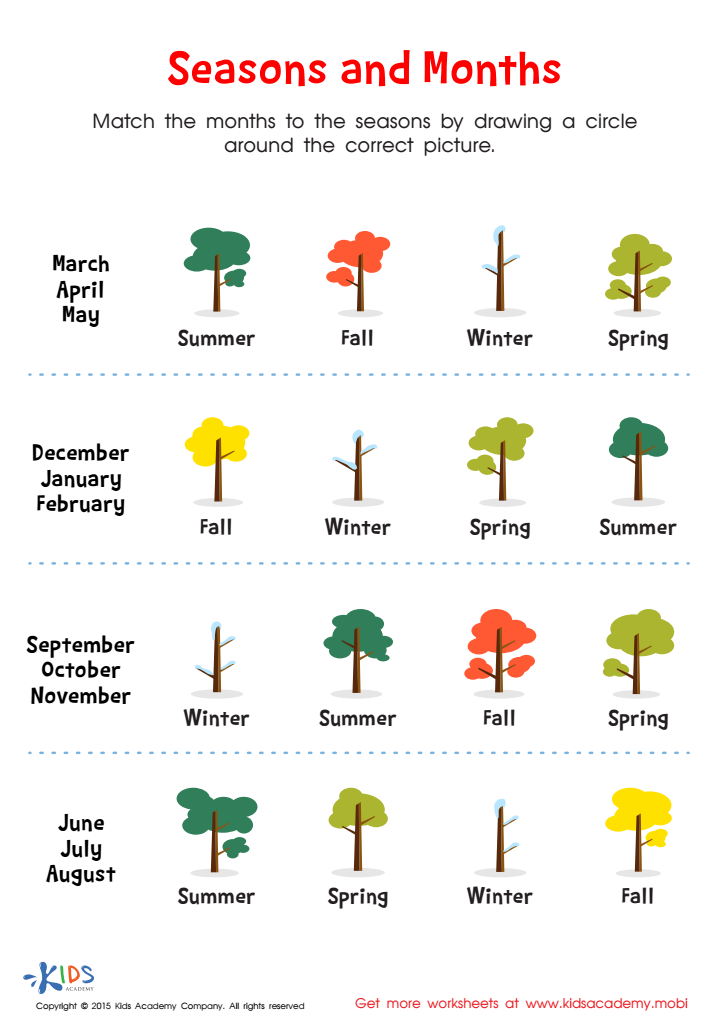
Seasons and Months Worksheet
Help your child explore the world around them with this fun seasons and months printable worksheet. It'll help them understand the months of the year and the seasons connected to them, teaching valuable science knowledge and skills. Plus, engaging in conversations about the current month and season will extend their learning!
 Assign to My Students
Seasons and Months Worksheet
Worksheet

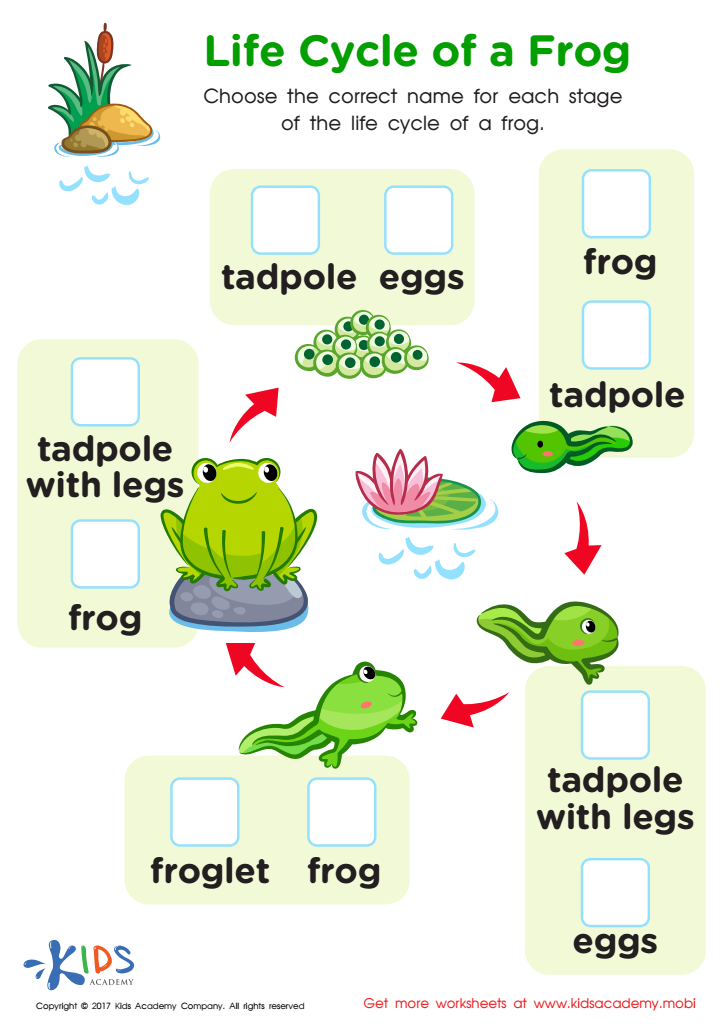
Life Cycle Frog Printable
Kids can explore the life cycle of frog with this fun worksheet! Draw lines from one stage to the next to follow the transformation from tadpole to frog and learn about the cycle of life.
Life Cycle Frog Printable
Worksheet
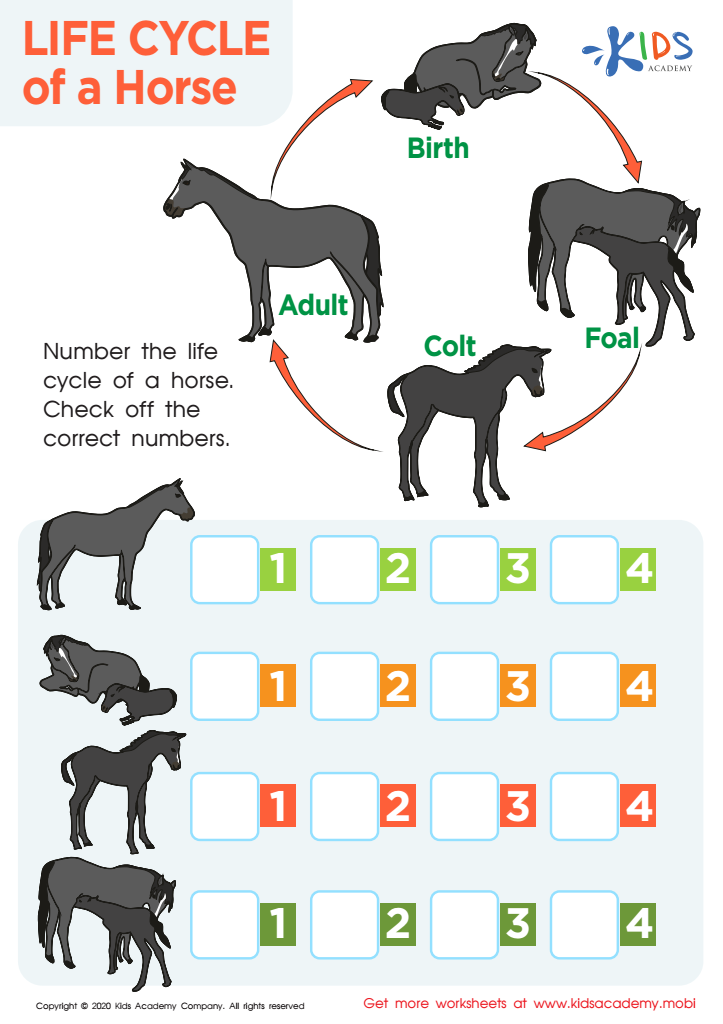
Life Cycle of a Horse Worksheet
Kids Academy's science worksheet on horses' lifecycles offers an engaging way for kids to learn! They'll study the diagram and label each stage of life, from birth to adulthood, and then number the pictures to mark the correct sequence. Fun and educational - a perfect way to get your kids learning!
Life Cycle of a Horse Worksheet
Worksheet
Join Kids Academy for Free
Who is primarily going to use this learning content?








Sequencing skills are crucial for young children, especially when learning about plants and animals. For 6-year-olds, developing these skills helps them to understand the natural world more clearly. Sequencing involves identifying the order of events or stages in a process; when kids learn how plants grow from seeds to mature plants or how animals go through life cycles, they enrich their comprehension of biology.
This skill not only aids in scientific understanding but fosters critical thinking, organizational abilities, and attention to detail. For example, understanding the life cycle of a butterfly or the stages of plant growth involves recognizing and recalling a series of steps, promoting cognitive development.
Moreover, sequencing is foundational for other academic areas. It can enhance reading, as children learn to follow narratives and understand story structure, and it supports mathematical concepts related to patterns and repetition.
Encouraging parents and teachers to nurture sequencing skills through hands-on activities, storytelling, or interactive projects can ignite curiosity, build literacy and analytics, and deepen students' engagement with their environment. Overall, developing sequencing skills in young learners prepares them for future learning and helps cultivate a lifelong appreciation for science.








