
Spatial awareness Space Worksheets for 6-Year-Olds
3 filtered results
Difficulty Level
Grade
Age
-
From - To
Subject
Activity
Standards
Unlock your child's potential with our Spatial Awareness Space Worksheets for 6-Year-Olds. Designed to inspire curiosity and boost critical thinking, these engaging printable worksheets blend exciting space themes with vital spatial awareness skills. Your child will explore the cosmos while improving abilities like identifying shapes, understanding positions, and navigating space. Each activity is crafted to challenge young minds while fostering creativity and confidence. Perfect for both classroom and home learning, our expertly designed worksheets offer a fun, educational experience that will help your child reach for the stars. Discover the joy of learning at Kids Academy today!
Favorites
With answer key
Interactive
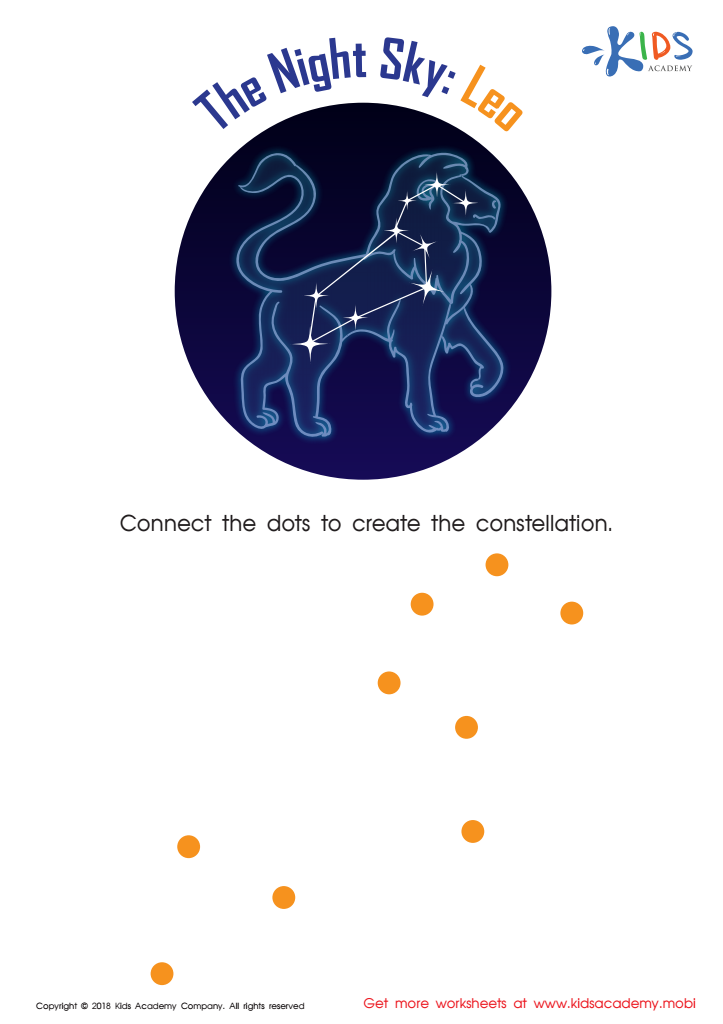
The Night Sky: Leo Worksheet
Let your kids explore the wonders of the stars with this fun worksheet! They'll connect the dots to create the constellation Leo. Night gazing instruments, a telescope or this printout can help your kids learn about constellations and horoscopes. Download the worksheet and let the star watching begin!
 Assign to My Students
The Night Sky: Leo Worksheet
Worksheet
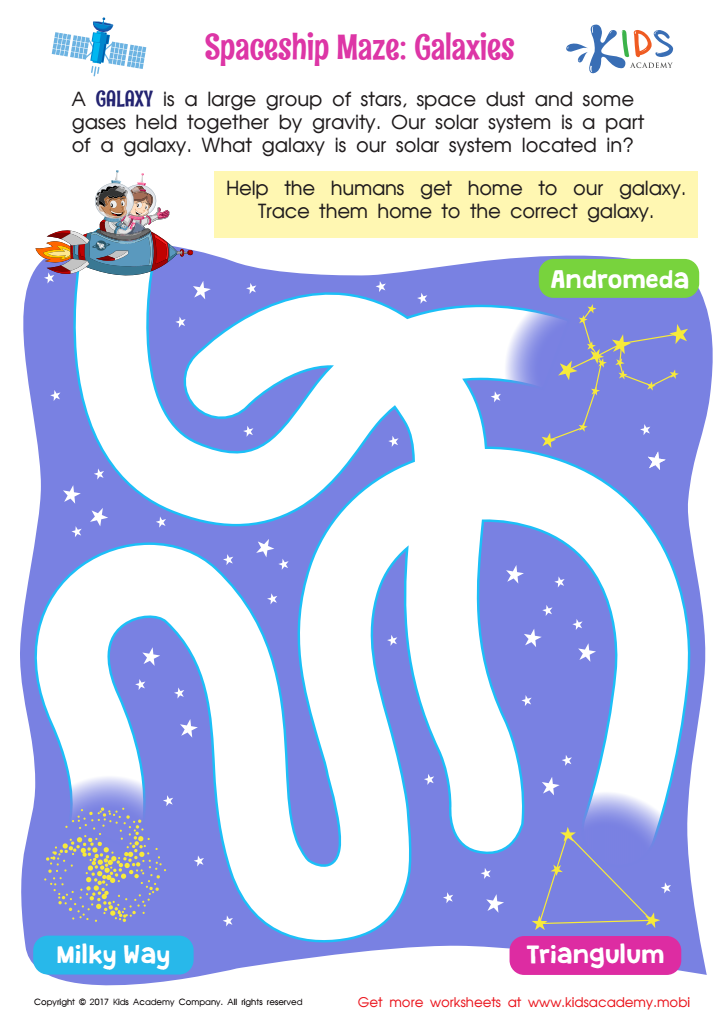
Spaceship Maze: Galaxies Worksheet
Guide lost humans home with this fun space maze: Galaxies! Once the journey is complete, kids can discover the name of our galaxy: the Milky Way! An exciting way to teach kids about space and help humans find their way back home.
Spaceship Maze: Galaxies Worksheet
Worksheet
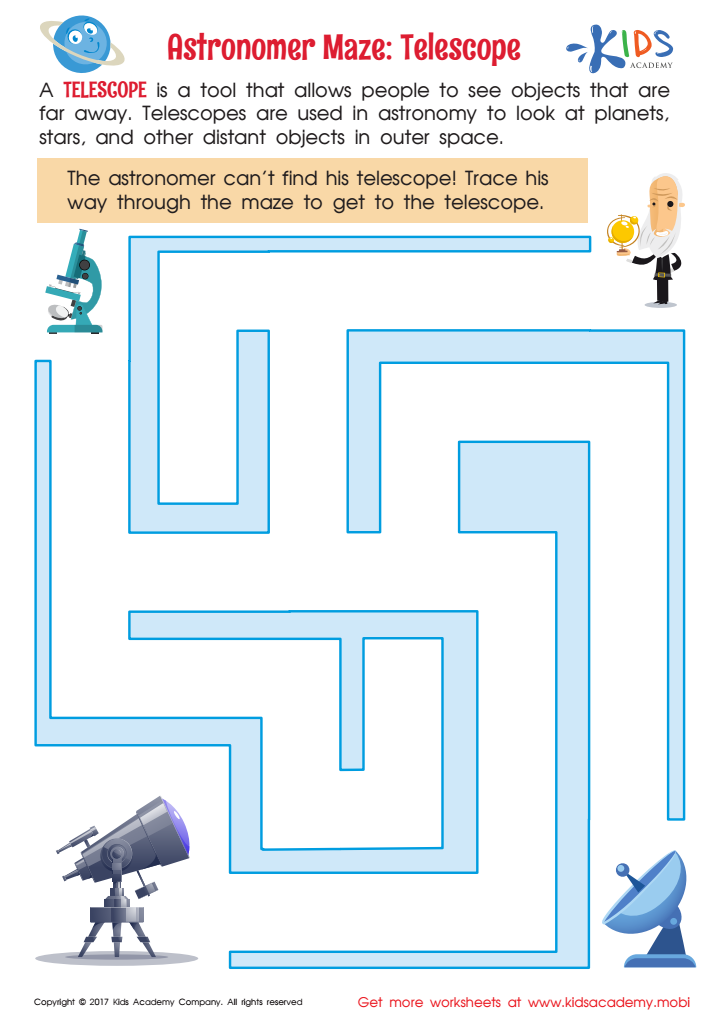
Astronomer Maze: Telescope Worksheet
Let your mini astronomer explore the galaxy with this fun and puzzling space maze worksheet – Telescope! Your child will have a great time navigating the maze, while learning how telescopes help scientists study the stars.
Astronomer Maze: Telescope Worksheet
Worksheet
Join Kids Academy for Free
Who is primarily going to use this learning content?







Spatial awareness space is essential for 6-year-olds as it significantly influences their cognitive and physical development. For parents and teachers, nurturing this skill can enhance a child's ability to understand their relationship with the world around them. This understanding lays the foundation for crucial life skills such as navigating an environment, interpreting maps, solving puzzles, and participating in sports.
When children grasp spatial concepts early, they perform better in subjects like math and science, where spatial reasoning is a core component. It also aids in developing fine motor skills and gross motor skills, crucial for writing, drawing, and handling objects.
From a social perspective, good spatial awareness helps kids understand and respect personal boundaries, making it easier for them to interact harmoniously with peers. Furthermore, improved spatial skills contribute to safety, as children learn to move carefully, avoid obstacles, and understand the spatial relationship between objects and hazards around them.
Parents and teachers play a pivotal role in fostering spatial skills by incorporating activities such as block building, drawing, and interactive games that require movement and navigation. Terms like 'front,' 'back,' 'above,' and 'below' become part of their vocabulary, aiding cognitive and linguistic growth. Investing time and resources in these activities pays off in better-rounded, adept children both academically and socially.







