Vocabulary development Writing Worksheets for 6-Year-Olds
6 filtered results
-
From - To
Enhance your 6-year-old's vocabulary with our engaging vocabulary development writing worksheets! Designed specifically for young learners, these worksheets provide a fun and interactive way to expand language skills. Through creative exercises, children will explore new words, practice writing sentences, and develop verbal expression. Our worksheets feature colorful illustrations and age-appropriate activities that make learning exciting. By integrating vocabulary growth with writing practice, children build a solid foundation for effective communication. Encourage your child's literacy journey and watch them thrive as they connect words with meaning. Perfect for home or classroom use, our resources support a love for learning in early education!
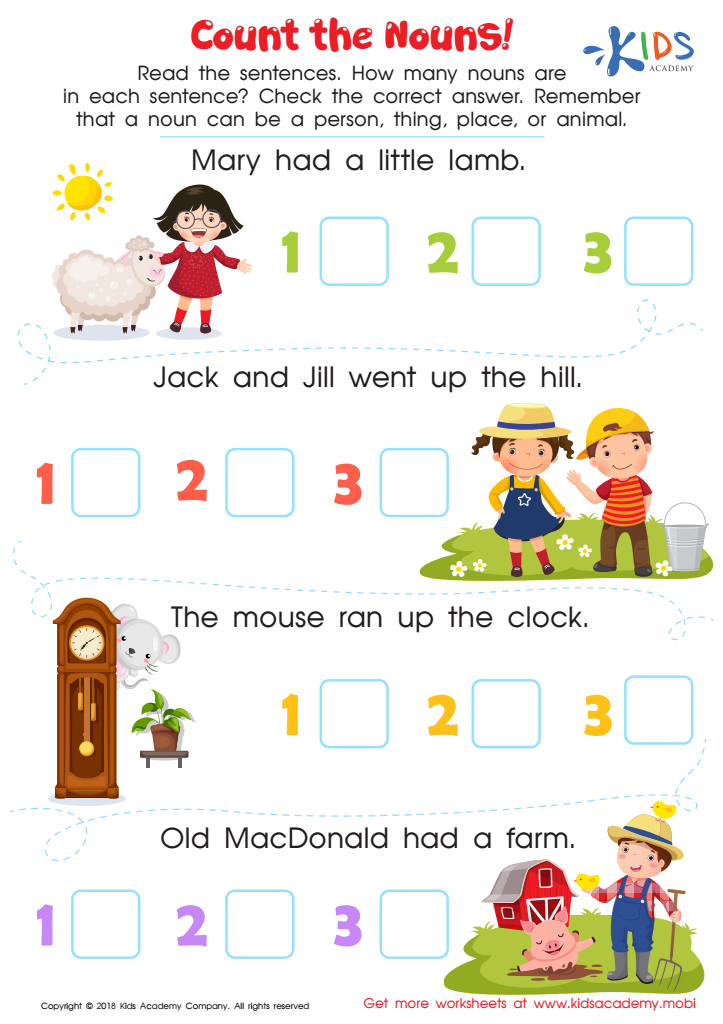
Count the Nouns Worksheet
 Assign to My Students
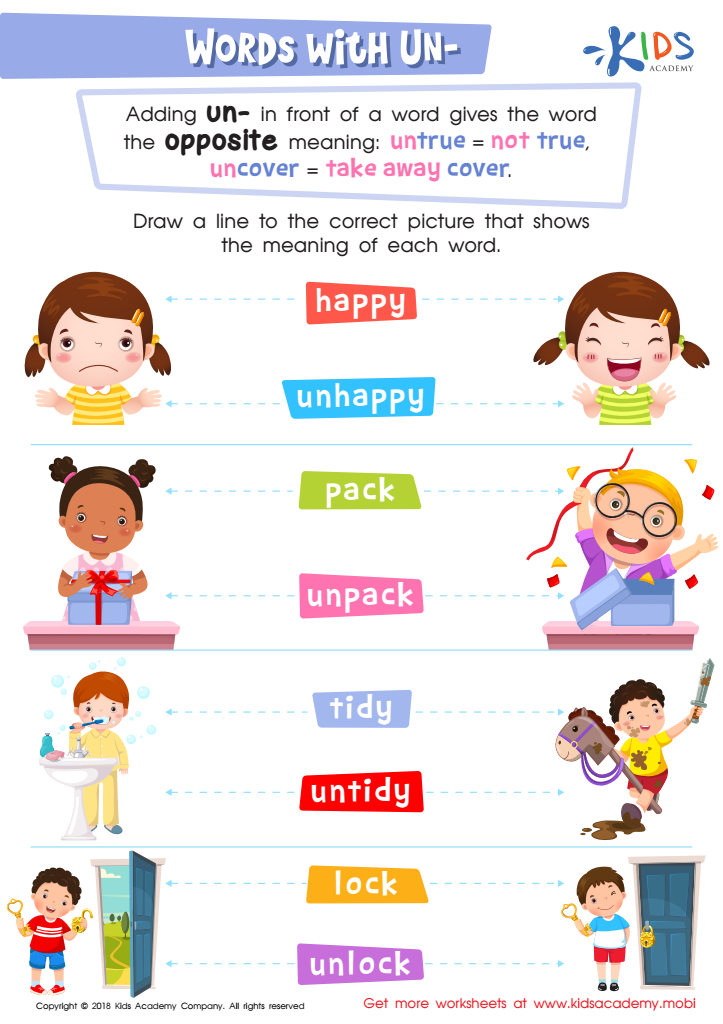
Words with Un– Worksheet
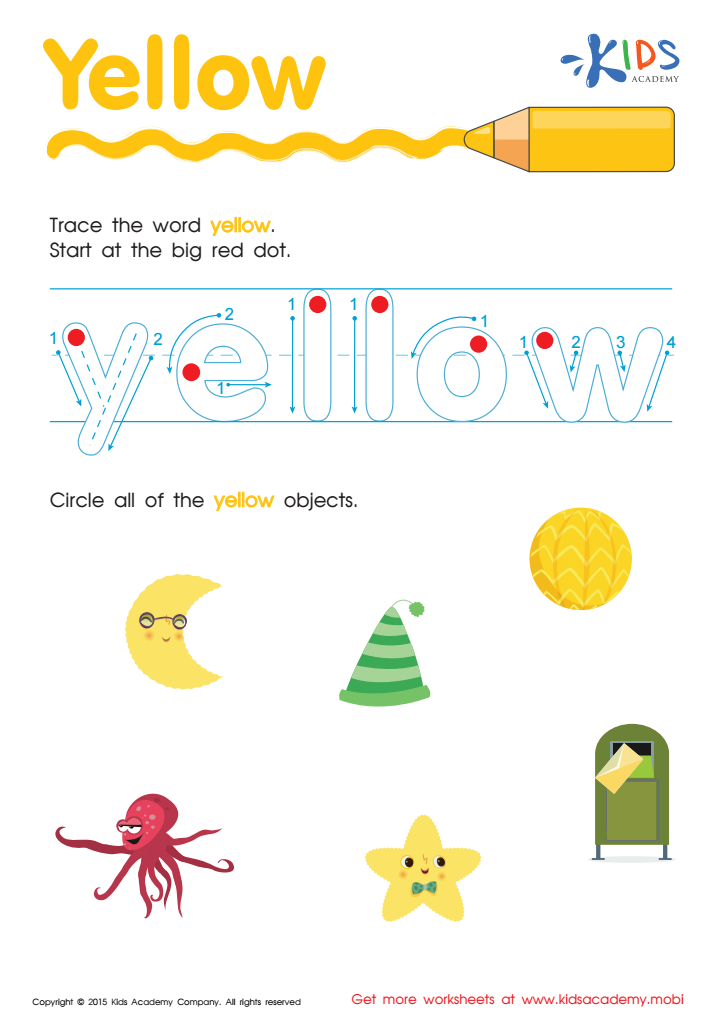
Yellow Tracing Color Words Worksheet
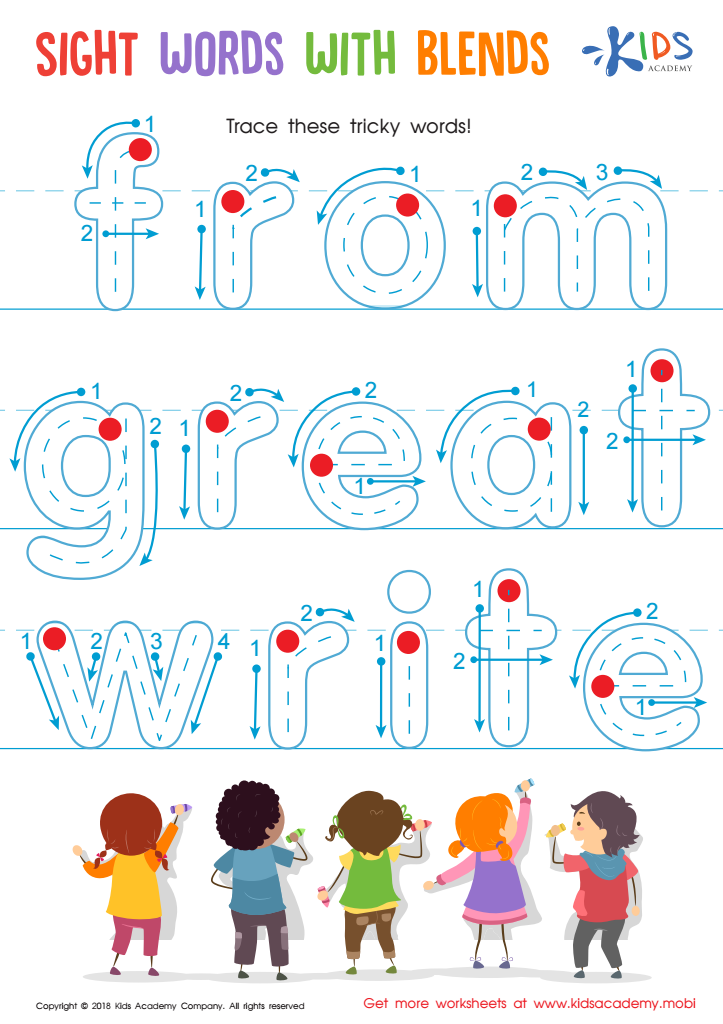
Sight Words with Blends Worksheet
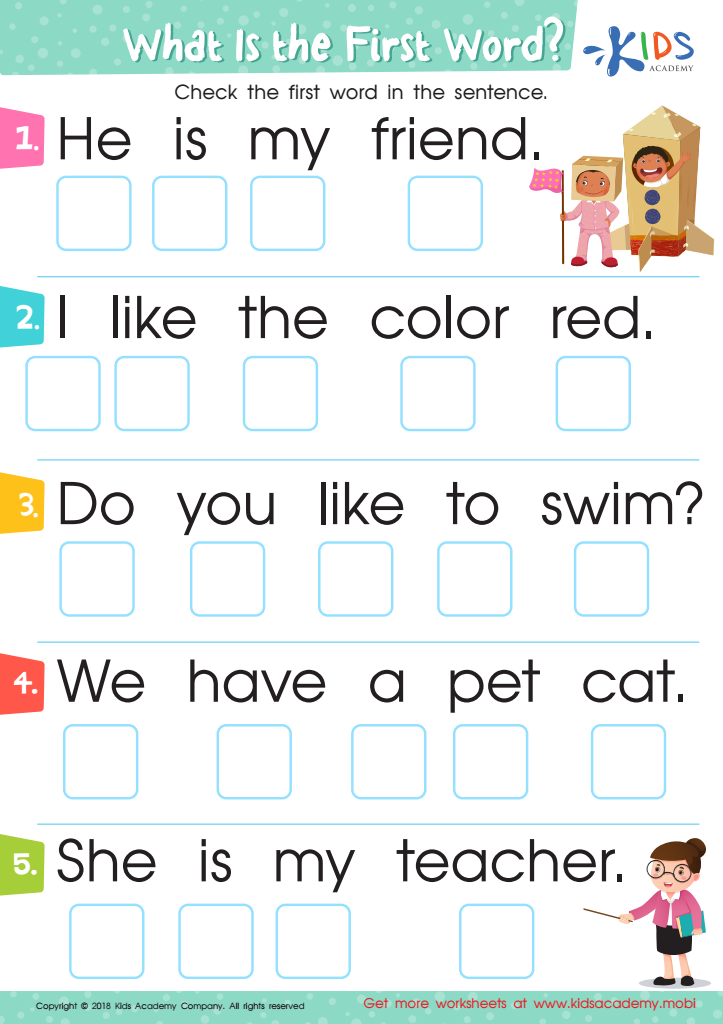
What is the First Word? Worksheet
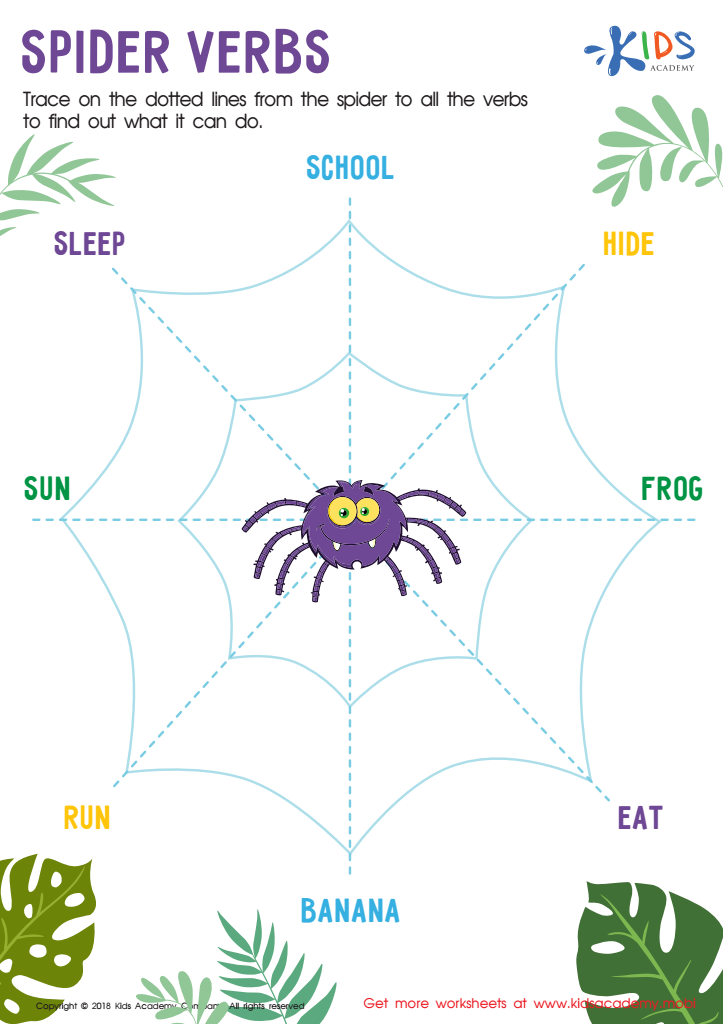
Spider Verbs Worksheet




.jpg)



Vocabulary development in 6-year-olds is crucial as it lays the foundation for reading, writing, and overall communication skills. At this age, children are curious and eager to learn new words, making it an opportune time for vocabulary expansion. A robust vocabulary enhances their ability to express thoughts and feelings clearly, fostering better relationships with peers and adults.
Parents and teachers play a vital role in this development by integrating diverse words into everyday conversations and encouraging exploration of new topics through reading and storytelling. This practice stimulates children's cognitive growth and helps them comprehend more complex ideas and instructions in school.
Moreover, a strong vocabulary has been linked to academic success. Children with rich word knowledge are more capable of understanding texts and are often more proficient writers. Engaging in vocabulary-building activities, such as word games and creative writing exercises, provides children with the tools they need to articulate their ideas effectively.
Investing time and effort in vocabulary development during these formative years not only supports literacy but also cultivates a love for learning, setting a positive trajectory for lifelong educational engagement. Therefore, parents and teachers should prioritize vocabulary skills as a critical component of early education.








