Basic Addition Skills Worksheets for Ages 7-8 - Page 2
35 filtered results
-
From - To
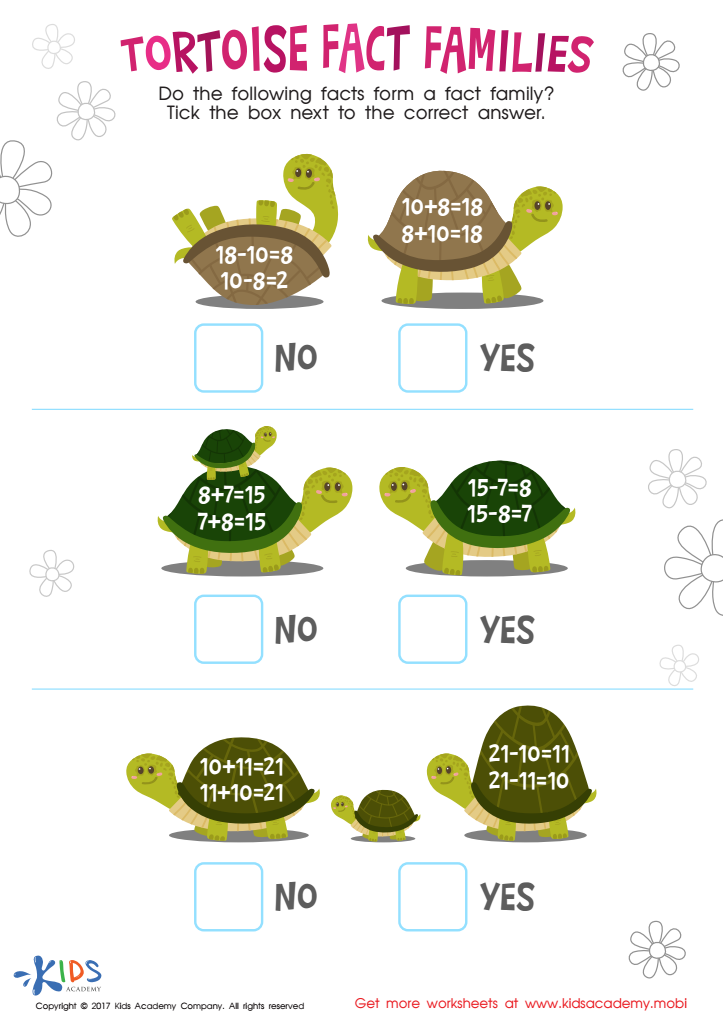
Tortoise Fact Families Printable
 Assign to My Students
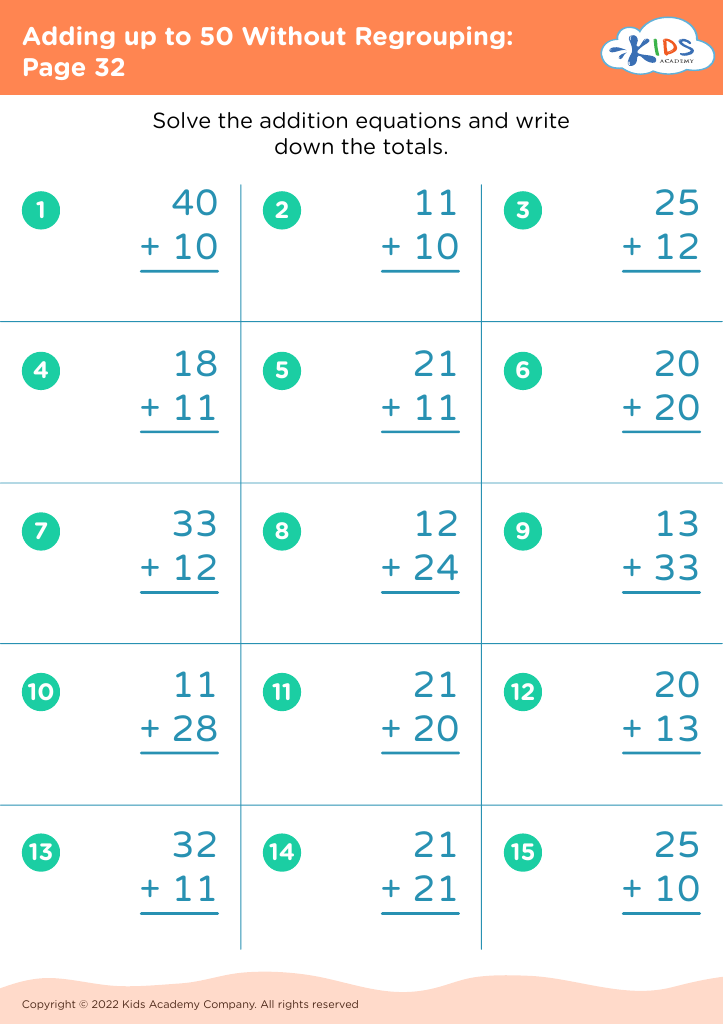
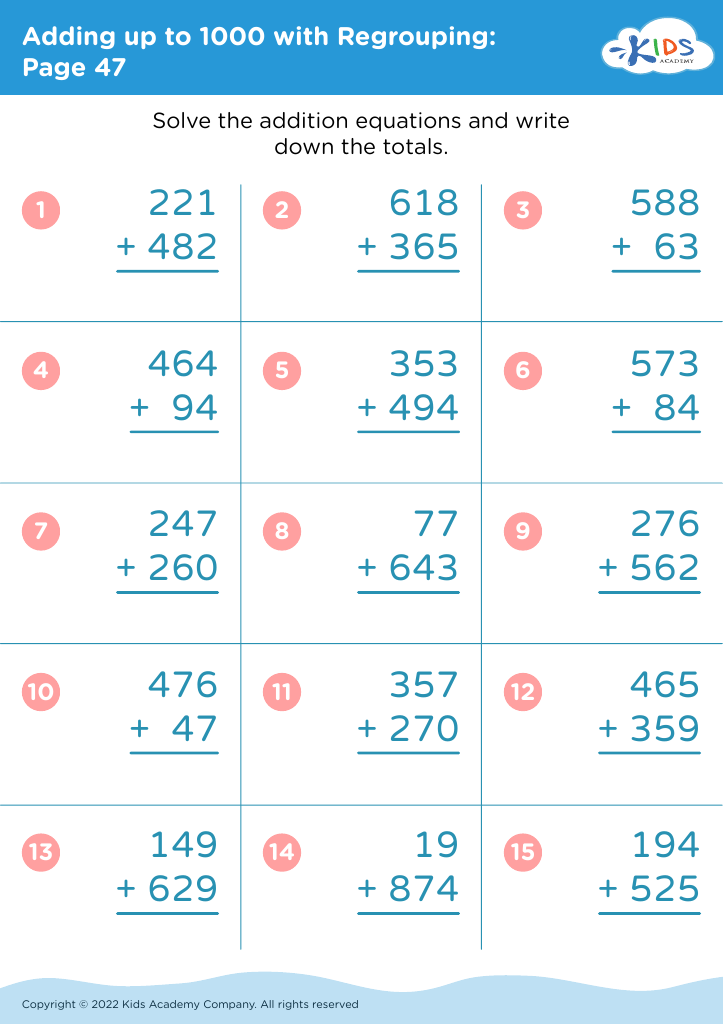
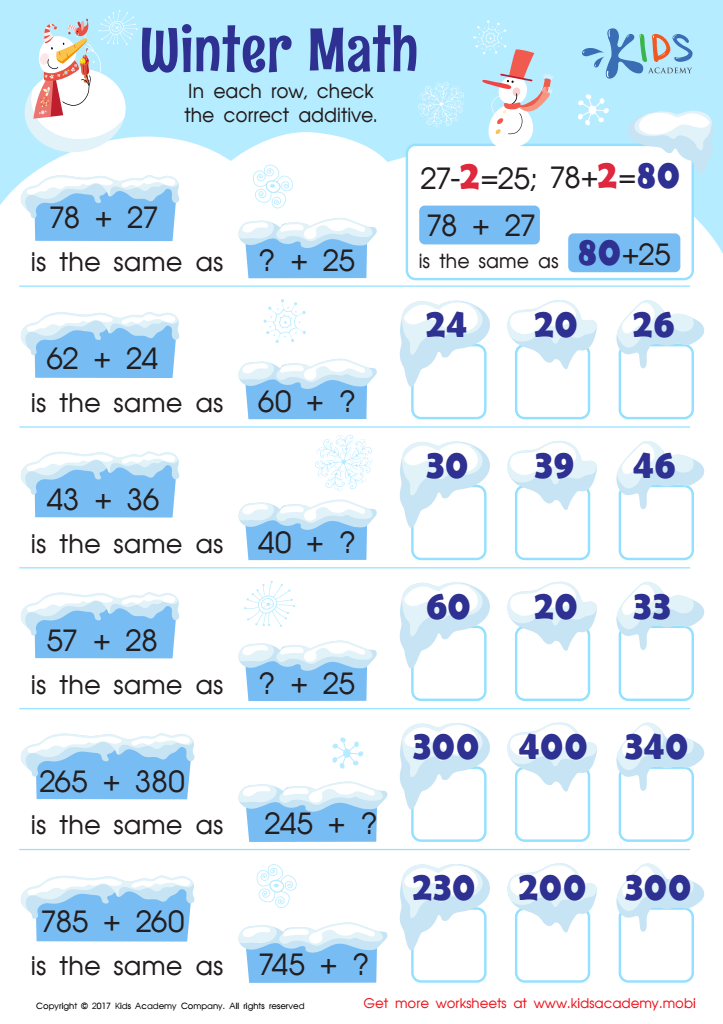
Free Addition Worksheet
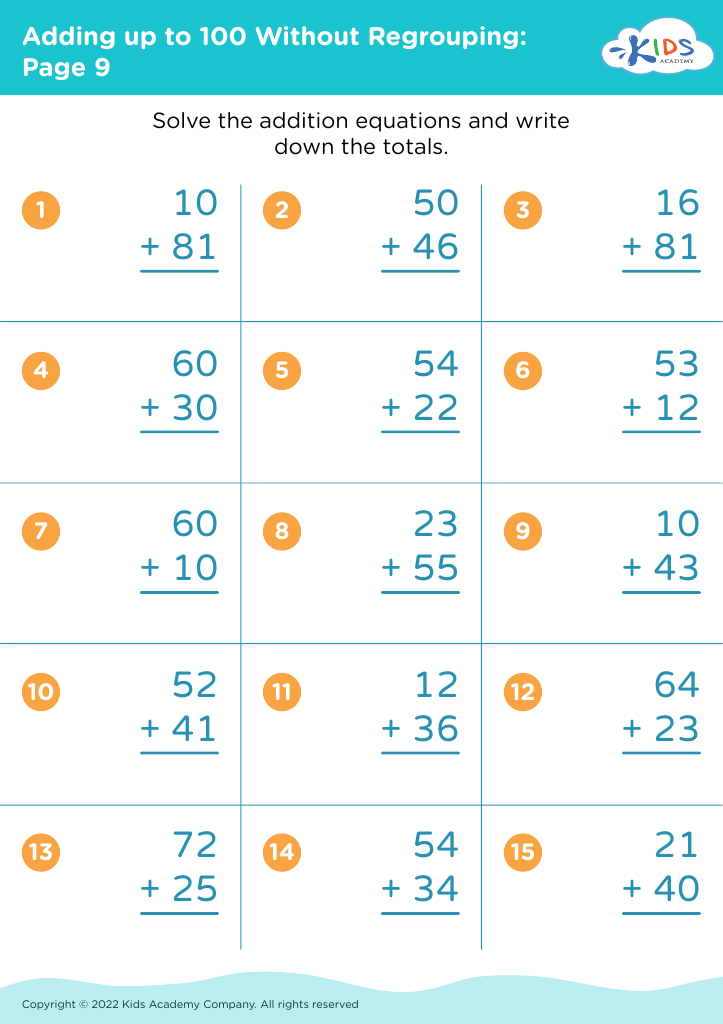
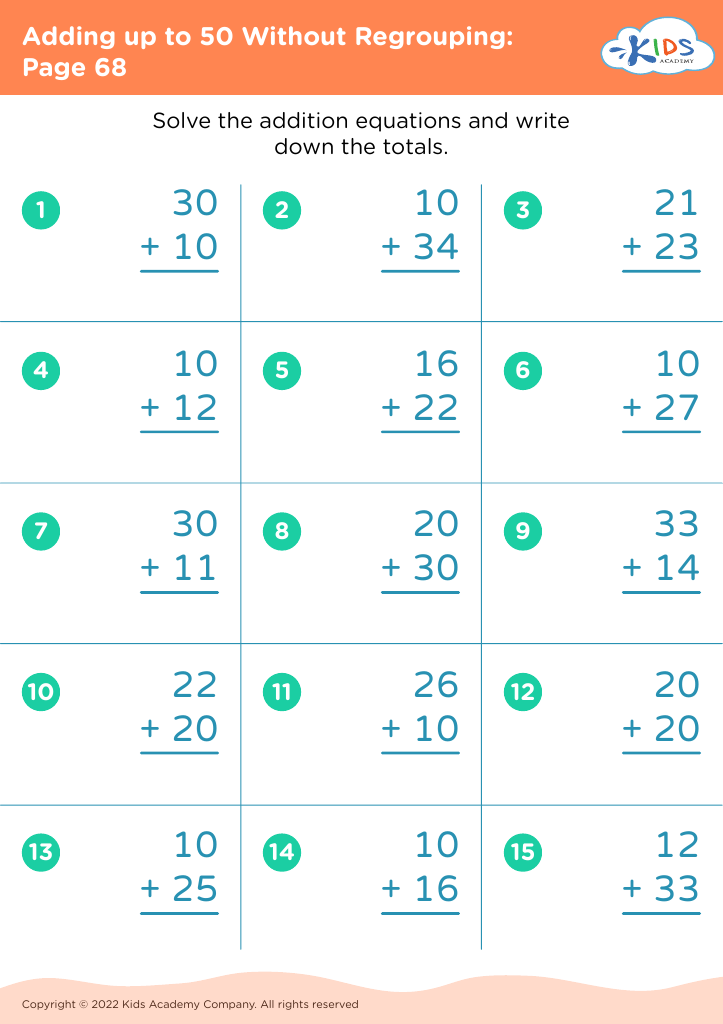
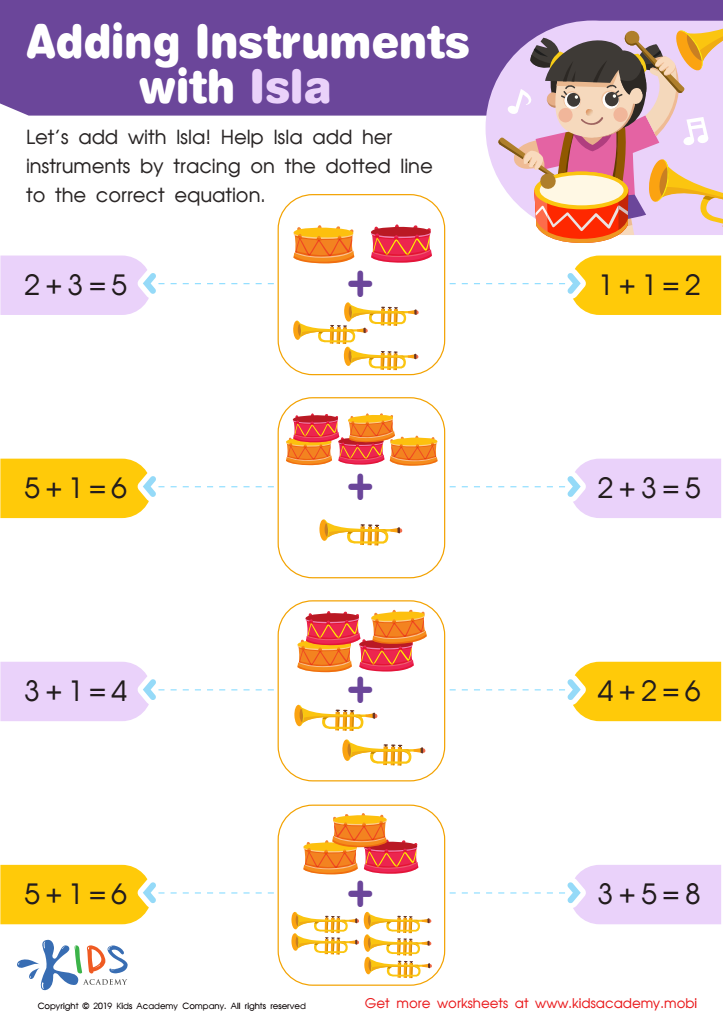
Adding Instruments with Isla Worksheet






Basic addition skills are foundational for children aged 7-8, forming the cornerstone for their mathematical understanding and overall academic success. At this age, children transition from simple number recognition to performing calculations confidently, which is essential for tackling more complex math concepts encountered in later grades, such as multiplication, division, or fractions.
Parents and teachers should emphasize the importance of mastering basic addition because it fosters critical thinking and problem-solving abilities. Proficiency in addition not only enhances mathematics skills but also builds self-esteem and confidence, encouraging children to engage in learning with enthusiasm. Furthermore, strong arithmetic skills are often necessary in daily life, from budgeting allowances to calculating scores in games.
Additionally, basic addition serves as a tool for greater cognitive development, connecting various subjects such as science, economics, and even art, where measurements and patterns are involved. Investing time in strengthening these skills at an early age promotes a positive attitude toward mathematics, reduces anxiety, and lays the groundwork for future academic achievements. In essence, the benefits extend far beyond the classroom, shaping a child’s approach to learning and real-world problem-solving as they grow.








