Comparing Fractions Worksheets for Ages 7-8
120 filtered results
-
From - To
Our "Comparing Fractions Worksheets for Ages 7-8" are specially designed to make learning fractions engaging and accessible for young learners. These printable worksheets help students understand essential concepts such as numerators, denominators, and the principles of comparing fractions. With fun, interactive activities and illustrations, our worksheets help children build strong mathematical foundations while developing critical thinking skills. Perfect for both classroom use and home practice, these resources align with educational standards, ensuring that your child is gaining the necessary skills to excel in math. Boost your child's confidence in fractions with our comprehensive and enjoyable learning tools.
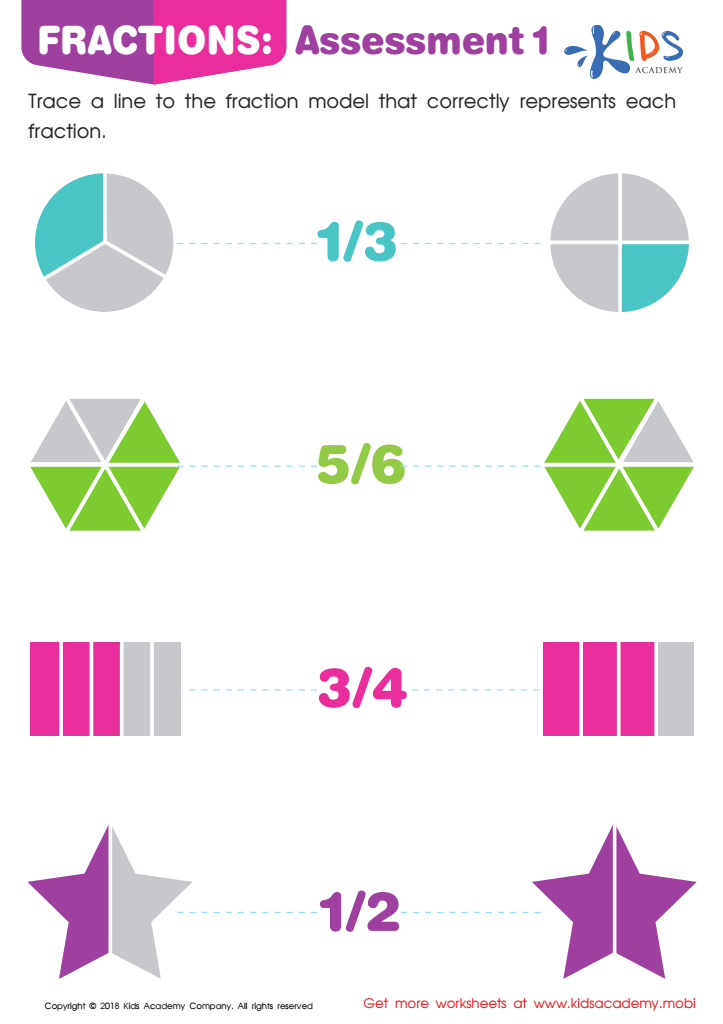
Fractions: Assessment 1 Worksheet
 Assign to My Students
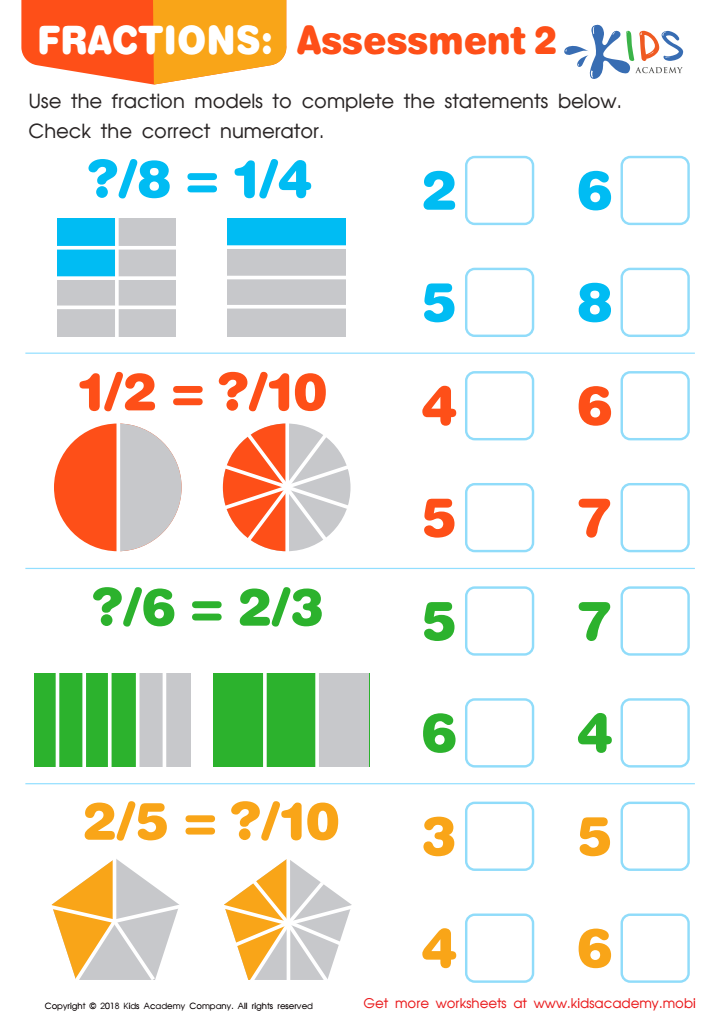
Fractions: Assessment 2 Worksheet
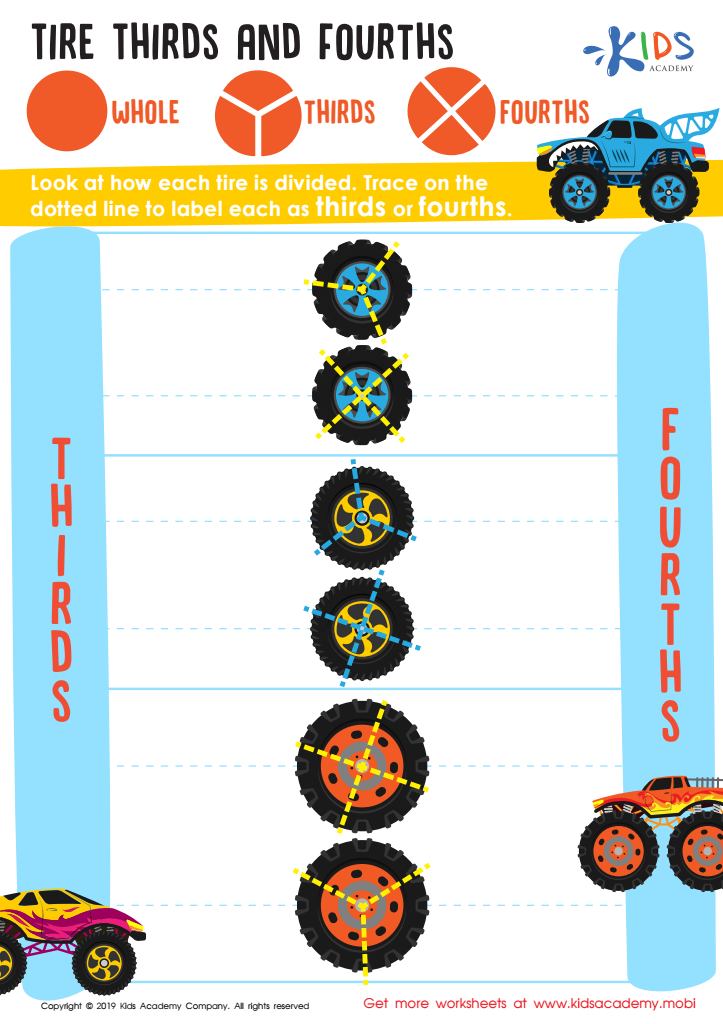
Tire Thirds and Fourths Worksheet
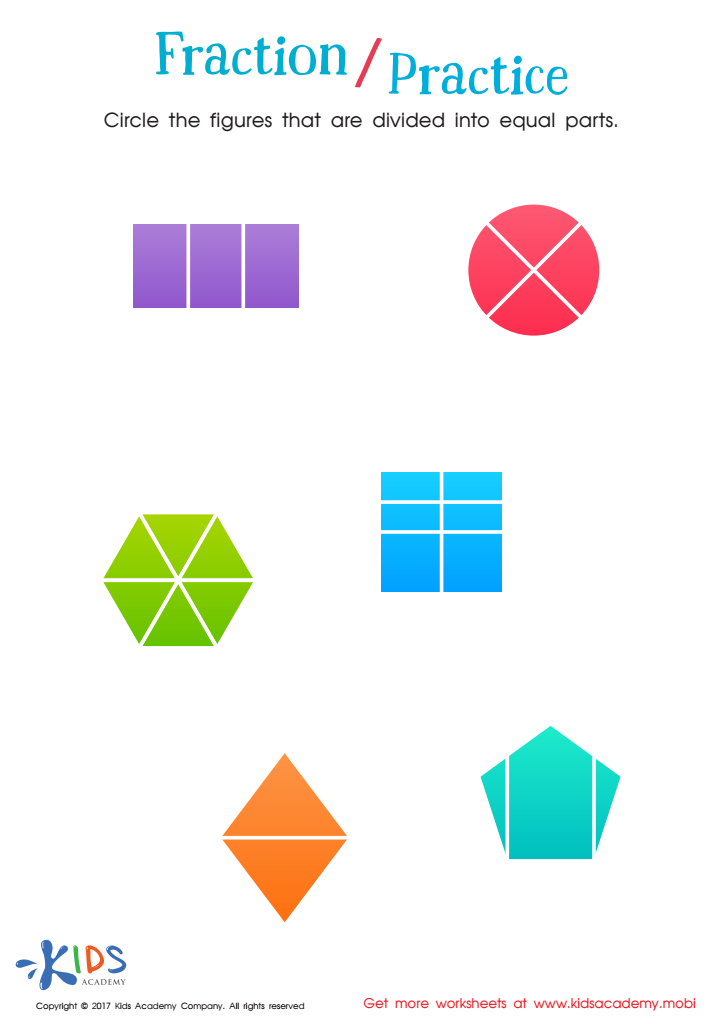
Fractions: Shapes Worksheet
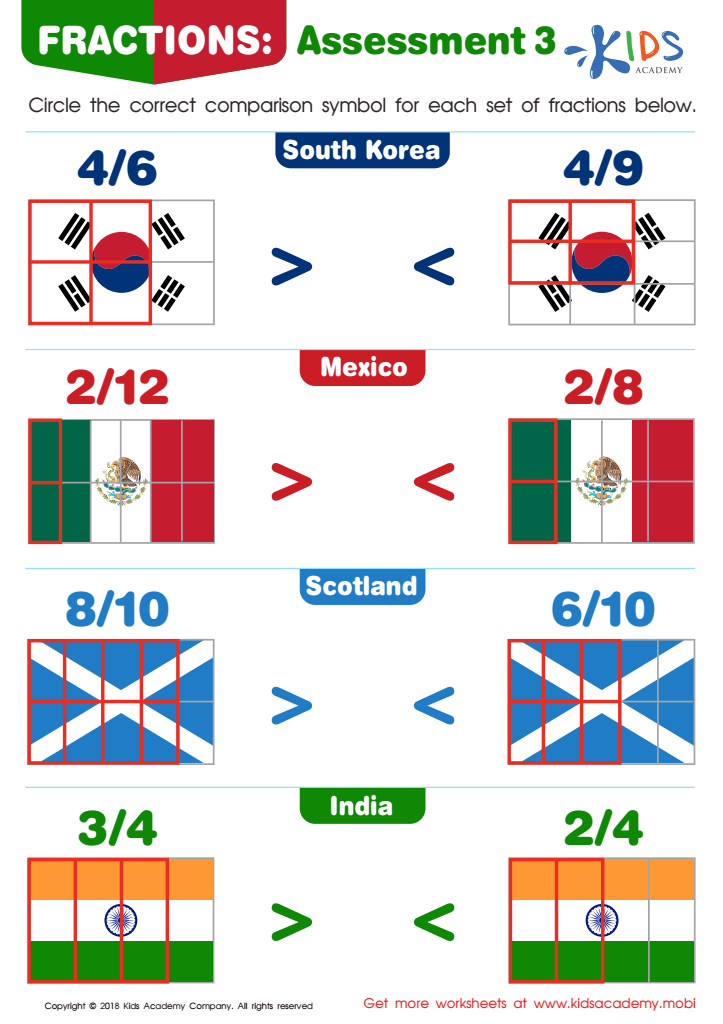
Fractions: Assessment 3 Worksheet
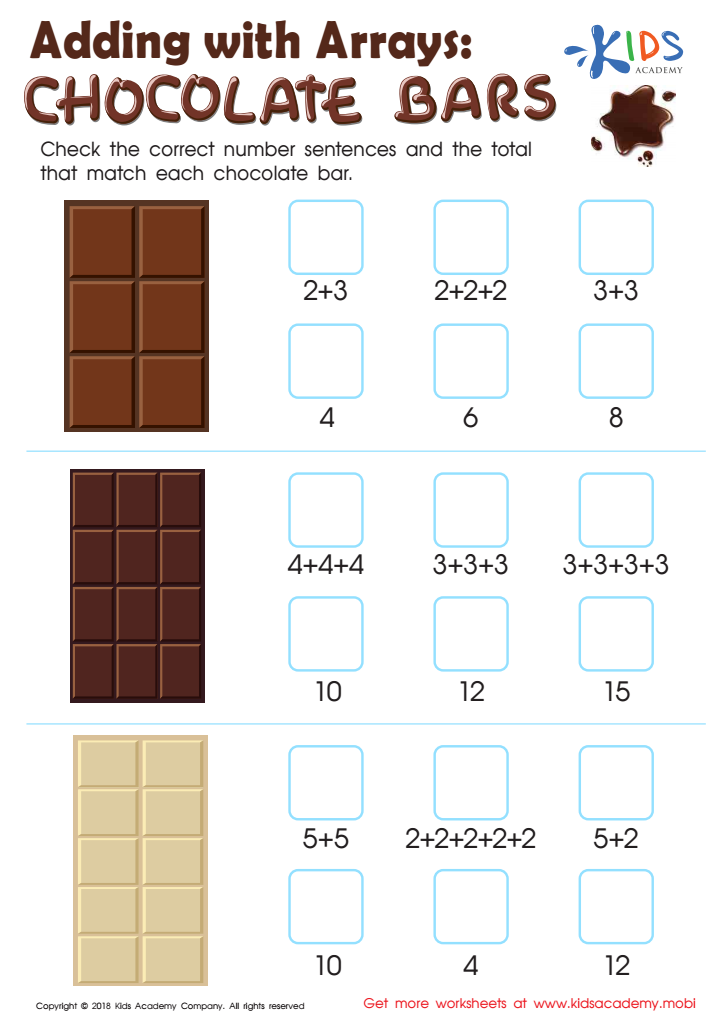
Adding with Arrays: Chocolate Bars Worksheet





.jpg)

Understanding fractions is a foundational math skill for children aged 7-8, and learning to compare fractions can significantly enhance their numerical literacy. Parents and teachers should care about teaching this skill because it builds on basic concepts of numbers and introduces a more complex understanding of parts of a whole.
Comparing fractions teaches children to think critically about relative sizes and values, fostering a deeper grasp of proportionality and ratios, which are essential concepts for future math courses. This skill also spans across real-life applications, such as cooking, where understanding parts of a whole can inform measurements and conversions.
Cognitively, engaging with fractions sharpens problem-solving abilities. It challenges children to consider factors such as common denominators and the equivalence of fractions, promoting logical reasoning. Moreover, being proficient in comparing fractions bolsters mathematical confidence, setting a positive foundation for future challenges.
From a pedagogical perspective, discussing fractions in a comparative manner helps educators identify individual student comprehension levels, allowing targeted support. Visual aids, such as fraction strips or pie charts, become useful tools, making abstract concepts more accessible.
Ultimately, strong comparative fraction skills are critical as they lay groundwork for advanced arithmetic, promote practical life skills, and encourage analytical thinking, making them indispensable in early education.








