Filters

17 filtered results

Clear all filters
Favorites
With answer key
Interactive

17 filtered results

Difficulty Level

Grade


Enhance your child's math skills with our engaging Comprehension Addition Worksheets designed for ages 7-8! These worksheets are crafted to improve not just basic addition but also understanding related concepts—such as word problems and real-world scenarios. By incorporating interactive exercises, your child will enjoy learning while developing critical thinking skills vital for mathematical comprehension. These resources empower young learners to connect addition with everyday life, thus fostering a deeper understanding of numbers. Perfect for homeschoolers and classroom settings, our worksheets support both guided practice and independent learning, making math fun and effective. Download today and watch your child's confidence soar!
Check out this FREE Trial Lesson on Addition for age 7-8!

Short and Long Vowel Sort

Favorites
With answer key
Interactive
  • 7-8
  • Enhance comprehension
  • Addition
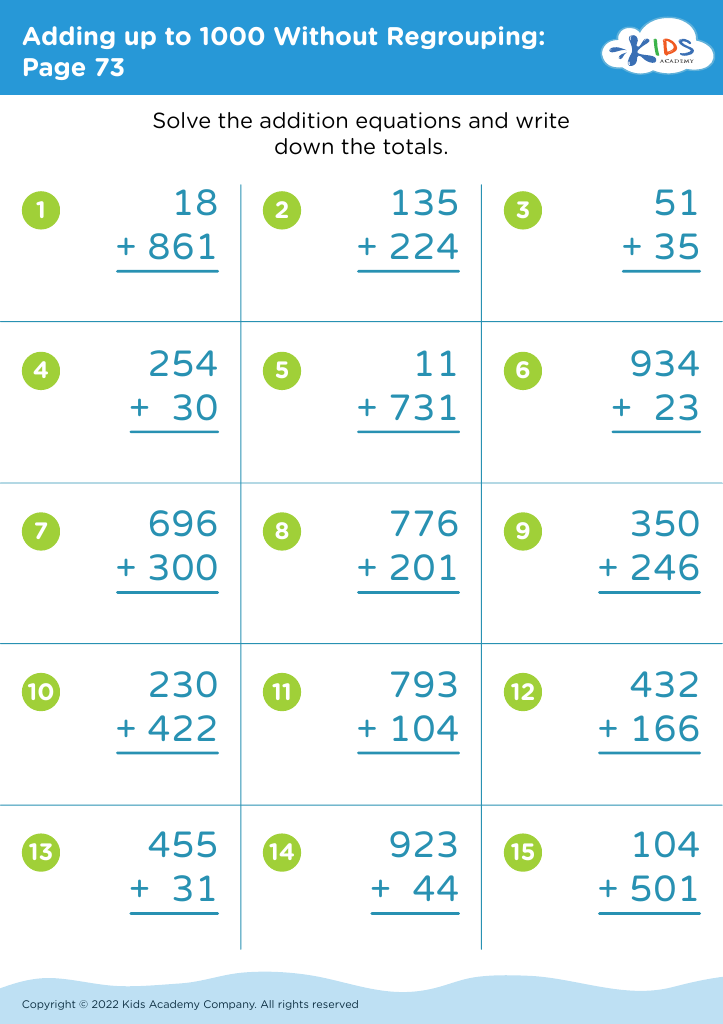
Adding up to 1000 Without Regrouping: Page 73
Worksheet
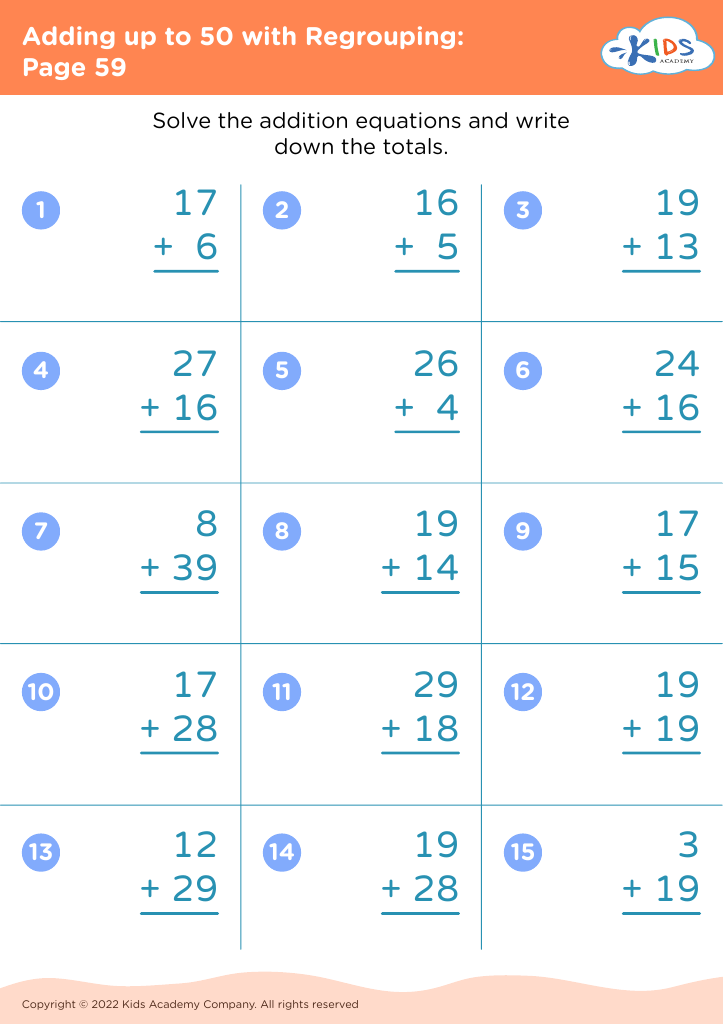
Adding up to 50 with Regrouping: Page 59
Worksheet
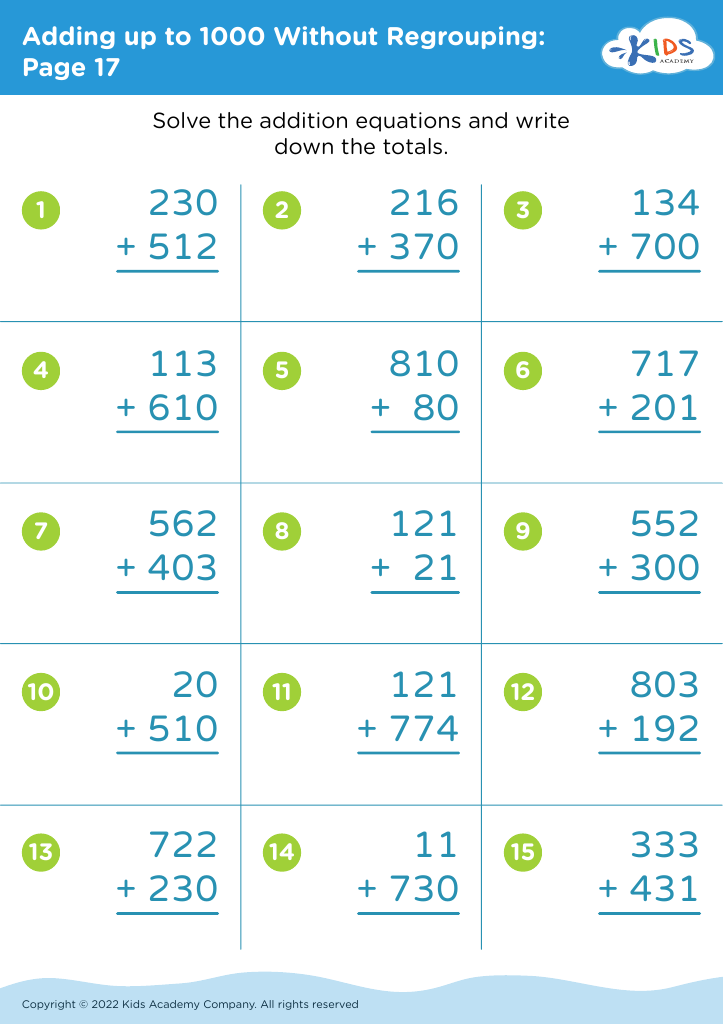
Adding up to 1000 Without Regrouping: Page 17
Worksheet
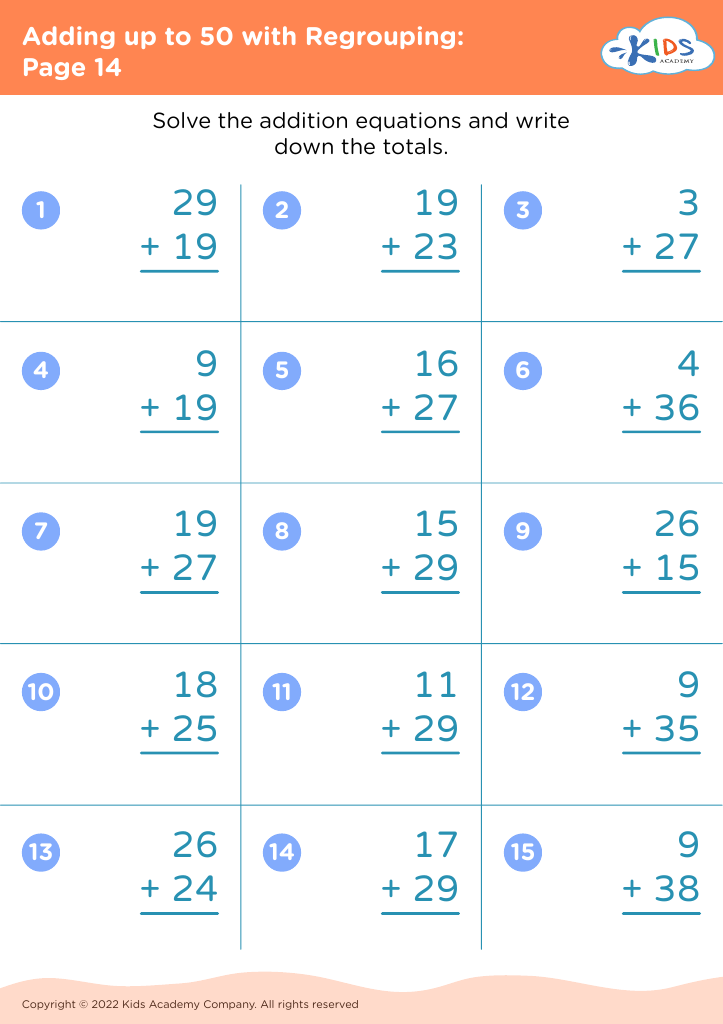
Adding up to 50 with Regrouping: Page 14
Worksheet
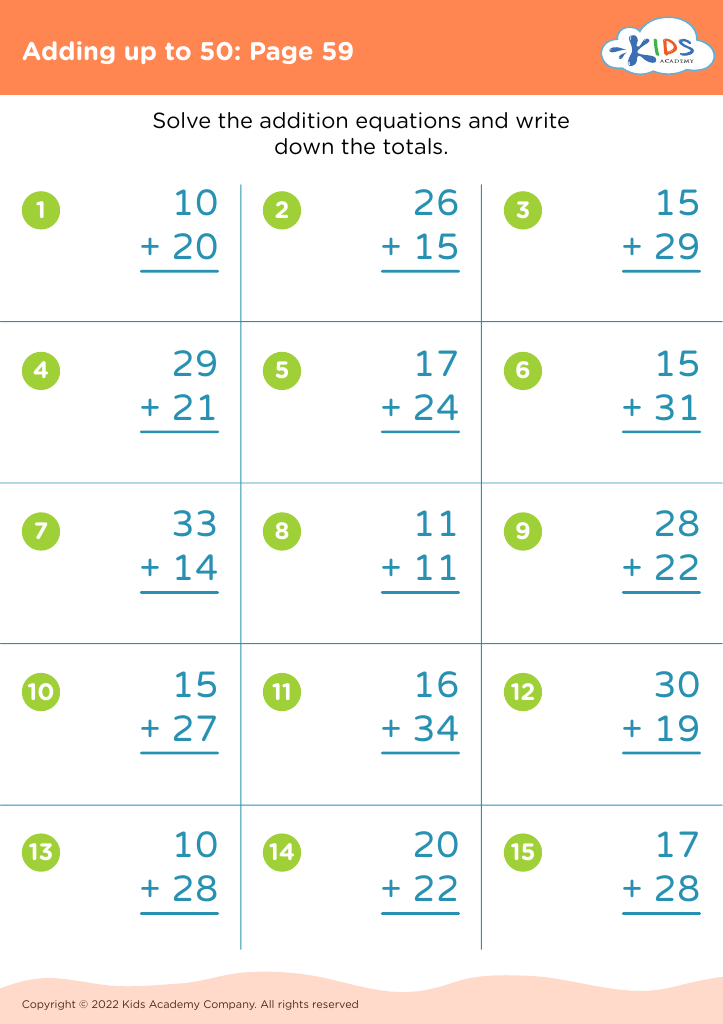
Adding up to 50: Page 59

Adding up to 50: Page 59

Adding up to 50: Page 59
Worksheet
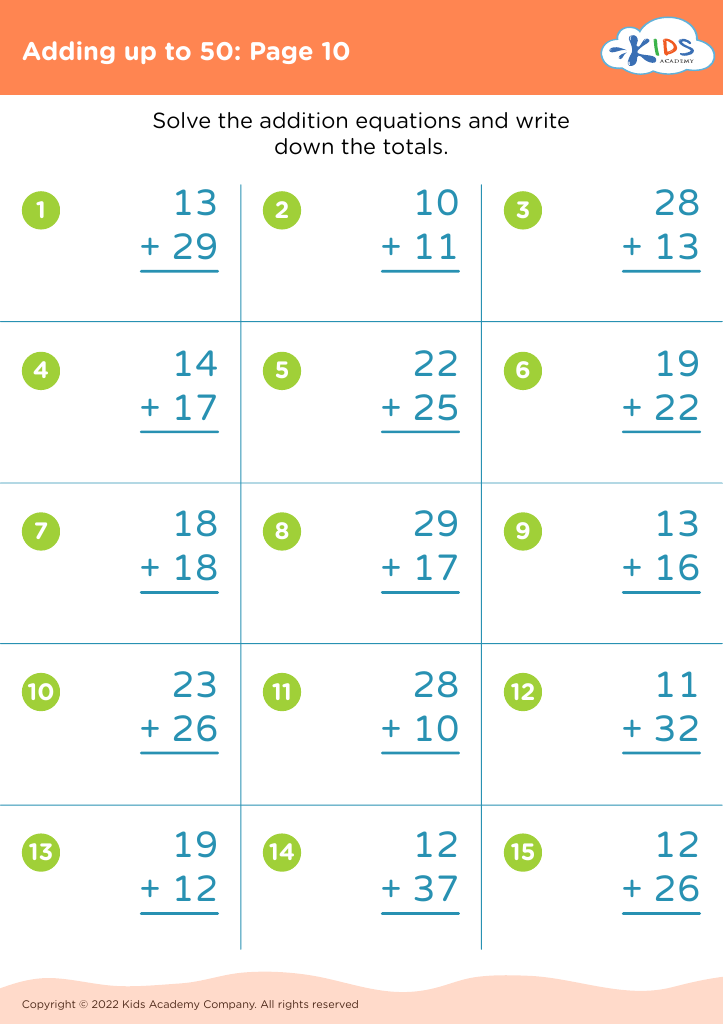
Adding up to 50: Page 10

Adding up to 50: Page 10

Adding up to 50: Page 10
Worksheet
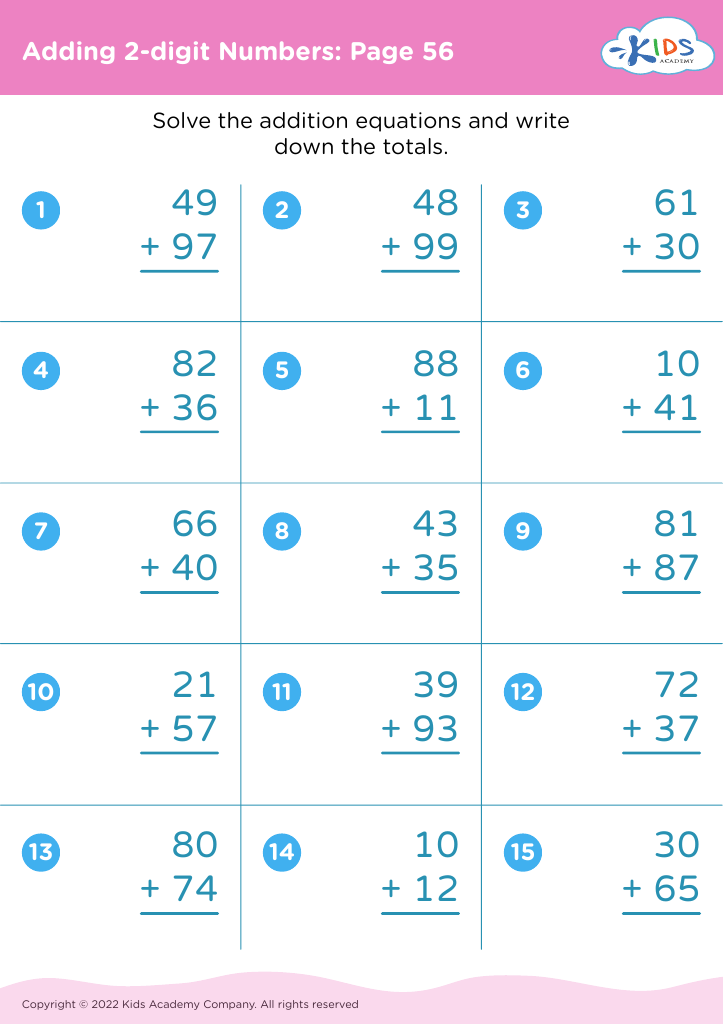
Adding 2-digit Numbers: Page 56

Adding 2-digit Numbers: Page 56

Adding 2-digit Numbers: Page 56
Worksheet
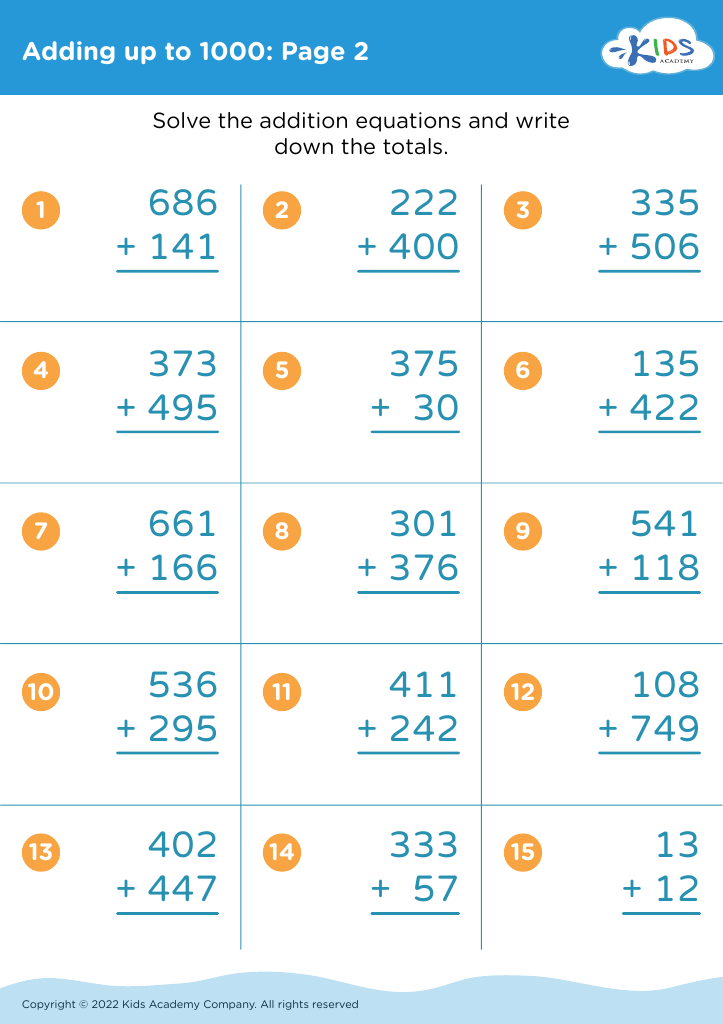
Adding up to 1000: Page 2

Adding up to 1000: Page 2

Adding up to 1000: Page 2
Worksheet
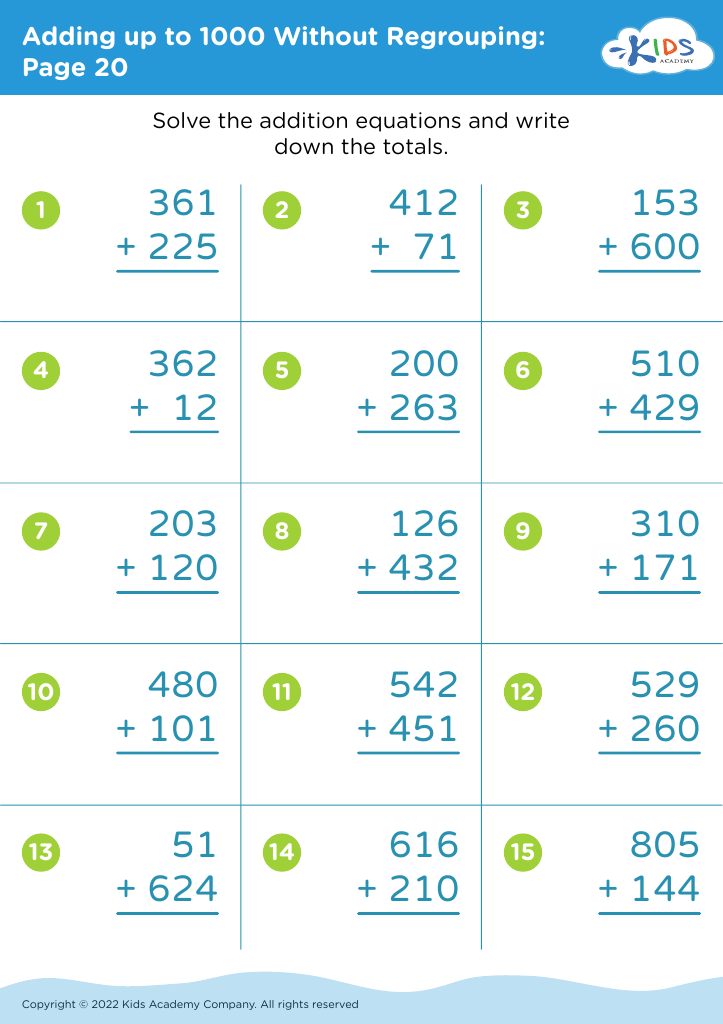
Adding up to 1000 Without Regrouping: Page 20
Worksheet
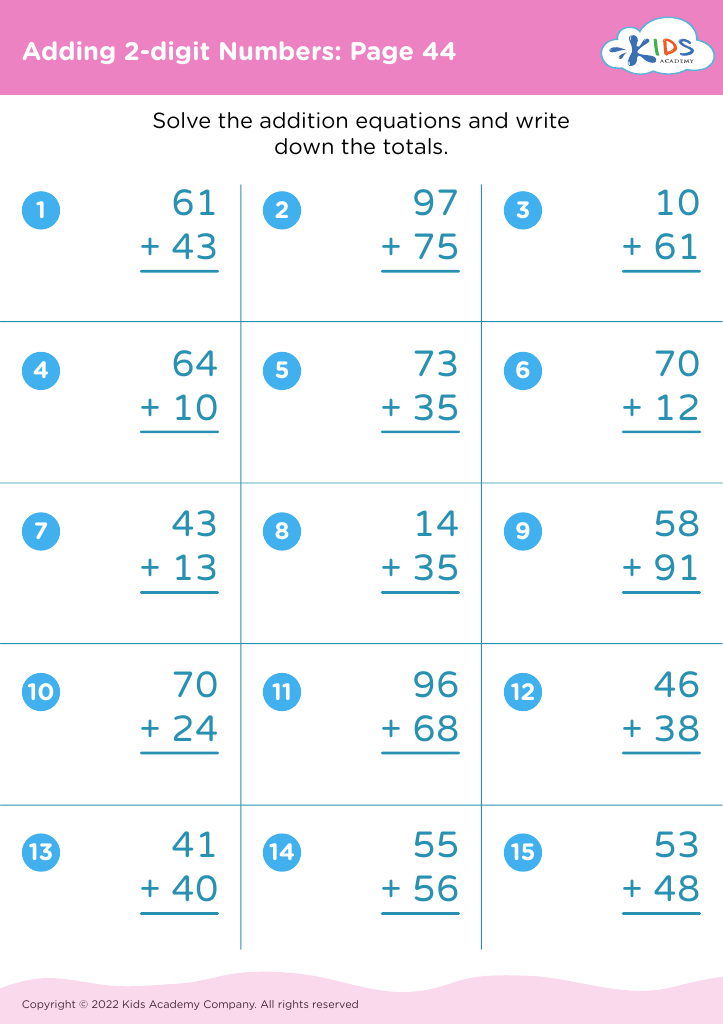
Adding 2-digit Numbers: Page 44

Adding 2-digit Numbers: Page 44

Adding 2-digit Numbers: Page 44
Worksheet
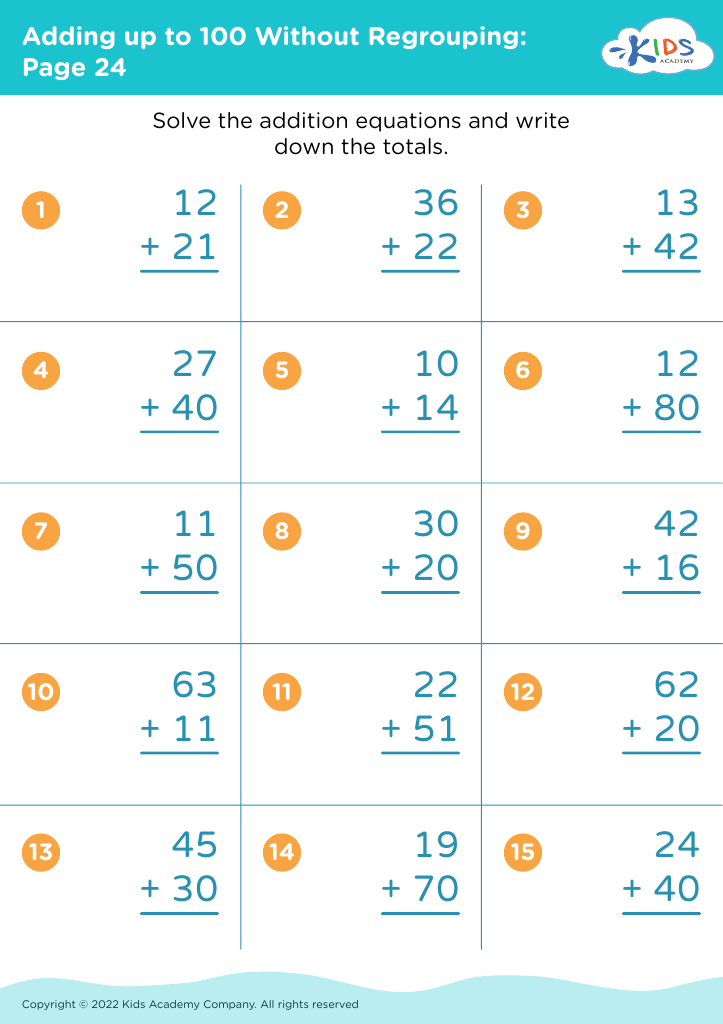
Adding up to 100 Without Regrouping: Page 24
Worksheet
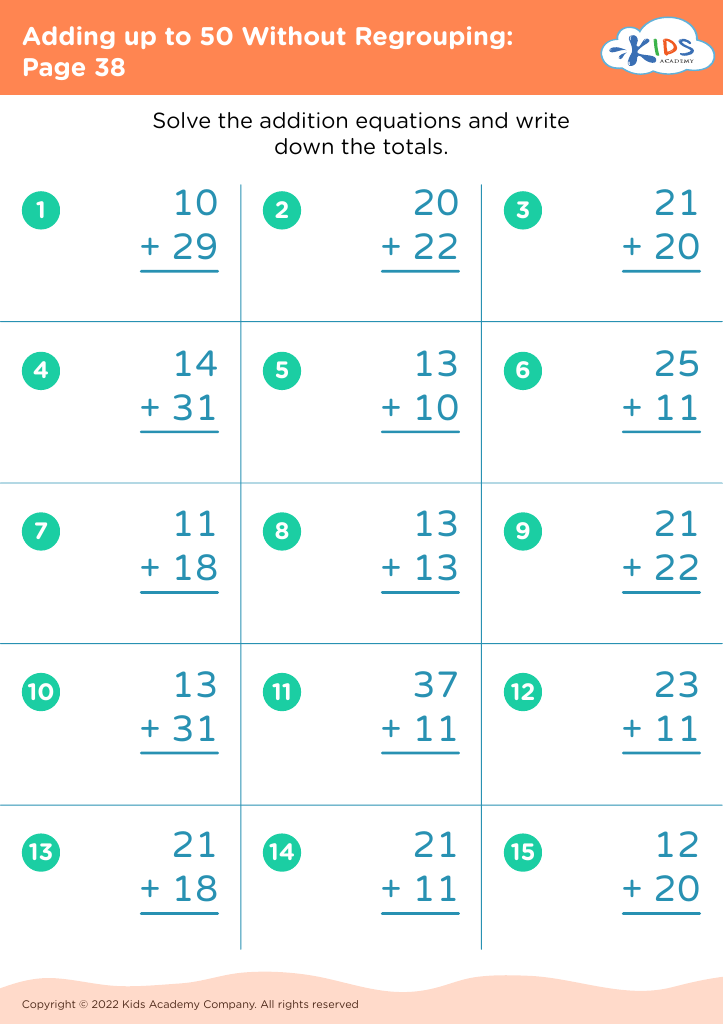
Adding up to 50 Without Regrouping: Page 38
Worksheet
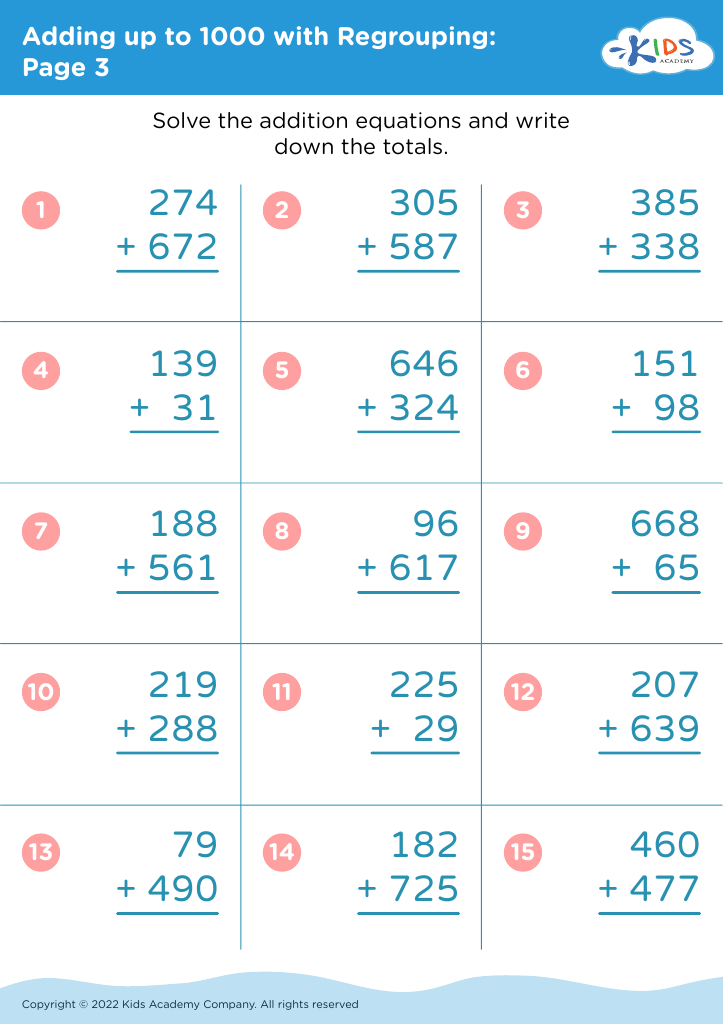
Adding up to 1000 with Regrouping: Page 3
Worksheet
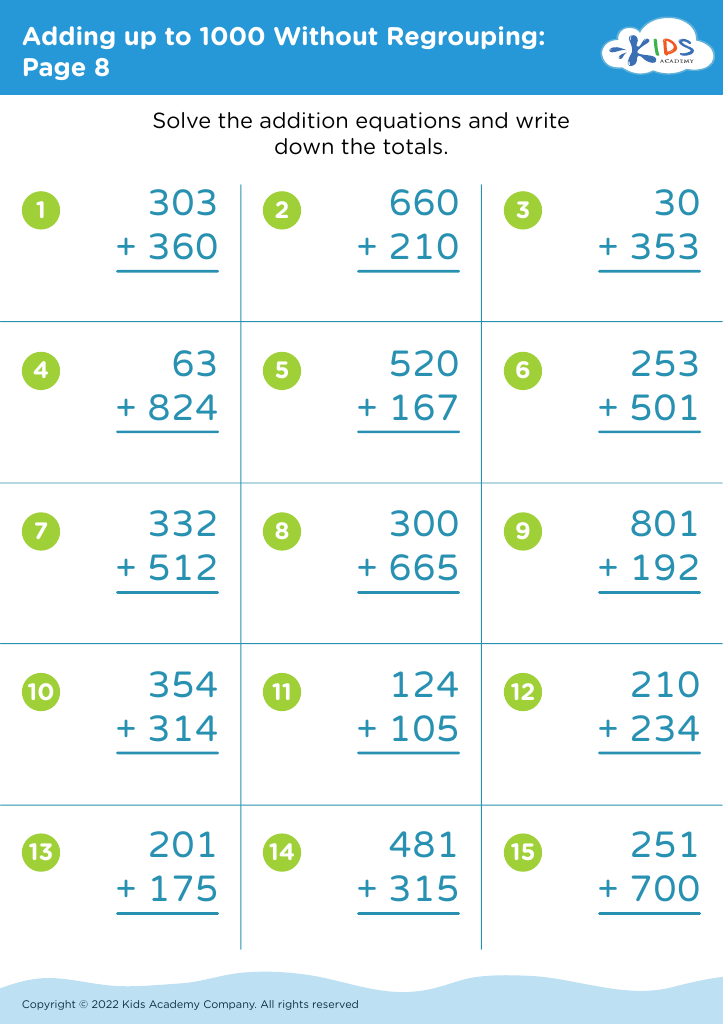
Adding up to 1000 Without Regrouping: Page 8
Worksheet
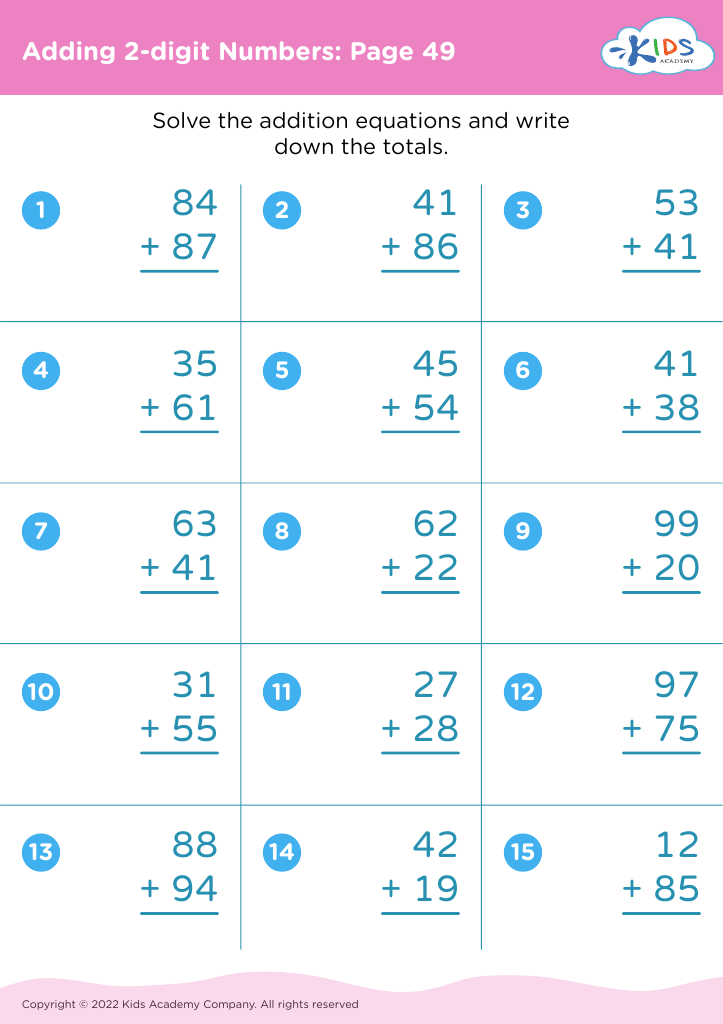
Adding 2-digit Numbers: Page 49

Adding 2-digit Numbers: Page 49

Adding 2-digit Numbers: Page 49
Worksheet
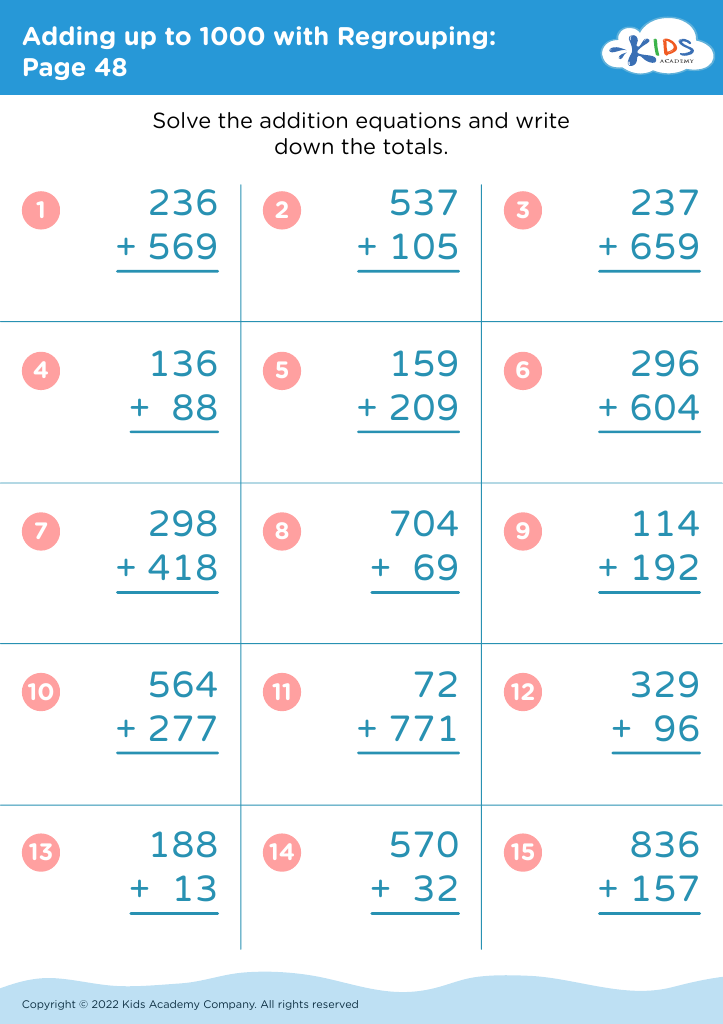
Adding up to 1000 with Regrouping: Page 48
Worksheet
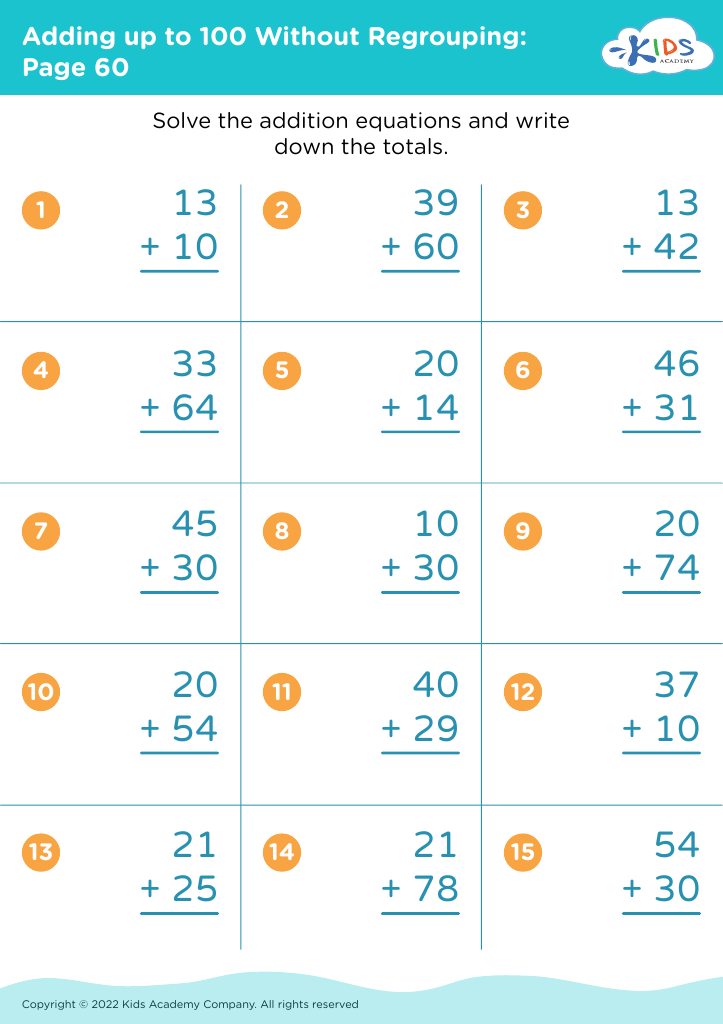
Adding up to 100 Without Regrouping: Page 60
Worksheet


Enhancing comprehension in addition for ages 7-8 is crucial for several reasons. First, this age marks a pivotal time in a child's educational journey where foundational skills in mathematics are established. Mastery of addition not only fosters confidence in young learners but also promotes a positive attitude towards math, which can carry through their academic careers.

Moreover, strong comprehension skills help children understand not just how to perform addition but why it works—leading to better problem-solving abilities and critical thinking. These skills are essential not just in math, but across all subjects, as they teach children to analyze information, draw connections, and apply their knowledge in varied contexts.

Additionally, parents and teachers play a vital role in creating an engaging learning environment. By providing supportive resources, such as interactive games or real-life math applications, they can keep students motivated and interested. Working together, they can closely monitor progress and identify areas needing attention, ensuring that each child advances at their own pace.

Ultimately, investing in comprehension of addition during these formative years builds a solid foundation for future learning, giving children the tools they need to tackle more complex concepts with confidence and ease.