Shape Recognition Geometry Worksheets for Ages 7-8 - Page 2
43 filtered results
-
From - To
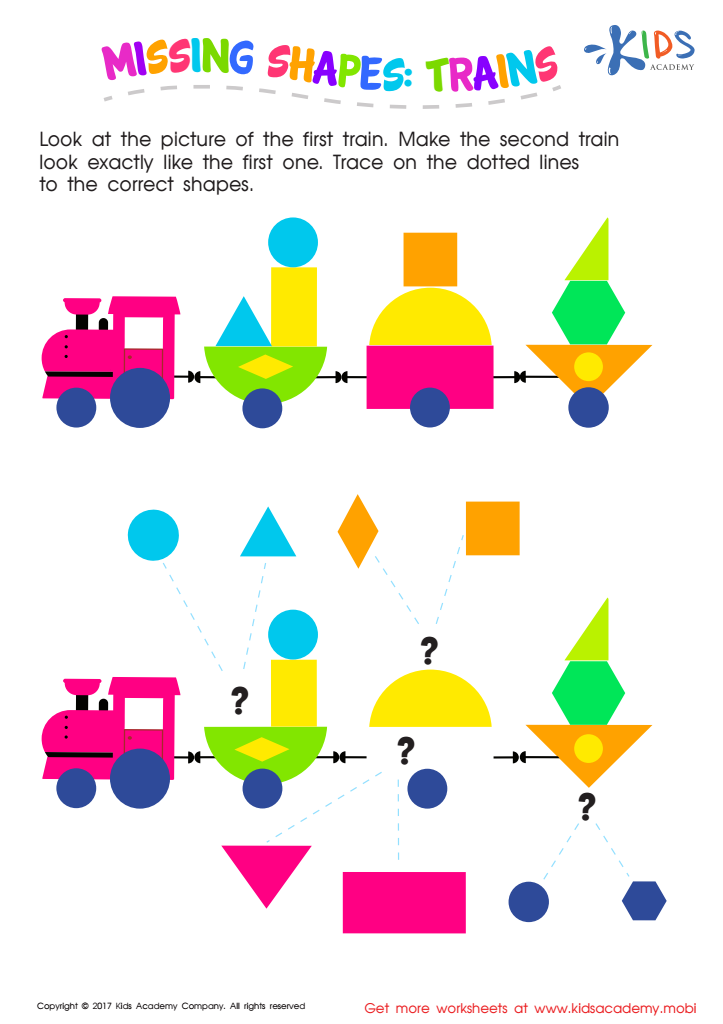
Missing Shapes: Trains Worksheet











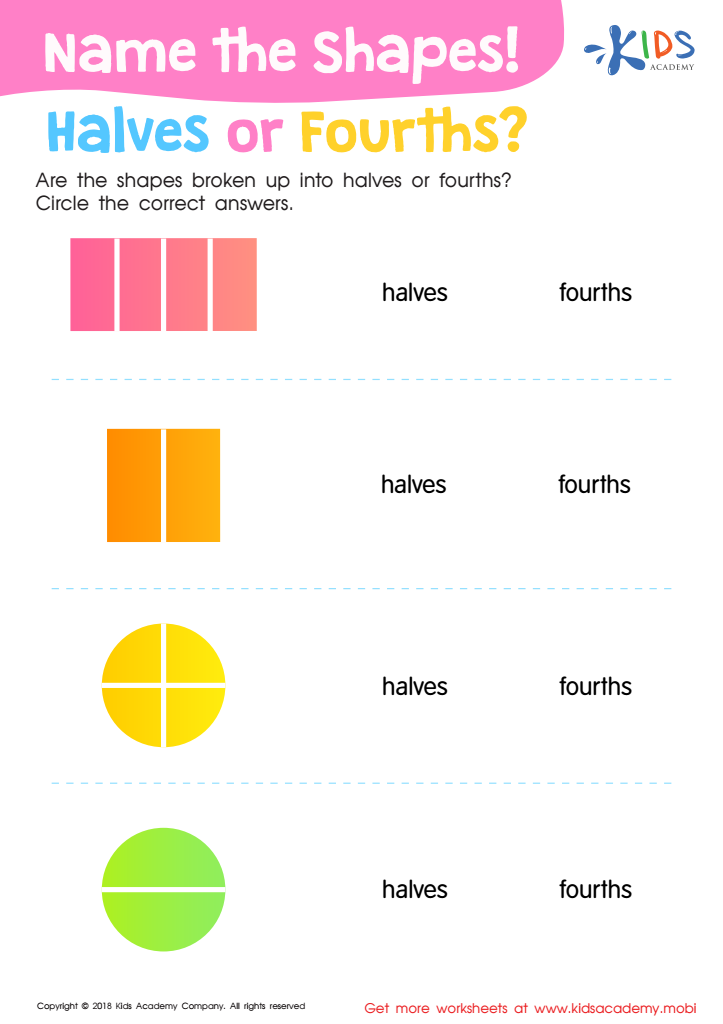
Name the Shapes Halves or Fourths? Worksheet
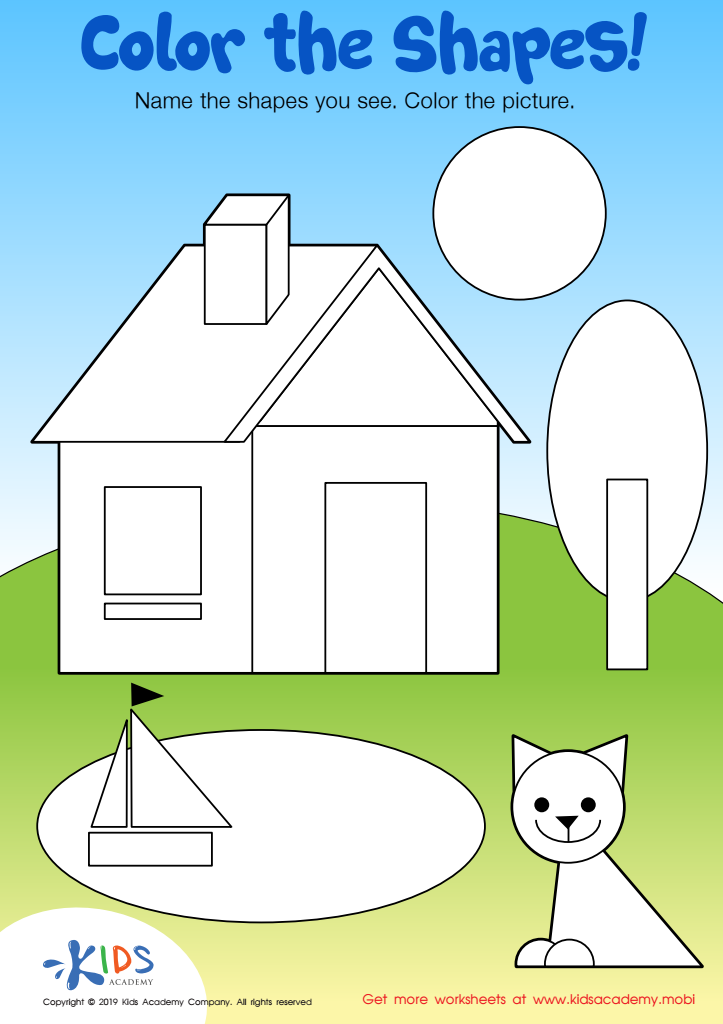
Color the Shapes Worksheet
 Assign to My Students
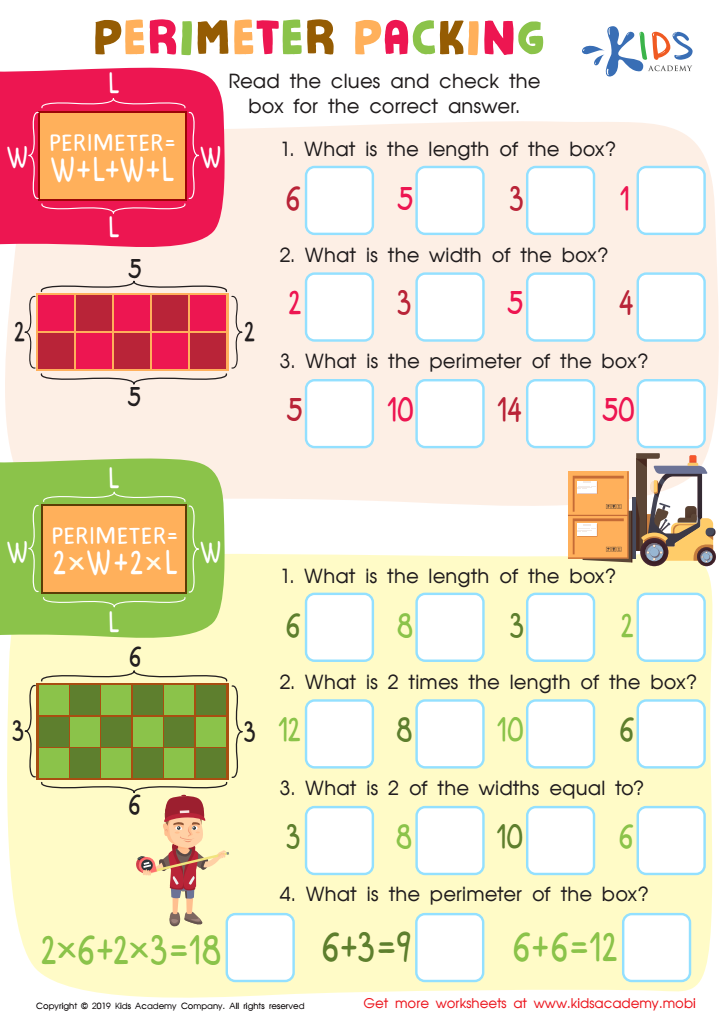
Perimeter Parking Worksheet
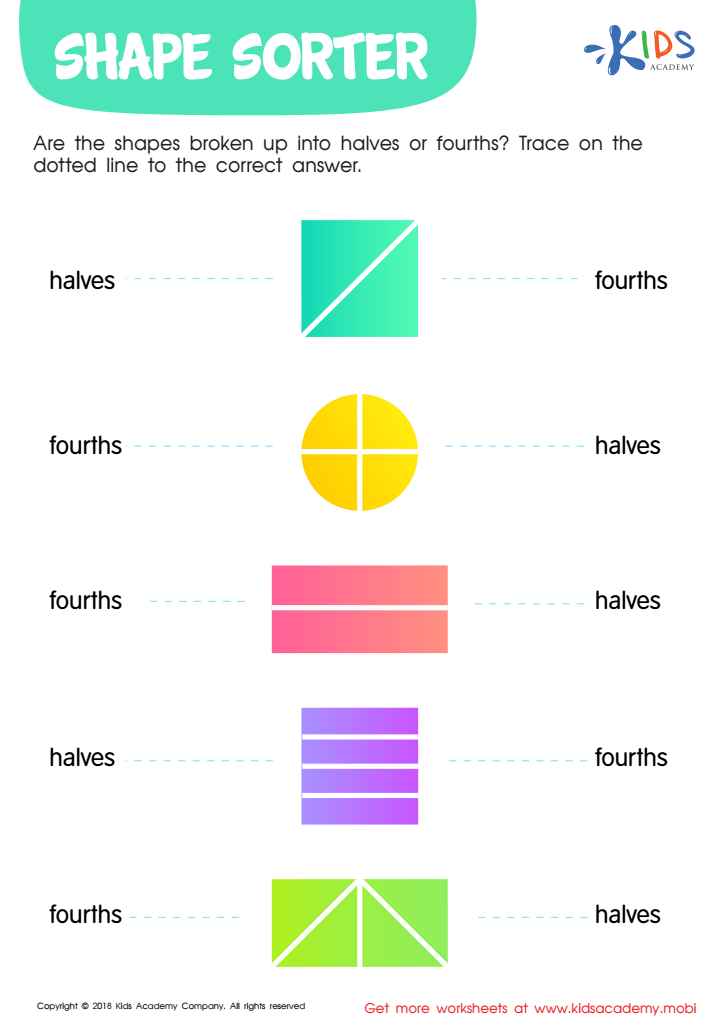
Shape Sorter Worksheet
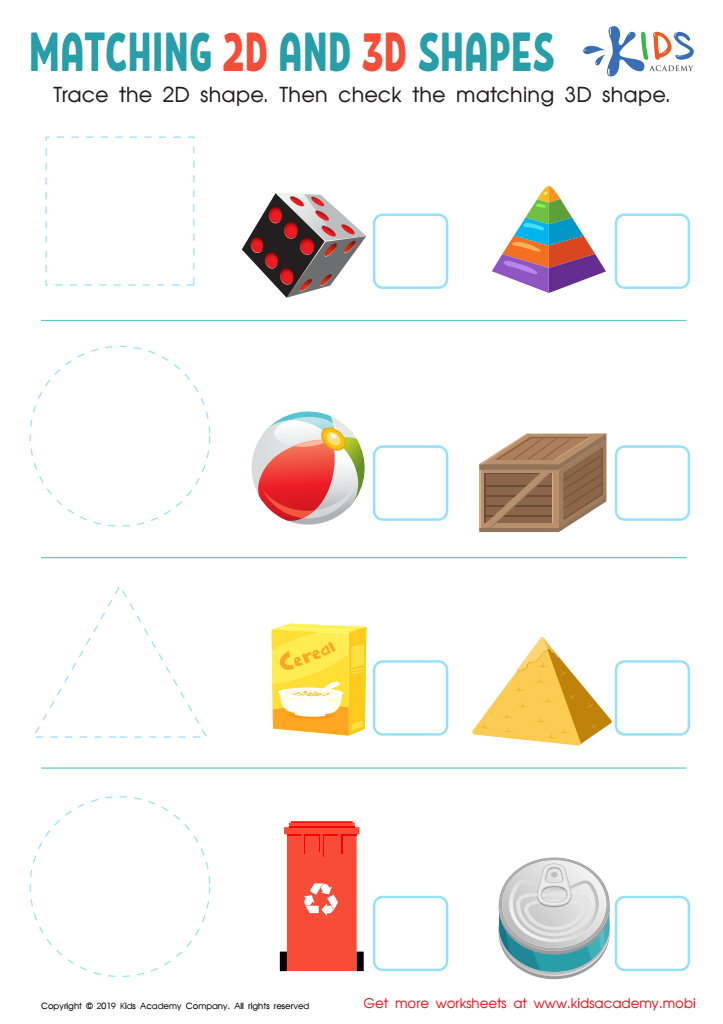
Matching 2D and 3D Shapes Worksheet
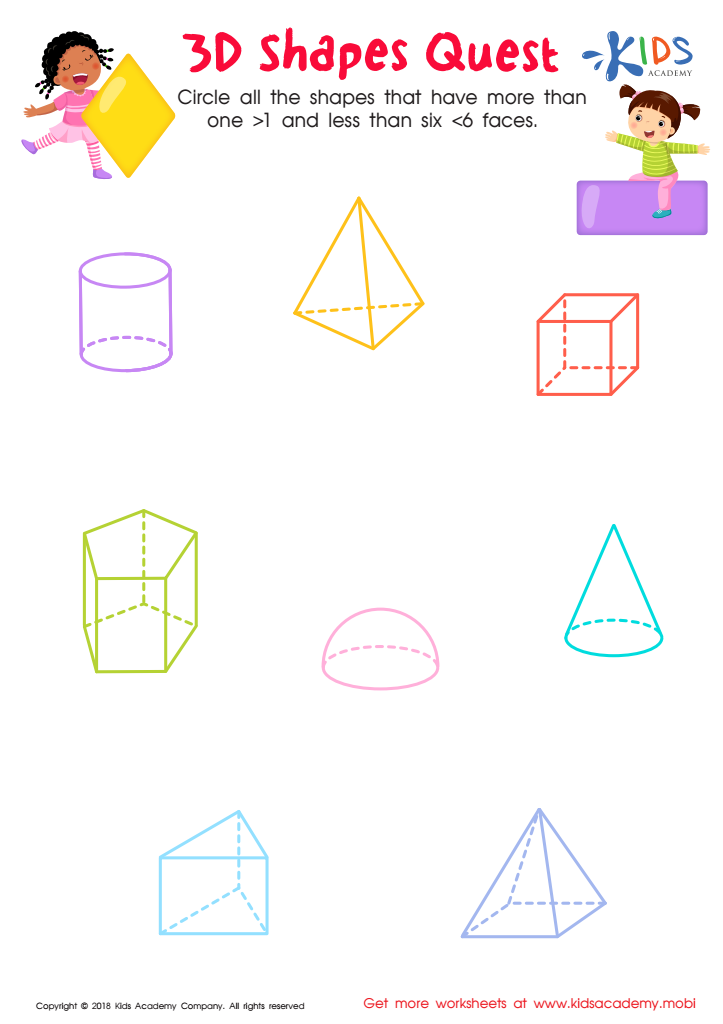
3D Shapes Quest Worksheet
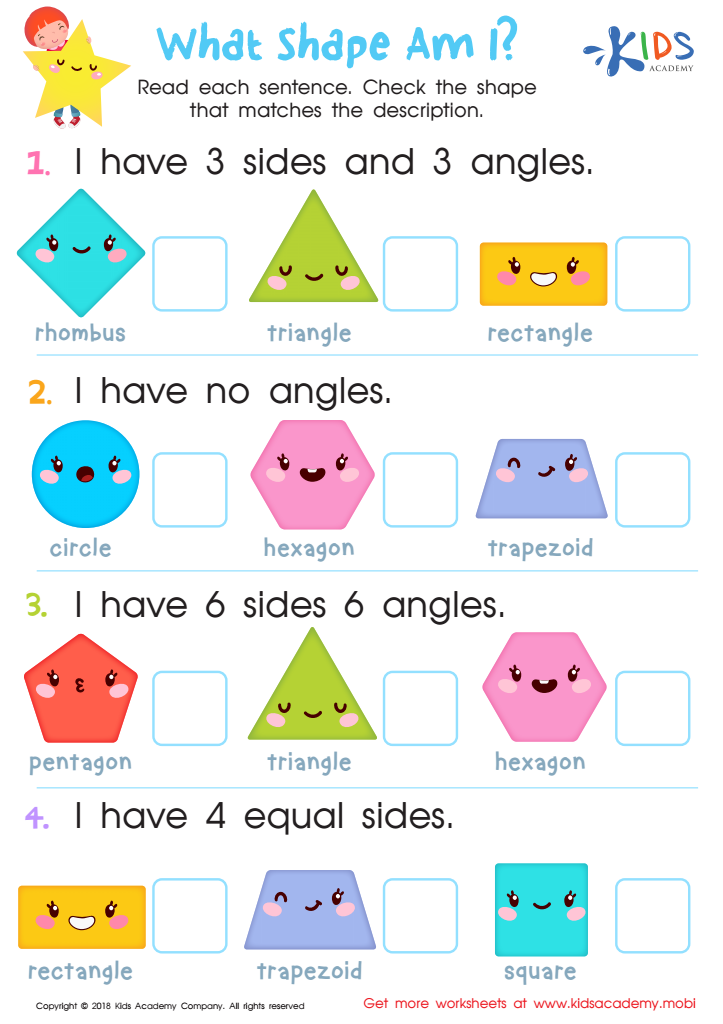
What Shape Am I? Worksheet
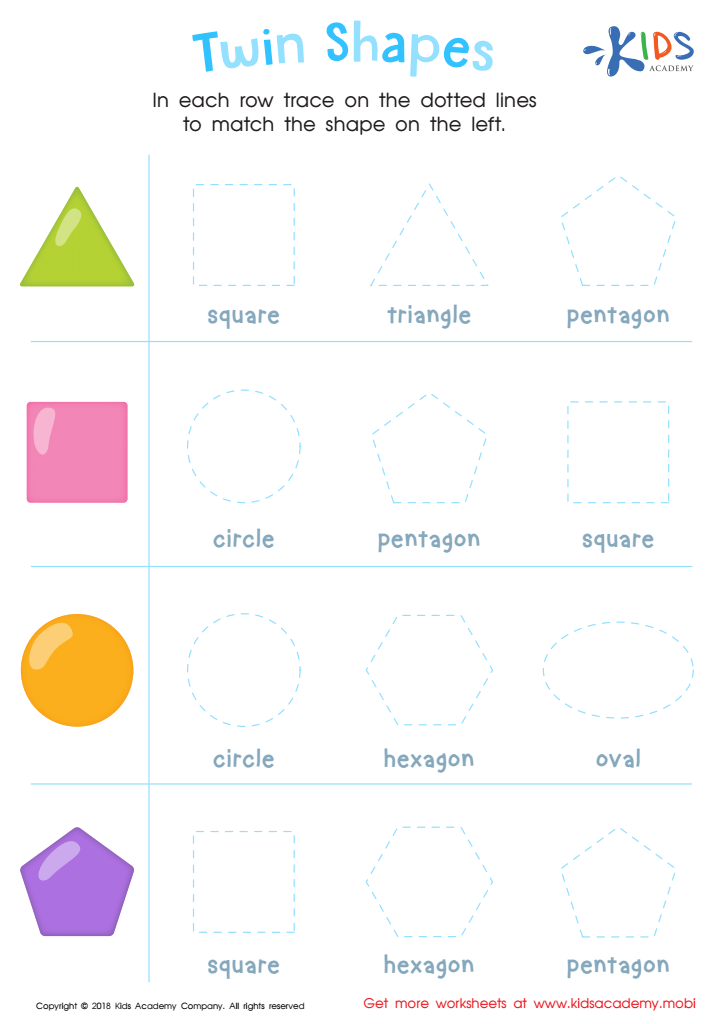
Twin Shapes Dot-to-Dot Worksheet
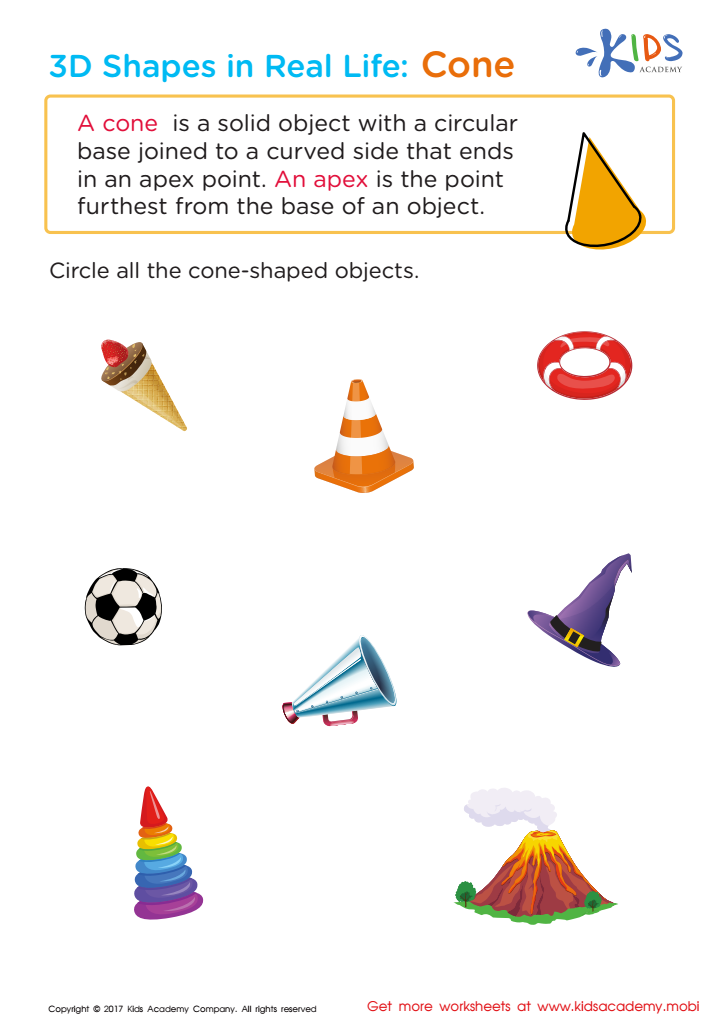
Shapes in Real Life: Cone Worksheet
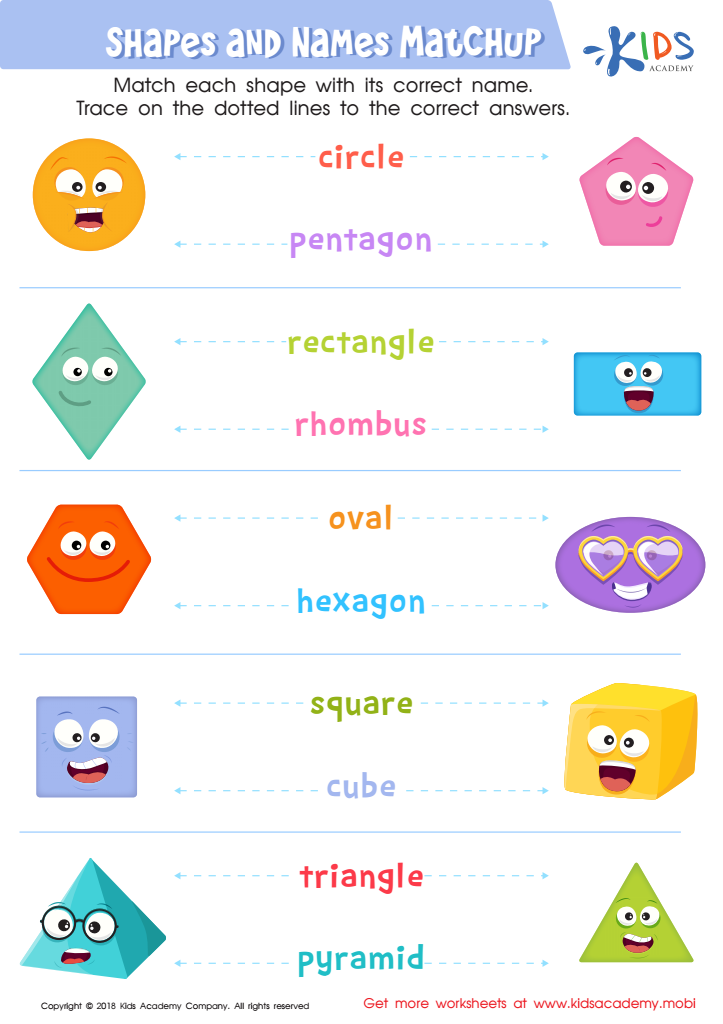
Shapes and Names Matchup Worksheet
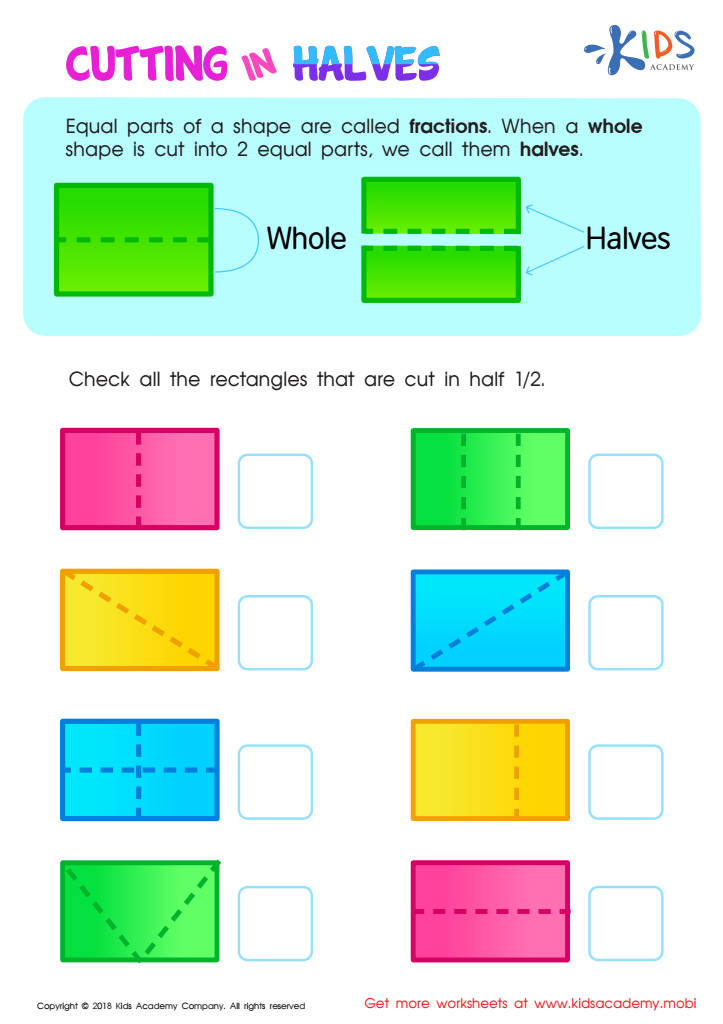
Cutting in Halves Worksheet
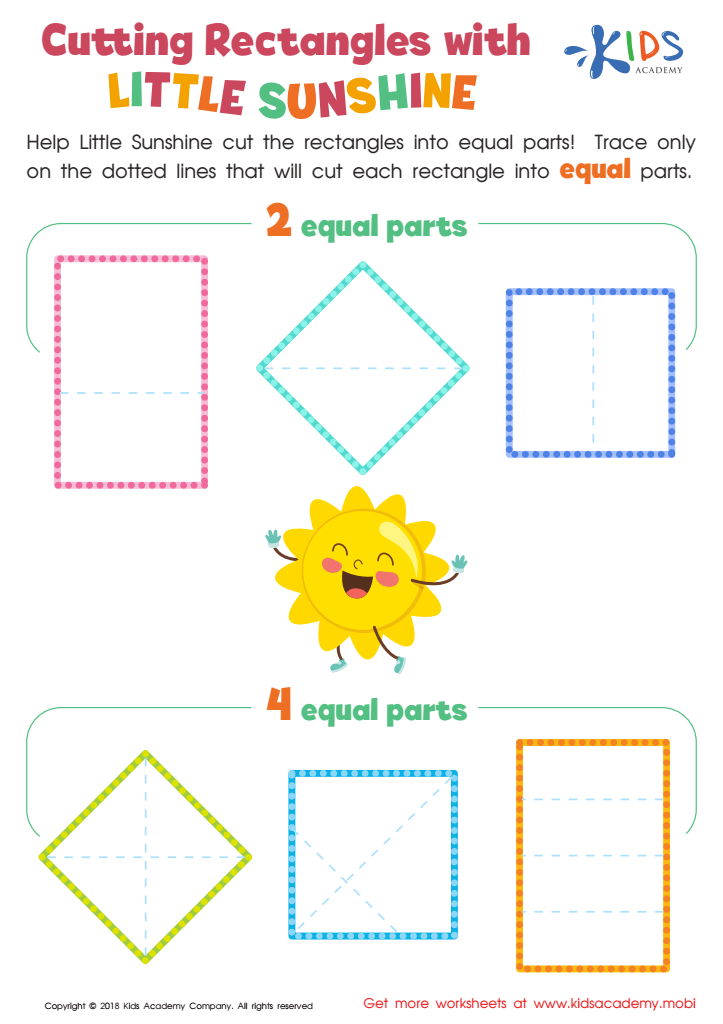
Cutting Rectangles with Little Sunshine Worksheet
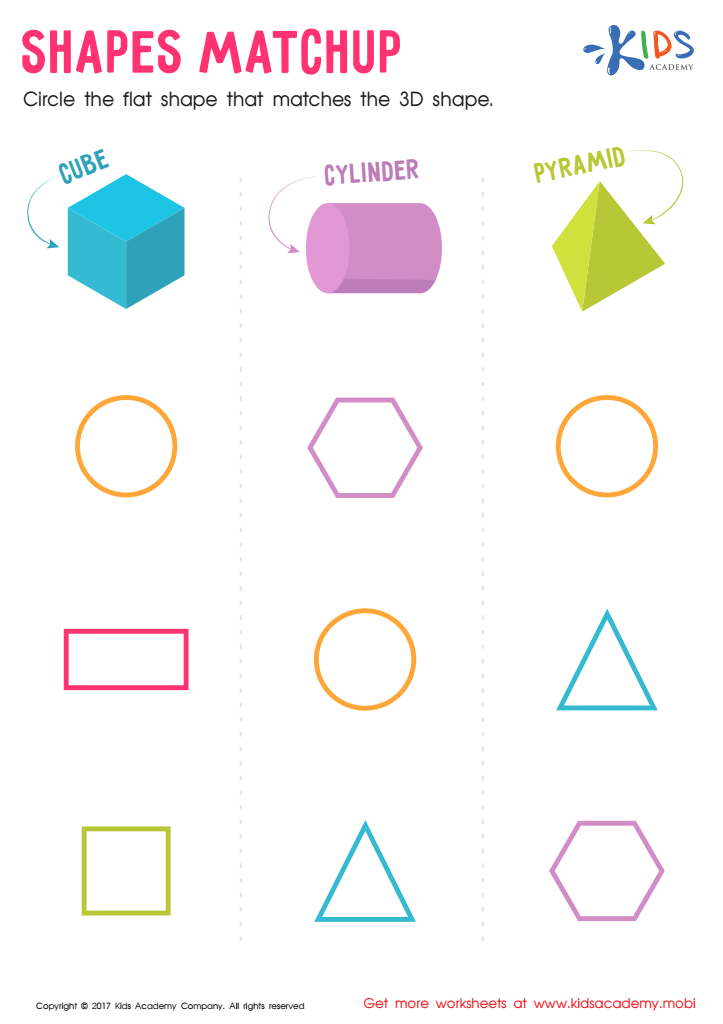
Shapes Matchup Worksheet
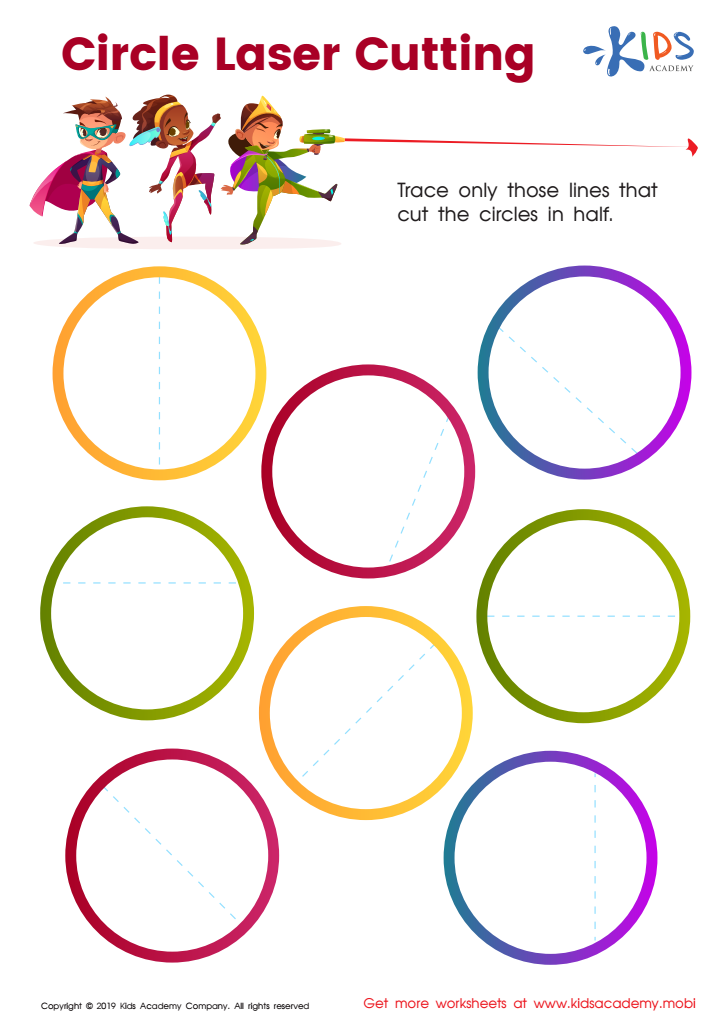
Circle Laser Cutting Worksheet
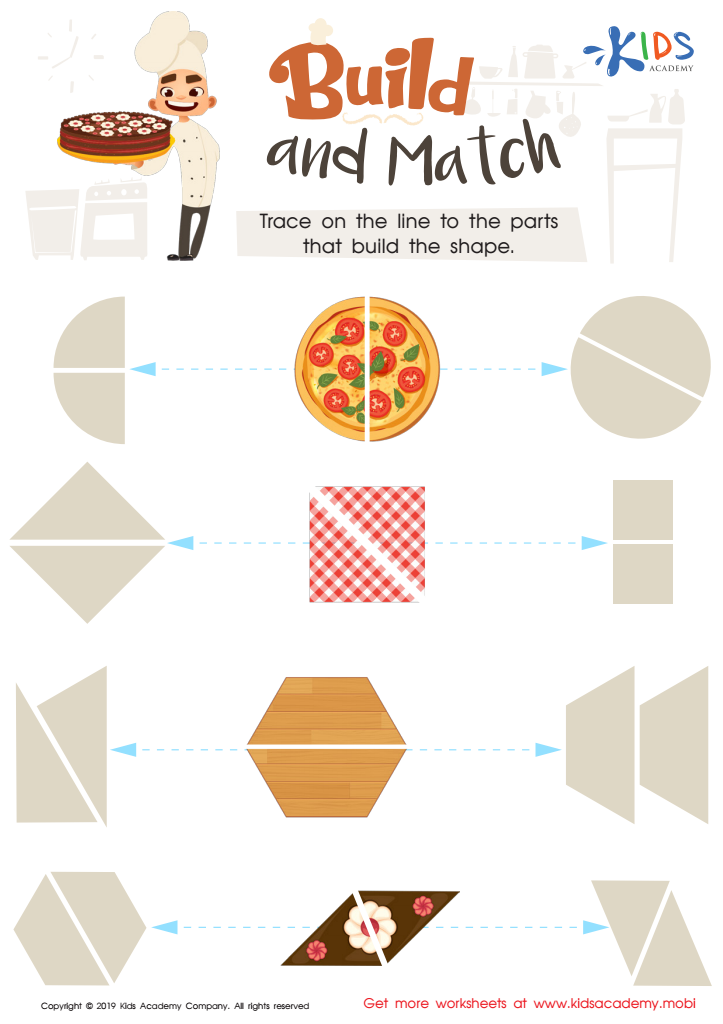
Build and Match Worksheet
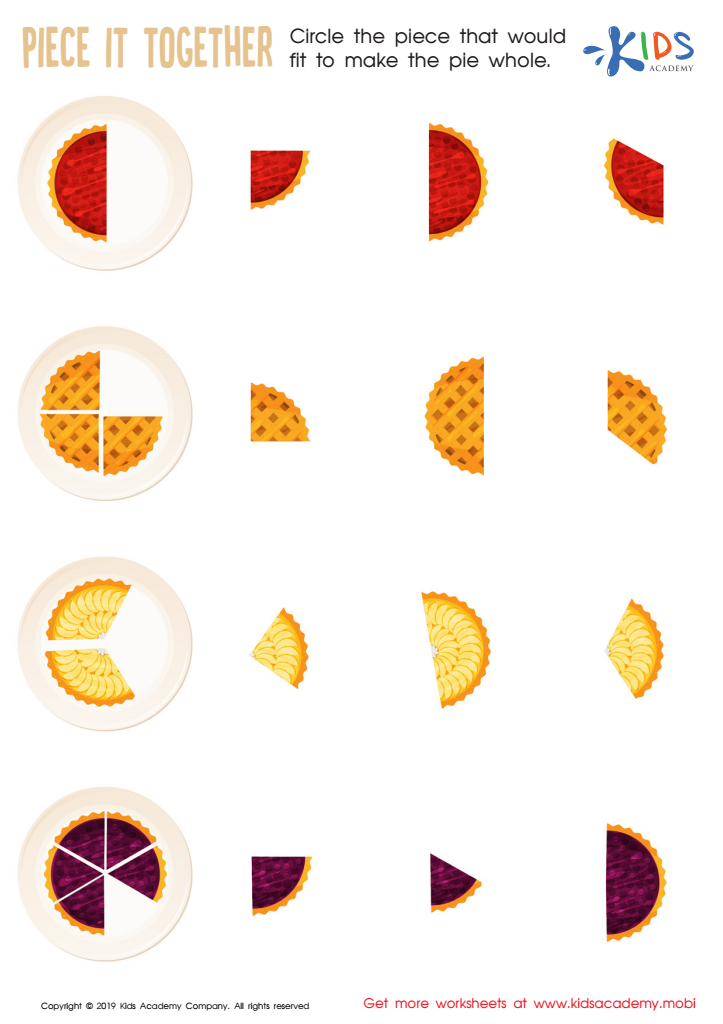
Piece it together Worksheet
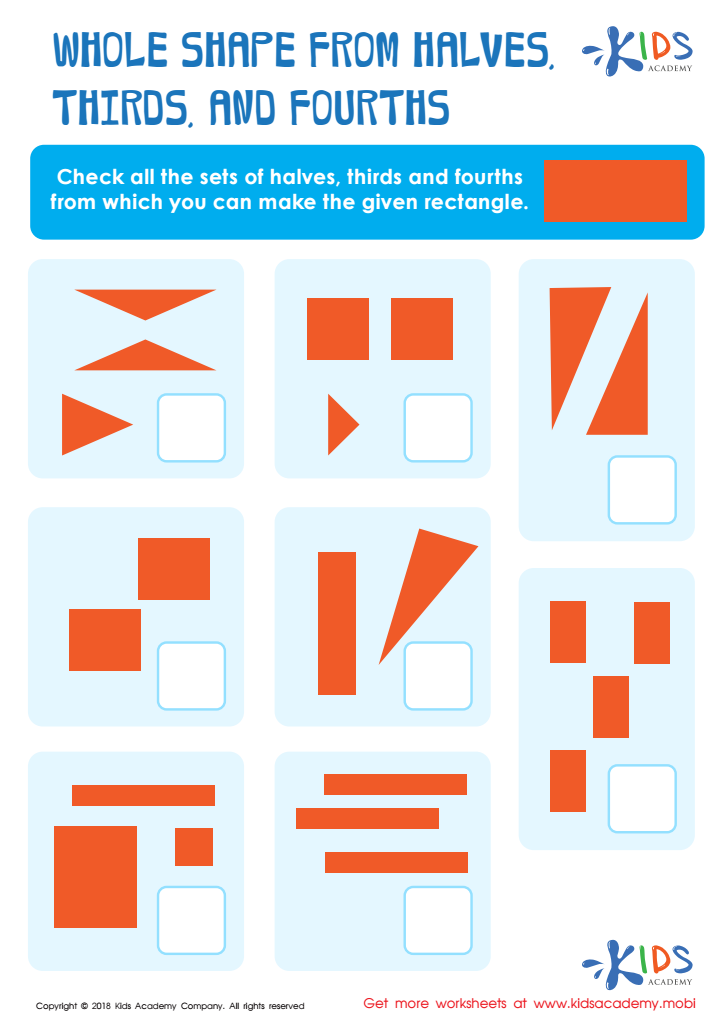
Whole Shape from Halves, Thirds and Fourths Worksheet
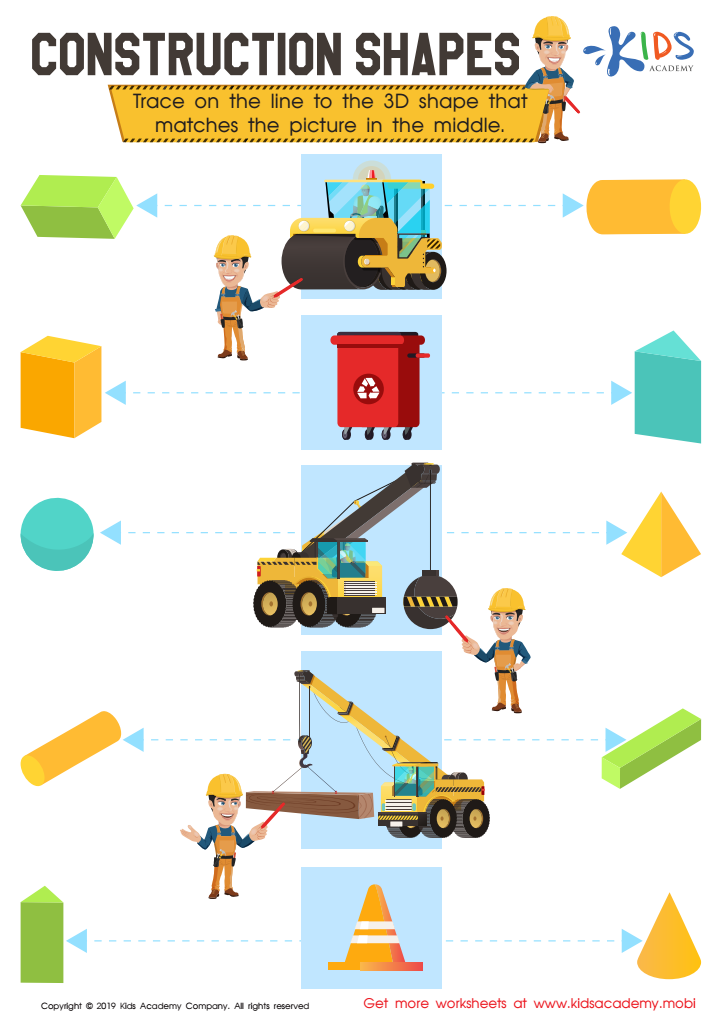
Construction Shapes Worksheet








Shape recognition in geometry is essential for children aged 7-8, as it lays the groundwork for critical mathematical understanding and cognitive development. At this stage, children begin to explore and appreciate the world around them through shapes and spatial relationships. Developing shape recognition skills not only enhances their ability to classify and describe objects but also fosters logical reasoning and problem-solving skills.
Geometry cultivates spatial awareness, allowing children to visualize and manipulate shapes mentally, which is crucial not only in math but also in various everyday activities like navigation and understanding architectural designs. Moreover, mastering shape recognition contributes to more complex mathematical concepts that children will encounter later, such as symmetry, area, and perimeter.
Parents and teachers should prioritize shape recognition as it develops foundational skills necessary for higher-order thinking. Engaging children with hands-on activities, games, and interactive lessons makes learning enjoyable and effective. This early emphasis on geometry encourages a lifelong curiosity and enthusiasm for math and science, empowering children to become confident learners. By nurturing their understanding of shapes and their properties, we equip them with tools that are applicable across multiple disciplines and real-world experiences.








