
Geography knowledge Numbers Worksheets for Ages 7-8
5 filtered results
Difficulty Level
Grade
Age
-
From - To
Subject
Activity
Standards
Introduce your child to the wonders of the world with our engaging Geography Knowledge Numbers Worksheets, designed specifically for ages 7-8. These printable worksheets seamlessly blend learning numbers with captivating geography lessons, helping young learners develop essential math skills while exploring diverse continents, countries, and landmarks. Each worksheet is crafted to be both educational and fun, ensuring that kids remain interested and motivated. Whether at home or in the classroom, our resources provide an excellent foundation in geography and numeracy, promoting critical thinking and a global perspective in young minds. Empower your child with knowledge and curiosity today!
Favorites
With answer key
Interactive
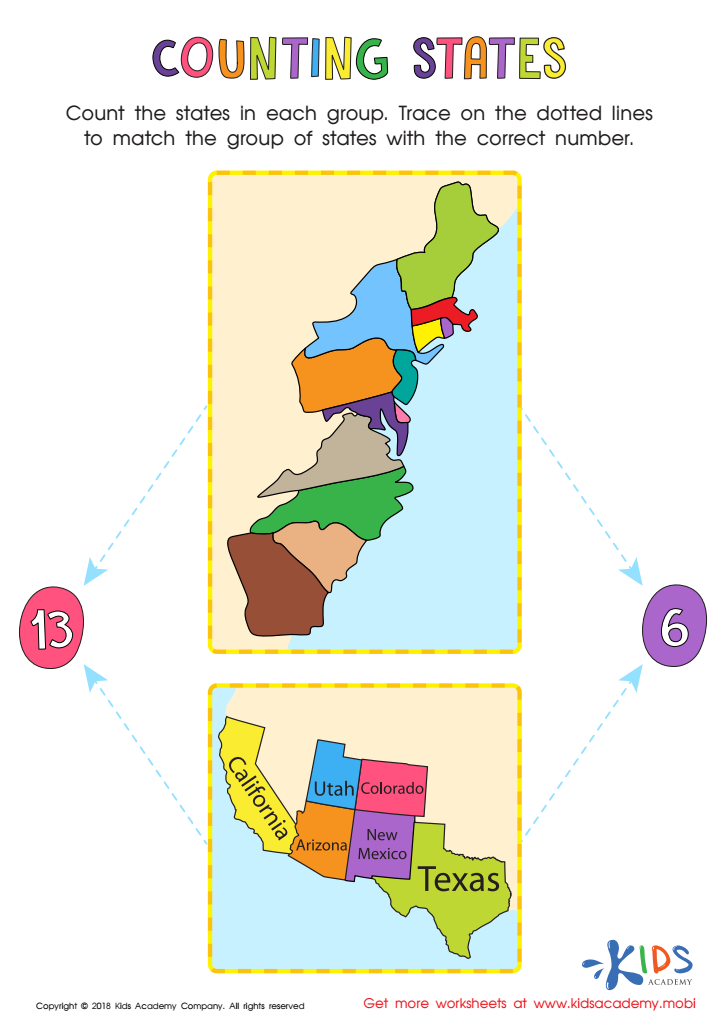
Counting States Worksheet
This fun and educative worksheet helps your kids learn more about their country. Ask them if they can name all the states, then help them trace on the dotted lines to match each state group to the correct number. Counting together is a fun way to reinforce learning.
 Assign to My Students
Counting States Worksheet
Worksheet
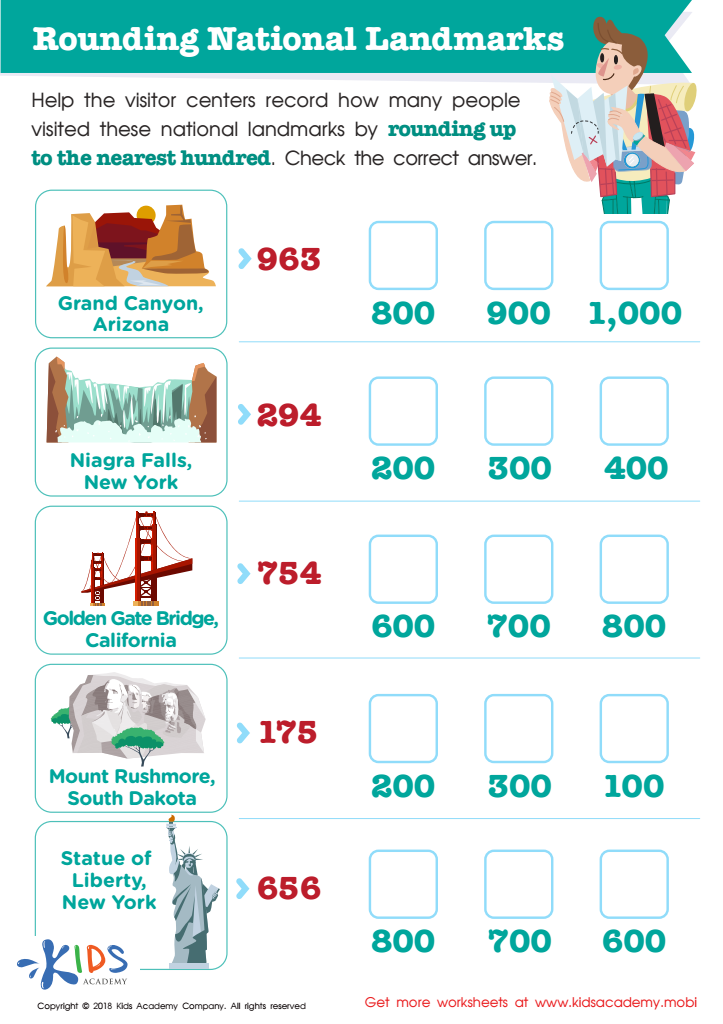
Rounding National Landmarks Worksheet
Does your city have tourist attractions? Help your kids count visitors to these national landmarks by rounding up to the nearest hundred. Then check the correct answer from the provided options. Or explore tourist centres in another state with your family.
Rounding National Landmarks Worksheet
Worksheet
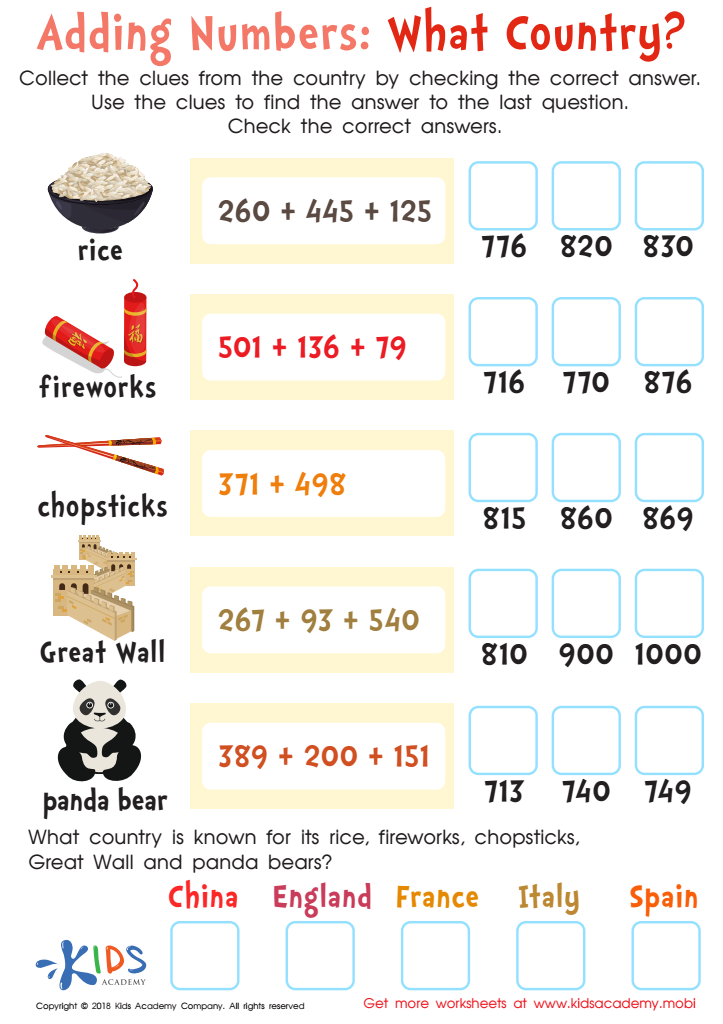
Adding Numbers: What Country Worksheet
Students can use this worksheet to learn more about different countries. Have them collect clues from the worksheet to answer the last question. Help them check the correct answer, and they'll gain knowledge about each country's food, animals, celebrations, and landmarks.
Adding Numbers: What Country Worksheet
Worksheet
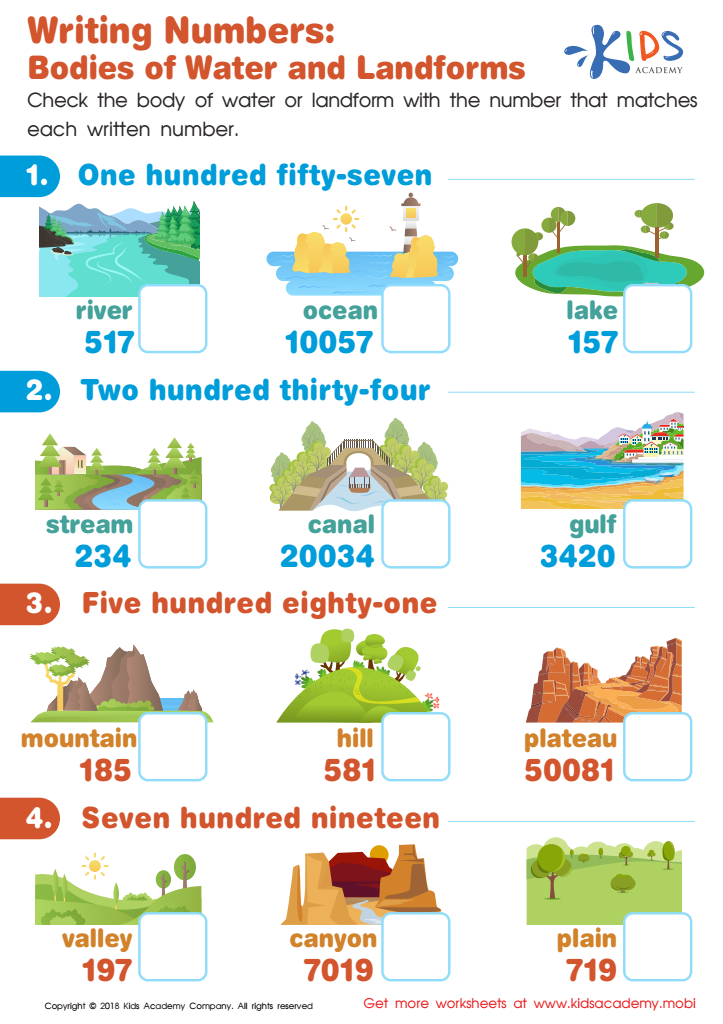
Bodies of Water and Landforms Writing Numbers Worksheet
Your student will love this engaging worksheet with its bright hues, while you give them practice comparing numbers with higher place values. Matching the correct number words to their numeral representations is key for our students as they deal with larger numbers and higher place values.
Bodies of Water and Landforms Writing Numbers Worksheet
Worksheet
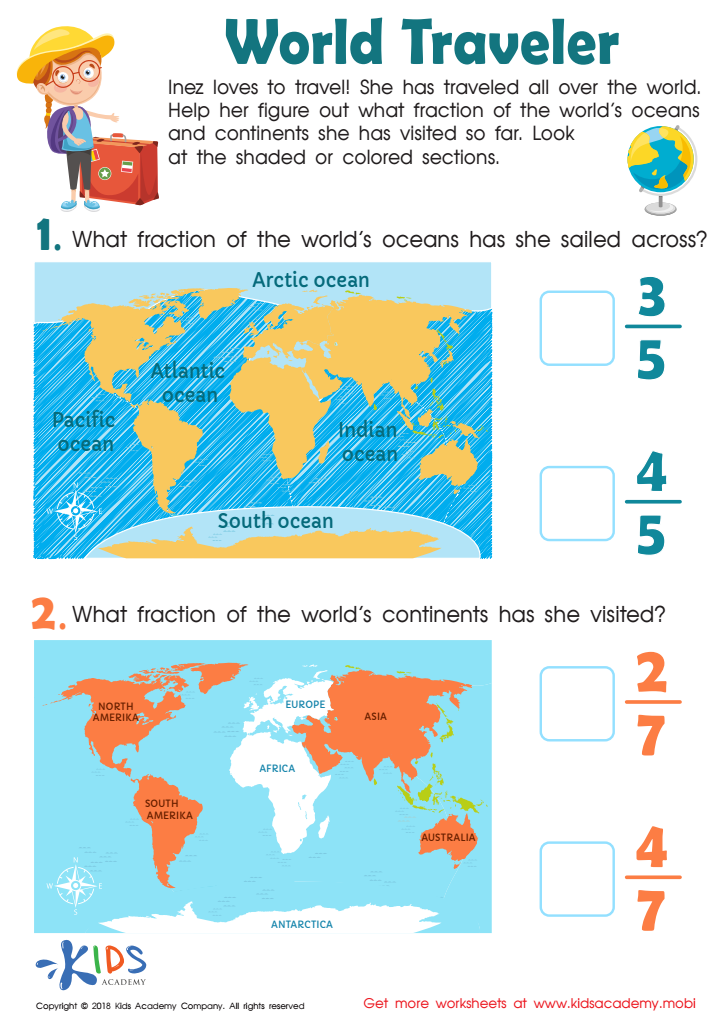
World Traveler Worksheet
Kids love exploring the world? Inez sure does! She's seen oceans and continents around the globe. Your kids can help her figure out what fraction of the world she has visited. Have them name all the countries they've been to, then look at the marked sections on the printout to find out!
World Traveler Worksheet
Worksheet
Join Kids Academy for Free
Who is primarily going to use this learning content?







Understanding geography is vital for children aged 7-8, as it lays the foundation for their comprehension of the world. For parents and teachers, emphasizing geography helps nurture informed and globally-aware citizens. At this age, children are naturally curious about their surroundings. Teaching them geography taps into this curiosity, making learning engaging and stimulating. It also aids in developing their spatial awareness and cognitive abilities, helping them understand concepts like distance, location, and direction.
Beyond maps and places, geography teaches respect and appreciation for different cultures and environments, fostering empathy and open-mindedness. This age-appropriate knowledge helps children recognize the interconnectedness of the world, realizing how different regions impact one another—economically, socially, and environmentally.
Moreover, in our increasingly globalized society, geographical knowledge is crucial. It strengthens their problem-solving and critical-thinking skills by encouraging children to consider various factors, such as weather, resources, and human activities, which shape different places.
For parents and teachers, incorporating geography into the curriculum means equipping children with essential tools and perspectives they'll use throughout their education and lives. As a result, children become more knowledgeable, tolerant, and conscious individuals, prepared to navigate and contribute to a diverse and interlinked world.








