Basic geometry understanding Math Worksheets for Ages 7-8
5 filtered results
-
From - To
Explore our "Basic Geometry Understanding Math Worksheets for Ages 7-8" designed to introduce young learners to fundamental geometric concepts. These engaging worksheets focus on shapes, symmetry, and spatial reasoning, fostering a solid math foundation. Each activity promotes critical thinking while encouraging creativity through fun illustrations and relatable examples. Perfect for classrooms and at-home learning, our worksheets help children identify shapes, calculate areas, and understand simple geometric terms. Tailored for ages 7-8, these resources ensure a joyful learning experience while preparing them for more advanced math concepts. Download now to make geometry an exciting adventure for your child!
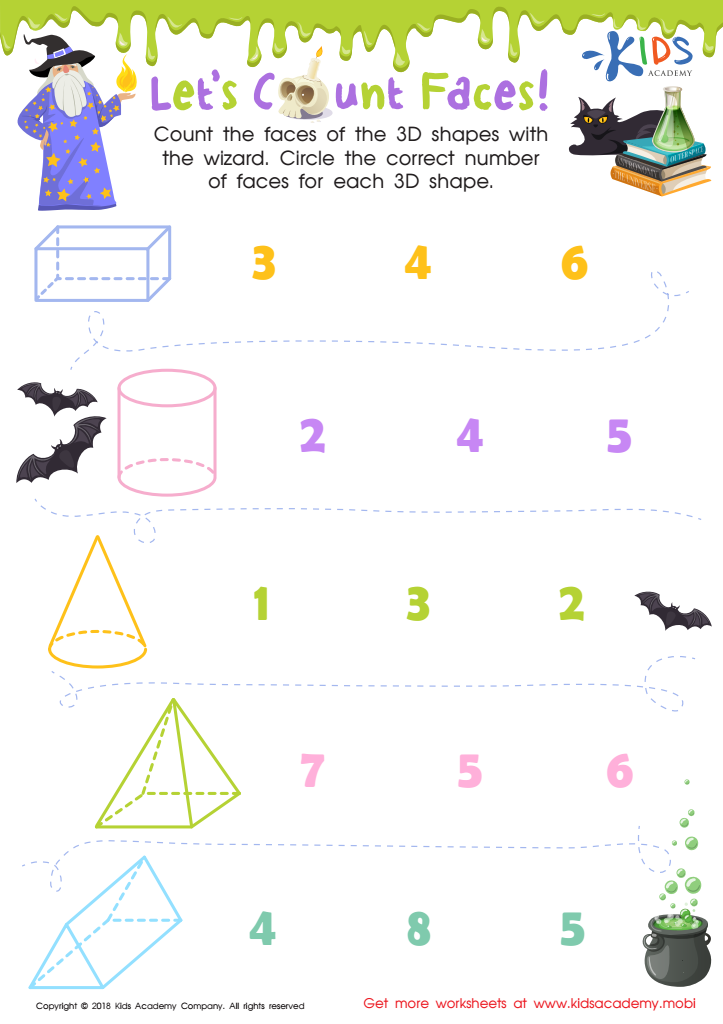
Let's Count Faces! Worksheet
 Assign to My Students
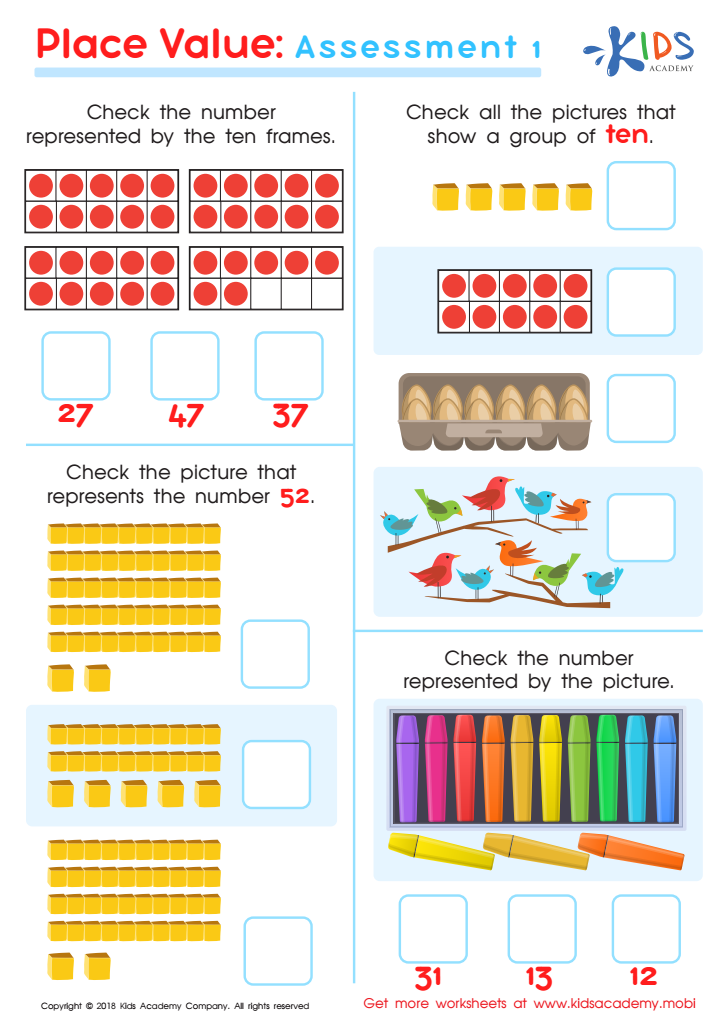
Place Value: Assessment 1 Worksheet
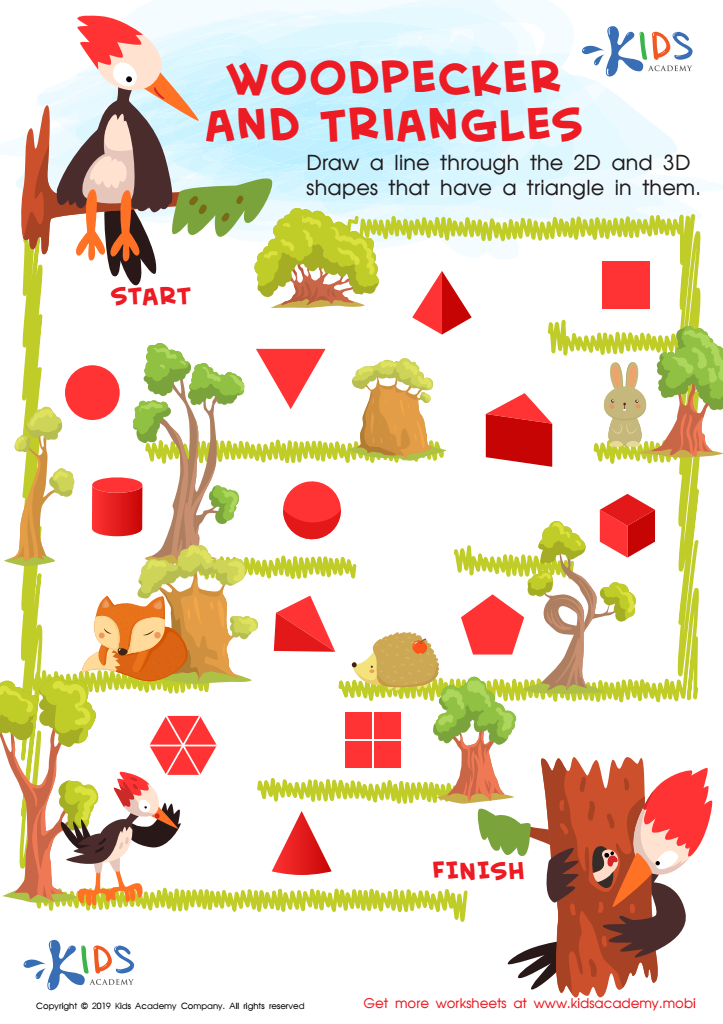
Woodpecker and Triangles Worksheet
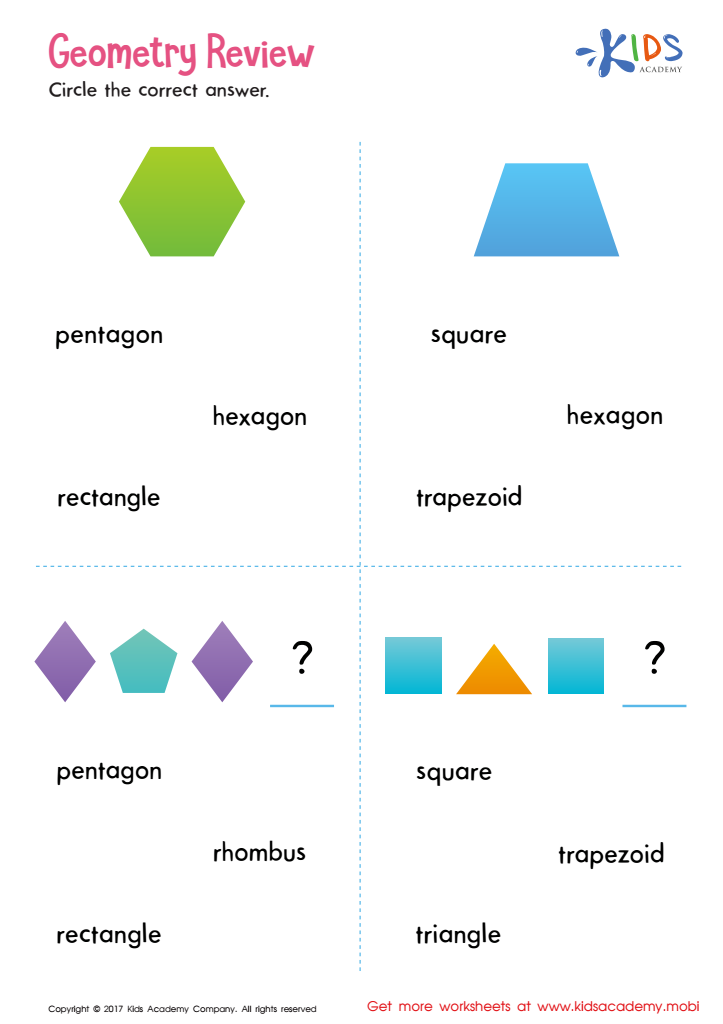
Geometry Review Printable
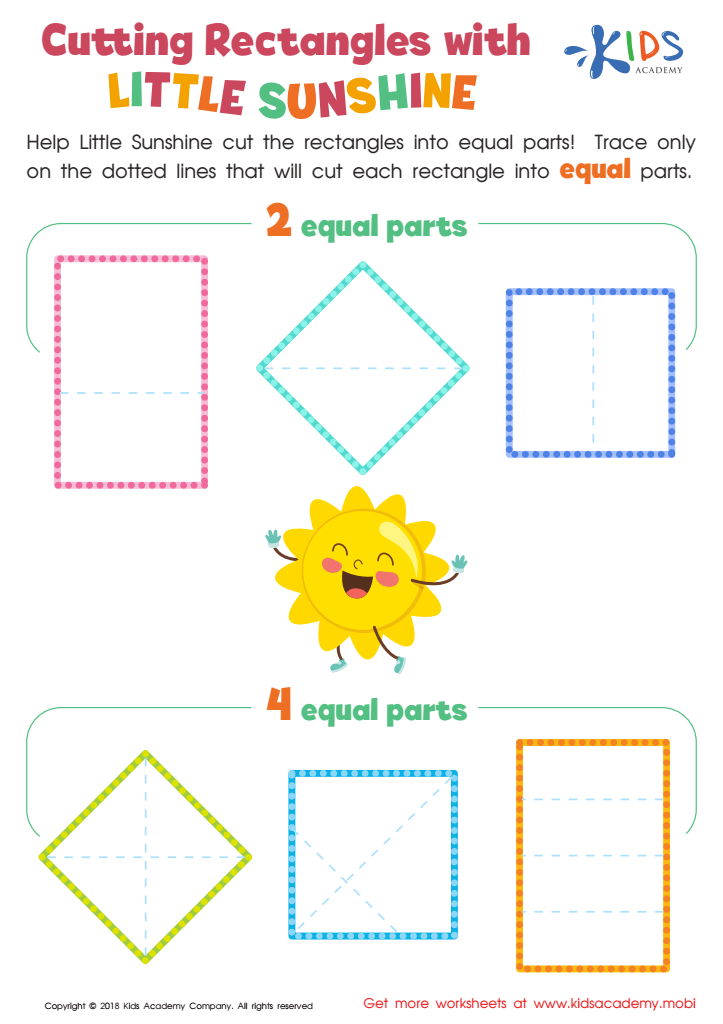
Cutting Rectangles with Little Sunshine Worksheet








Understanding basic geometry is crucial for children aged 7-8, as it lays the foundation for their future mathematical and problem-solving skills. At this developmental stage, children begin to explore and recognize shapes, sizes, and spatial relationships, which not only enriches their mathematical vocabulary but also nourishes their critical thinking abilities.
Geometry helps young learners make connections between mathematical concepts and real-world scenarios. By identifying and classifying shapes, children develop observational skills and learn to categorize their environment, enhancing their spatial awareness. These skills can be invaluable as they progress in math and science courses, where geometric concepts often play a key role.
Furthermore, geometry fosters creativity. Children can engage in activities such as drawing, building with blocks, or crafting, which allows them to visualize and manipulate shapes, heavily promoting hands-on learning. Parents and teachers can nurture this curiosity and creativity by integrating geometry into daily activities.
In summary, fostering a solid foundation in basic geometry equips children with essential skills crucial for their academic journey and empowers them to navigate the world with confidence and curiosity. Engaging them in geometric concepts at this young age can thus significantly influence their overall cognitive development and lifelong learning.








