Mathematical reasoning Math Worksheets for Ages 7-8 - Page 3
51 filtered results
-
From - To
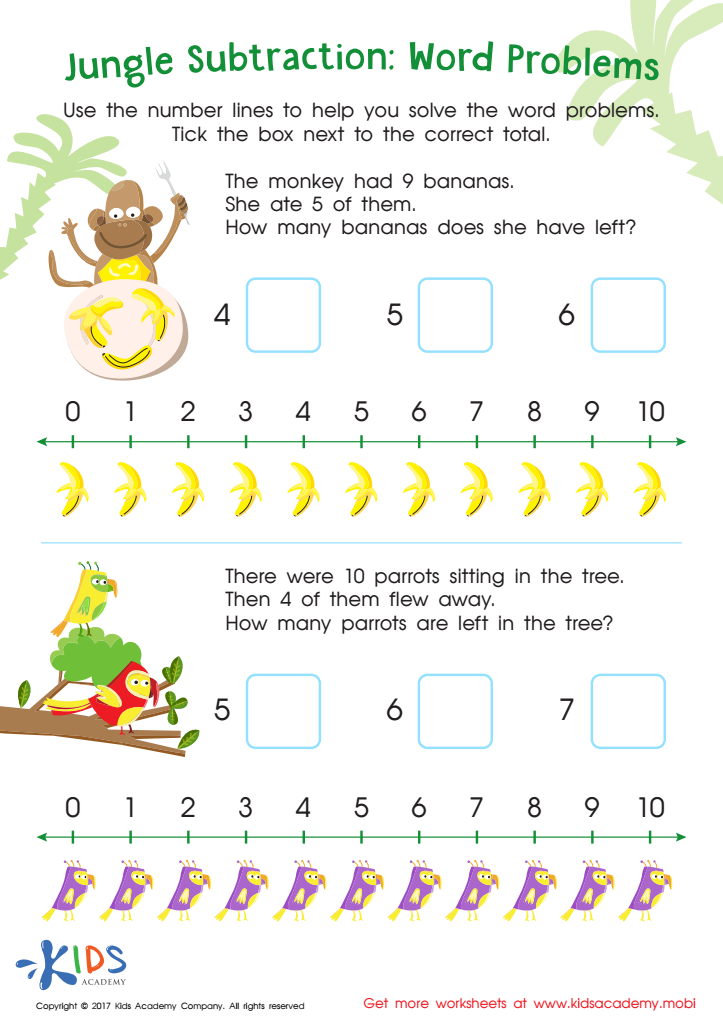
Jungle Subtraction Word Problems Substraction Worksheet
 Assign to My Students
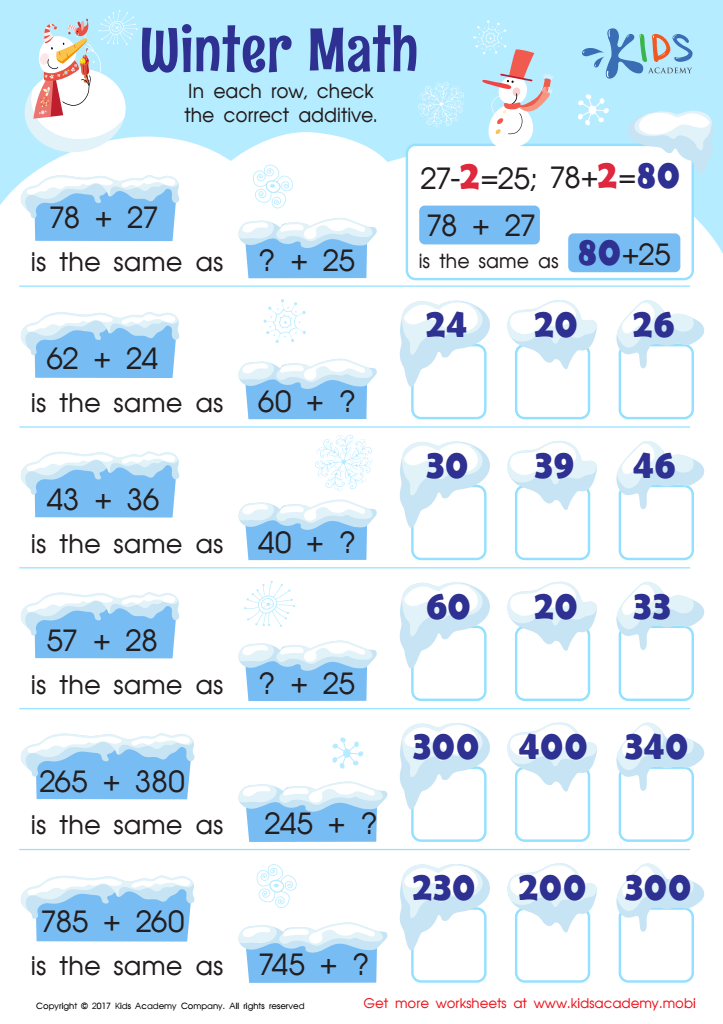
Free Addition Worksheet







Mathematical reasoning in children aged 7-8 is paramount for several reasons. Firstly, it lays the foundation for future learning. At this age, kids are transitioning from basic arithmetic to more complex concepts. Developing strong reasoning skills helps them understand the "why" behind mathematical operations, fostering a deeper comprehension that is essential for tackling advanced topics later.
Secondly, mathematical reasoning enhances problem-solving abilities. When children learn to approach problems methodically, break them into manageable parts, and think logically, they become adept at finding solutions not only in mathematics but across various life situations. This critical thinking skill extends to their daily choices and interactions.
Thirdly, it nurtures a positive attitude towards mathematics. Kids who understand the logic behind math operations are more likely to enjoy the subject, reducing math anxiety which can often hinder progress. They become more confident learners, eager to explore new challenges.
Additionally, fostering mathematical reasoning aligns with overall cognitive development. It sharpens memory, improves concentration, and enhances analytical skills. Thus, both parents and teachers play a crucial role in reinforcing these skills through interactive learning and engaging activities which makes math interesting and enjoyable for the child. By prioritizing mathematical reasoning, we equip children with the tools for academic success and informed decision-making in life.








