
Critical thinking skills Reading Worksheets for Ages 7-8
10 filtered results
Difficulty Level
Grade
Age
-
From - To
Subject
Activity
Standards
Enhance your child's critical thinking skills with our engaging reading worksheets designed for ages 7-8. Tailored specifically for young learners, these worksheets promote analytical thinking and comprehension through fun and interactive activities. Kids will explore various reading passages, answer thought-provoking questions, and develop problem-solving skills while enjoying the learning process. Our resources encourage curiosity and creativity, fostering a deeper understanding of stories and themes. Perfect for both classroom use and at-home learning, these worksheets provide an excellent foundation for lifelong learning. Equip your child with essential thinking skills and watch them thrive in their reading journey!
Favorites
With answer key
Interactive
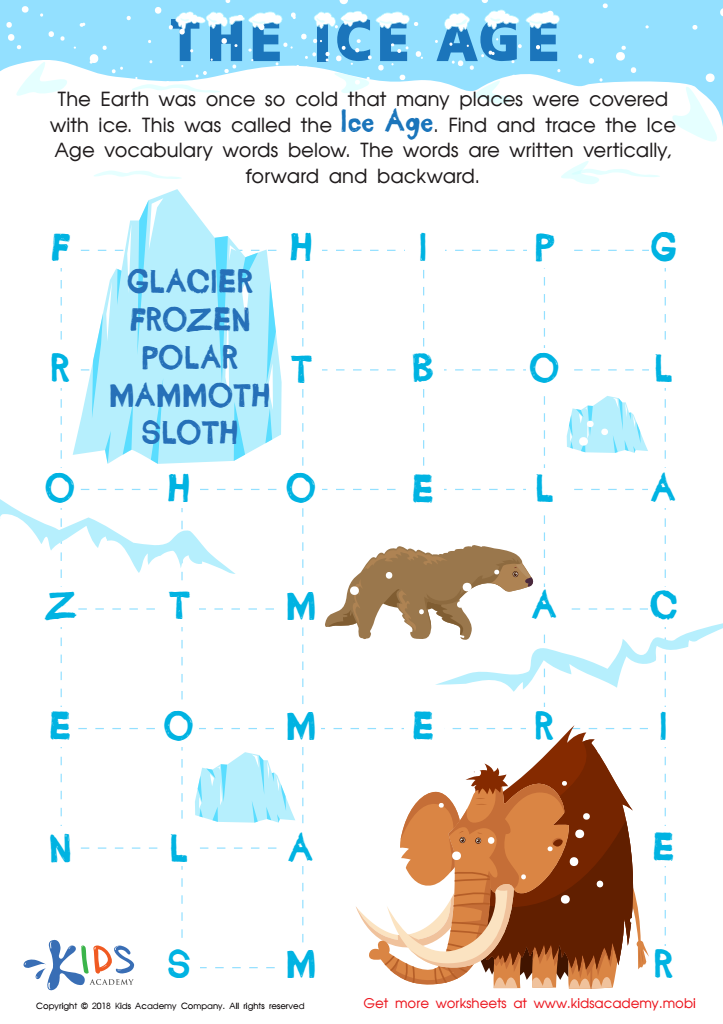
The Ice Age Worksheet
Let your child explore the Ice Age with this fun word search from Kids Academy! They can find words like glacier, frozen, polar, mammoth, and sloth. After finding each, discuss the meaning to help them build a better vocabulary and understanding of ancient history.
 Assign to My Students
The Ice Age Worksheet
Worksheet
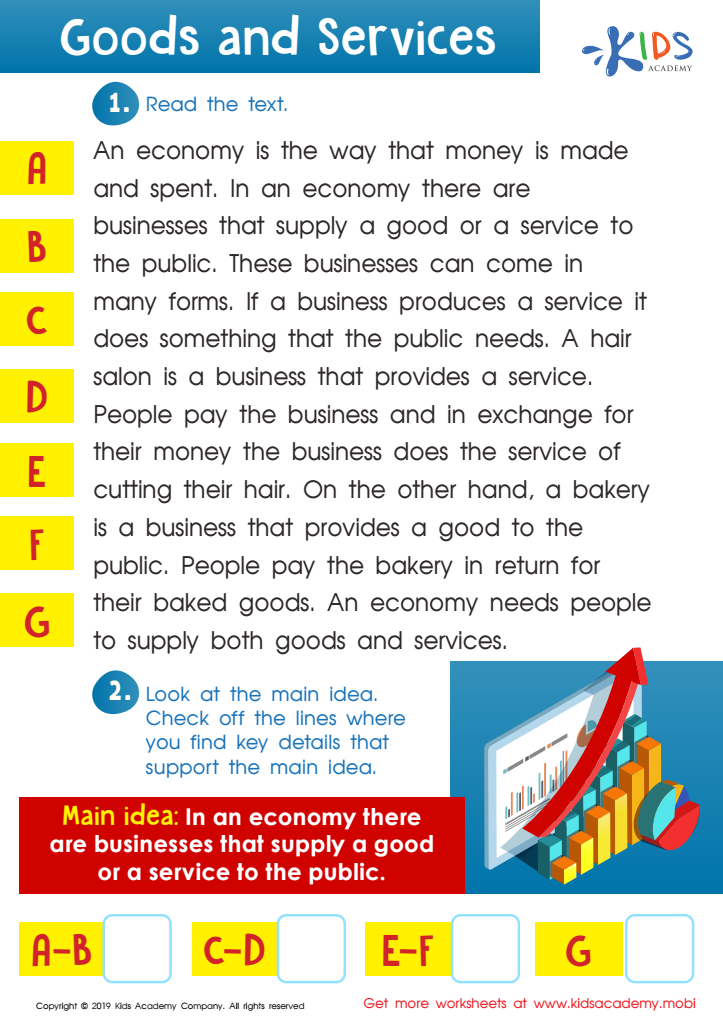
Goods and Services Worksheet
Teach your kids about the economy and businesses with this worksheet. Ask them if they know what goods and services are. After they complete the worksheet, they'll have a better understanding. Read the text to them and guide them step-by-step through the instructions. Help them learn!
Goods and Services Worksheet
Worksheet
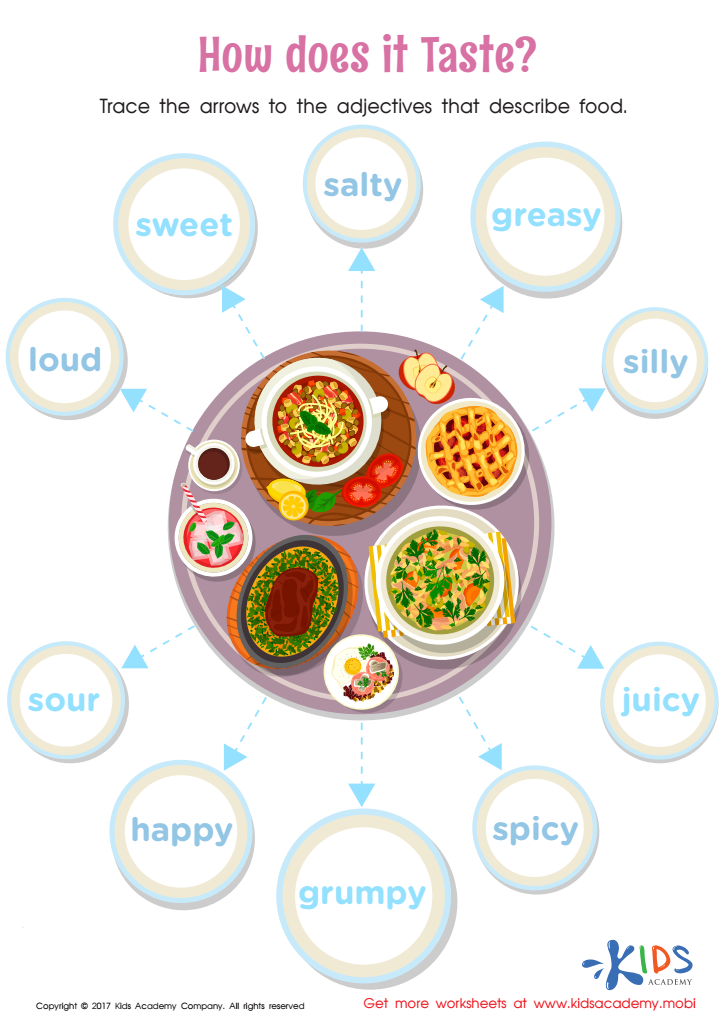
Food Adjectives Worksheet
Here’s a fun PDF worksheet to get your child’s taste buds tingling and help build descriptive language skills!
Food Adjectives Worksheet
Worksheet
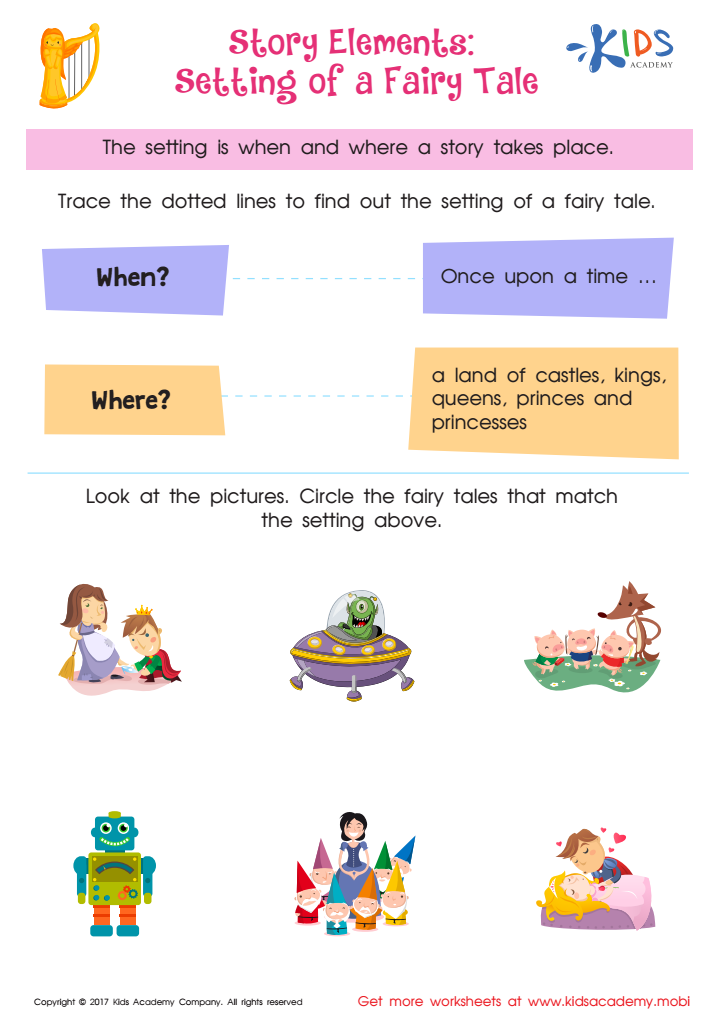
Story Elements: Setting of a Fairy Tale Printable
Help your child learn to analyze stories starting with setting. Use Story Elements worksheet to break down setting into two parts. This will help your child recognize setting quickly and understand its importance in the plot.
Story Elements: Setting of a Fairy Tale Printable
Worksheet
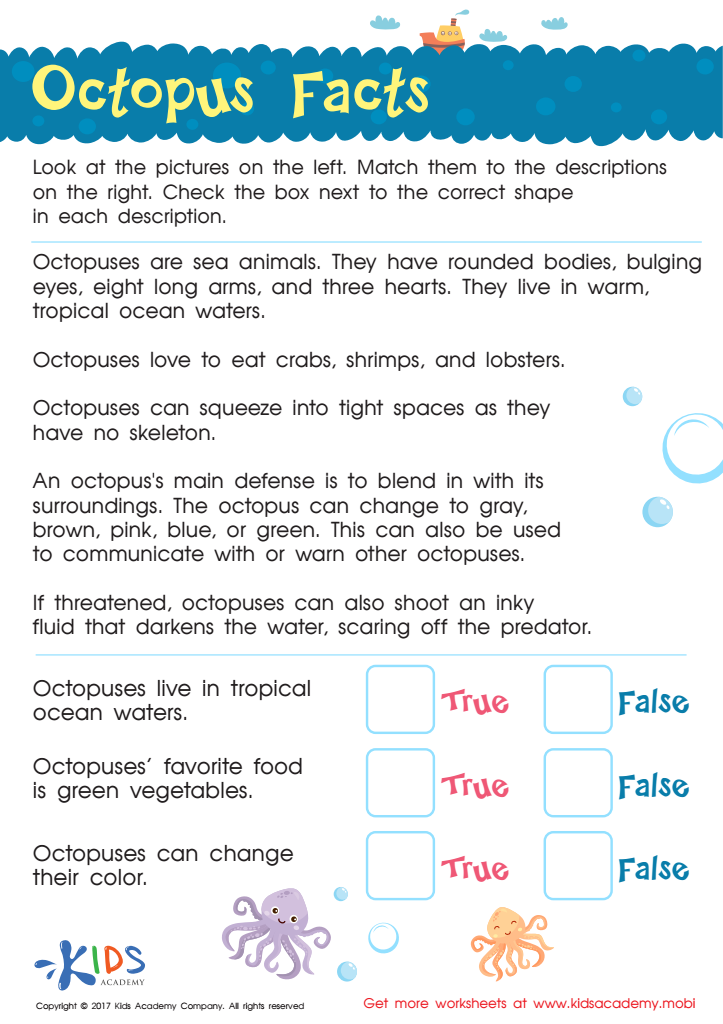
Octopus Facts Worksheet For Kids
Let your child dive into the world of octopuses with this fun worksheet. It offers invaluable practice in reading non-fiction texts, while they learn interesting facts about these strange sea creatures. It's a great way to help them hone their skills in reading comprehension.
Octopus Facts Worksheet For Kids
Worksheet
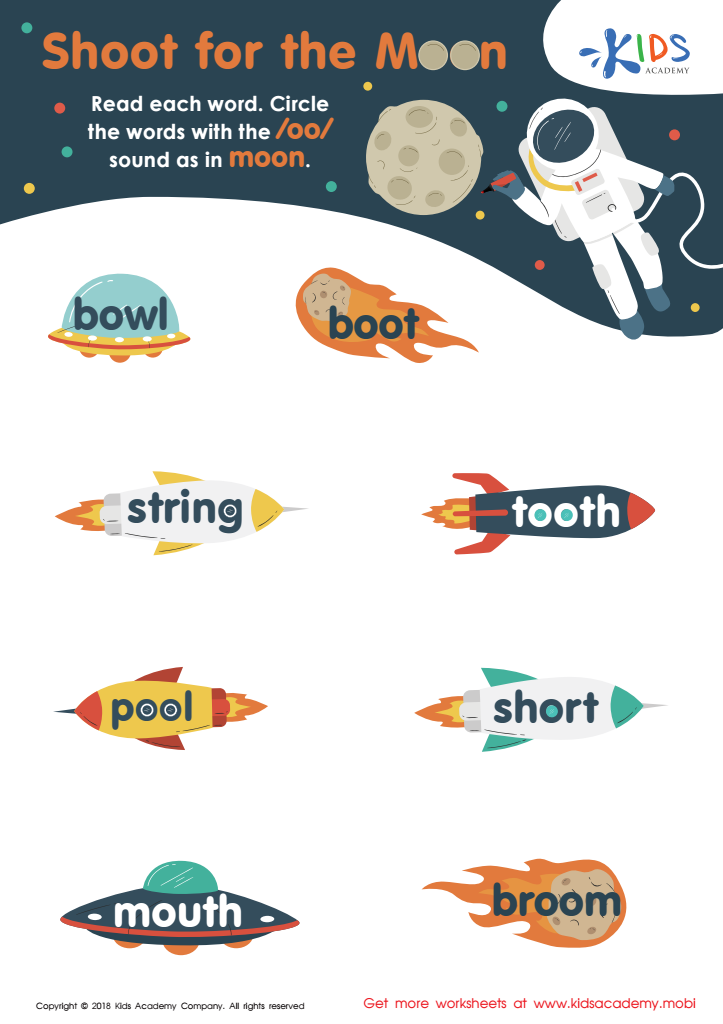
Reading: Shoot for the Moon Worksheet
Ask your kids if they can name any common words with the /oo/ sound. Read each word with them and help them pronounce it. Then, have them circle the words that have the /oo/ sound as in moon.
Reading: Shoot for the Moon Worksheet
Worksheet
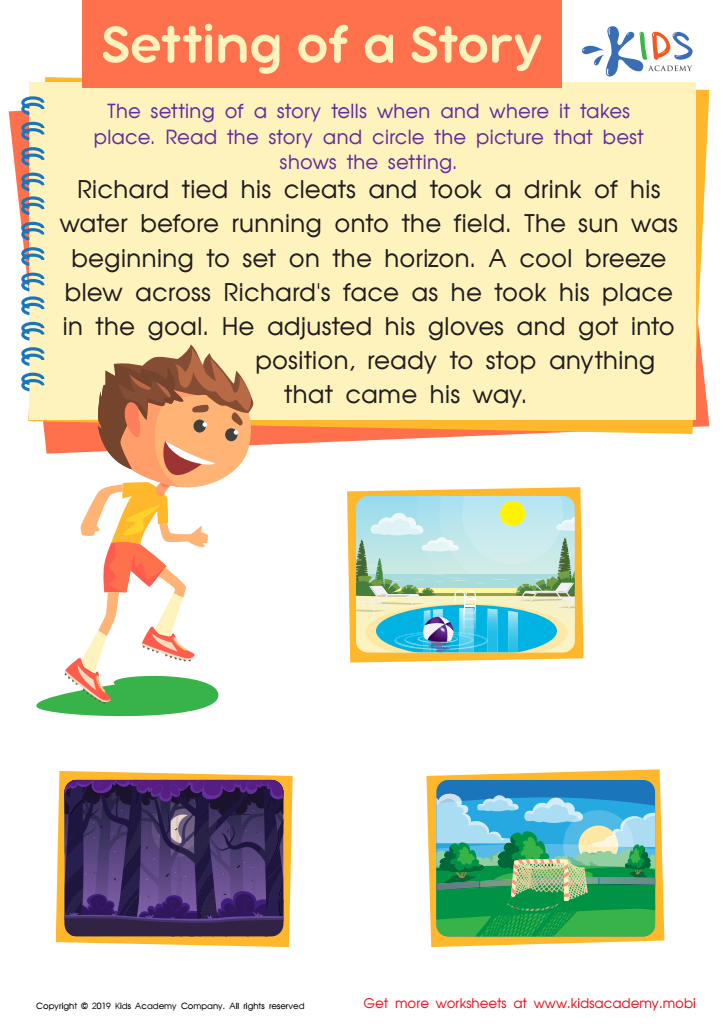
Setting of a Story Worksheet
You need characters, theme, POV, plot and setting to tell a good story. Ask your kids to explain them and use this worksheet with a story to teach them about setting. Read the story with your kids, then have them circle the picture that best shows the setting.
Setting of a Story Worksheet
Worksheet
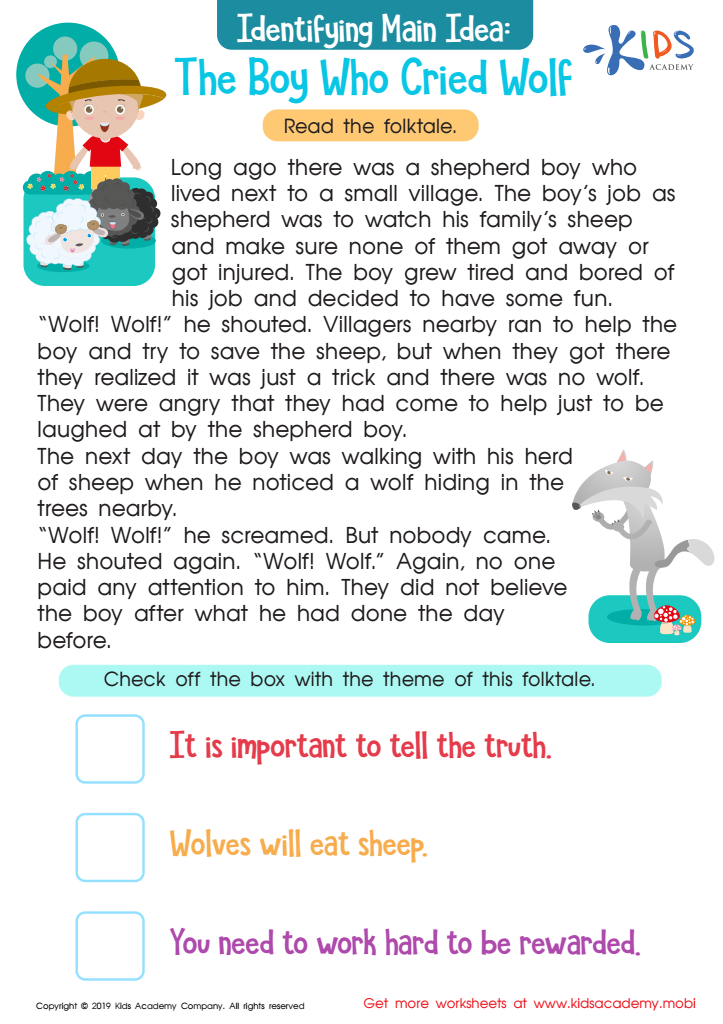
The Boy Who Cried Wolf Part 2 Worksheet
Kids love story time - no doubt they know their favorites! This worksheet tells a story with a theme or main idea. Read it carefully with your kids and ensure they understand every word. Then, help them answer the simple questions at the bottom of the page.
The Boy Who Cried Wolf Part 2 Worksheet
Worksheet
Join Kids Academy for Free
Who is primarily going to use this learning content?






Critical thinking skills in reading are essential for children aged 7-8, as this foundational stage sets the tone for their future learning. At this age, kids begin to move beyond simple comprehension, requiring them to analyze, evaluate, and synthesize information from texts.
Parents and teachers should prioritize these skills because they empower children to engage meaningfully with literature, fostering a love of reading that transcends mere decoding of words. Critical thinking enables young readers to question motives, discern fact from opinion, and recognize bias, all of which cultivates informed and responsible citizens.
Moreover, encouraging critical thinking in reading helps students develop problem-solving skills and creativity, both of which are crucial in academic settings and everyday life. By discussing stories, posing open-ended questions, and prompting discussions about characters’ choices and consequences, adults can nurture this vital skill set.
Investing in critical thinking now leads to long-term benefits; children will be better equipped to tackle complex texts in the future and approach learning challenges with a thoughtful mindset. Ultimately, fostering these skills lays the groundwork for lifelong learning, building confident individuals who can navigate an increasingly complex world.








