Categorizing objects Science Worksheets for Ages 7-8
3 filtered results
-
From - To
Explore our engaging "Categorizing Objects Science Worksheets" designed specifically for children ages 7-8. These worksheets empower young learners to identify, group, and classify various items based on their properties and characteristics. By interacting with fun illustrations and hands-on activities, students will enhance their critical thinking and observational skills. Ideal for home or classroom use, these resources promote understanding of classification in the natural world while making learning enjoyable. Watch your child strengthen their science skills and nurture a lifelong curiosity about the world around them with our thoughtfully crafted worksheets. Dive into the science of categorization today!
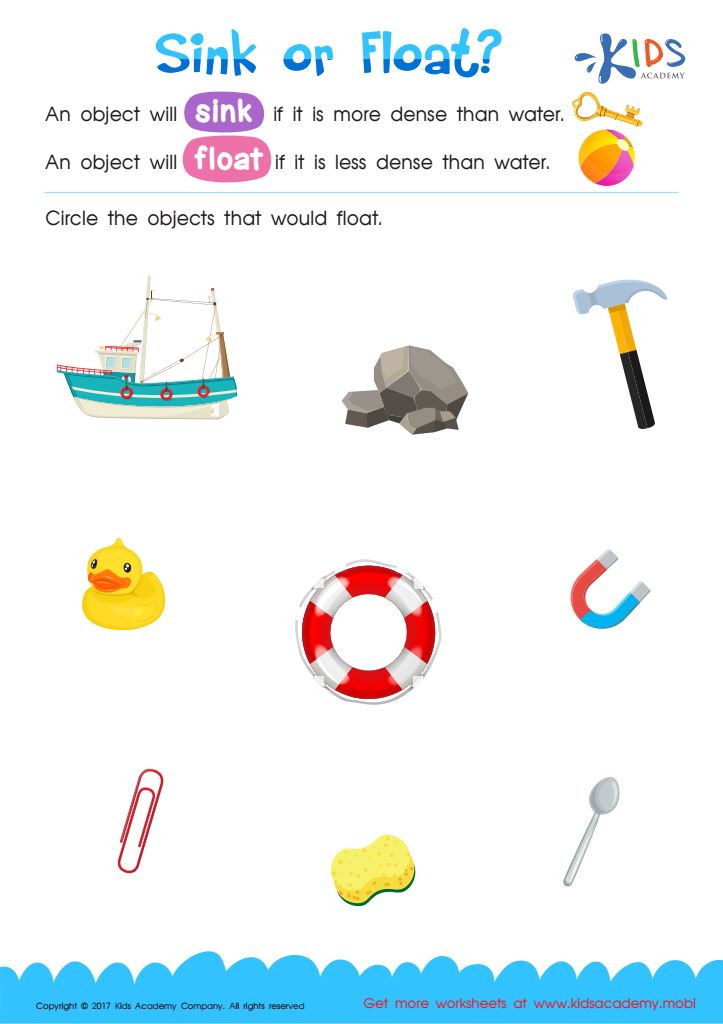
Sink or Float Printable
 Assign to My Students
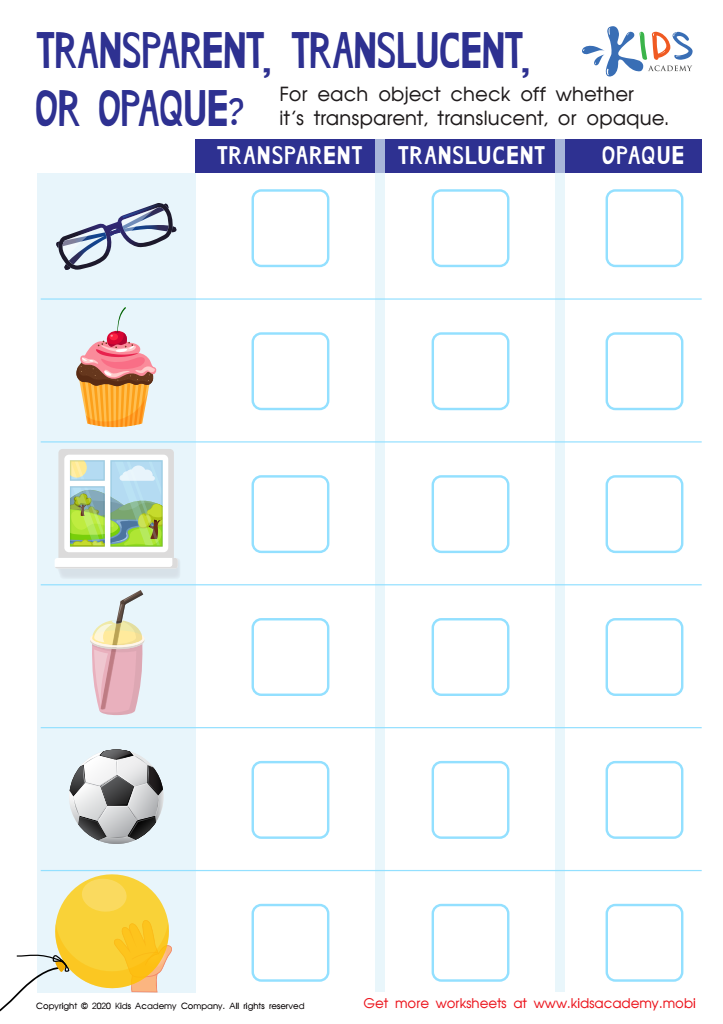
Transparent, Translucent, or Opaque Worksheet
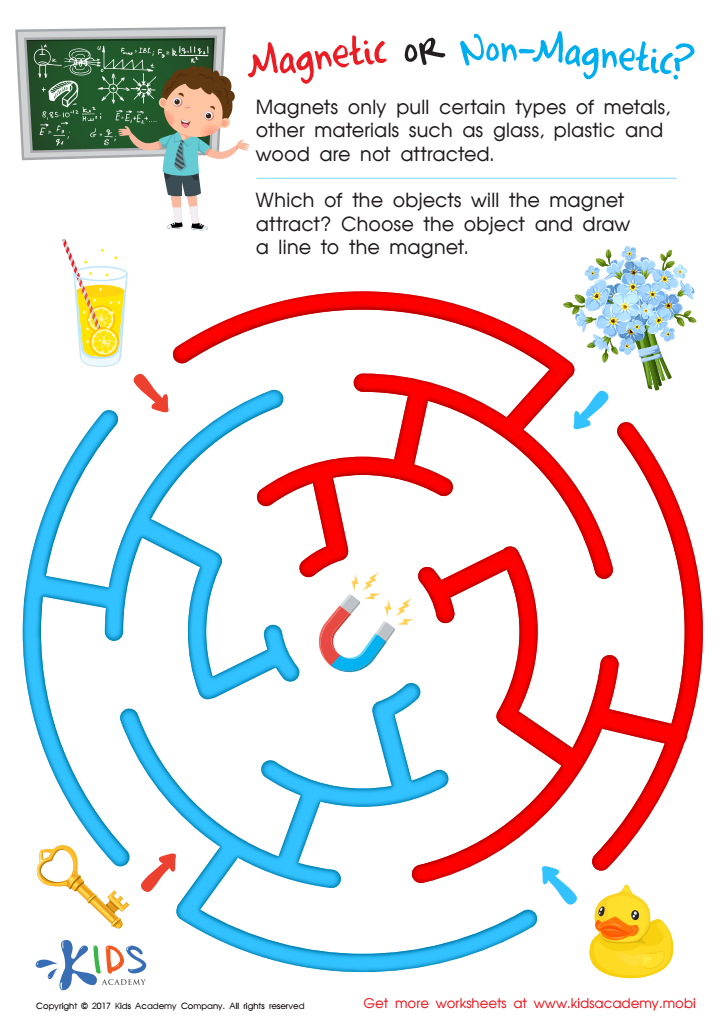
Magnetic or Non–Magnetic Worksheet



.jpg)




Categorizing objects in science is a fundamental skill that parents and teachers should prioritize for children ages 7-8. At this stage of development, children are naturally curious and eager to explore the world around them. Engaging them in categorization activities helps refine their observation and analytical skills, laying the groundwork for critical thinking.
When kids categorize objects—be it by size, shape, color, or function—they learn to identify similarities and differences. This cognitive process enhances their understanding of concepts such as classification, which is essential in various scientific fields like biology and chemistry. Such skills also encourage systematic thinking, fostering a mindset that's valuable in problem-solving across all subjects.
Additionally, categorizing objects promotes language development. As children describe categories and discuss their reasons for sorting objects, their vocabulary expands and their communication skills improve. Furthermore, hands-on categorization activities can engage students, making learning more enjoyable and interactive.
Ultimately, encouraging categorization helps children make sense of the world, instilling confidence in their ability to observe, analyze, and communicate. This foundation not only enhances their academic performance but also nurtures a lifelong love of learning and discovery.







