
Science vocabulary expansion Science Worksheets for Ages 7-8
3 filtered results
Difficulty Level
Grade
Age
-
From - To
Subject
Activity
Standards
Unlock the wonders of science with our engaging Science Vocabulary Expansion Worksheets designed specifically for ages 7-8. These innovative resources help young learners enhance their scientific vocabulary through fun activities and interactive exercises. By focusing on essential terms and concepts, our worksheets foster a deeper understanding of the natural world. Each worksheet is tailored to challenge and stimulate young minds, ensuring they not only learn new words but also apply them in context. Perfect for classrooms or home learning, these science worksheets make vocabulary acquisition enjoyable while paving the way for future academic success in science and beyond. Explore today!
Favorites
With answer key
Interactive
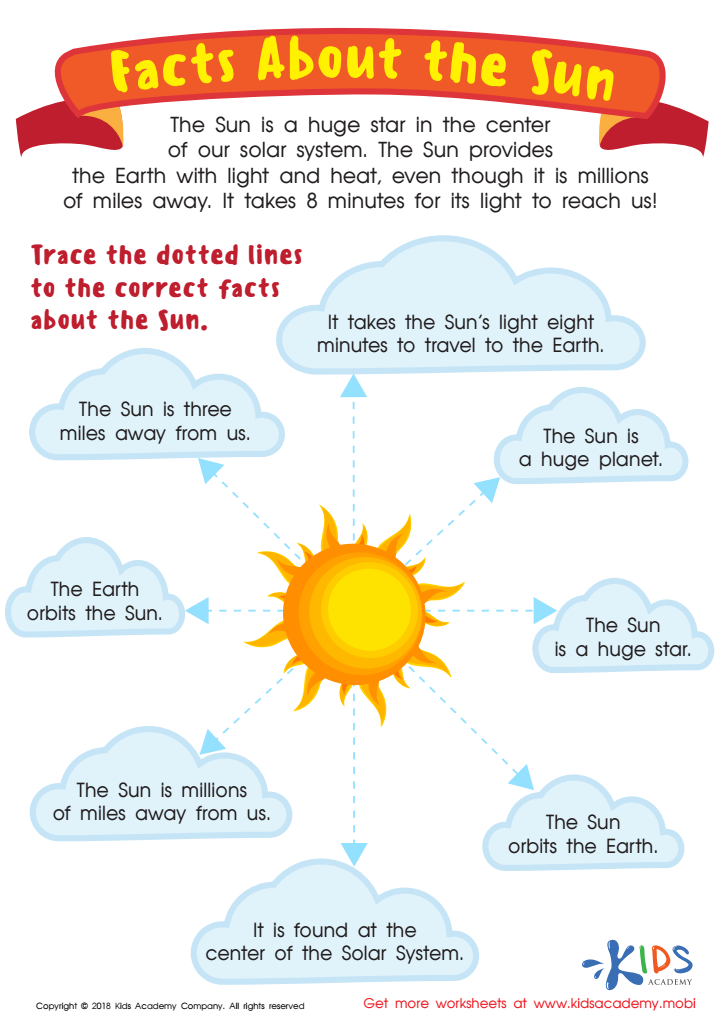
Facts About the Sun Worksheet
Long ago humans thought the Earth was the center of the solar system, but we now know it's really the sun! Use this science worksheet to review basic facts about the sun with your early learner. Have them recall prior knowledge about space before tackling the "true or false" questions. Trace from the sun in the center to the true facts in the clouds.
 Assign to My Students
Facts About the Sun Worksheet
Worksheet
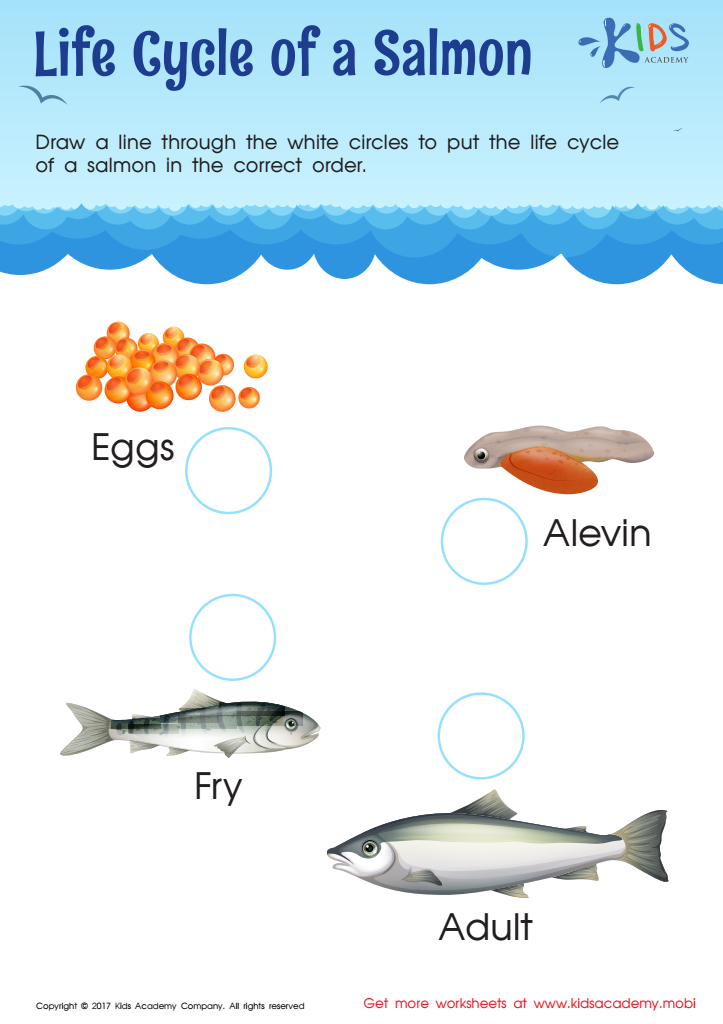
Cycle Of Salmon Worksheet
Explore the life cycle of a salmon with this grade 2 worksheet! Kids will learn by arranging the stages of the salmon's lifecycle in order. Science activities in this set cover a wide range of lifecycles in nature.
Cycle Of Salmon Worksheet
Worksheet
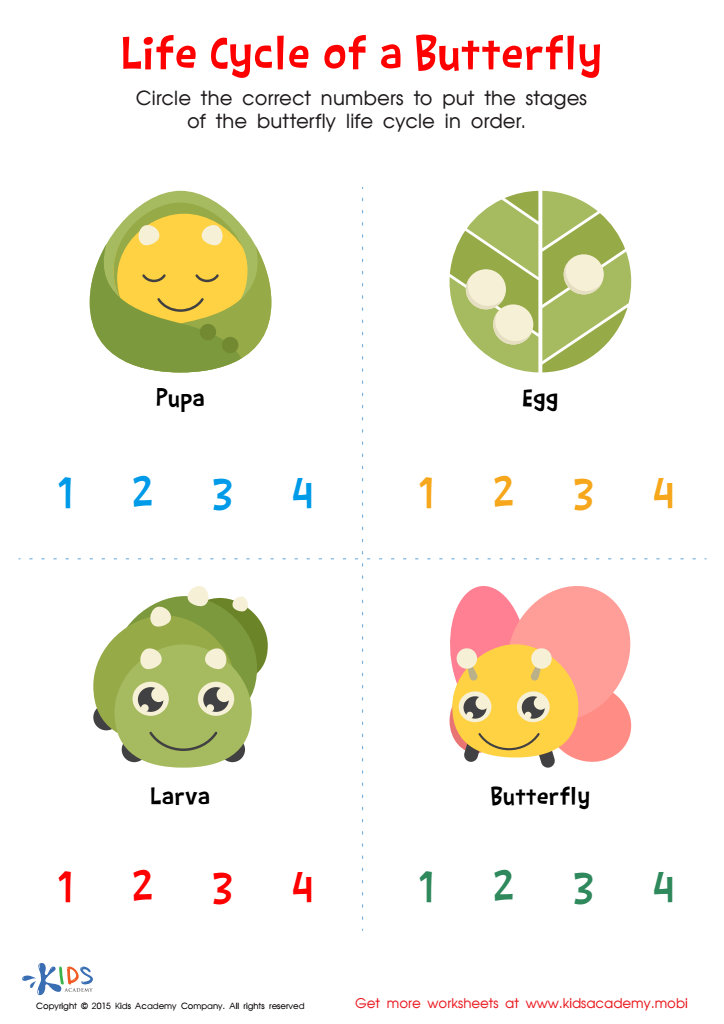
Life Cycle of Butterfly Printable
Kids and grownups alike marvel at the beauty of butterflies. With this printable worksheet, kids can review the life cycle of these favorite insects and strengthen cognitive and problem solving skills. From egg to butterfly, kids will order the stages and use the best strategy to solve it. Guide them as they work and they'll learn multiple skills.
Life Cycle of Butterfly Printable
Worksheet
Join Kids Academy for Free
Who is primarily going to use this learning content?







Expanding science vocabulary for children ages 7-8 is crucial for their academic and cognitive development. At this age, children are naturally curious about the world around them and are beginning to engage in more complex scientific concepts. By enhancing their science vocabulary, parents and teachers can help children articulate their observations, formulate questions, and express their understanding more effectively.
A robust science vocabulary facilitates better comprehension of scientific texts and discussions. Children who understand key terms—such as "ecosystem," "force," or "matter"—can grasp essential concepts that underpin various scientific phenomena. This foundational knowledge is vital as they progress to more advanced studies.
Moreover, a rich vocabulary boosts critical thinking and problem-solving skills. When students can communicate their ideas clearly, they become more confident in participating in experiments and class discussions. This interactive engagement fosters a love for science, encouraging lifelong learning and exploration.
Finally, an expanded vocabulary can bridge connections between science and everyday life, making science more relatable and engaging. By nurturing children’s language skills in science, parents and teachers ignite a passion for discovery, preparing them for future challenges in an increasingly scientific and technological world.







