Analytical skills Plants and Animals Worksheets for Ages 7-8
5 filtered results
-
From - To
Enhance your child's understanding of plants and animals with our engaging Analytical Skills Worksheets designed for ages 7-8. These thoughtfully crafted resources promote critical thinking as students explore the fascinating world of flora and fauna. Through fun activities, children will learn to analyze, compare, and identify relationships between different species and their environments. Our worksheets encourage curiosity, helping young learners develop essential analytical skills crucial for their academic journey. Perfect for classroom use or at-home learning, these interactive materials make science enjoyable while reinforcing important concepts. Unleash the scientist in your child today with our plants and animals worksheets!
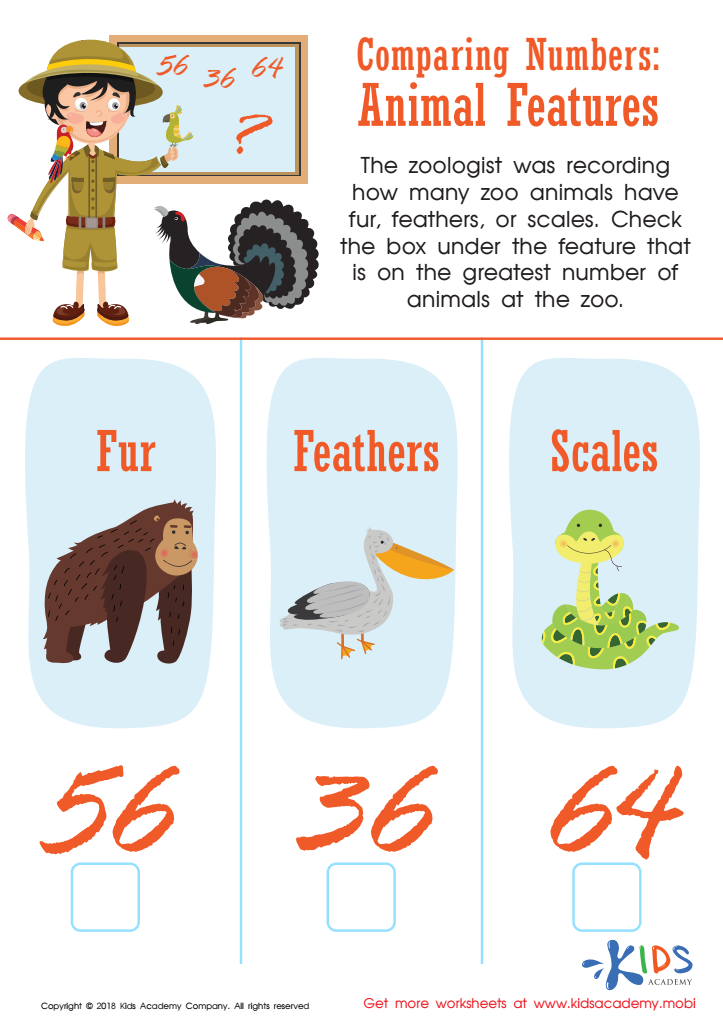
Animal Features Worksheet
 Assign to My Students











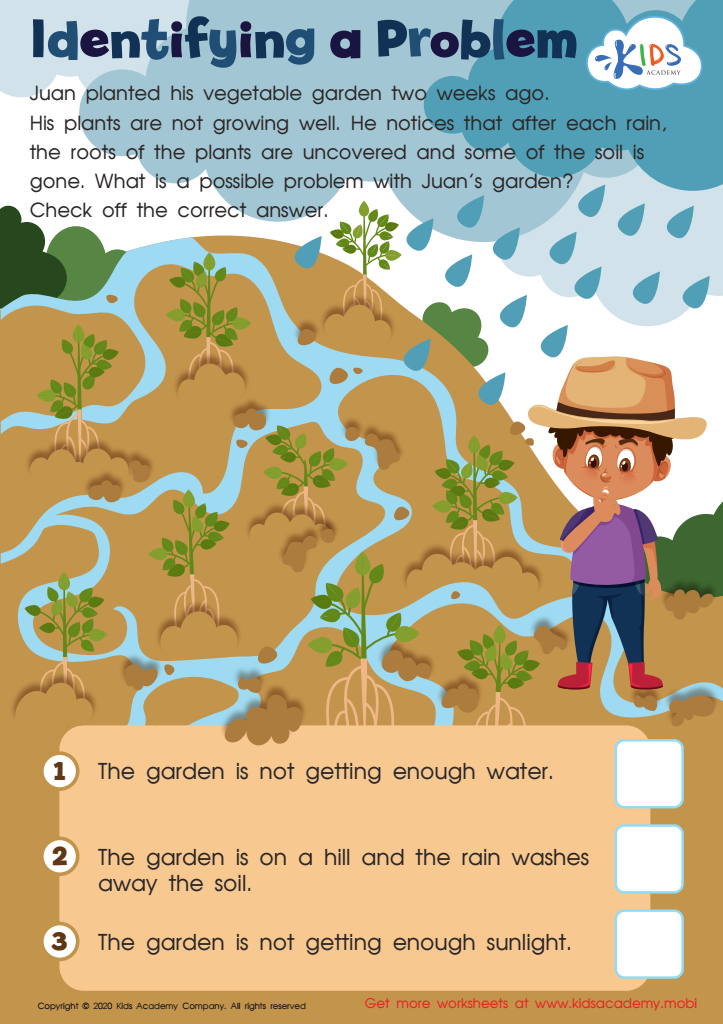
Identifying a Problem Worksheet
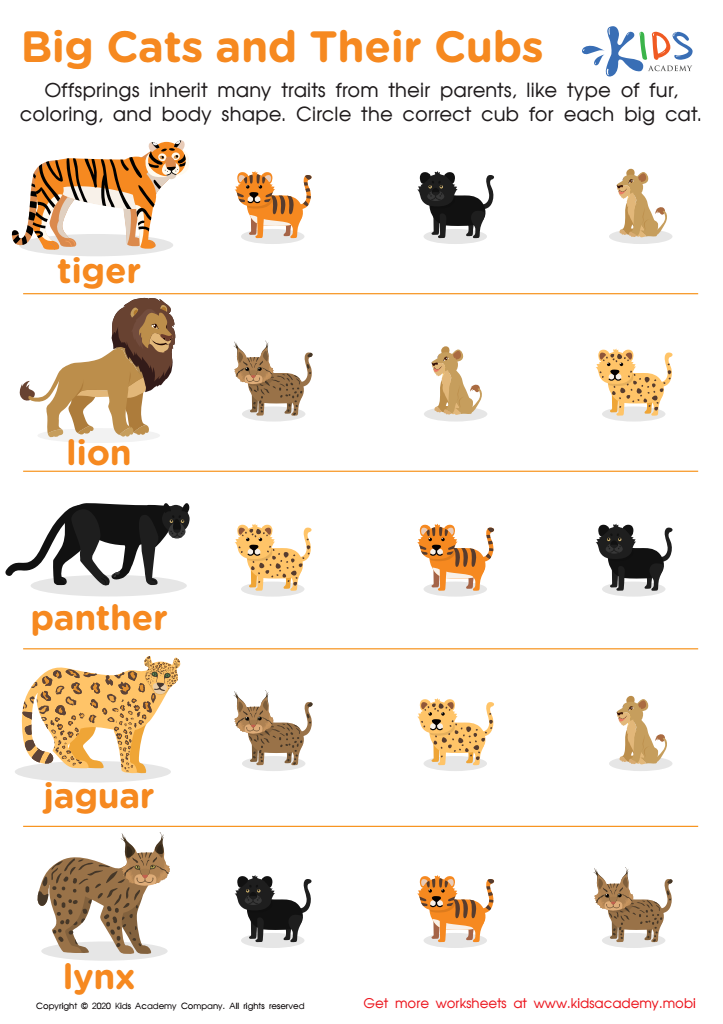
Big Cats and Their Cubs Worksheet
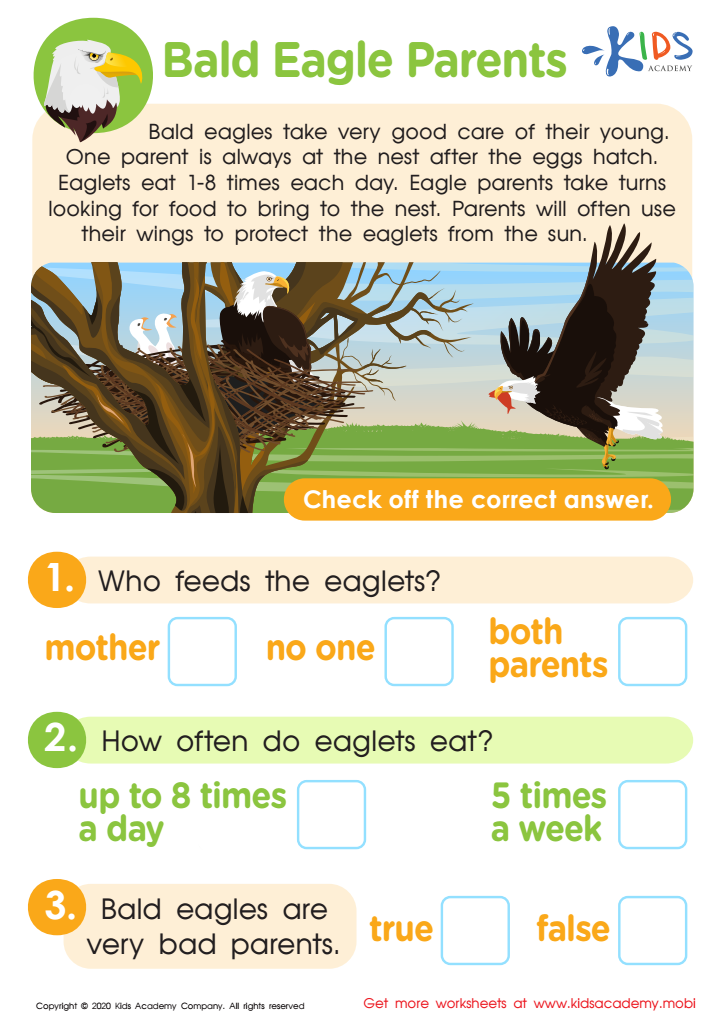
Bald Eagle Parents Worksheet
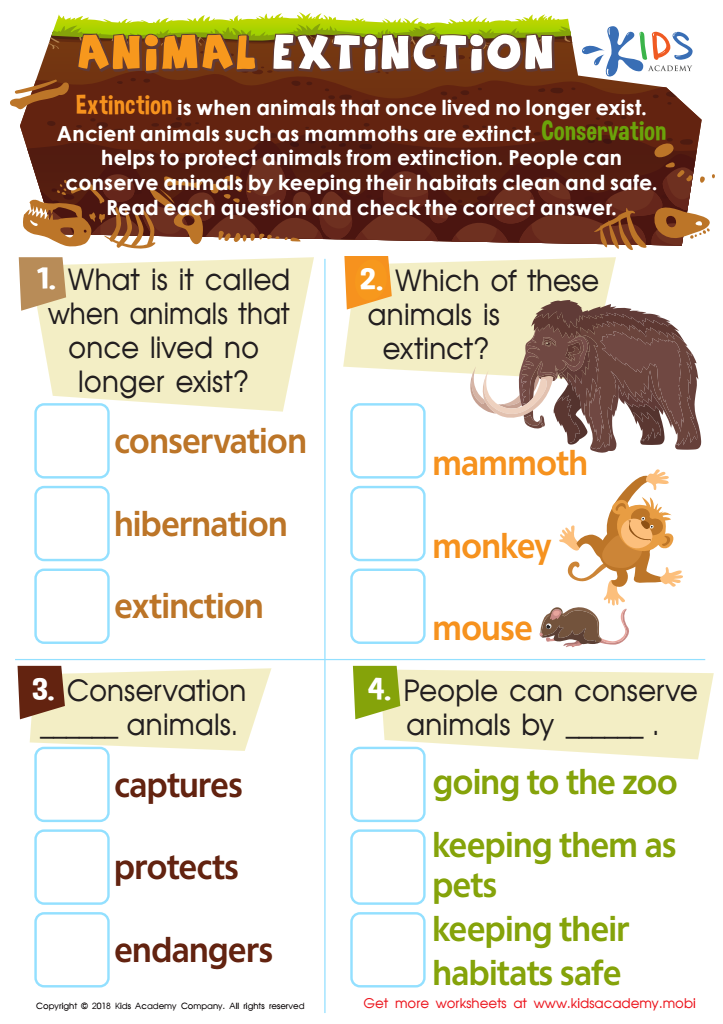
Animal Extinction Worksheet








Parents and teachers should prioritize fostering analytical skills in children, especially regarding the study of plants and animals for Ages 7-8, as these skills are fundamental in nurturing curious, competent learners. At this age, children are naturally inquisitive, and exploring the intricacies of living organisms stimulates critical thinking and problem-solving abilities.
Understanding plants and animals encourages children to ask questions, observe patterns, and draw conclusions based on their findings. For instance, when children analyze how plants grow or how animals adapt to their environments, they develop skills like forming hypotheses, testing theories, and synthesizing information. These analytical experiences enable children to make connections between concepts, promoting a deeper understanding of science and the world around them.
Additionally, building analytical skills at this age lays the groundwork for academic success in later grades, integrating scientific inquiry with math and literacy. Beyond academics, these skills help foster a sense of responsibility and environmental awareness as children learn the importance of biodiversity and ecosystems. By providing opportunities to engage with plants and animals, parents and teachers cultivate critical thinkers, equipping children with the tools they need to navigate and contribute meaningfully to an increasingly complex world.








