Vocabulary development Plants and Animals Worksheets for Ages 7-8
3 filtered results
-
From - To
Enhance your child's vocabulary with our "Plants and Animals Worksheets for Ages 7-8". Specifically crafted for budding learners, these engaging worksheets focus on enriching their understanding of plant and animal terminology. Through a variety of interactive exercises and fun activities, children will discover the fascinating world of living things. These worksheets are designed to support literacy skills by introducing and reinforcing scientific vocabulary in an accessible way. Ideal for classroom or home use, our printable worksheets serve as a superb resource for both educators and parents wanting to bolster their children's language development while exploring the wonders of nature.
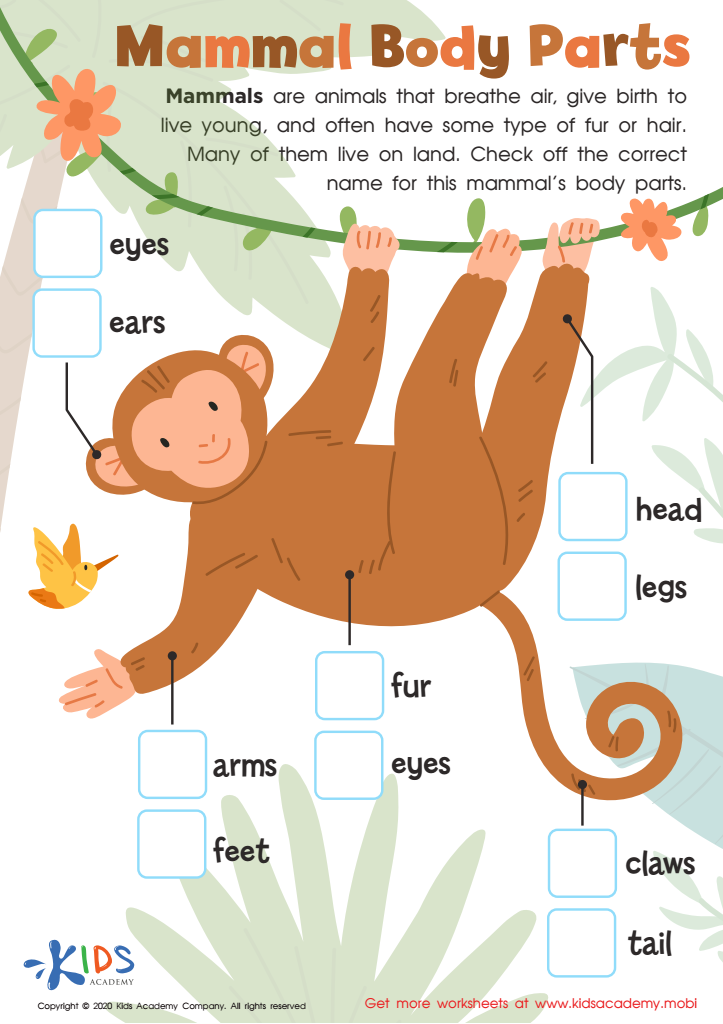
Mammal Body Parts Worksheet
 Assign to My Students

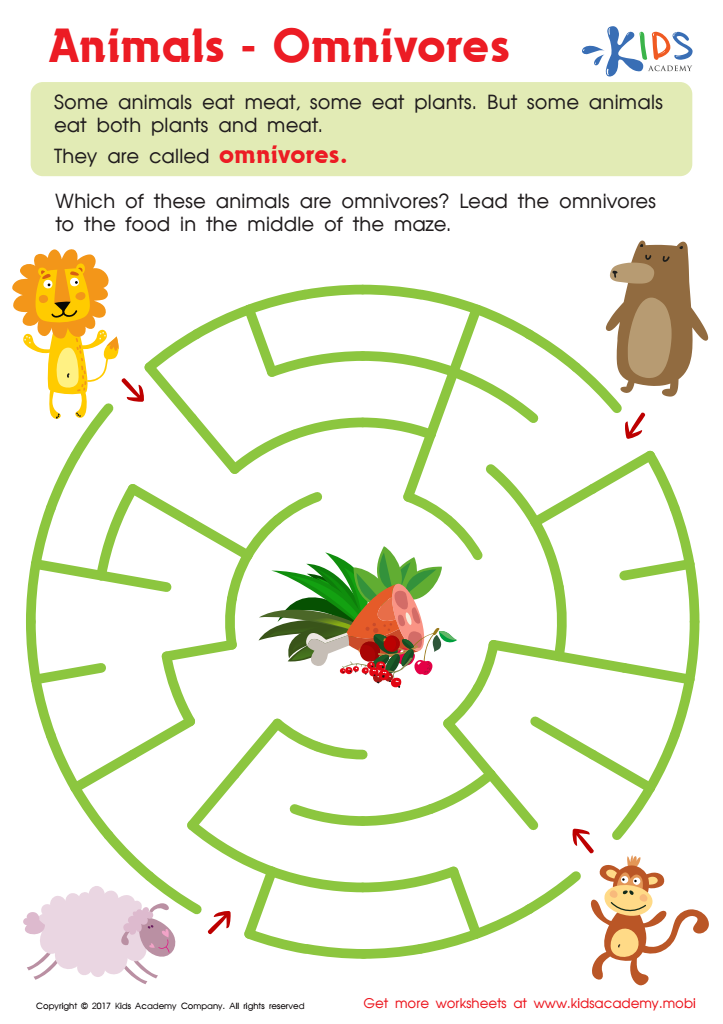
Omnivores Animals Worksheet
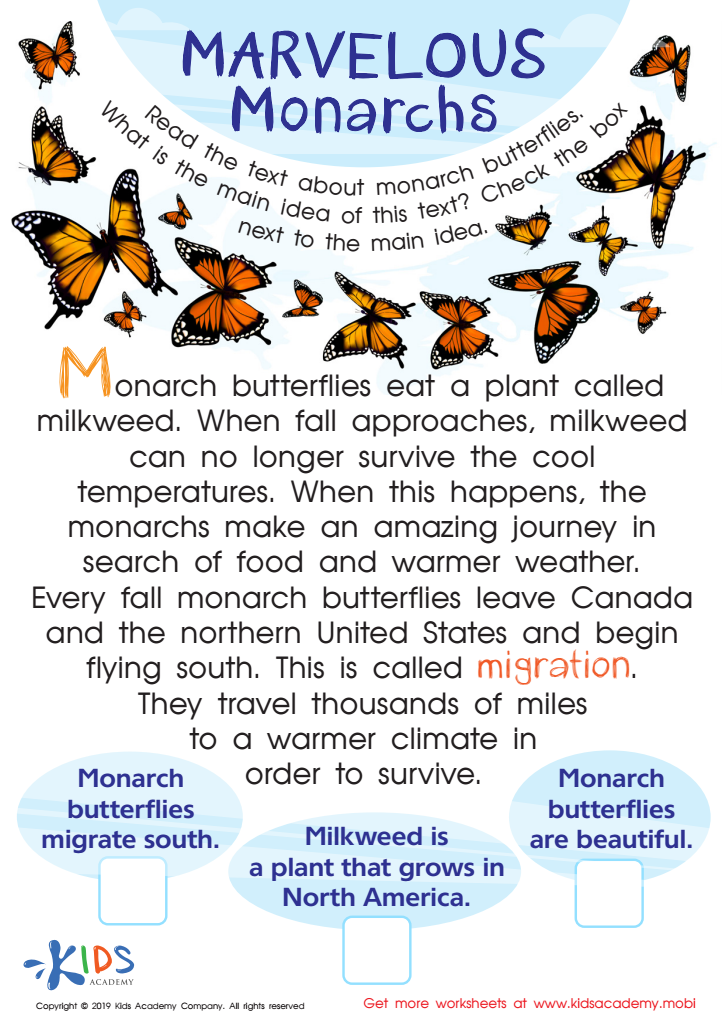
Marvelous Monarchs Worksheet







Vocabulary development in the context of plants and animals is vital for children ages 7-8 for several reasons. At this stage, their cognitive abilities are maturing, making it an ideal time to expand their lexicon. Knowing words related to plants and animals deepens their understanding of the natural world and helps them better grasp ecological relationships.
A robust vocabulary fosters curiosity and enhances communication skills. When children can accurately name different plants and animals, they are more likely to engage in meaningful conversations about their surroundings. This can spark a lifelong interest in science and environmental stewardship, as they become more connected to and invested in the natural world.
In addition, learning specific terms (like photosynthesis, habitat, predator, and herbivore) equips children with the language needed for future learning. These words serve as building blocks for more complex scientific concepts they will encounter later in their education. Improved vocabulary also strengthens reading comprehension and helps in various school subjects like science, geography, and even art.
Moreover, discussing plants and animals provides authentic learning experiences, keeps lessons varied and interesting, and often complements outdoor activities. Thus, focusing on vocabulary development in these areas supports holistic education and nurtures a well-rounded, knowledgeable individual.








