
Cursive writing practice Writing Worksheets for Ages 7-8
21 filtered results
Difficulty Level
Grade
Age
-
From - To
Subject
Activity
Standards
Discover our engaging Cursive Writing Practice Worksheets, specially designed for kids ages 7-8! These worksheets provide an interactive and fun way for young learners to enhance their cursive writing skills. Packed with various exercises, children can practice tracing, writing letters, and forming words through captivating activities. Our resources help boost fine motor skills and promote handwriting fluency, ensuring students gain confidence in their writing abilities. Perfect for classroom use or homeschooling, these worksheets make learning cursive writing enjoyable and effective. Let your child embark on a journey to master cursive handwriting with our comprehensive and visually appealing materials today!
Favorites
With answer key
Interactive
Cursive Numbers: 2 Worksheet
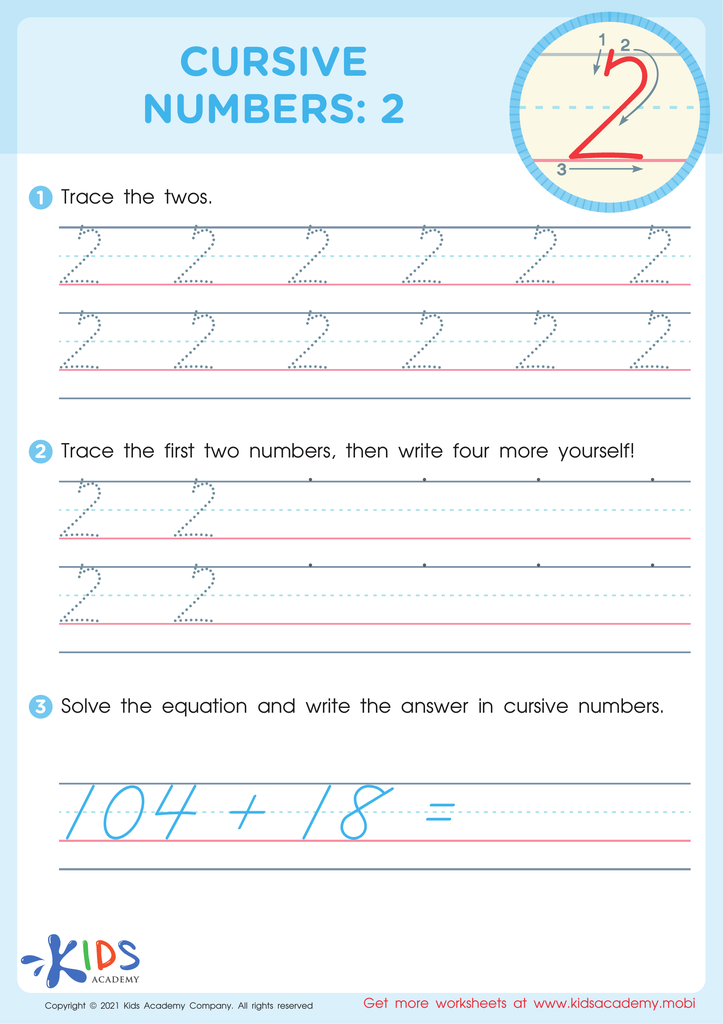
Mastering maths goes beyond basic counting and arithmetic. These tracing worksheets will help your kids practice their cursive numbers. The dotted lines are easy to follow and your kids can trace the number 2 over and over. Soon they'll be able to write it on their own. At the end of the sheet, there's a simple math equation - have your child write the answer in cursive.
Cursive Numbers: 2 Worksheet
Worksheet
Cursive Numbers: 6 Worksheet
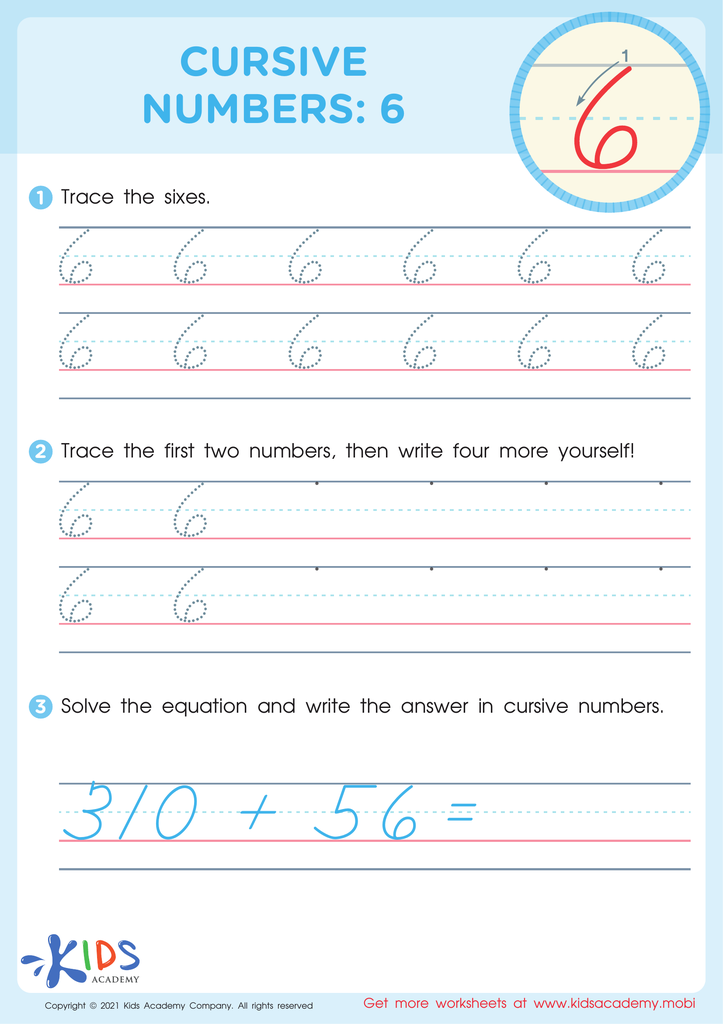
Help your children practice counting and writing numbers with cursive number worksheets. They'll learn to write the number six with dotted lines to guide them and space to practice writing it on their own. They can also solve a simple equation and write the answer in cursive. Let them practice as much as they need - it'll help them succeed.
Cursive Numbers: 6 Worksheet
Worksheet
Cursive Numbers: 0 Worksheet
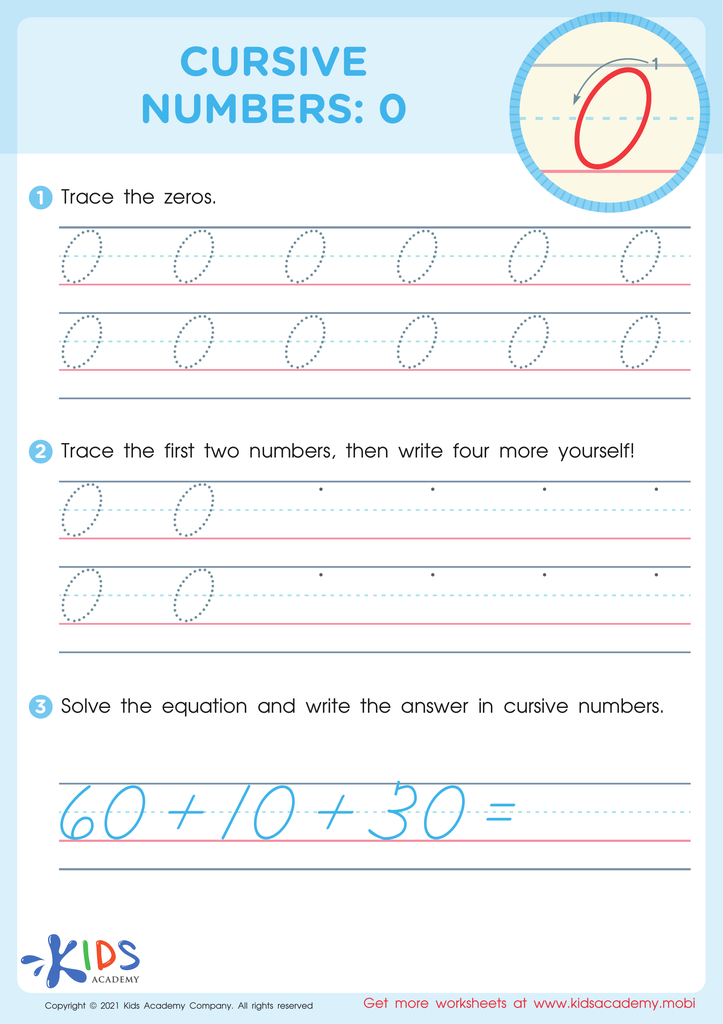
Practice makes perfect when teaching your kid handwriting. Spend time teaching them the alphabet and cursive numbers. These math worksheets have traceable numbers for them to practice with, then they can write 0 on their own. There's also a bonus math problem to solve and write the answer in cursive.
Cursive Numbers: 0 Worksheet
Worksheet
Cursive Numbers: 9 Worksheet
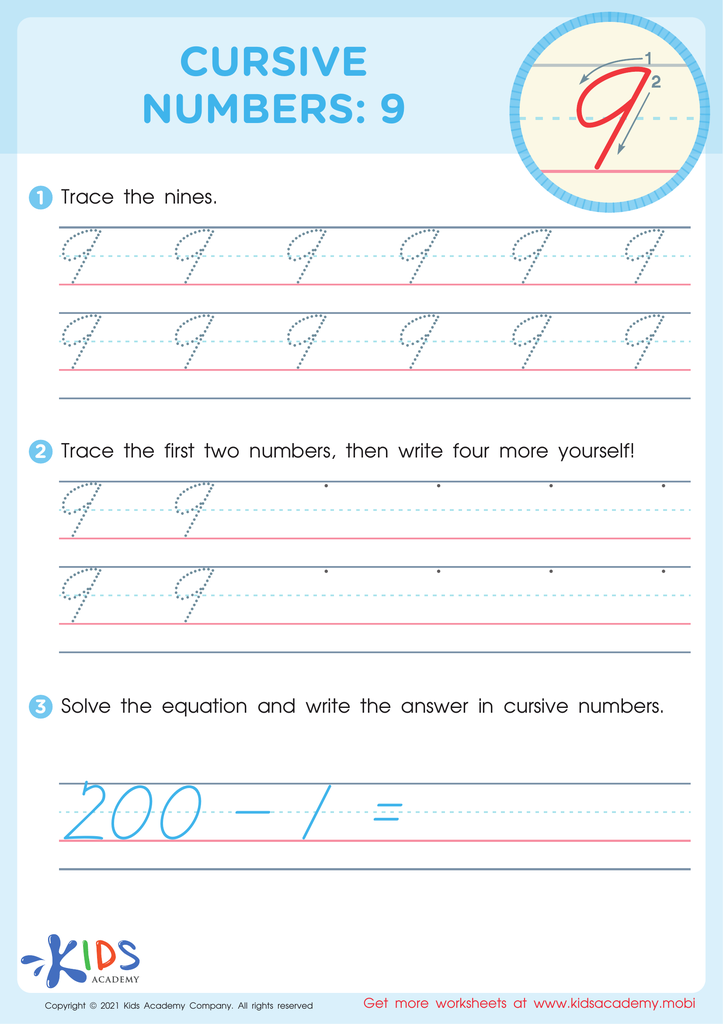
Identifying and writing numbers is key to math success. These worksheets help kids learn to trace the number 9 and build confidence. As they practice, they'll soon be able to write it on their own. Plus, they get to apply their learning and solve a simple equation at the bottom of the page. Writing the answer in cursive is a great way to help them remember!
Cursive Numbers: 9 Worksheet
Worksheet
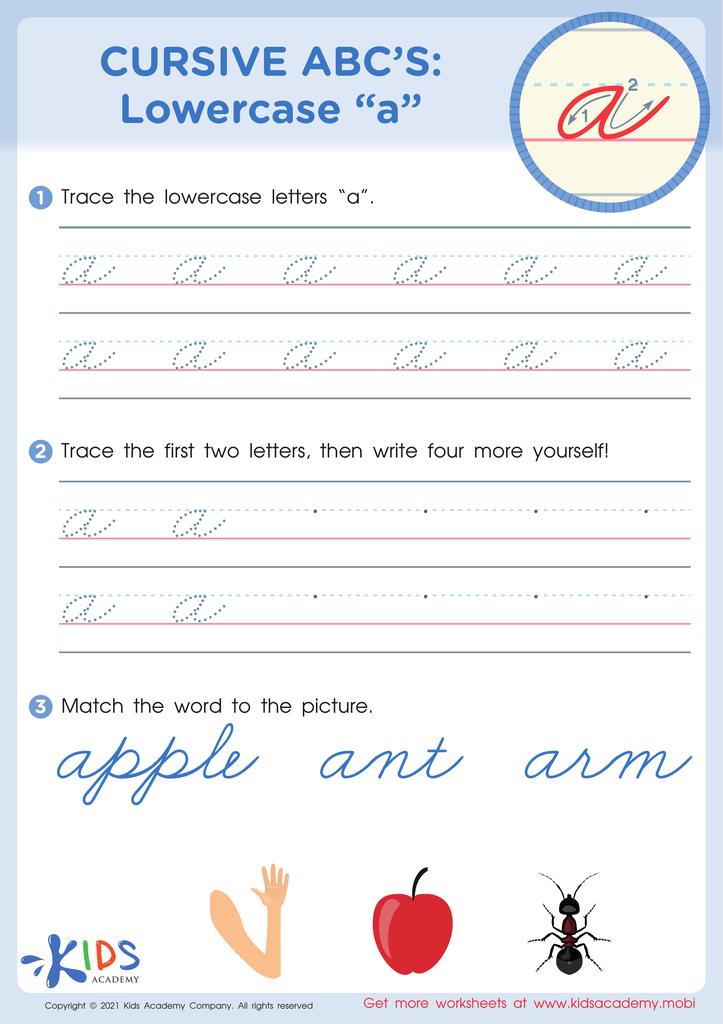
Cursive ABCs: Lowercase a
Help your children learn to write cursive letters with these free tracing sheets. They'll practice their handwriting, develop printing skills and build vocabulary. By tracing the lowercase letter “a” multiple times, they'll learn how it's formed and be ready to write it on their own. The colorful pictures at the bottom of each page also offer new words beginning with the letter 'a'.
Cursive ABCs: Lowercase a
Worksheet
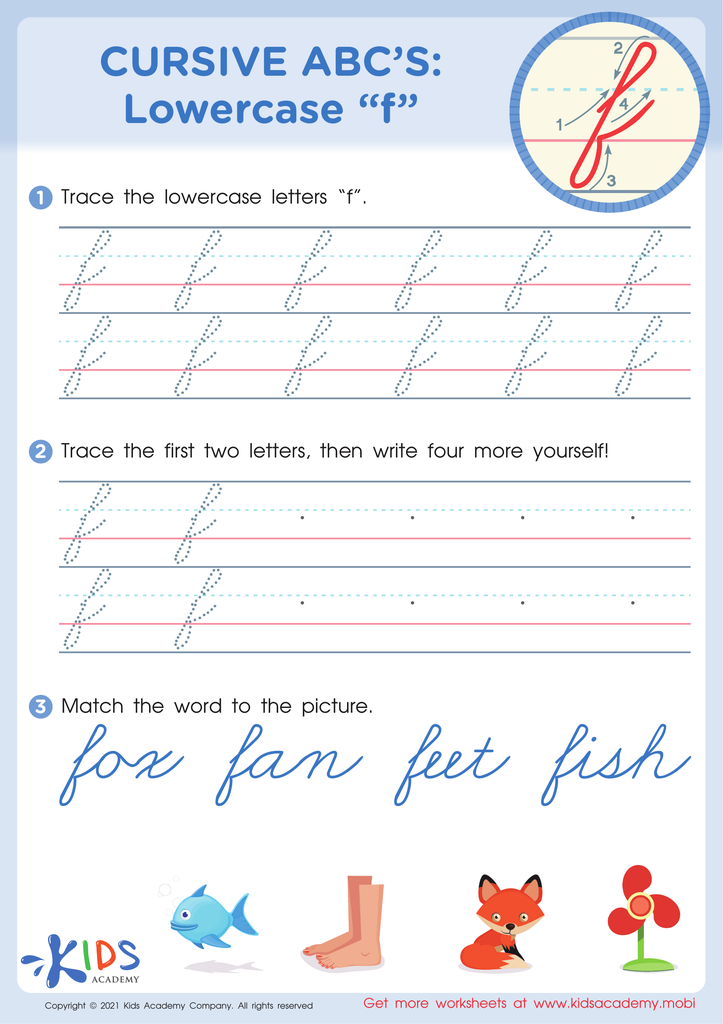
Cursive ABCs: Lowercase f
This worksheet helps your child improve letter writing and recognition. Each letter has its own form, so teaching is important. Practicing the lowercase letter 'f' helps kids memorize its shape and recognize it in words. With practice, they'll be able to write the letter correctly and identify it quickly.
Cursive ABCs: Lowercase f
Worksheet
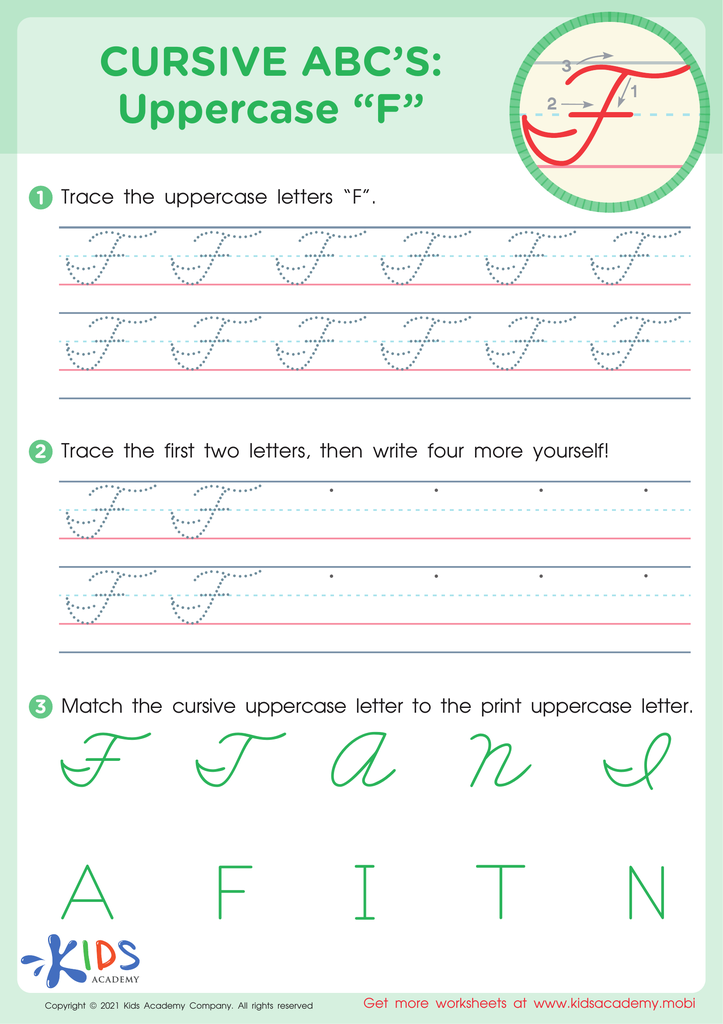
Cursive ABCs: Uppercase F
Help your kids trace the letters in these worksheets and watch their confidence grow as they learn to write cursive uppercase and lowercase letters. Ask them to identify the letters in words and give examples of words that start with an uppercase 'F', then have them write some letters on their own and assess their progress.
Cursive ABCs: Uppercase F
Worksheet
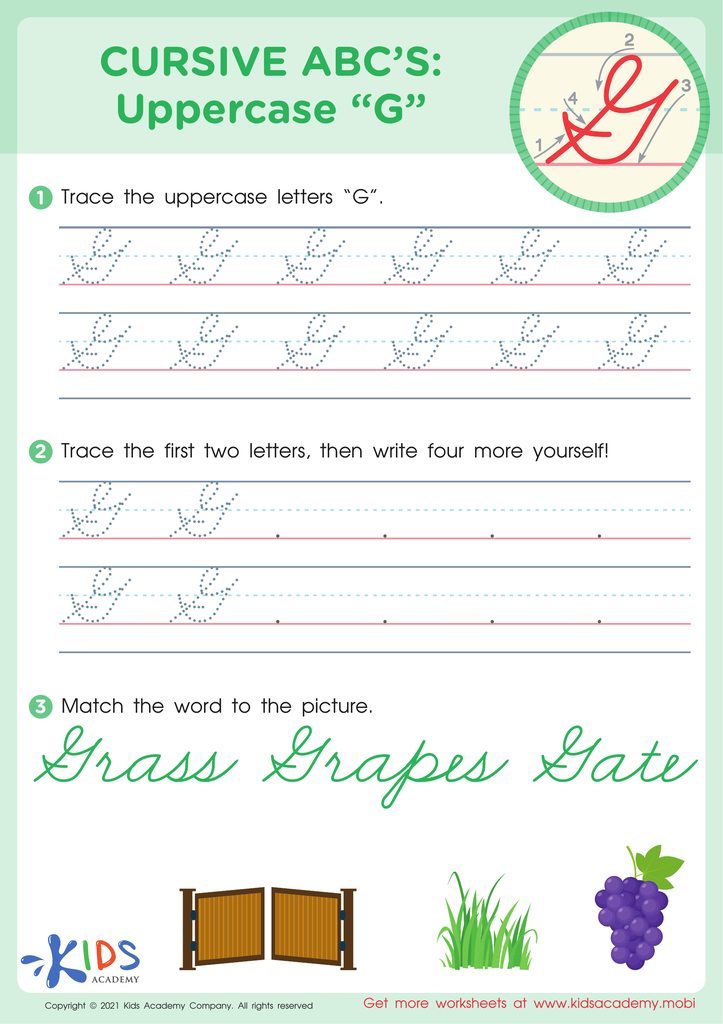
Cursive ABCs: Uppercase G
Remind your kids of words beginning with 'G' like 'girl' and 'goat'. Ask them to give examples too. Use this tracing worksheet to help your kids practice writing the cursive uppercase 'G'. It'll help them perfect their motor skills and get better at cursive letters.
Cursive ABCs: Uppercase G
Worksheet
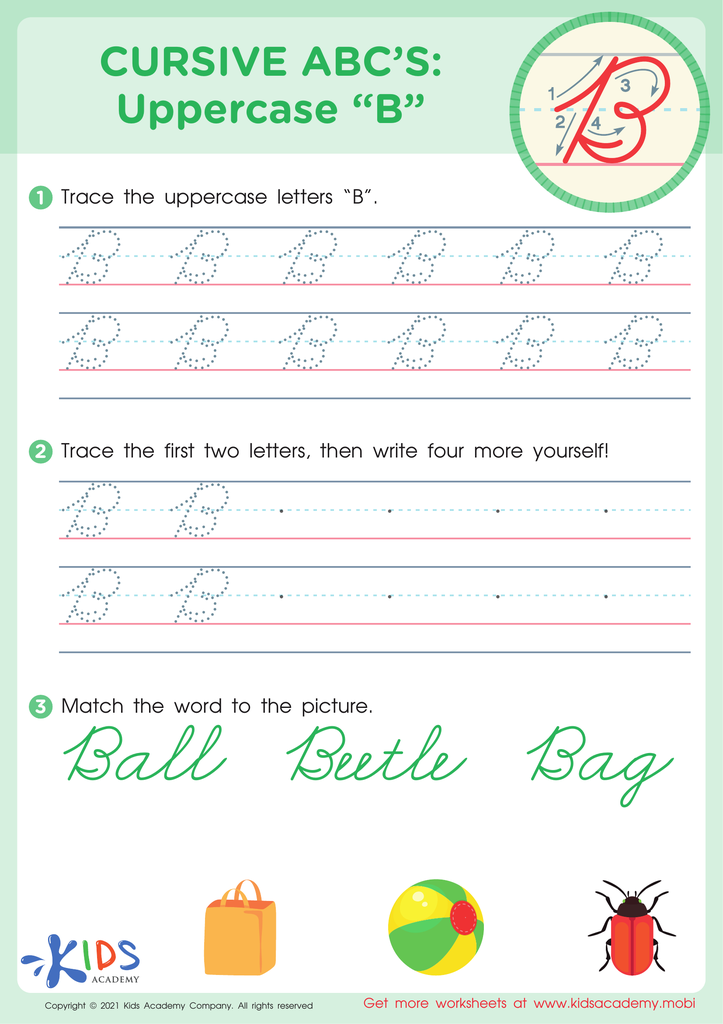
Cursive ABCs: Uppercase B
Help your kids learn the alphabet: have them identify, give examples and sound out letters, then use tracing worksheets to perfect cursive uppercase writing. Show them how to trace the letter ‘B’, then watch them write it on their own. This will give them the skills needed for further writing!
Cursive ABCs: Uppercase B
Worksheet
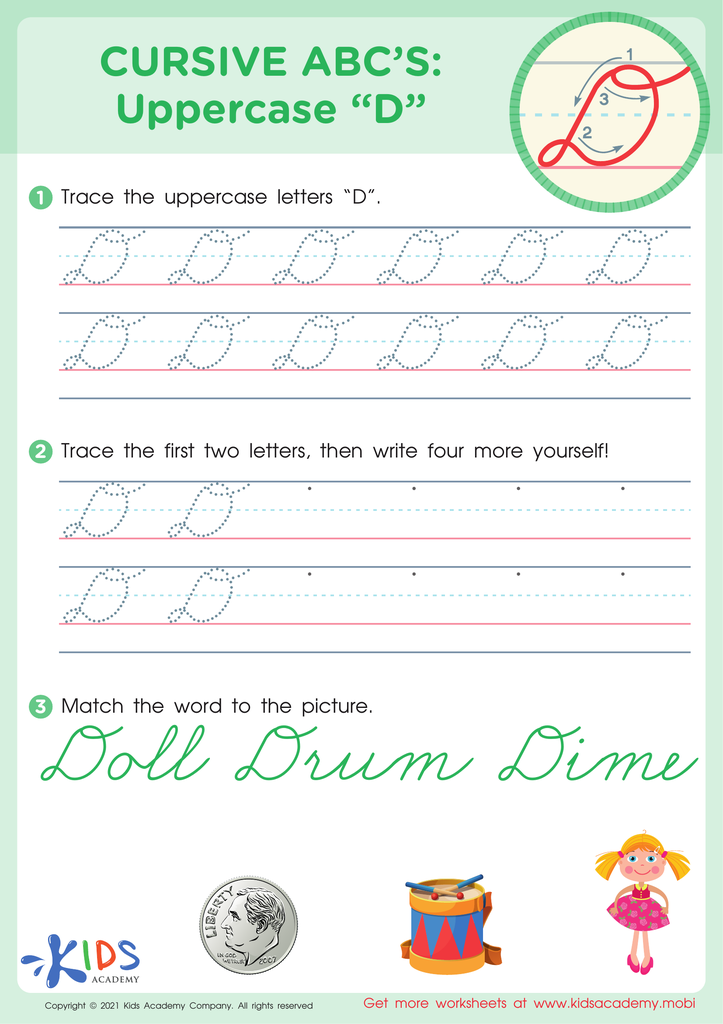
Cursive ABCs: Uppercase D
Help your kids learn to write the uppercase letter 'D' in cursive with the help of this tracing worksheet. Show them how to trace it over and over. When they're ready, let them write the letter on their own. Match pictures to words that start with 'D' and your kids will be pros in no time!
Cursive ABCs: Uppercase D
Worksheet
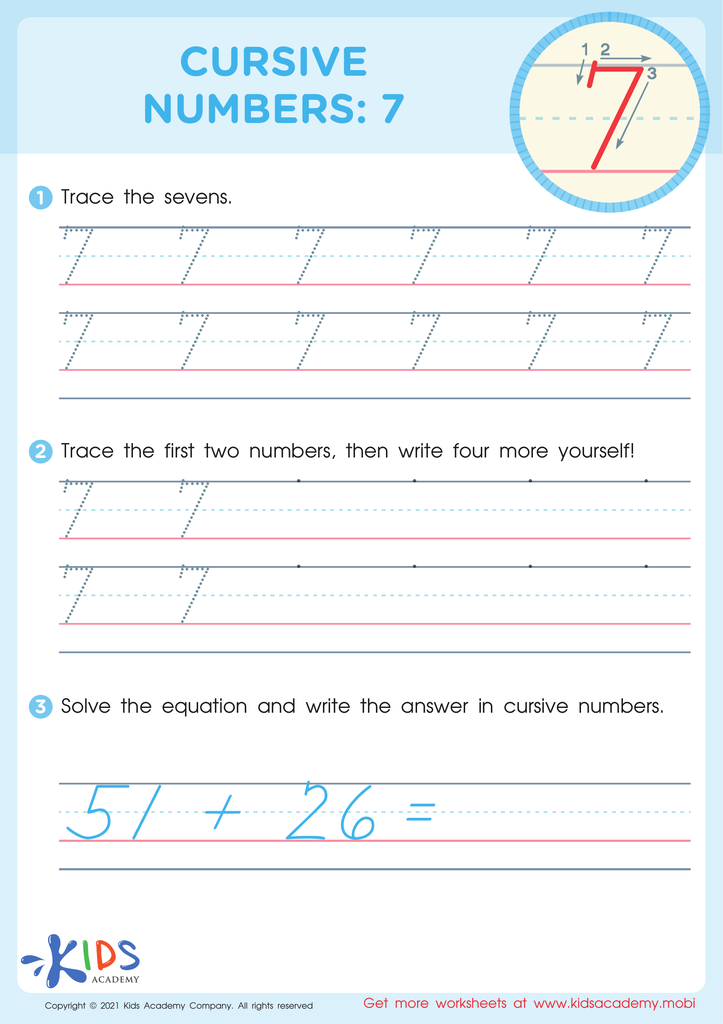
Cursive Numbers: 7 Worksheet
Kids learn best with engaging and easy-to-understand materials. This tracing worksheet is ideal for developing kids' writing skills, with two exercises to help them write the number 7. The first involves tracing the 6s provided and the second asking them to write four cursive 7s independently.
Cursive Numbers: 7 Worksheet
Worksheet
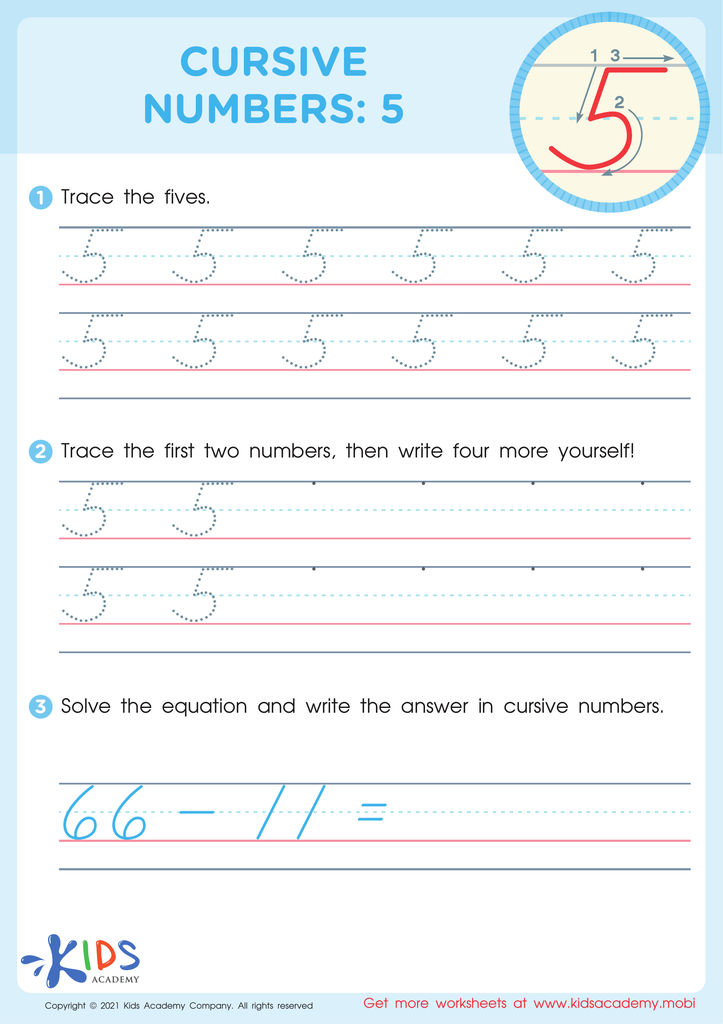
Cursive Numbers: 5 Worksheet
Ask your child to count to 10 to refresh their number knowledge. This worksheet is great for mastering the cursive number 5. Exercises are simple and keep them engaged, with the help of the dotted lines to trace. Constant practice will have your child writing the 5 like a pro!
Cursive Numbers: 5 Worksheet
Worksheet
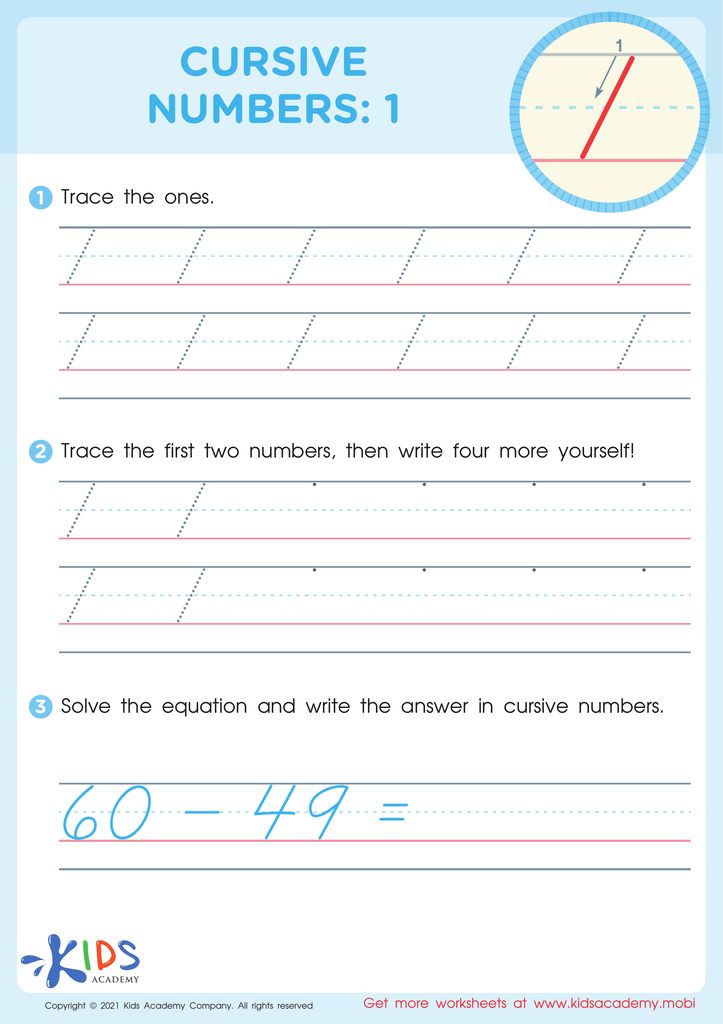
Cursive Numbers: 1 Worksheet
Math and handwriting are connected! Try these traceable worksheets to help your children learn cursive numbers. The tracing lines make it easy to follow, plus there's a simple subtraction exercise at the bottom for them to try. This is perfect for kids who struggle with handwriting and gives them a fun way to practice.
Cursive Numbers: 1 Worksheet
Worksheet
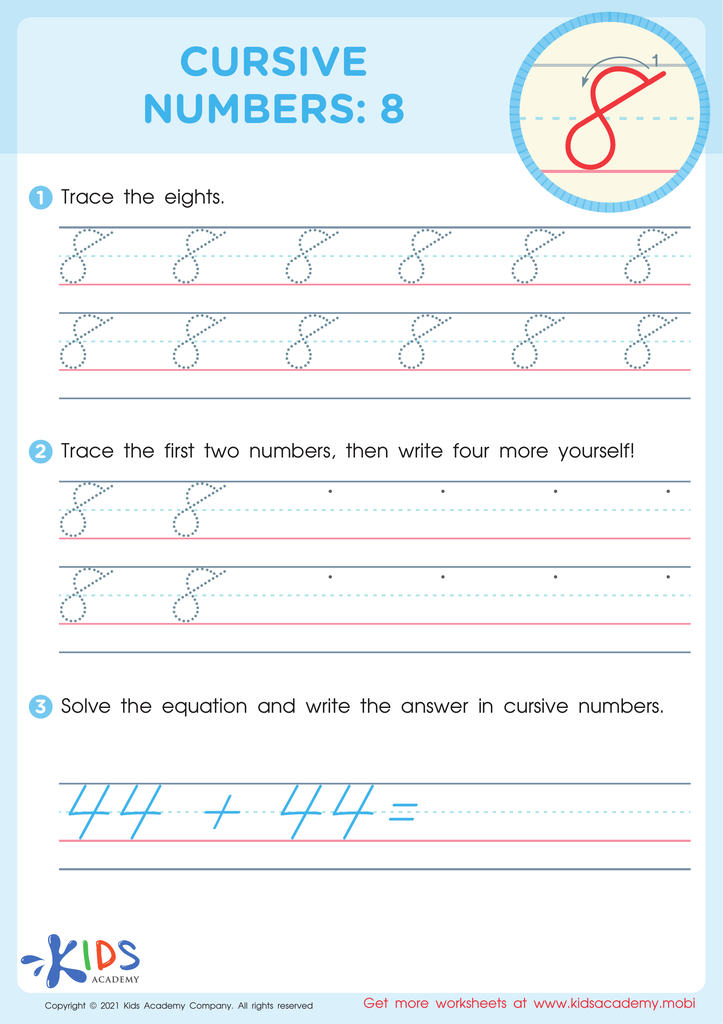
Cursive Numbers: 8 Worksheet
This tracing sheet helps your kids learn to write the cursive number 8. It's perfect for those struggling with handwriting. They'll trace the number 8, write it on their own, then solve a simple math equation and answer in cursive. Counting and writing numbers correctly is essential, so help your kids master it with this worksheet!
Cursive Numbers: 8 Worksheet
Worksheet
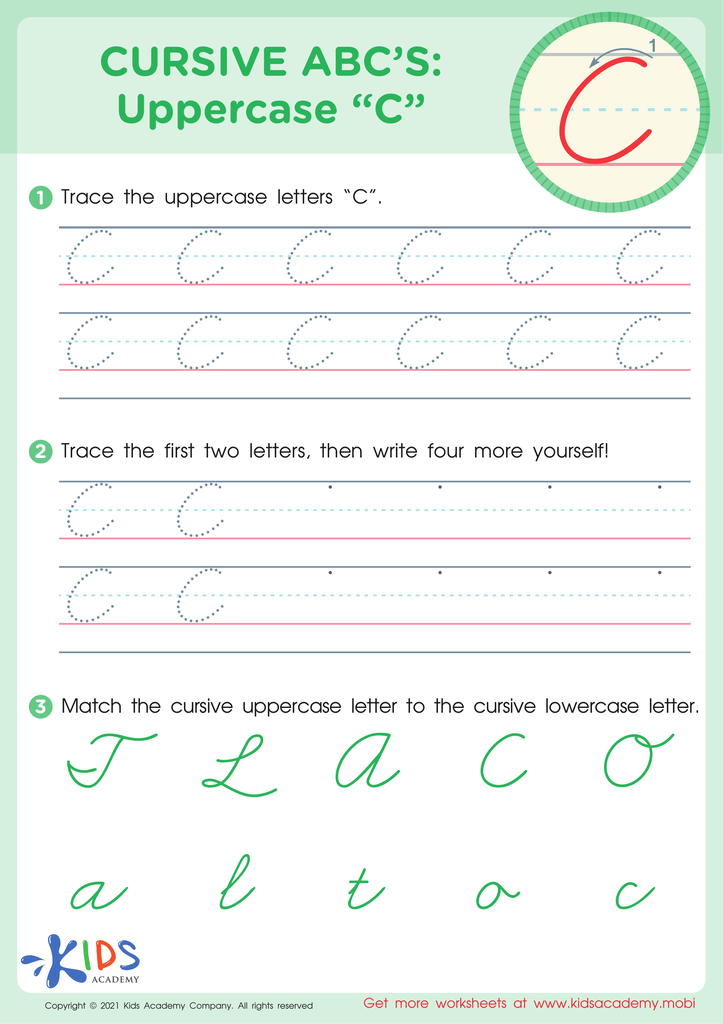
Cursive ABCs: Uppercase C
These worksheets are perfect for those wanting to improve their handwriting or learn letter recognition. The tracing exercises help younger students sharpen their writing skills and teach how to write the 'C' in cursive. First, they trace the given examples and then practice writing it solo. A letter recognition test is at the bottom of the page to check progress.
Cursive ABCs: Uppercase C
Worksheet
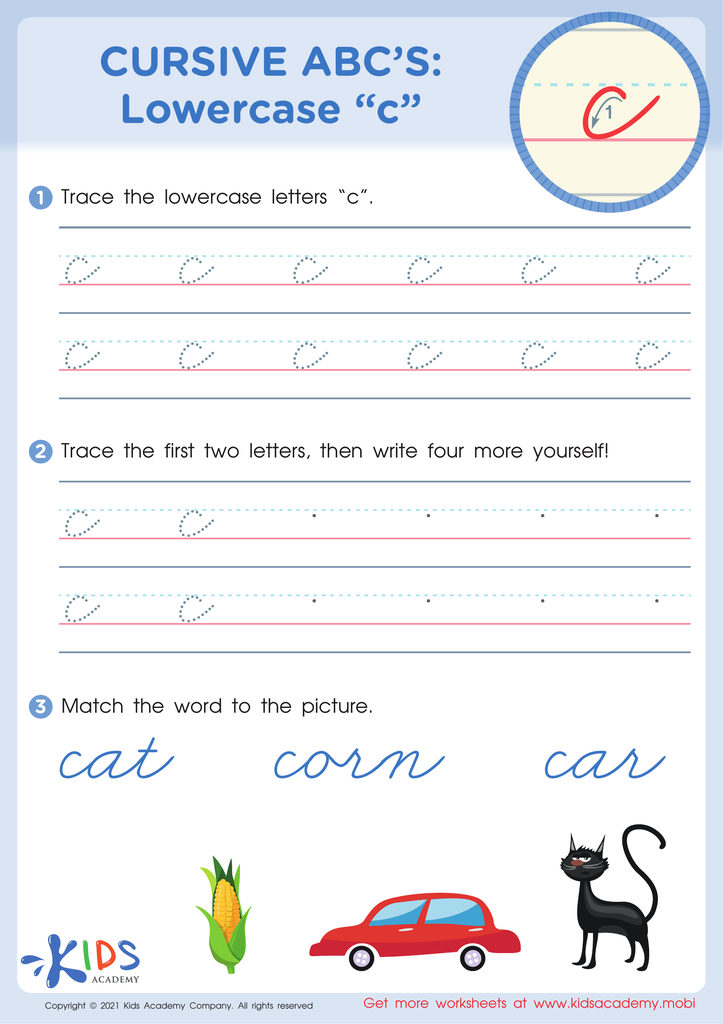
Cursive ABCs: Lowercase c
Once your child has successfully printed their letters, help them learn to recognize and write the alphabet in cursive. Struggling? This worksheet is perfect to assist them. Writing is an essential skill for kids to learn, so do all you can to help them. Use these tracing worksheets and guide them as they write the lowercase letter 'c' in cursive.
Cursive ABCs: Lowercase c
Worksheet
Cursive ABCs: Lowercase h
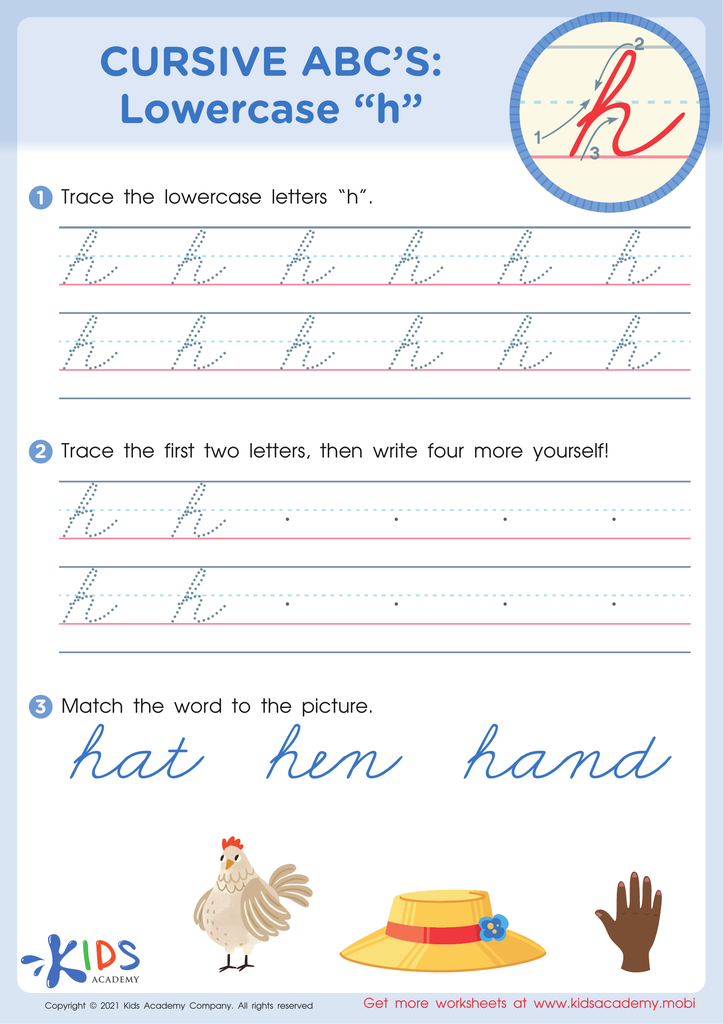
Your children will need more than just reciting the alphabet; they need to learn how to identify and write it. Cursive writing helps with neatness, and these tracing worksheets are great learning aids and offer exercises to practice writing lowercase 'h'. With these, your children get better writing skills and learn new words.
Cursive ABCs: Lowercase h
Worksheet
Cursive Numbers: 3 Worksheet
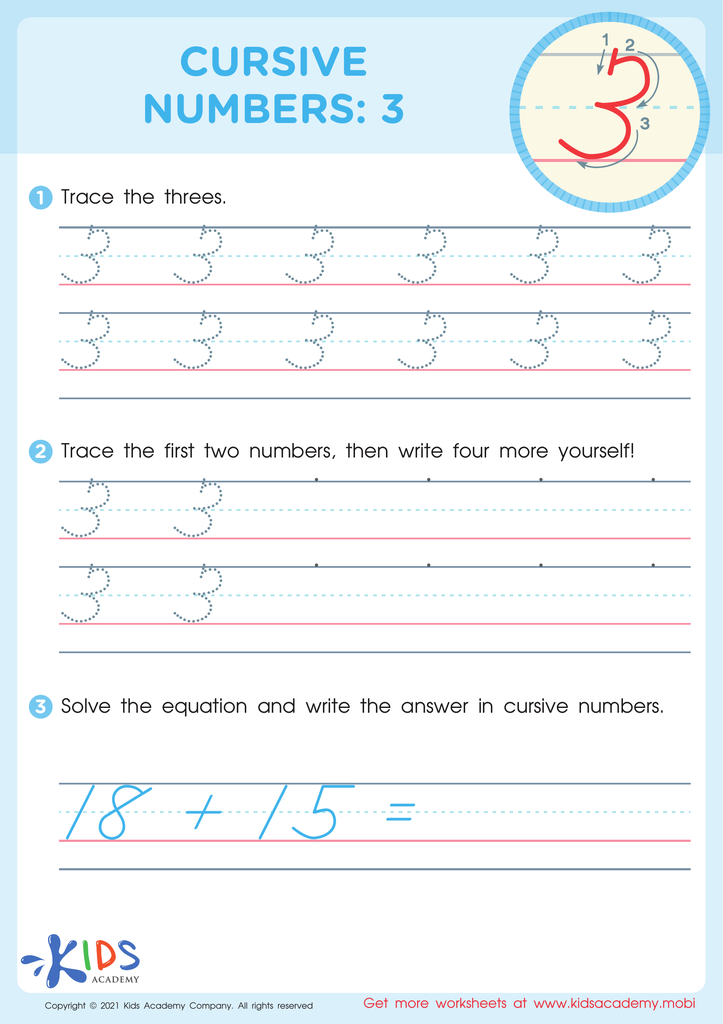
Help your child learn to write with this exercise. They'll practice tracing lines to write the cursive 3 until they gain the skill and confidence to do it on their own. Then have them write the 3 and solve the math equation on the worksheet. You can watch and encourage them as they progress. Writing is a key lesson, so offer your help to ensure they succeed.
Cursive Numbers: 3 Worksheet
Worksheet
Cursive ABCs: Lowercase e
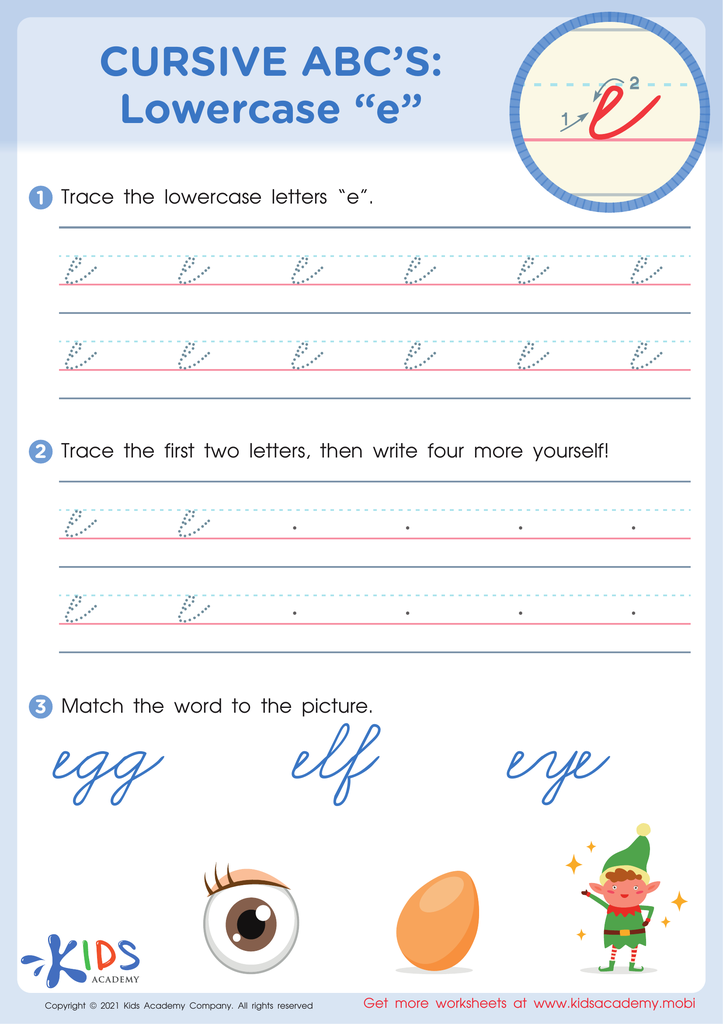
Traceable worksheets are great for kids wanting to practice writing alphabet letters. Help them improve their skills by tracing dotted lines to form 'e', then writing it on their own. They'll also learn new words beginning with letters of the alphabet.
Cursive ABCs: Lowercase e
Worksheet
Cursive Numbers: 4 Worksheet
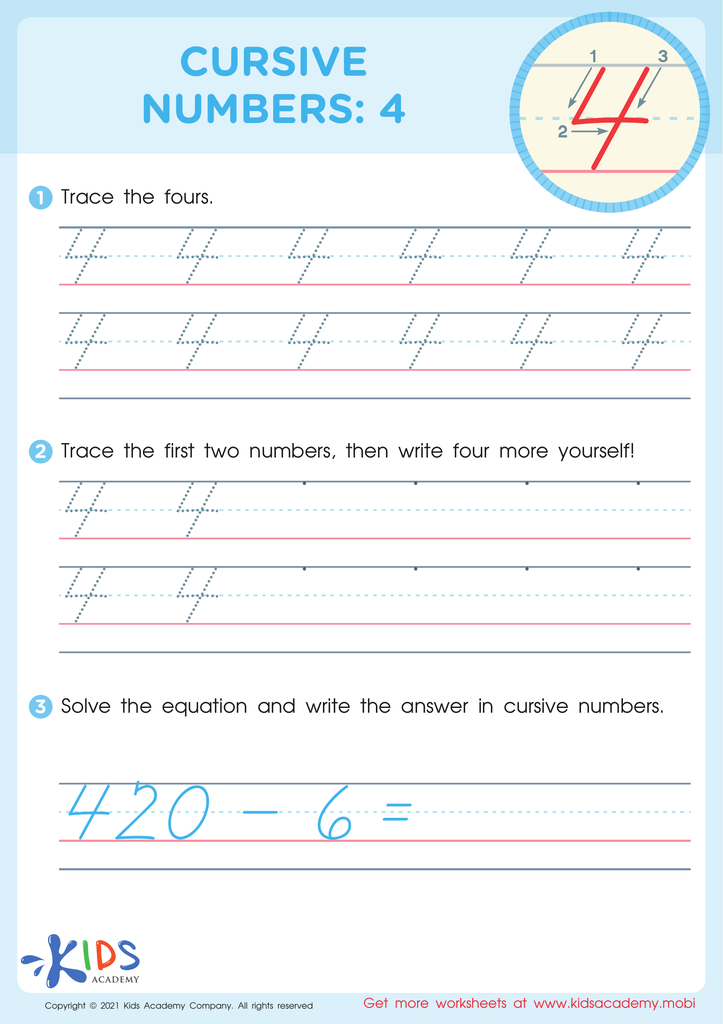
Math is challenging, and teaching cursive alongside it can be overwhelming. Make lessons enjoyable and your child will be more likely to stay engaged. Utilize worksheets to practice tracing the number 4 in cursive. With regular practice, your child can learn to write the number on their own.
Cursive Numbers: 4 Worksheet
Worksheet
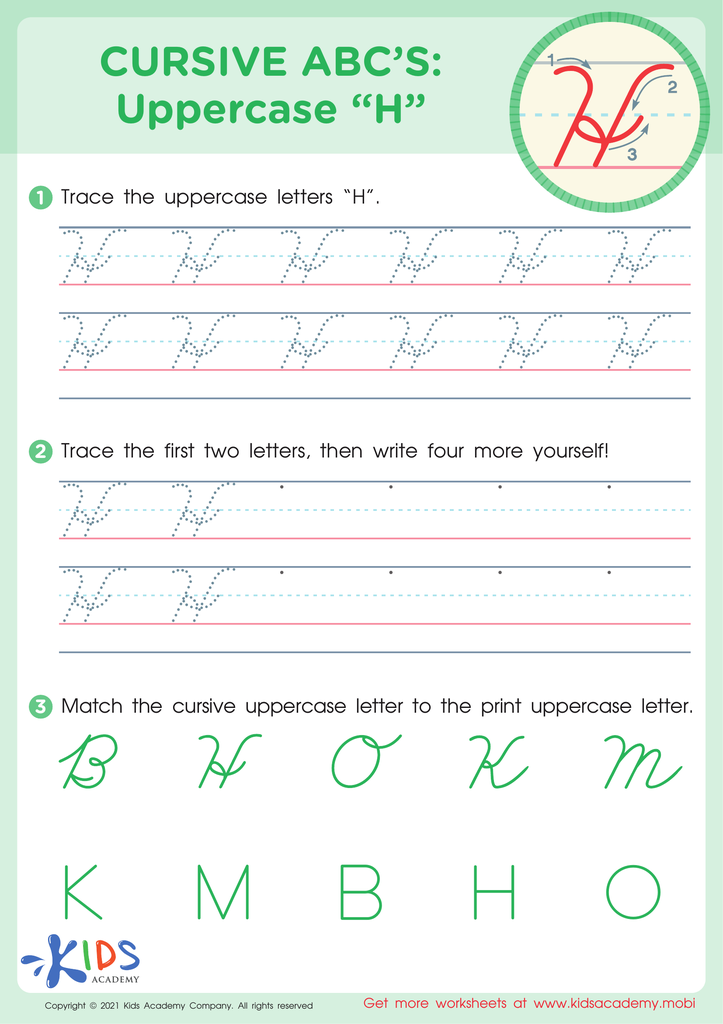
Cursive ABCs: Uppercase H
Have your child recite the alphabet and give you words beginning with H. This tracing sheet is perfect to help them improve their handwriting. Guide their hands as they trace the uppercase H, then have them practise writing it alone. At the bottom is an exercise to check their letter recognition.
Cursive ABCs: Uppercase H
Worksheet
Join Kids Academy for Free
Who is primarily going to use this learning content?








Cursive writing practice is essential for children aged 7-8 for several reasons. First, it aids in the development of fine motor skills, as the fluid motion of cursive requires coordinated hand movements. This helps strengthen the hand muscles and improve overall dexterity, which is crucial for various tasks beyond writing, such as drawing and buttoning clothes.
Moreover, cursive writing has cognitive benefits. Research indicates that writing by hand, especially in cursive, engages multiple areas of the brain, enhancing memory retention and comprehension. Children are likely to remember information better when they've written it in cursive compared to typing or printing.
Additionally, learning cursive promotes a sense of identity and self-expression. Cursive writing allows children to create a unique style, fostering their creativity and individuality. It also connects them with historical documents that were written in cursive, offering insights into history and culture.
Lastly, as technology increasingly dominates communication, cursive writing provides a valuable skill that enhances literacy and can be particularly useful during formal situations like signing documents. In summary, cursive writing practice supports motor skills, cognitive development, creativity, and ensures children are prepared for varied communication needs. Thus, parents and teachers should prioritize it in their educational activities.








