Grammar skills Writing Worksheets for Ages 7-8
3 filtered results
-
From - To
Enhance your child's writing proficiency with our Grammar Skills Writing Worksheets for ages 7-8. Designed to align with educational standards, these worksheets cover essential grammar topics such as punctuation, sentence structure, and parts of speech. Engaging activities and colorful illustrations keep young learners interested while reinforcing key concepts. Perfect for classroom use or extra practice at home, these printable worksheets will boost your child's confidence and mastery in writing. Start building a strong grammatical foundation today with our expertly crafted resources available at Kids Academy.
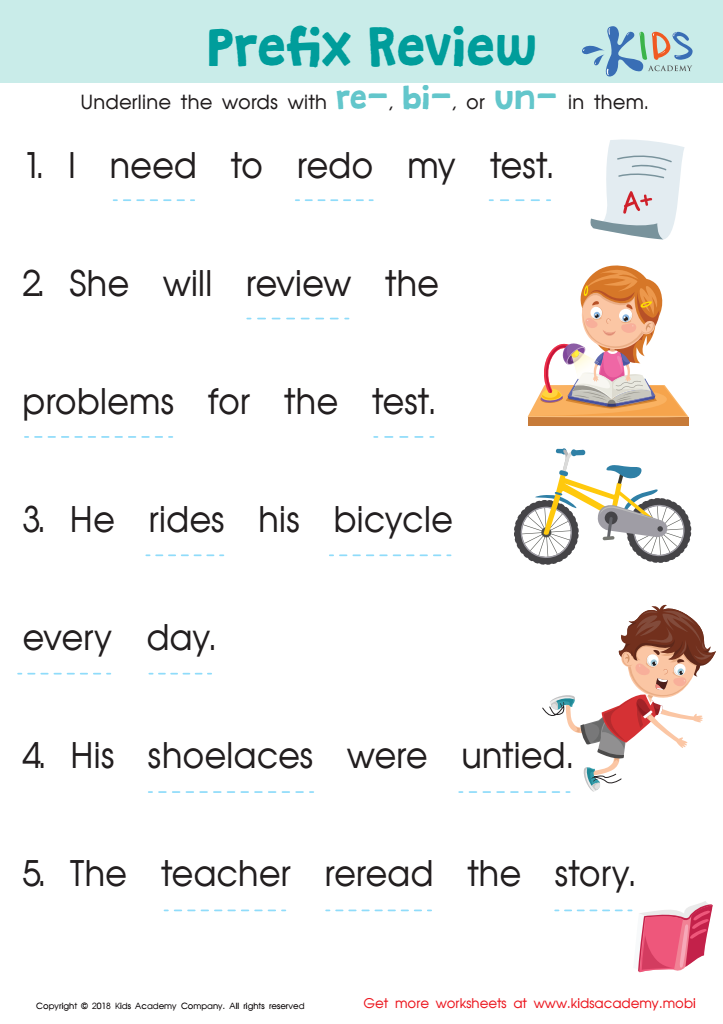
Prefix Review Worksheet
 Assign to My Students
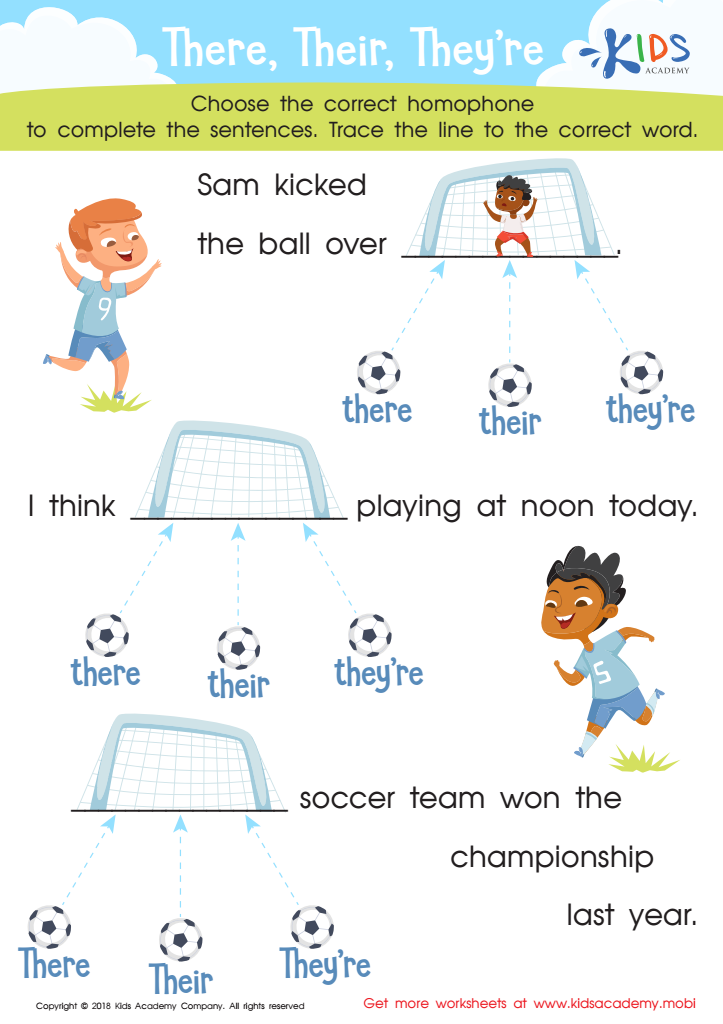
There, Their, They're Worksheet
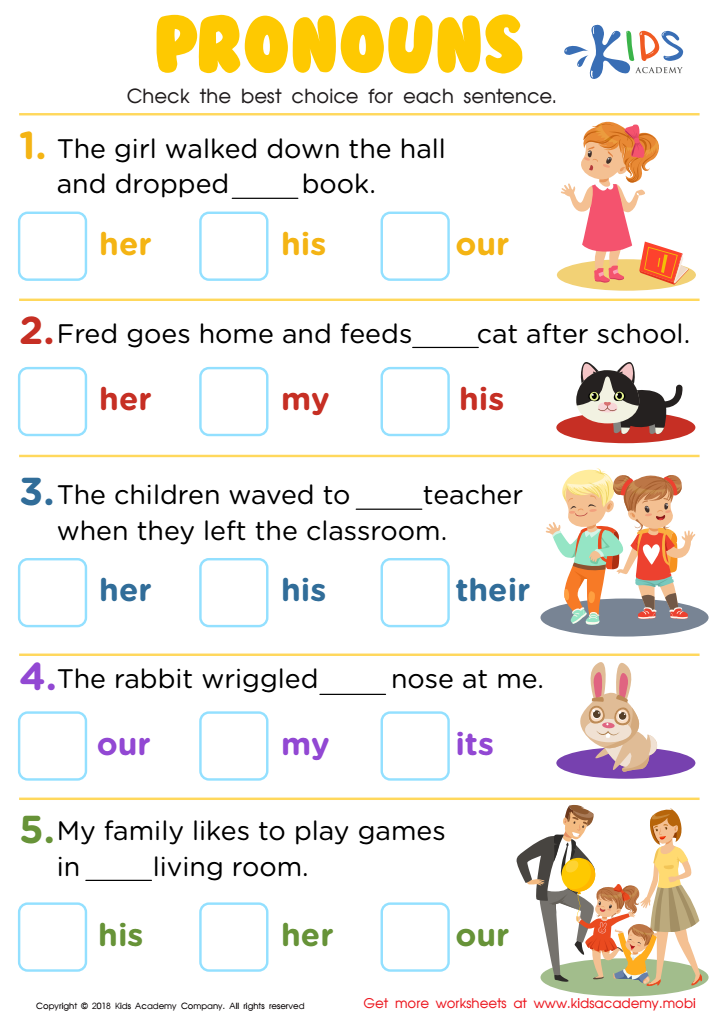
Pronouns Worksheet








Parents and teachers should prioritize grammar skills in writing for children aged 7-8 because it's a foundational period where core language abilities are rapidly developing. Good grammar provides children with the tools they need to express their thoughts clearly and effectively. Mastery of grammar basics at this age can propel their academic success, facilitating better reading comprehension and writing skills, which are essential across all subjects.
Moreover, learning proper grammar helps children develop critical thinking skills as they learn to structure sentences logically and oversee coherence in their writing. These abilities l promote clearer communication, reduce misunderstandings, and contribute to emotional expression in socially acceptable ways.
Additionally, early grammar skills foster confidence. When children can write well, they feel more competent in both their academic and personal requests, from school essays to letters and eventually job applications. This self-assurance boosts their overall self-esteem and readiness to tackle complex challenges, laying down the building blocks for lifelong learning.
Lastly, understanding grammar also nurtures a love for language and reading. Children who can write efficiently are more likely to enjoy reading and storytelling, activities that are crucial for their cognitive and emotional growth. Thus, investing time in teaching grammar not only shapes competent communicators but also nurtures confident, creative, and logical thinkers.








