Long Vowels Worksheets for Ages 7-9 - Page 2
26 filtered results
-
From - To
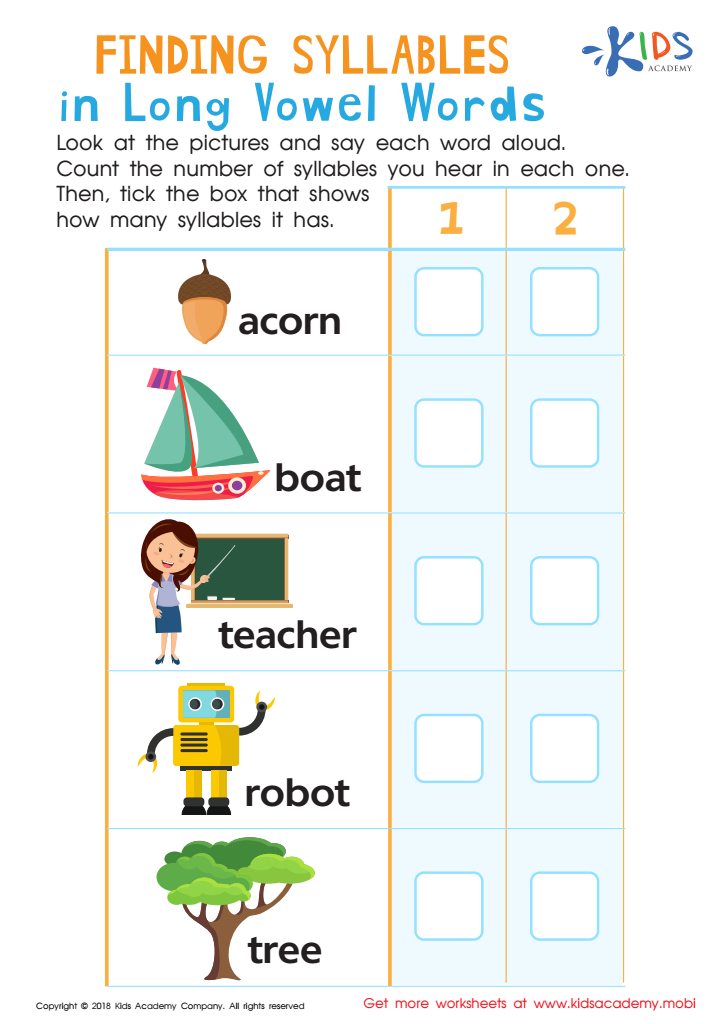
Finding Syllables in Long Vowel Words Worksheet
 Assign to My Students
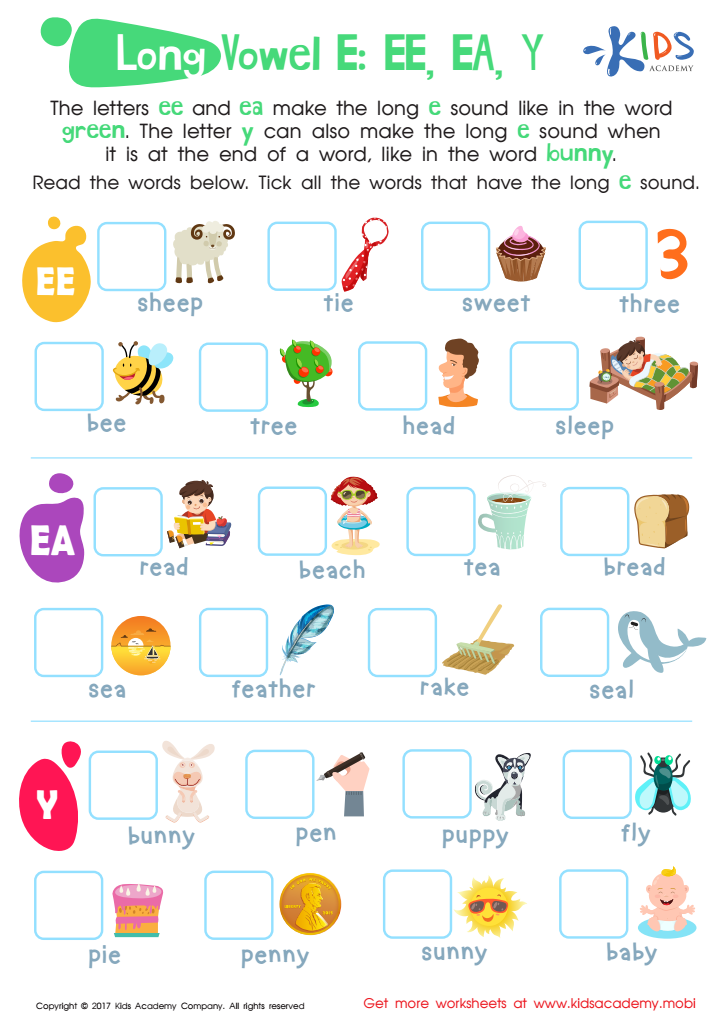
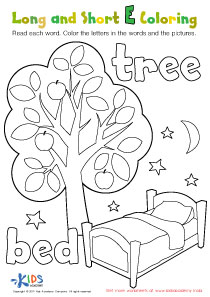
Long Vowel E Printable



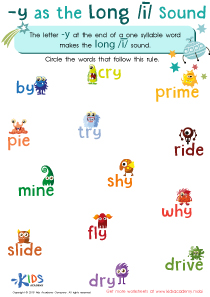
Understanding long vowels is crucial for children aged 7-9 as it forms the foundation for reading fluency and accurate spelling, both essential skills in early literacy development. Long vowels occur when a vowel sounds like its letter name, such as the 'a' in "cake" or the 'e' in "these."
First, recognizing long vowels helps children decode new words more easily. When children understand vowel patterns, they can apply this knowledge to segment and blend sounds to read unfamiliar words correctly. This boosts their confidence and interest in reading, making the learning process smoother and more enjoyable.
Secondly, a solid grasp of long vowels improves spelling accuracy. English has many irregularly spelled words, and children equipped with knowledge of vowel patterns can better predict and remember correct spellings. This skill becomes even more important as they progress to more complex texts and writing tasks in later grades.
Finally, mastering long vowels supports overall phonological awareness, a critical component for developing strong reading comprehension skills. When children can easily identify and manipulate vowel sounds, they can focus more on the content and meaning of what they read rather than getting stuck on word recognition.
Therefore, parents and teachers should prioritize long vowel instruction to lay a solid foundation for lifelong literacy success.