Silent Vowels Worksheets for Ages 7-9
5 filtered results
-
From - To
Unlock the mysteries of silent vowels with our expertly crafted Silent Vowels Worksheets for ages 7-9! Designed to boost literacy skills, these engaging exercises help young learners identify and understand silent vowels within words. Vibrant illustrations and fun activities make mastering tricky silent letters an enjoyable journey. Perfect for classroom resources or extra practice at home, our worksheets build solid phonics foundations, promoting confident and fluent reading. Reinforce classroom concepts seamlessly while sparking curiosity and providing essential practice. Dive into learning with excitement and watch your 7-9-year-old excel at silent vowels today!
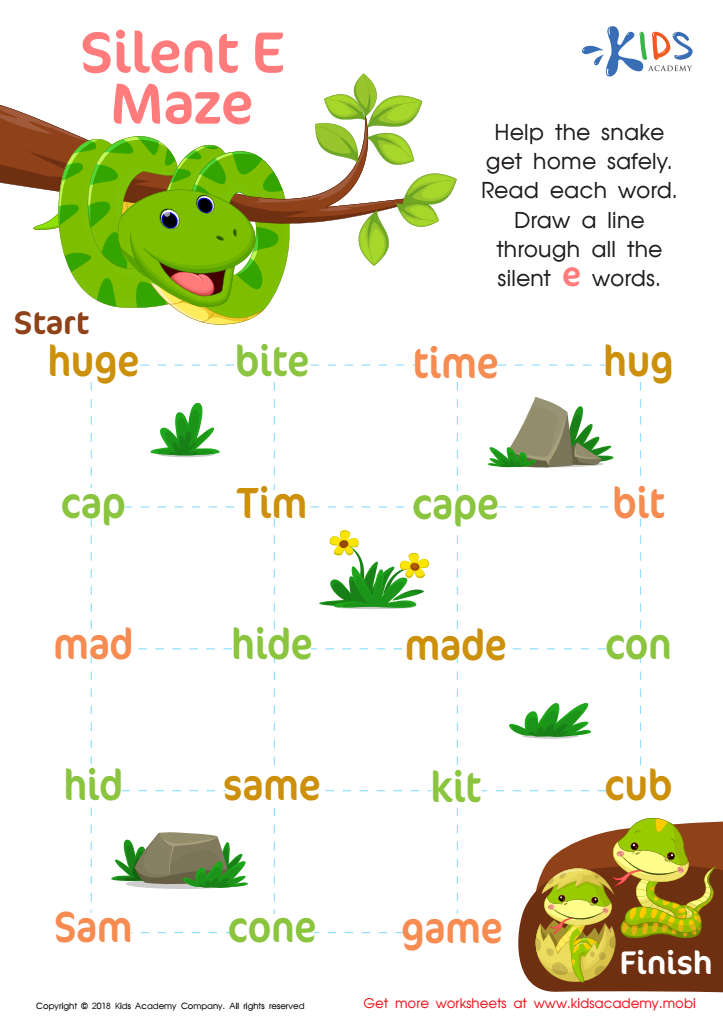
Silent E Maze Worksheet
 Assign to My Students
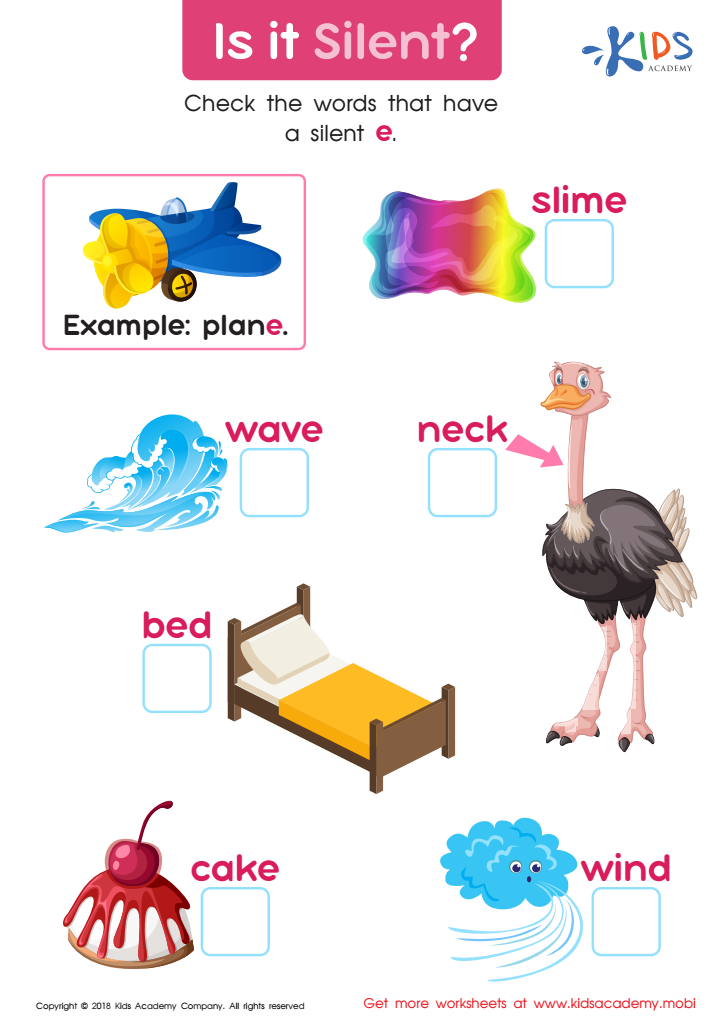
Is It Silent? Worksheet
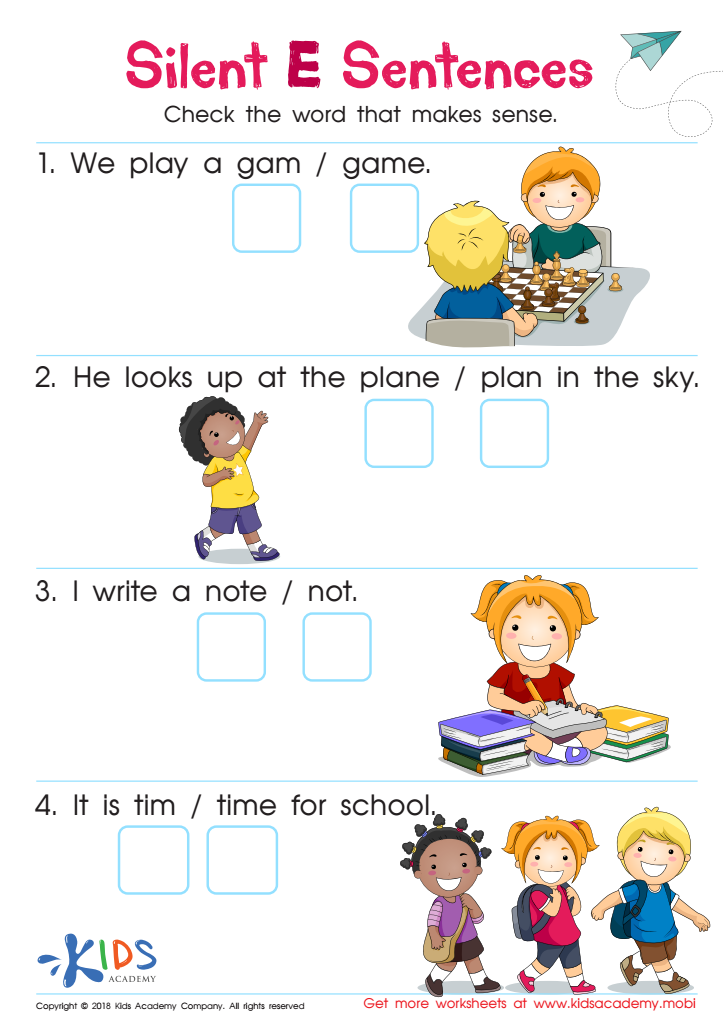
Silent E Sentences Worksheet
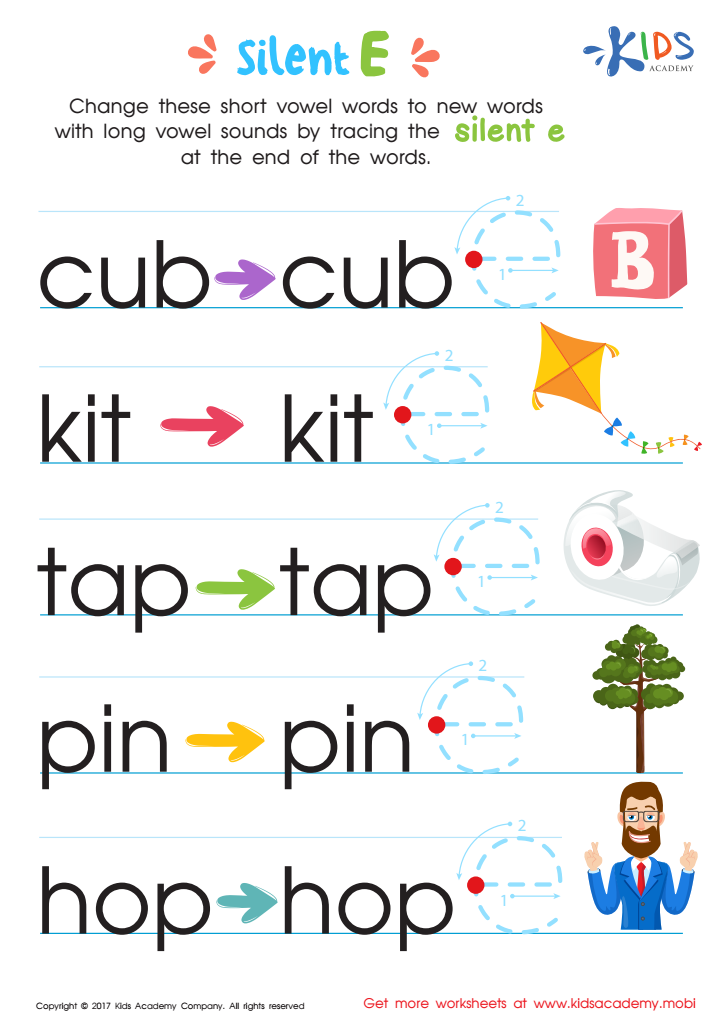
Silent E Words Worksheet
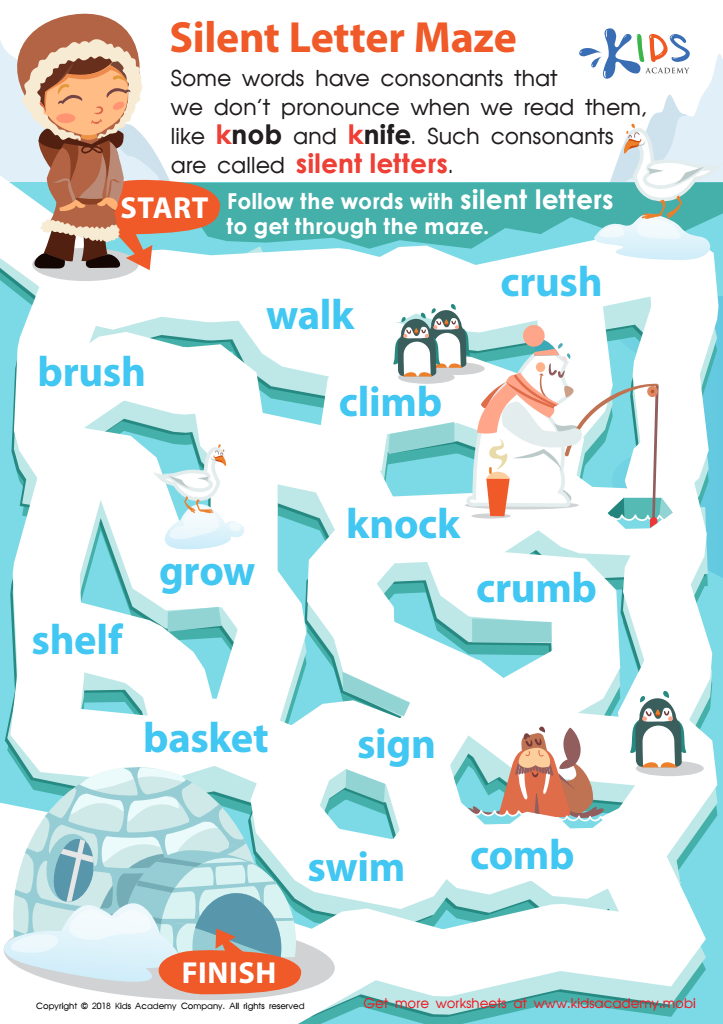
Silent Letter Maze Worksheet


Understanding silent vowels is essential for children ages 7-9 because it significantly aids in developing their reading and spelling skills. As children in this age group transition from learning to read to reading to learn, recognizing patterns of silent vowels becomes crucial. Silent vowels are letters that appear in words but are not pronounced, such as the 'e' in 'cake' or 'h' in 'ghost'. These silent components often determine the pronunciation and meaning of words, which directly impacts a child's ability to read fluently and comprehend texts accurately.
When parents and teachers emphasize the importance of silent vowels, children learn to recognize common spelling patterns and exceptions within the English language. This understanding can prevent confusion, reduce errors, and build confidence – skills useful across all subjects. For instance, knowing that the 'e' at the end of 'bake' changes the vowel sound in comparison to 'back' helps children decipher unfamiliar words effectively.
Moreover, silent vowel knowledge supports orthographic mapping – the process of storing written words in long-term memory. With strong orthographic mapping, children can read quickly and automatically recognize words, making reading a more enjoyable and less laborious task. Therefore, an emphasis on silent vowels sets a foundation for academic success and fosters a lifelong love of reading and learning.