Basic Addition Worksheets for Ages 7-9 - Page 2
48 filtered results
-
From - To
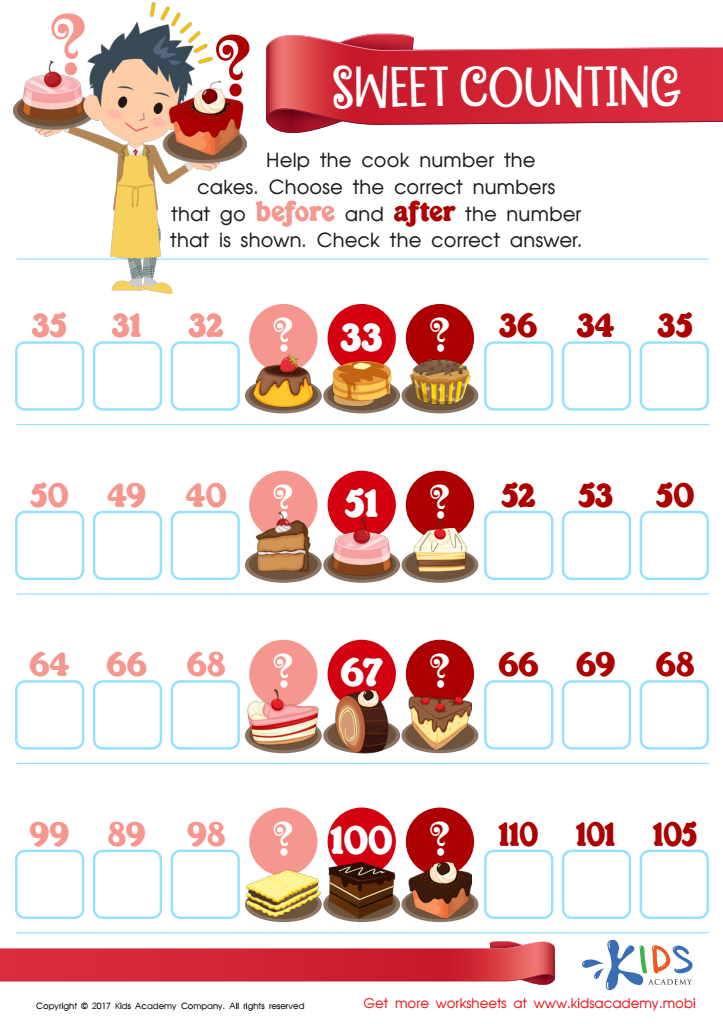
Sweet Counting - Part 1 Worksheet
 Assign to My Students
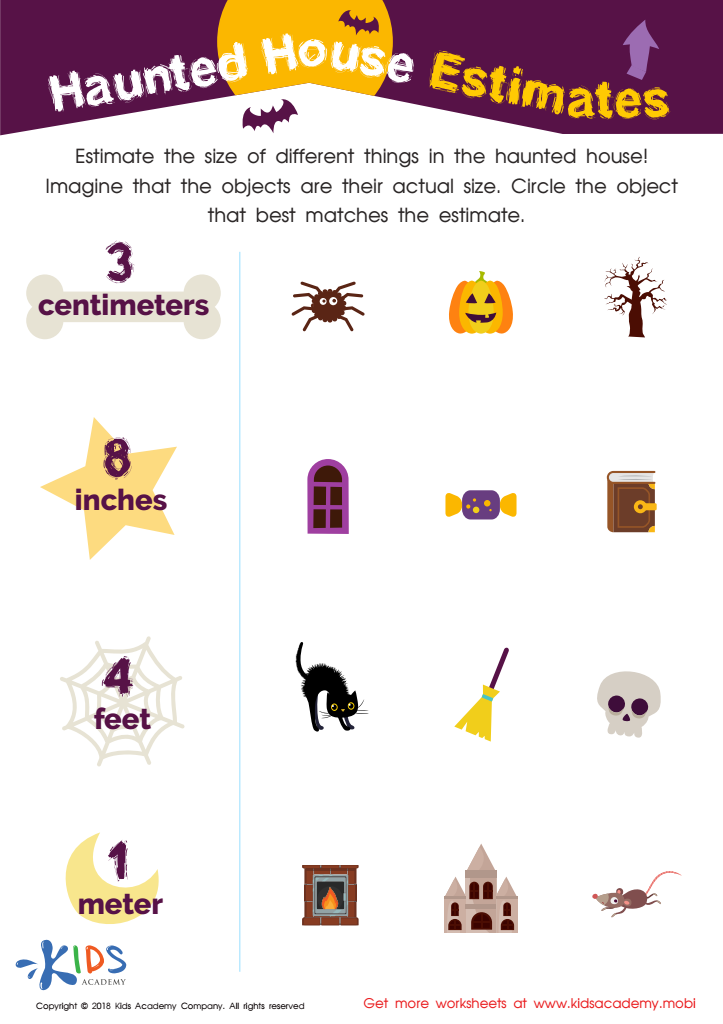
Haunted House Estimates Worksheet
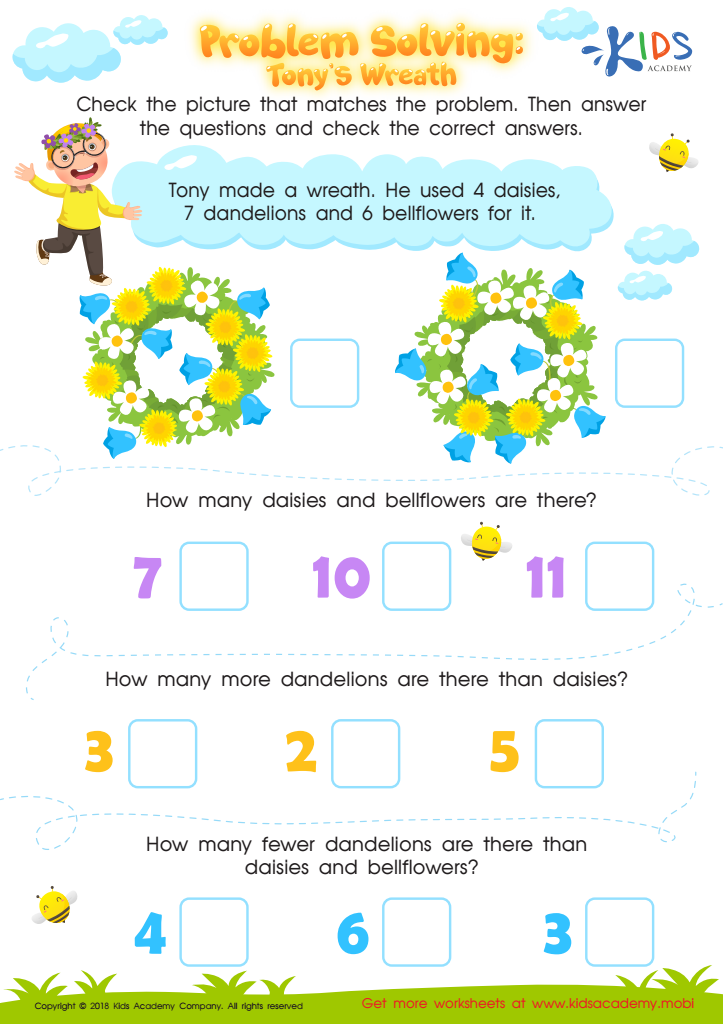
Problem Solving: Tony's Wreath Worksheet
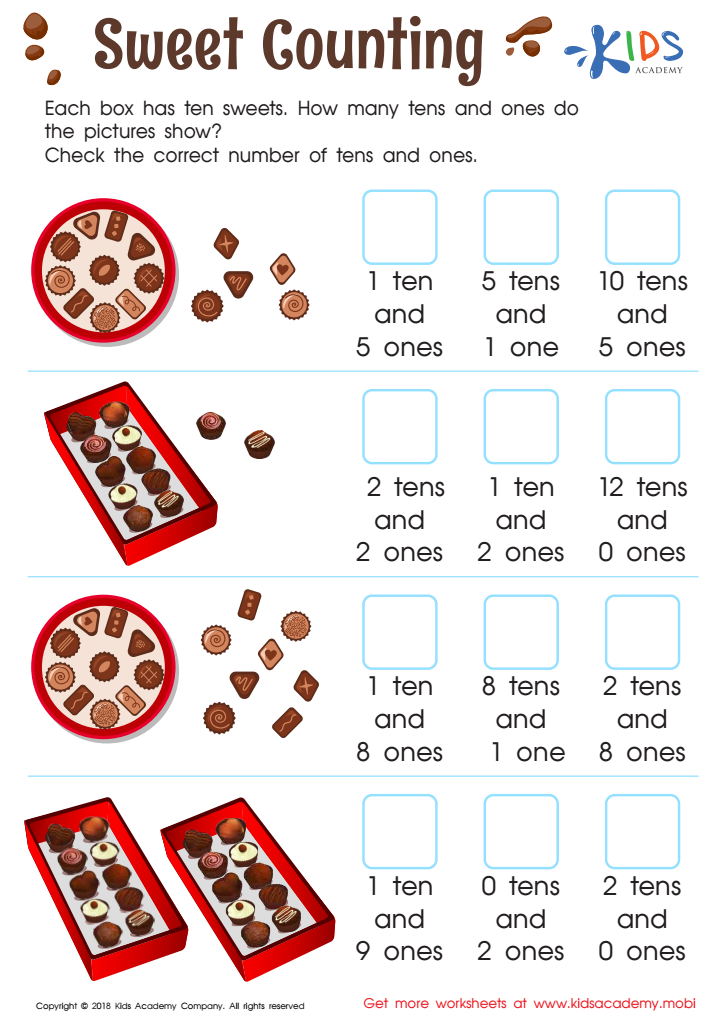
Sweet Counting - Part 2 Worksheet
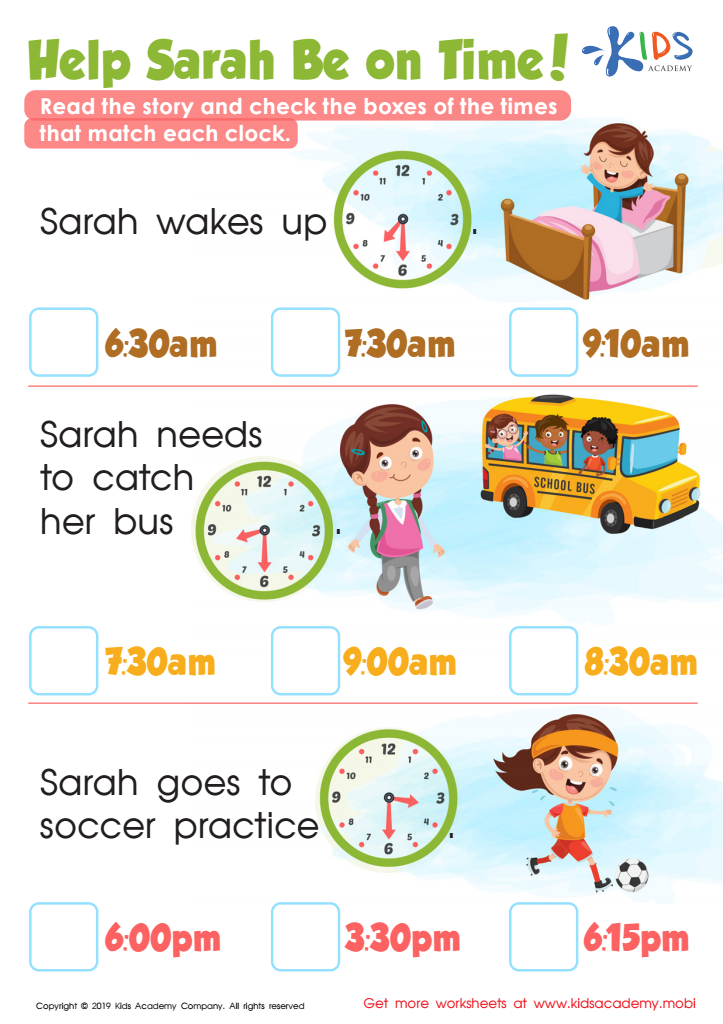
Help Sarah Be on Time! Worksheet
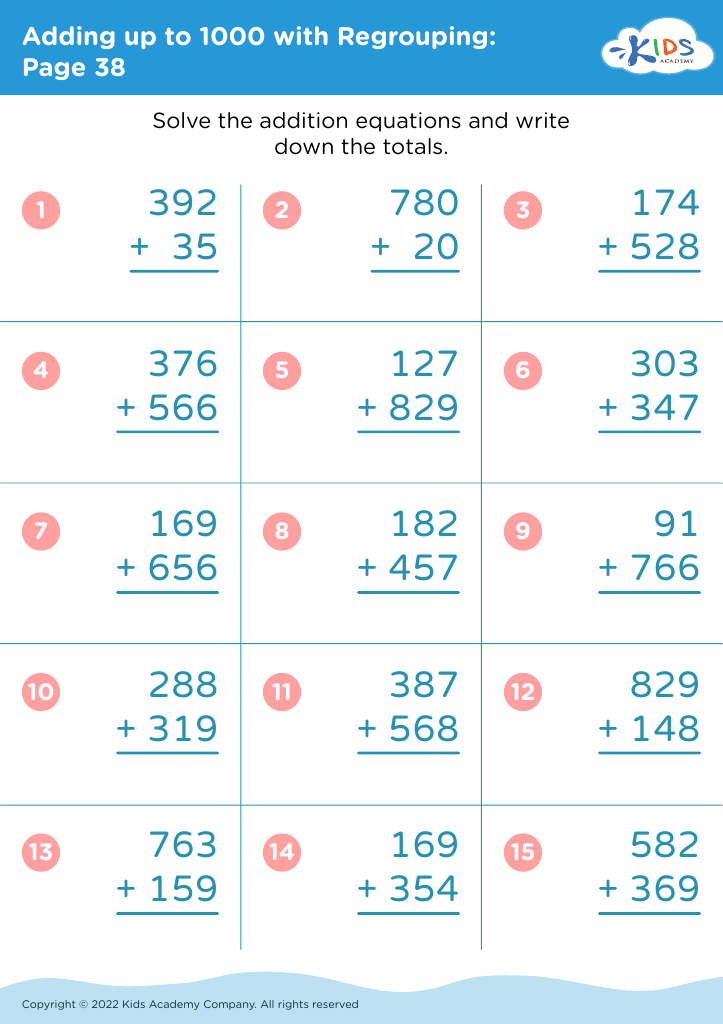
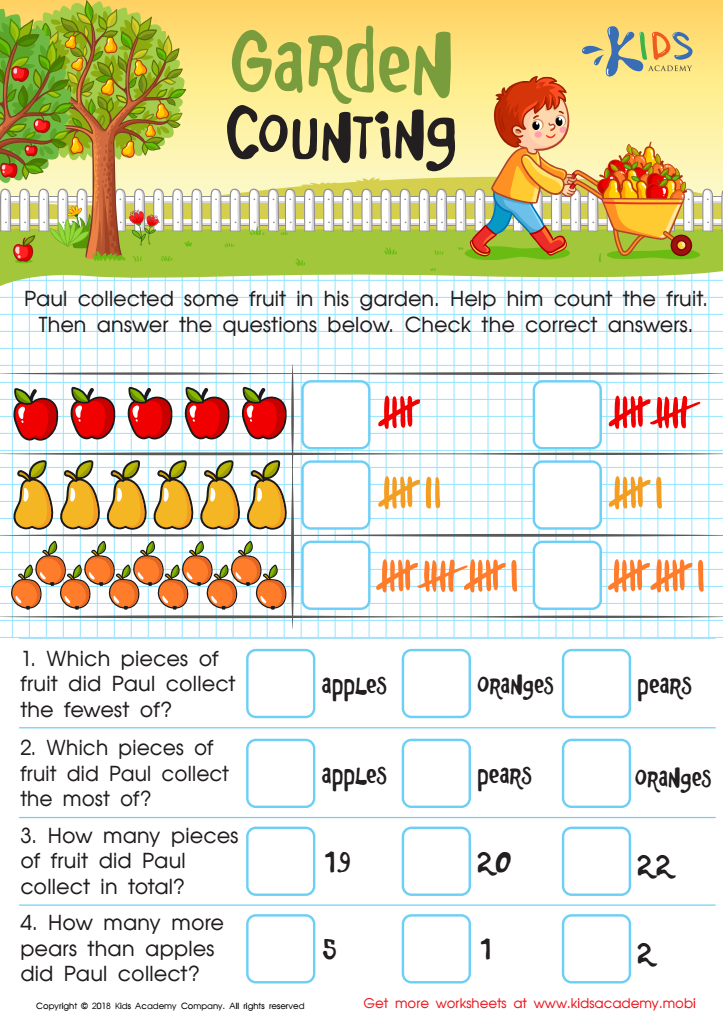
Garden Counting Worksheet
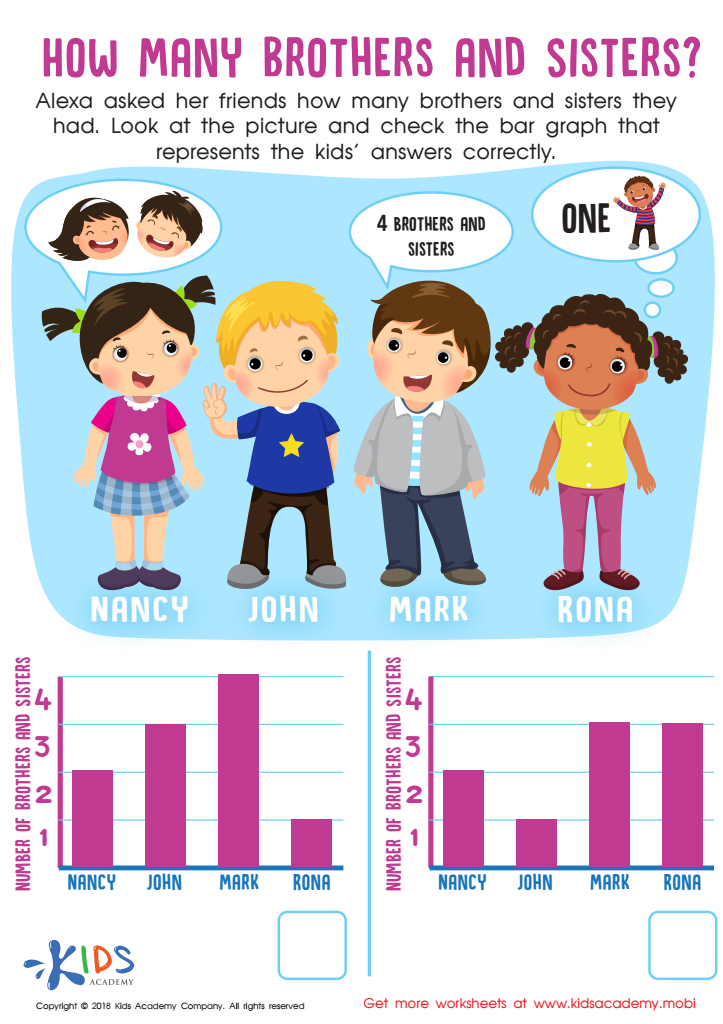
How Many Brothers and Sisters? Worksheet
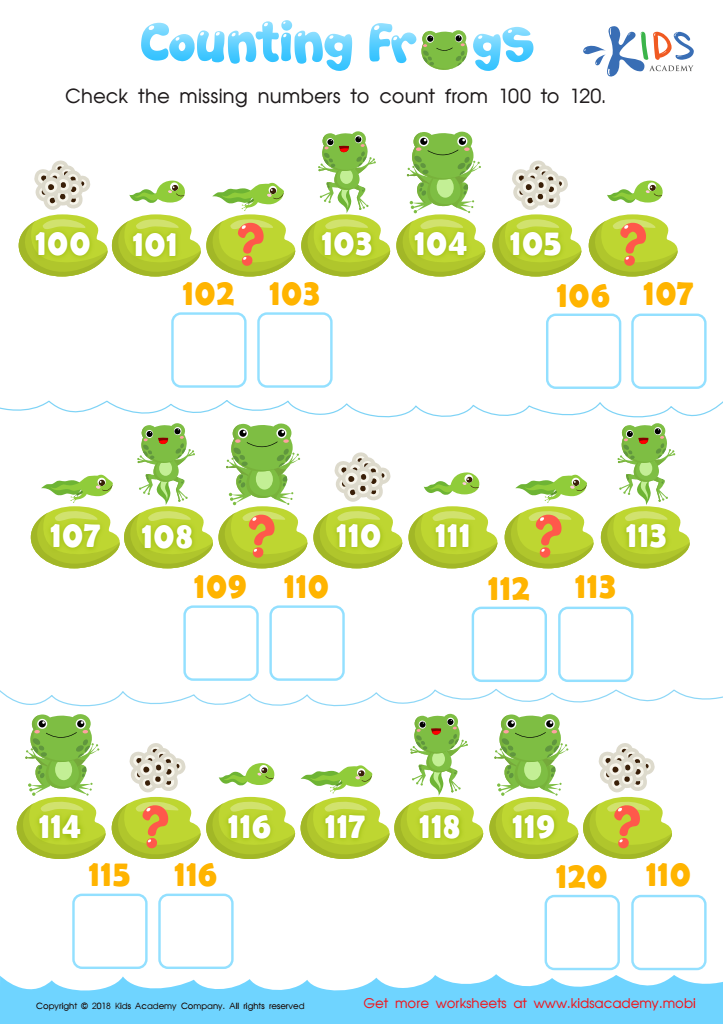
Counting Frogs Worksheet
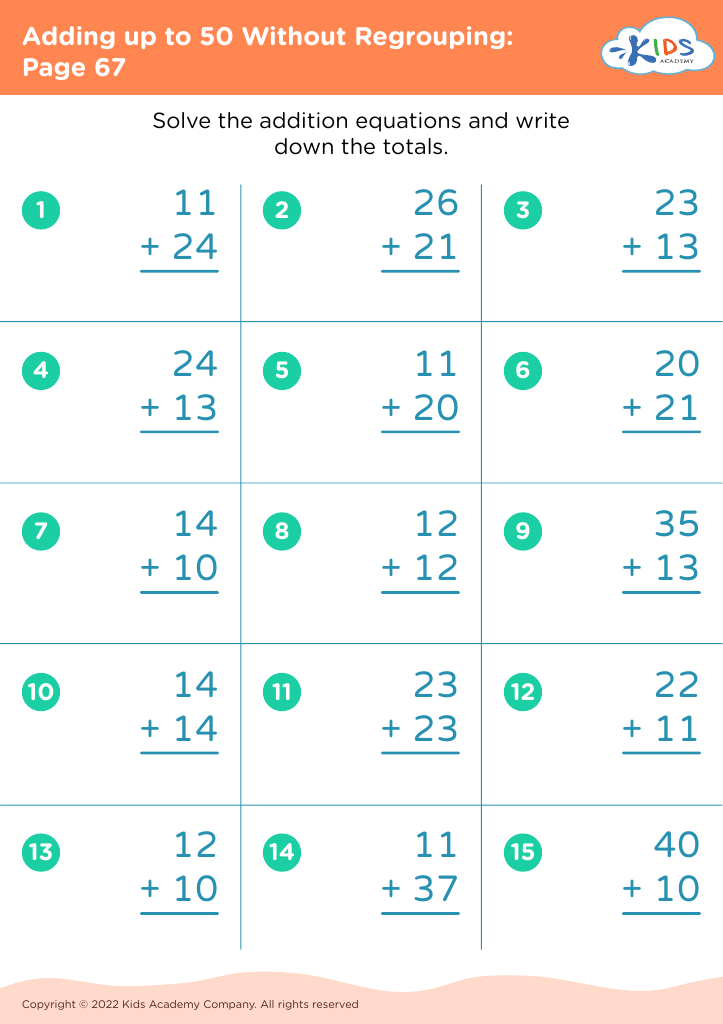
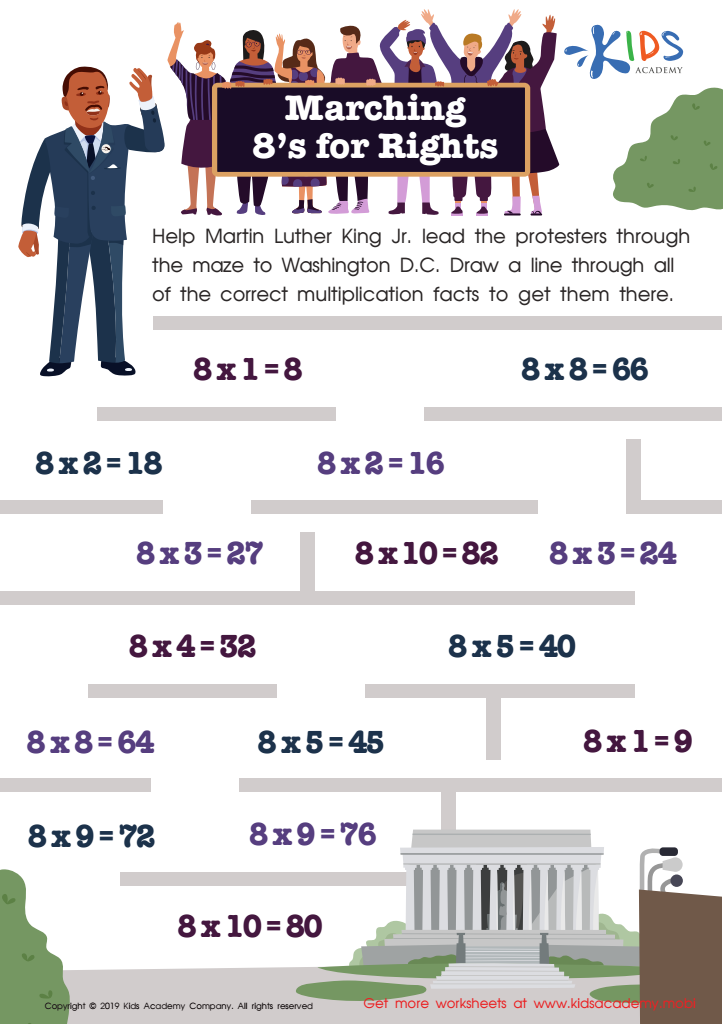
Marching 8’s for Rights Worksheet
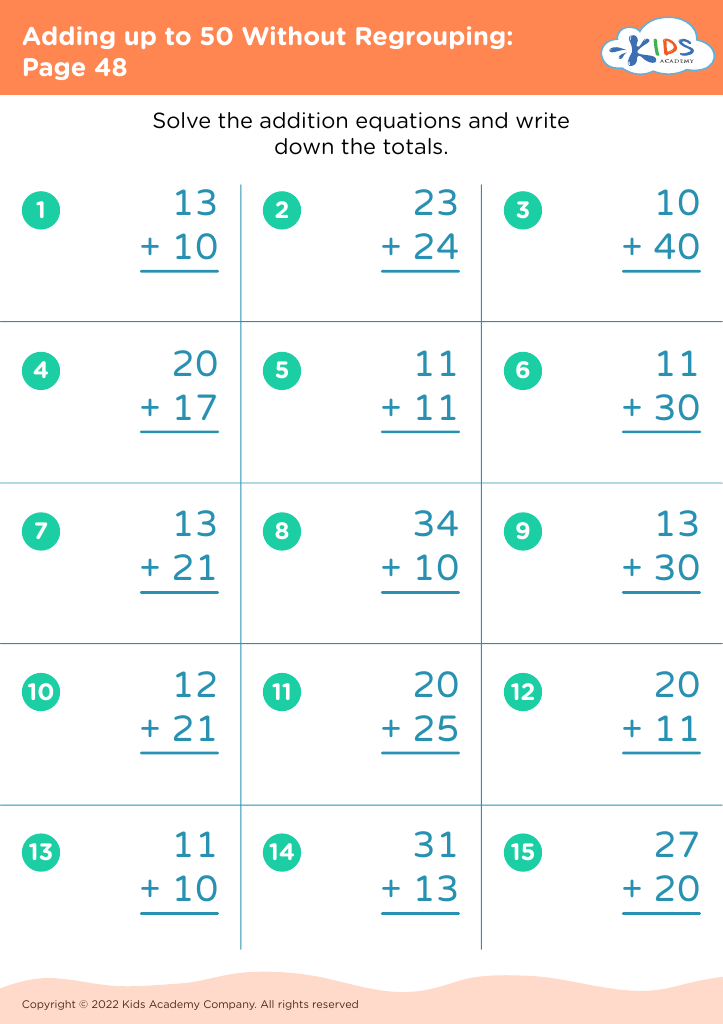
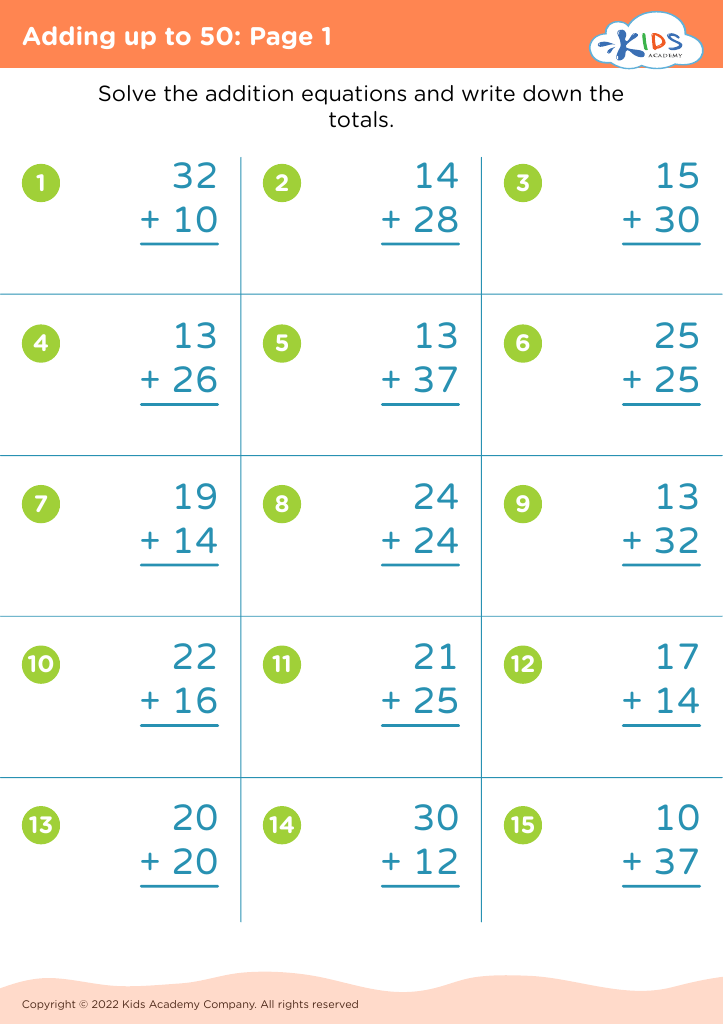
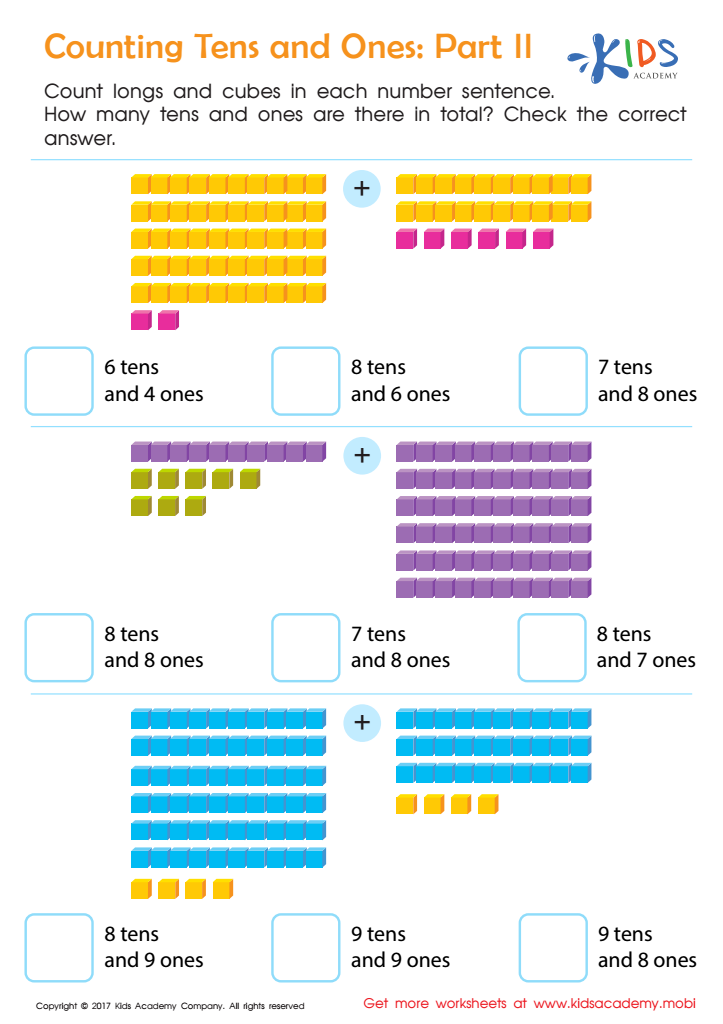
Counting Tens and Ones: Part 2 Worksheet
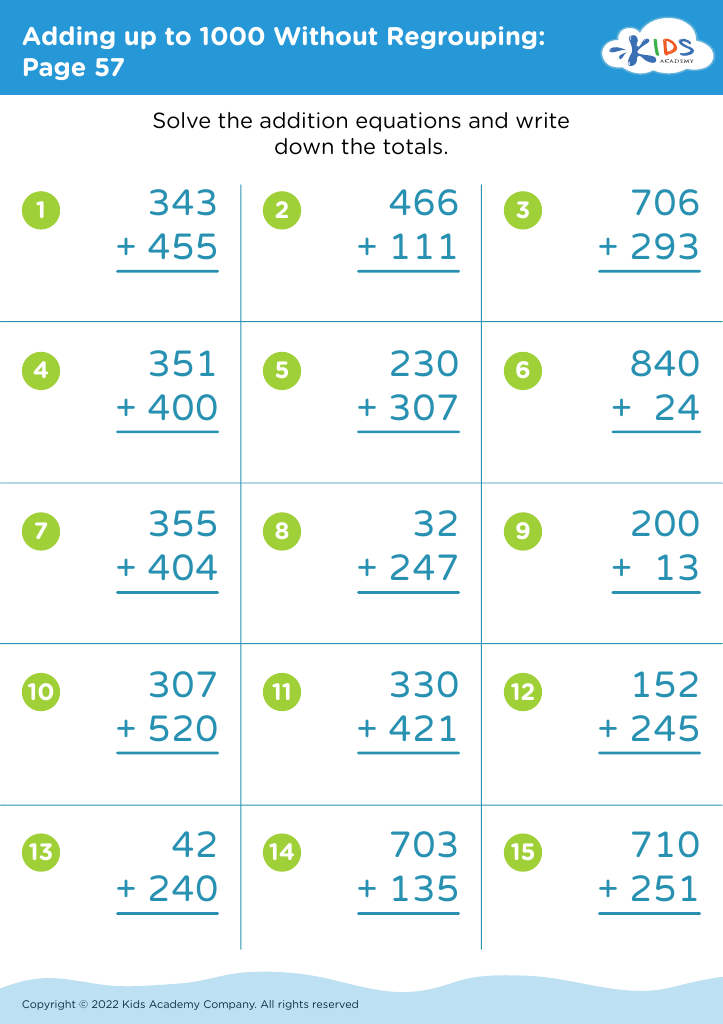
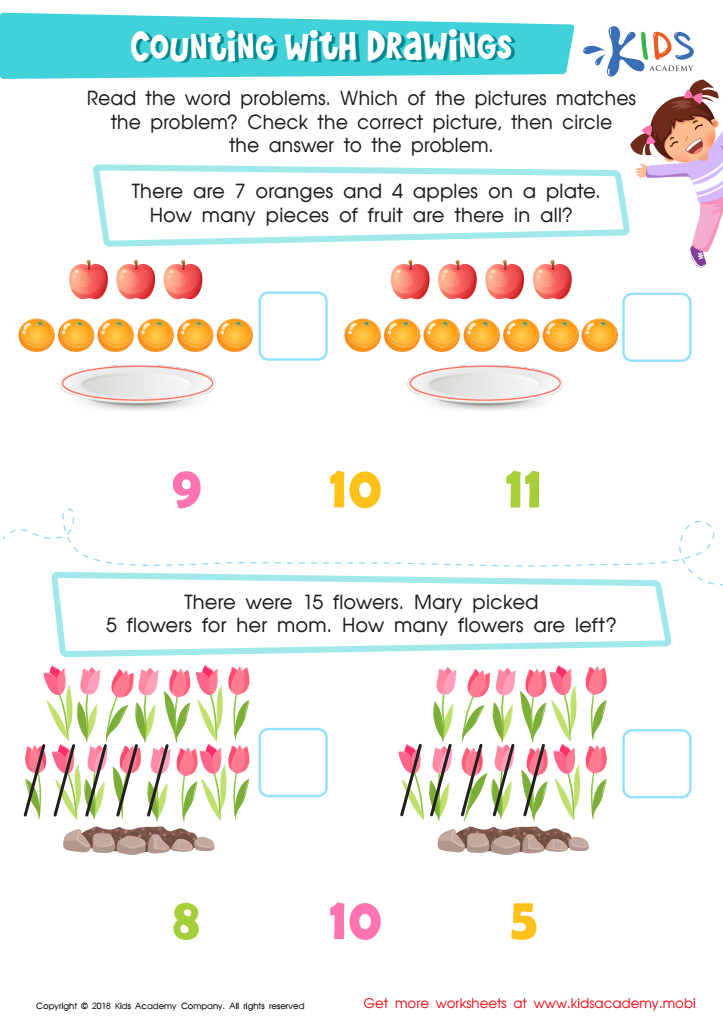
Counting with Drawings:Fruits & Flowers Worksheet
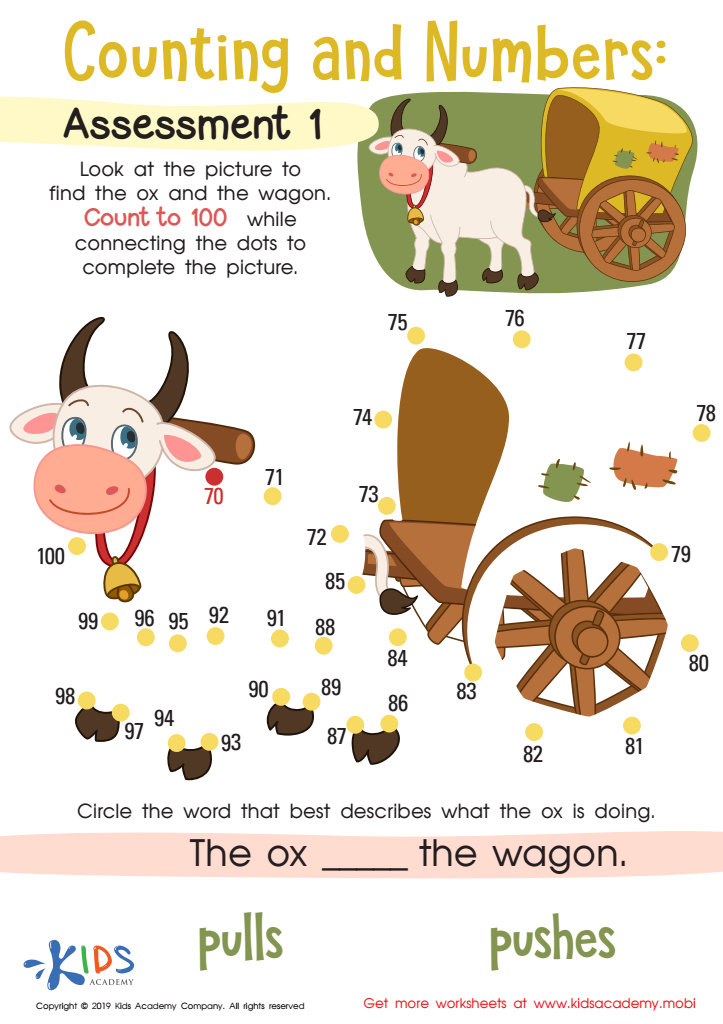
Counting and Numbers: Assessment 1 Worksheet
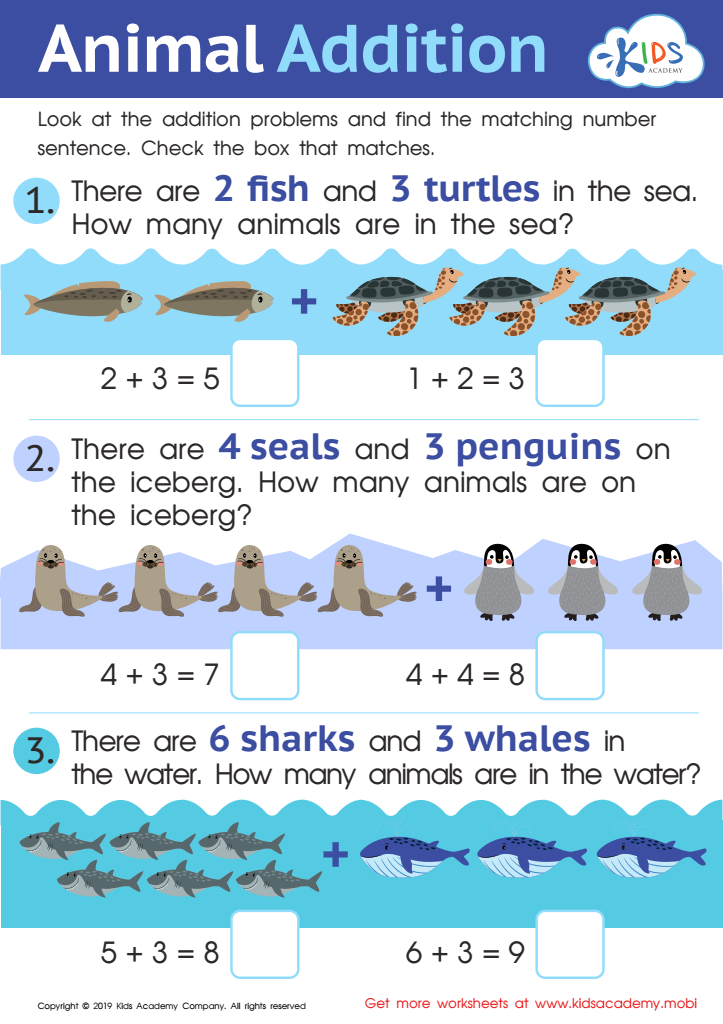
Animal Addition Worksheet
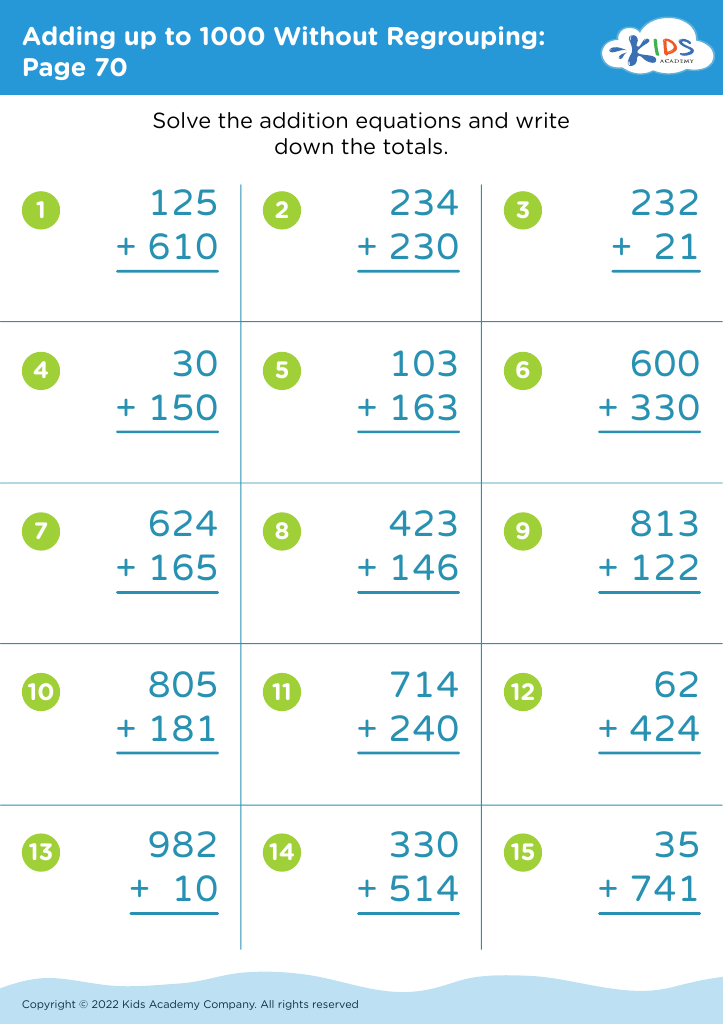







Basic addition is a foundational skill essential for children's mathematical development, particularly for those aged 7-9. During this stage, children are transitioning from simple arithmetic to more complex problem-solving tasks, and a strong grasp of addition sets the stage for future success in math. Mastery of basic addition helps children develop logical thinking and analytical skills, which are applicable in everyday life.
Moreover, addition is often the springboard for understanding more advanced concepts such as subtraction, multiplication, and division. If a child struggles with basic addition, it can create barriers in learning these subsequent skills, potentially leading to frustration and a lack of confidence in their mathematical abilities.
Additionally, proficient addition skills assist children in navigating everyday situations, like counting money, measuring ingredients in cooking, or determining distances. Engaging in addition-related activities also enables parents and teachers to build a positive learning environment and enhance a child’s cognitive and social skills through collaborative games and problem-solving exercises.
Ultimately, fostering a solid understanding of basic addition enriches children's academic performance and equips them with lifelong skills, making it a critical area of focus for parents and educators alike.








