Graph interpretation Worksheets for Ages 7-9
5 filtered results
-
From - To
Discover our engaging Graph Interpretation Worksheets designed specifically for ages 7-9! These worksheets provide young learners with essential skills to analyze and interpret various types of graphs, including bar, line, and pictographs. With fun, age-appropriate exercises, children will develop critical thinking abilities while enhancing their math and data interpretation skills. Each worksheet is crafted to align with educational standards, ensuring that students grasp important concepts through interactive learning. Perfect for classroom use or home practice, our graph interpretation resources aid in boosting confidence and competence in math. Download your worksheets today and watch your child flourish in understanding data!
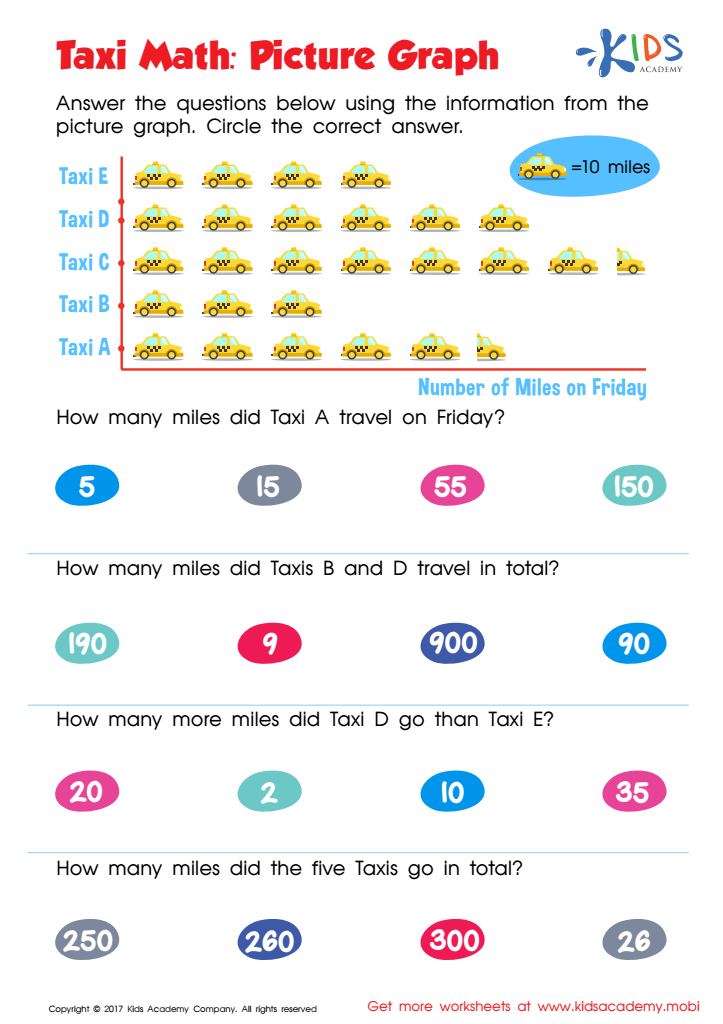
Taxi Math Worksheet
 Assign to My Students
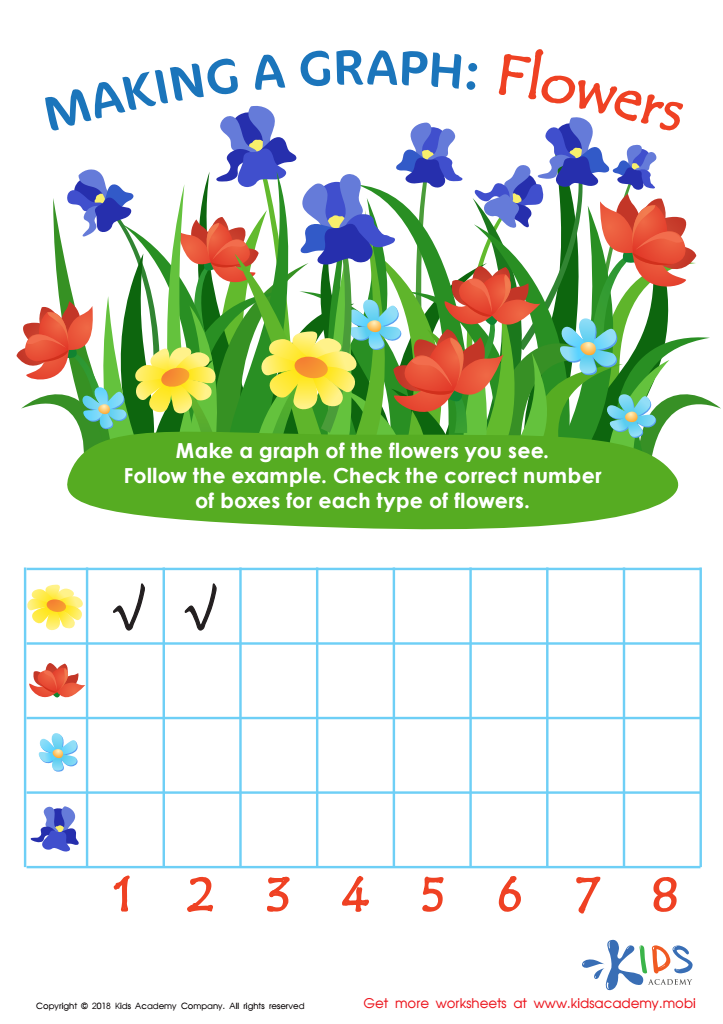
Making a Graph: Flowers Worksheet
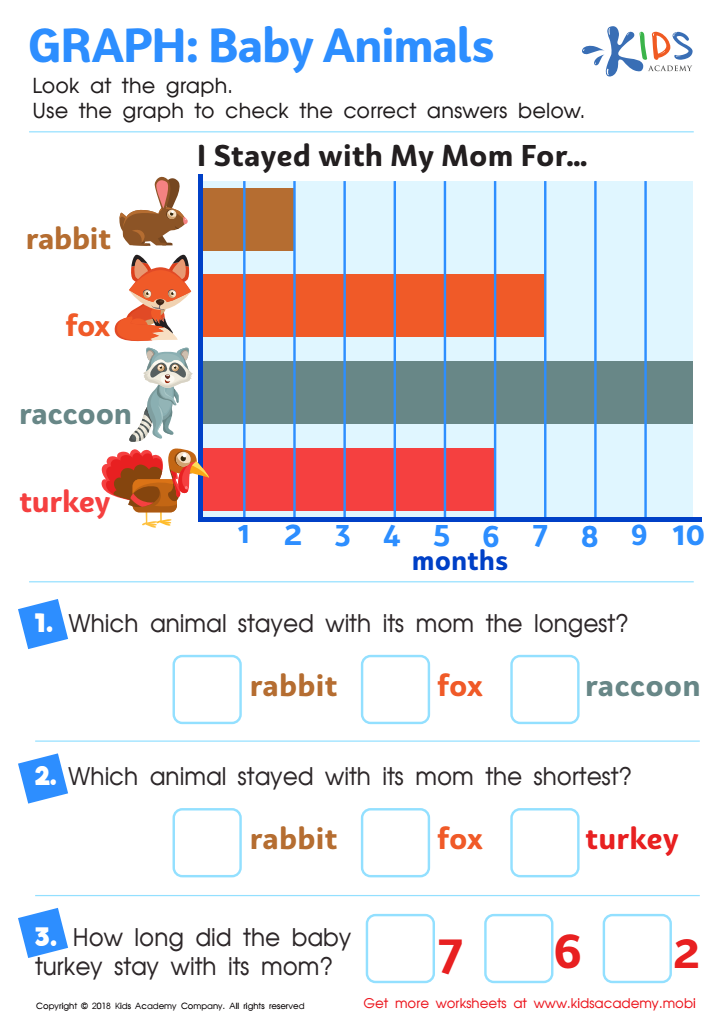
Graph: Baby Animals Worksheet
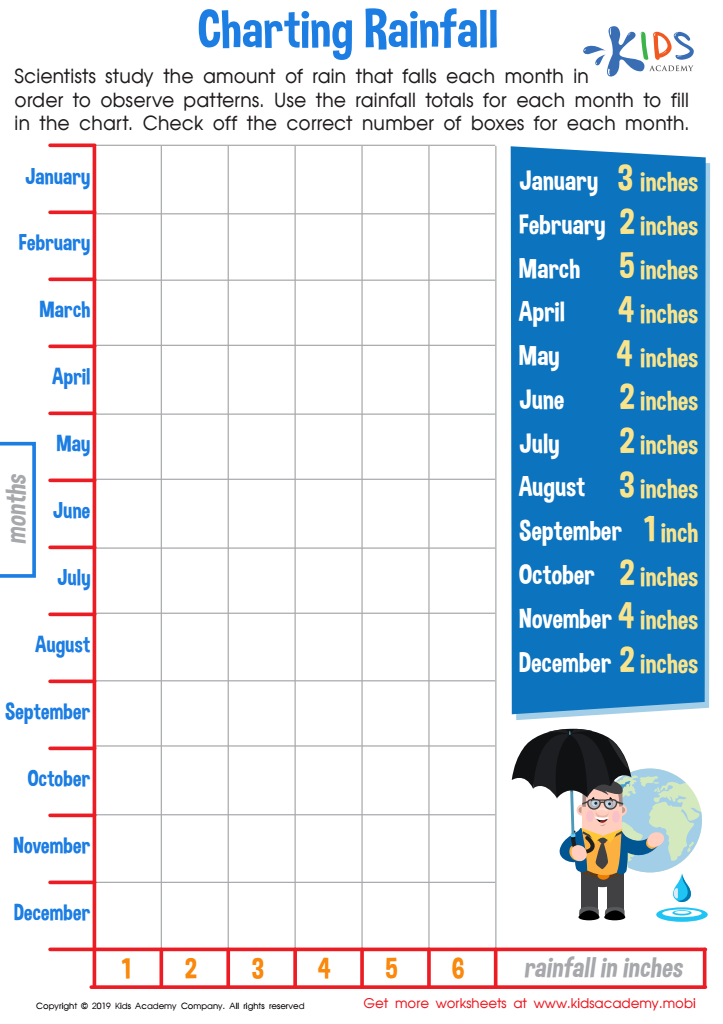
Charting Rainfall Worksheet
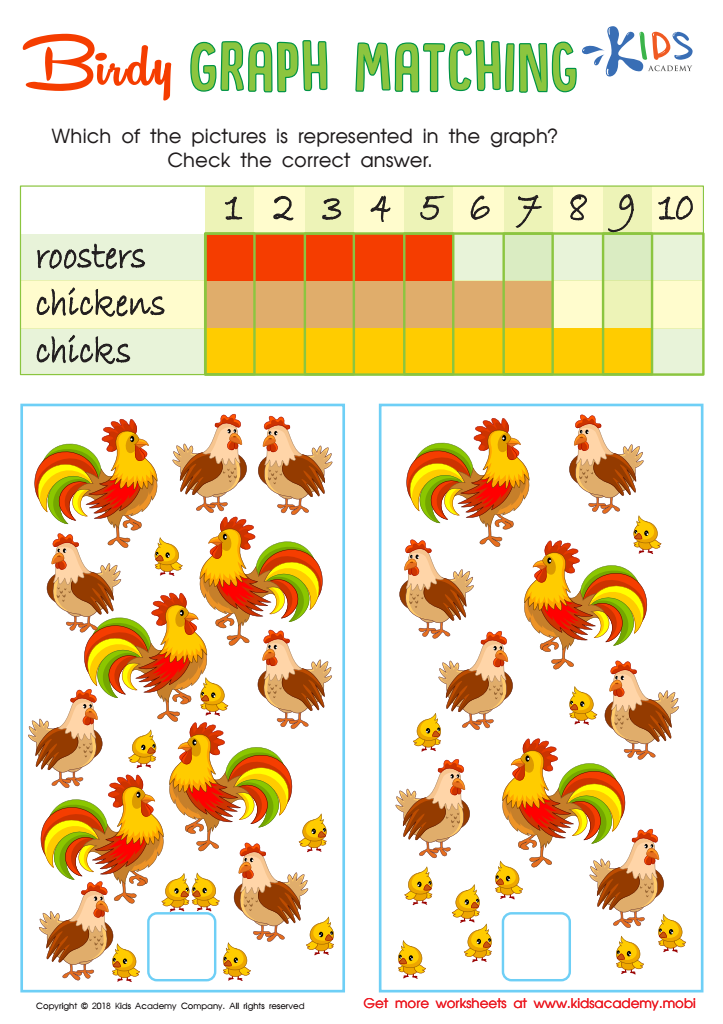
Birdy Graph Matching Worksheet





Graph interpretation is an essential skill for children aged 7 to 9, and it is crucial for both parents and teachers to prioritize this foundational knowledge. At this developmental stage, children are beginning to cultivate their critical thinking and analytical skills, and understanding graphs fosters these abilities. Interpreting graphs helps students learn to analyze data visually, identify trends, and make informed decisions based on evidence, which are important skills not only in mathematics but across various subjects.
Furthermore, graphs are ubiquitous in daily life—from weather reports to sports statistics and even social media trends. Understanding how to read graphs equips children with the ability to critically analyze information they encounter, promoting informed citizenship. Engaging with graphs also enhances their mathematical concepts, including addition, subtraction, and fractions, as they explore different types of graphs like bar charts and line graphs.
As children learn these skills early on, they build a solid foundation for future academic success and real-world problem-solving. Parents and teachers play a vital role in creating opportunities for children to engage with graphs through hands-on activities, discussions, and practical applications, making graph interpretation an essential area of focus in their education.








