Understanding Simple Machines Worksheets for Ages 7-9
3 filtered results
-
From - To
Discover our engaging "Understanding Simple Machines Worksheets for Ages 7-9," designed to spark curiosity and enhance learning about basic mechanical tools. These worksheets introduce young learners to the six types of simple machines: lever, wheel and axle, pulley, inclined plane, screw, and wedge. With colorful illustrations and age-appropriate activities, children will explore concepts through fun exercises that encourage critical thinking, problem-solving, and creativity. Ideal for classroom use or at-home learning, these resources foster an early understanding of physics while making learning enjoyable. Equip your students with the knowledge to see the everyday applications of simple machines in the world around them!
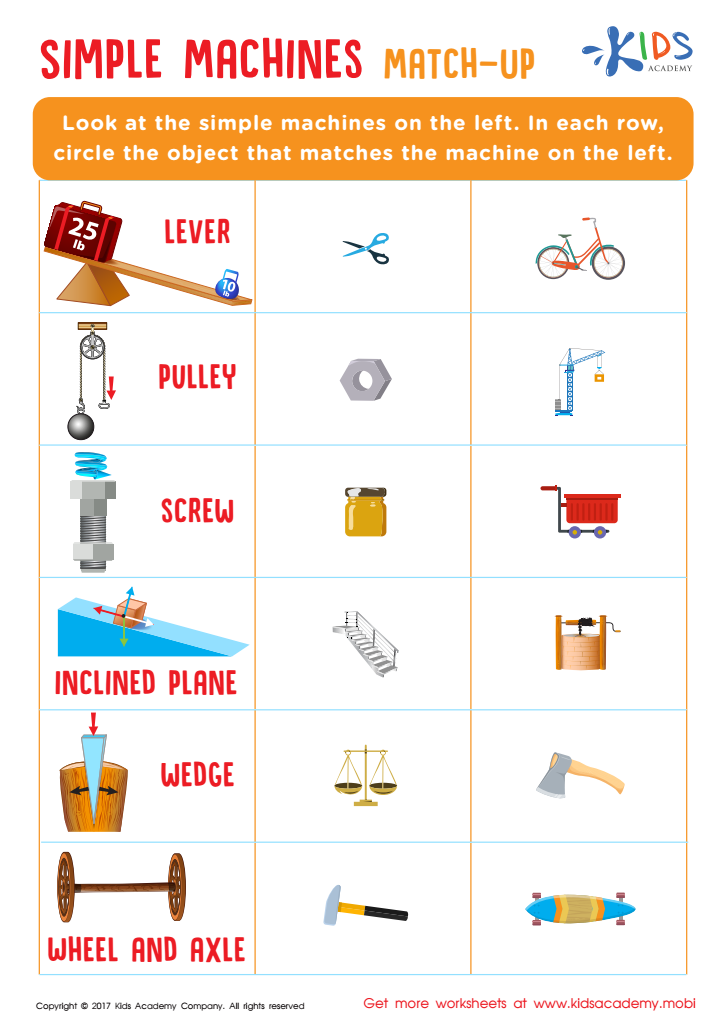
Simple Machines Worksheet
 Assign to My Students
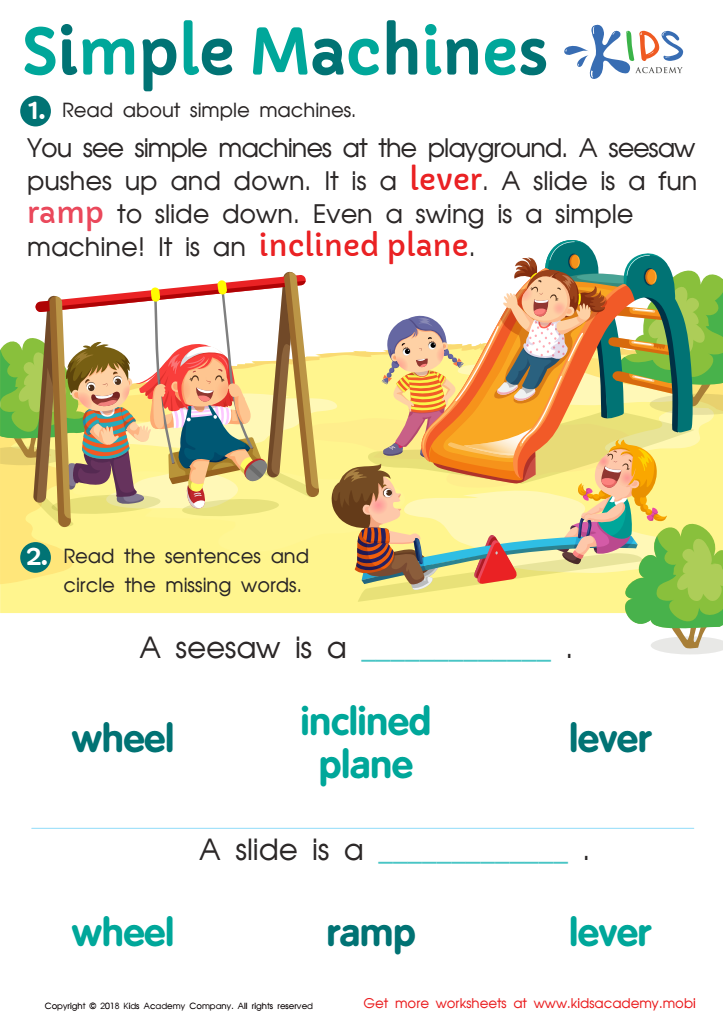
Simple Machines Worksheet
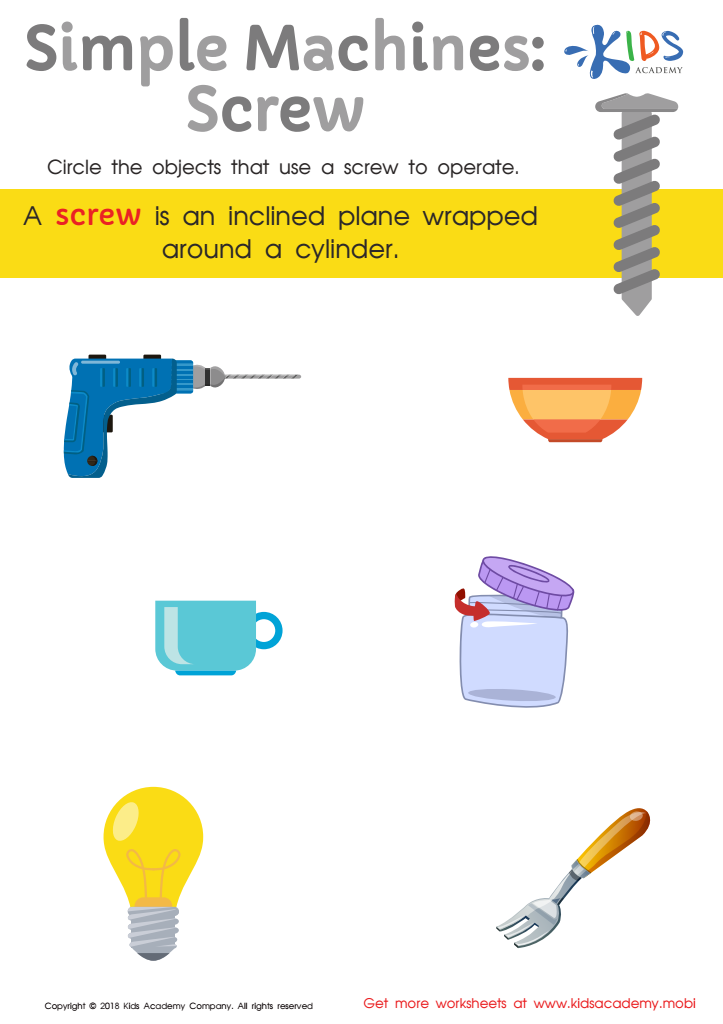
Simple Machines: Screw Worksheet


.jpg)


.jpg)


Understanding simple machines is vital for children ages 7-9 as it lays the groundwork for critical thinking and problem-solving skills. At this age, children are naturally curious and inquisitive about how things work, making it the perfect opportunity to introduce concepts like levers, pulleys, and inclined planes. By engaging with simple machines, children can explore mechanics through hands-on activities, fostering both creativity and analytical thinking.
Moreover, comprehension of simple machines integrates seamlessly into real-world applications, helping students connect science with their everyday life. Learning about these machines encourages collaborative work and communication as students might tackle projects in pairs or groups, enhancing their social skills.
Parents and teachers play a significant role in this learning process. They can create an environment that promotes exploration and experimentation, which boosts engagement and retention of knowledge. Additionally, understanding simple machines nurtures a foundation in STEM (Science, Technology, Engineering, and Mathematics), preparing children for future academic pursuits.
Ultimately, fostering this understanding not only enhances learning in school but also encourages a lifelong love for discovery, innovation, and inquiry. By valuing the teaching of simple machines, adults invest in their children's cognitive and practical skills essential for future success.








