Comparing lengths Addition & Subtraction Worksheets for Ages 7-9
3 filtered results
-
From - To
Boost your child's math skills with our engaging "Comparing Lengths Addition & Subtraction Worksheets" designed for ages 7-9! These worksheets provide a fun and interactive way for young learners to practice their addition and subtraction skills while comparing lengths. With colorful illustrations and relatable examples, children can grasp the concepts of measurement and develop their problem-solving abilities. Each activity promotes critical thinking and reinforces math fundamentals, making learning enjoyable and effective. Perfect for classroom use or homeschooling, these worksheets help kids build confidence and achieve mastery in their math skills. Download today and watch their understanding of lengths grow!
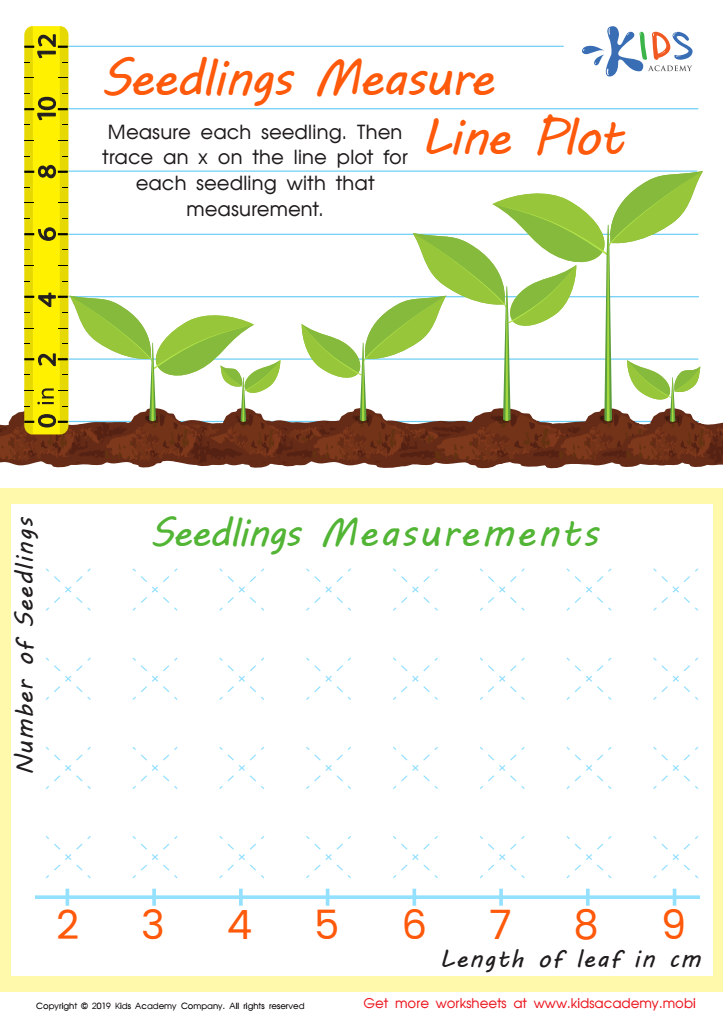
Seedling Measure Line Plot Worksheet
 Assign to My Students
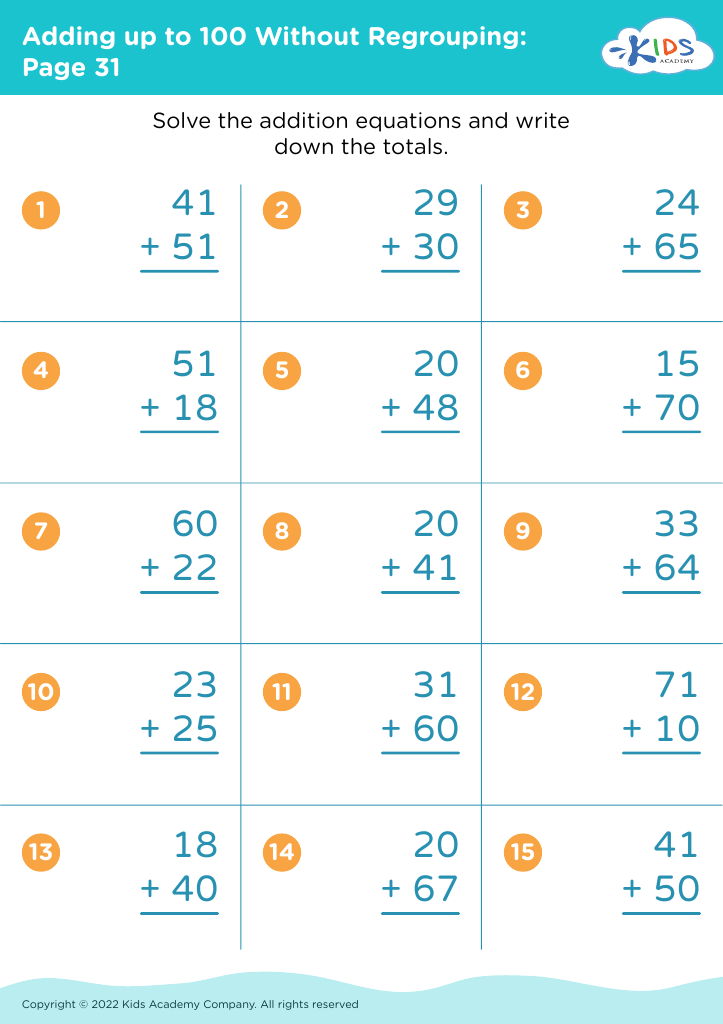
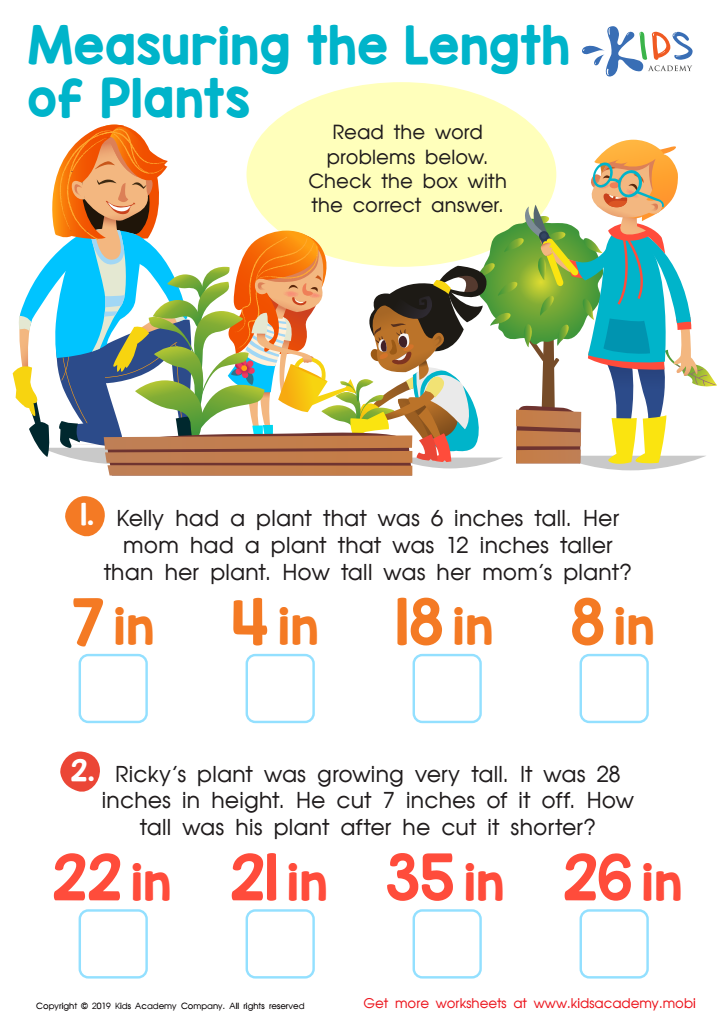
Measuring the Length of Plants Worksheet








Parents and teachers play a vital role in nurturing mathematical understanding in children aged 7-9, particularly with concepts such as comparing lengths and performing addition and subtraction. At this developmental stage, children are transitioning from basic arithmetic to more complex problem-solving skills. Engaging with comparing lengths not only helps children understand measurement but also sharpens their ability to identify and analyze differences and relationships between objects in their environment.
Moreover, addition and subtraction are foundational skills in mathematics. The ability to accurately add and subtract enhances a child's numerical fluency, fostering confidence and competence in handling various mathematical tasks. Mastery of these skills is crucial as they form the basis for more advanced mathematical concepts, including multiplication and division.
Learning through practical experiences—such as comparing lengths of objects—makes math tangible and relevant. This approach helps children develop critical thinking skills and can even inspire interests in geometry and other advanced mathematics.
Ultimately, when parents and teachers prioritize these concepts, they not only address curriculum standards but also equip children with essential life skills. By fostering a strong mathematical foundation, we prepare children for future academic success and empower them to navigate a world filled with quantitative challenges.








