Filters

817 filtered results

Clear all filters
Favorites
With answer key
Interactive

817 filtered results

Difficulty Level

Grade


Subject

    Check out this FREE Trial Lesson on Addition for age 7-9!

    My Family

    Favorites
    With answer key
    Interactive
    • 7-9
    • Addition
    Adding up to 100: Page 39
    Adding up to 100: Page 39

    Adding up to 100: Page 39

    Adding up to 100: Page 39
    Worksheet
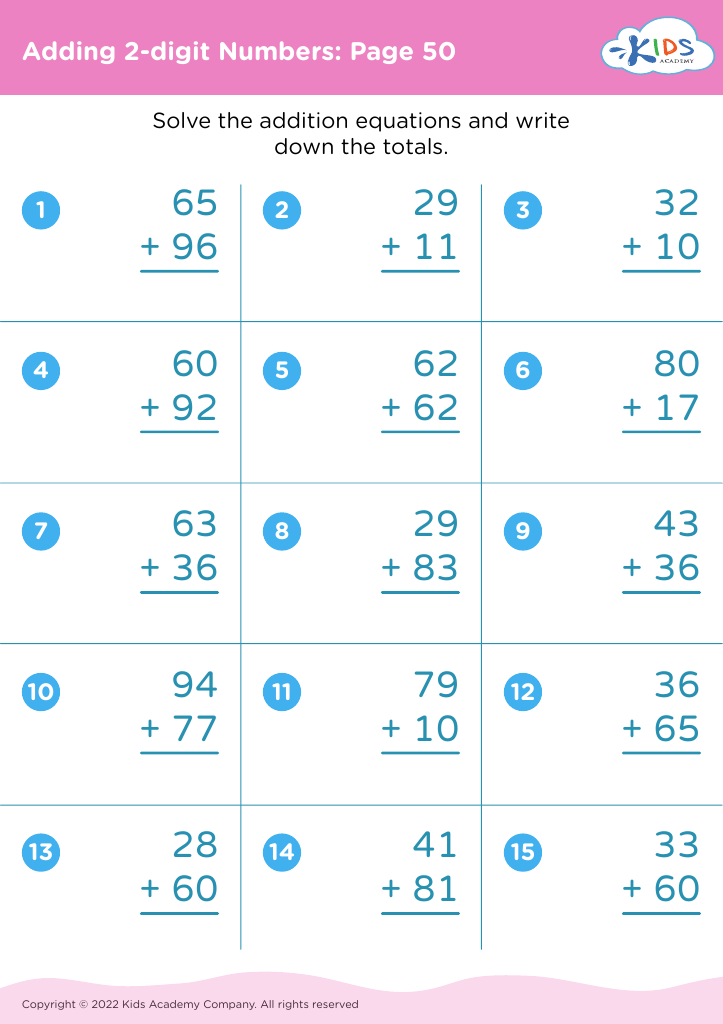
    Adding 2-digit Numbers: Page 50
    Adding 2-digit Numbers: Page 50

    Adding 2-digit Numbers: Page 50

    Adding 2-digit Numbers: Page 50
    Worksheet
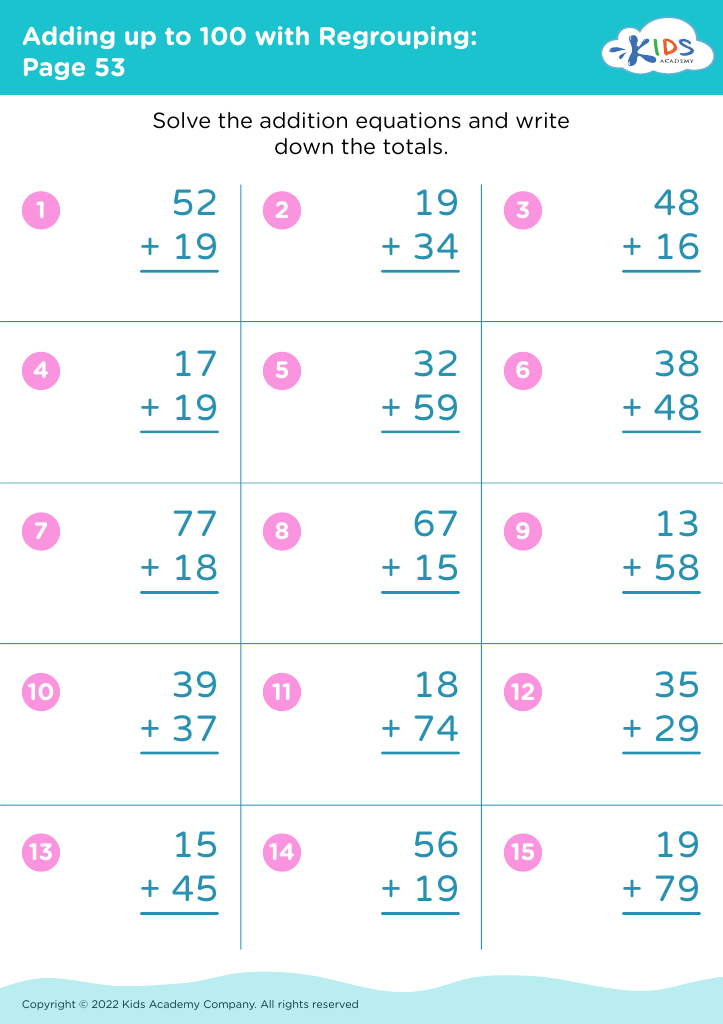
    Adding up to 100 with Regrouping: Page 53
    Adding up to 100 with Regrouping: Page 53
    Adding up to 100 with Regrouping: Page 53
    Worksheet
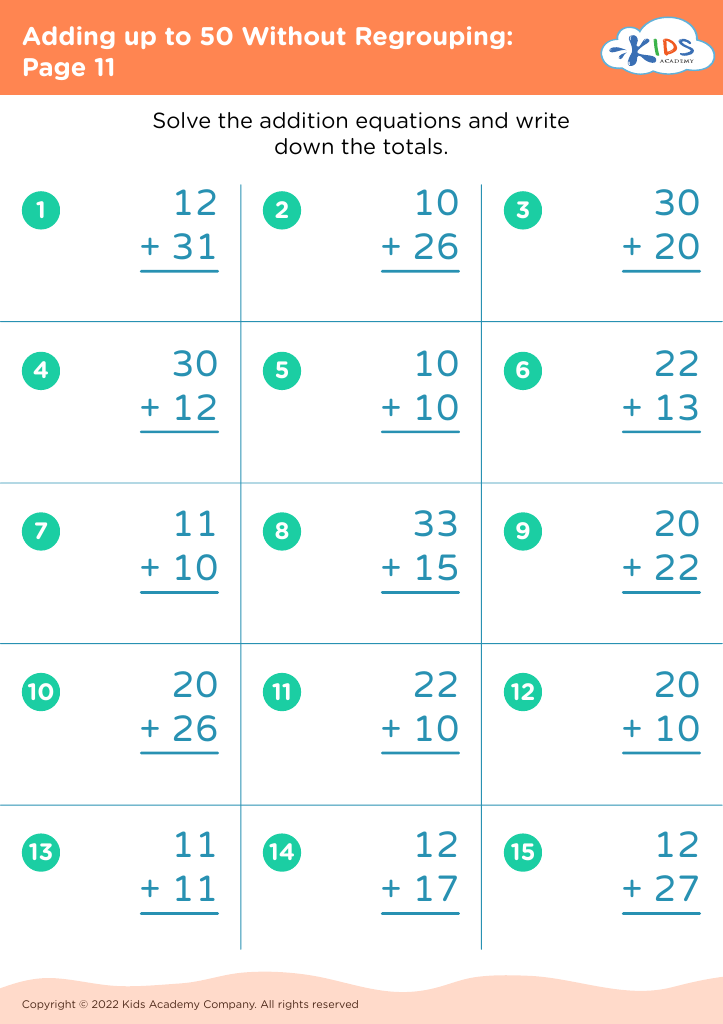
    Adding up to 50 Without Regrouping: Page 11
    Adding up to 50 Without Regrouping: Page 11
    Adding up to 50 Without Regrouping: Page 11
    Worksheet
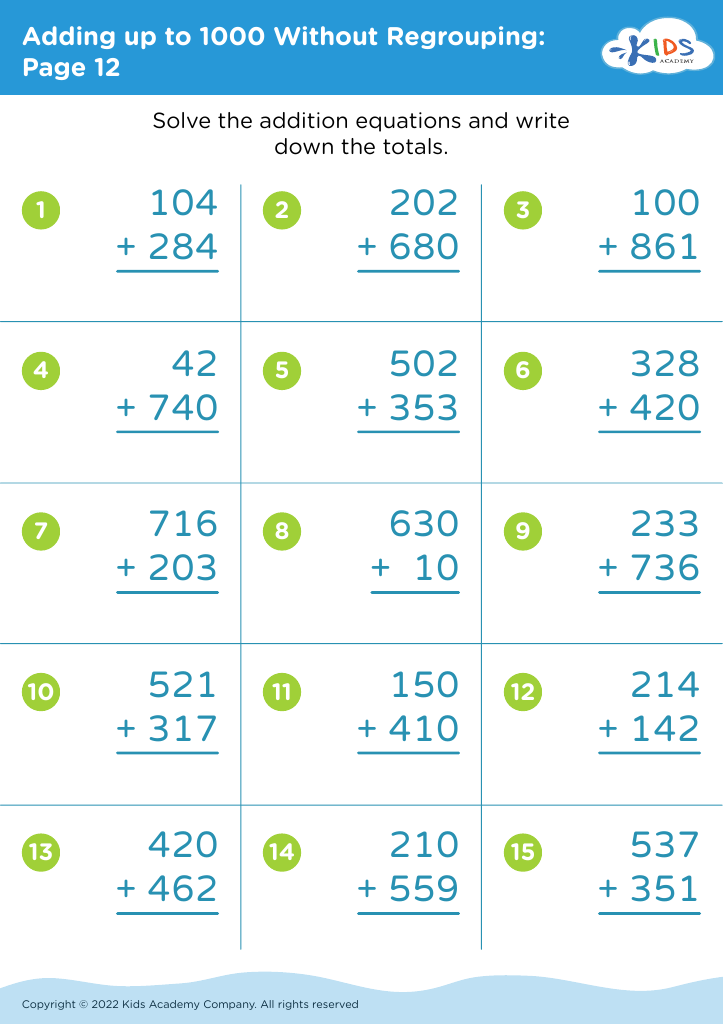
    Adding up to 1000 Without Regrouping: Page 12
    Adding up to 1000 Without Regrouping: Page 12
    Adding up to 1000 Without Regrouping: Page 12
    Worksheet
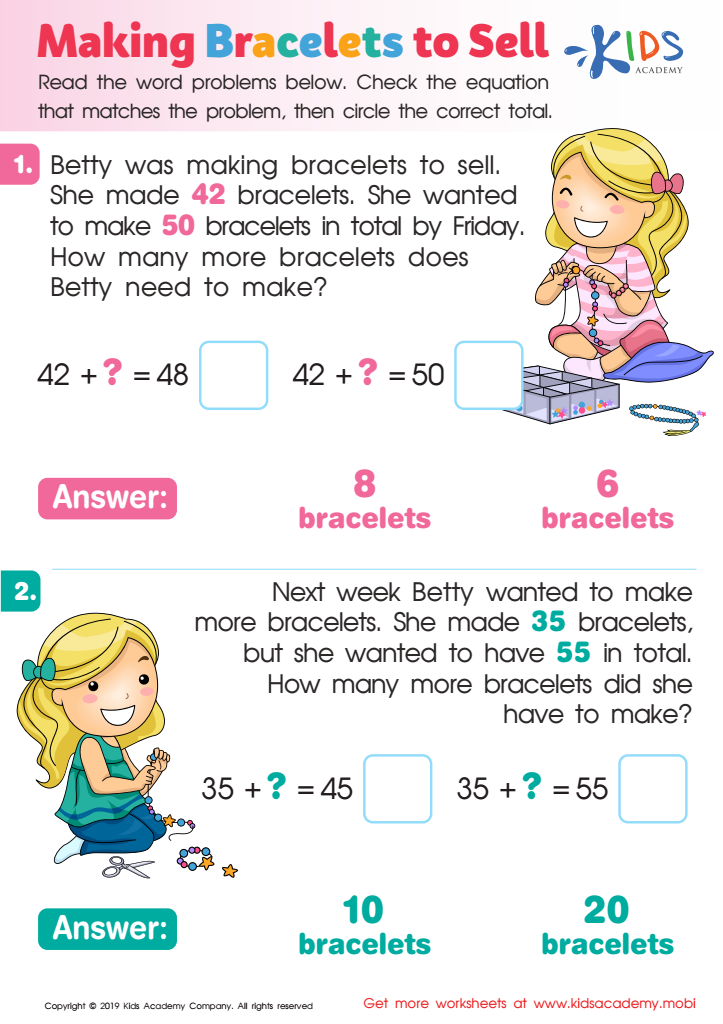
    Making Bracelets to Sell Worksheet
    Making Bracelets to Sell Worksheet
    Making Bracelets to Sell Worksheet
    Got kids who love crafting? This worksheet will be right up their alley! Let them use their creative and problem-solving skills to check equations and decide the correct total. It's just like making beads into a bracelet but on paper! Print out this downloadable PDF and get ready for a fun craft session.
    Making Bracelets to Sell Worksheet
    Worksheet
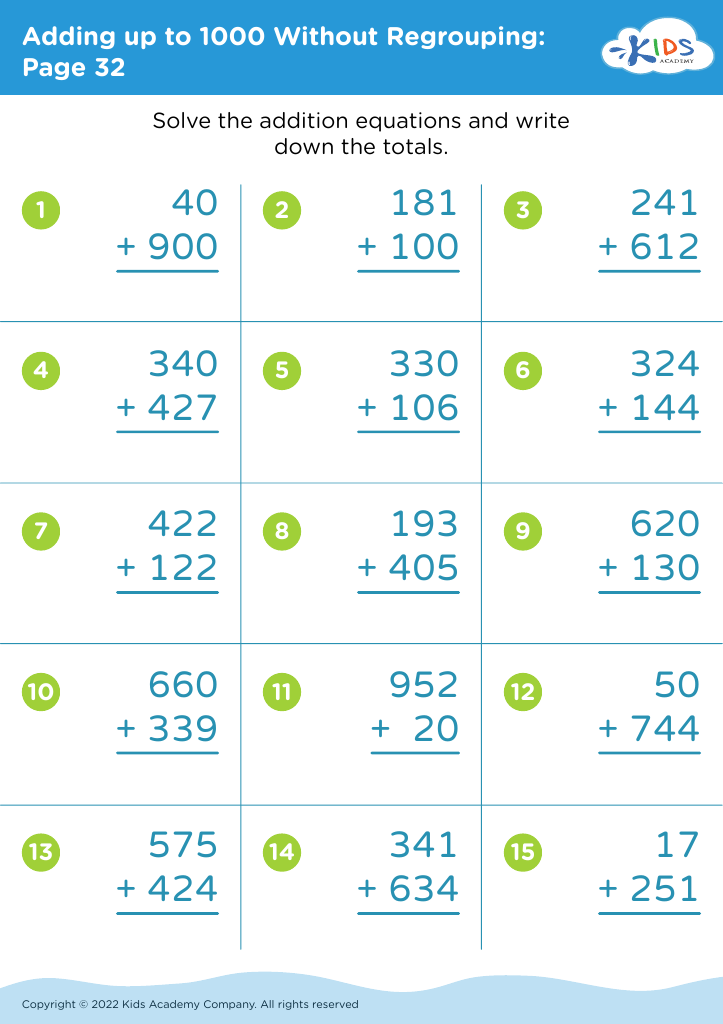
    Adding up to 1000 Without Regrouping: Page 32
    Adding up to 1000 Without Regrouping: Page 32
    Adding up to 1000 Without Regrouping: Page 32
    Worksheet
    Adding up to 50 with Regrouping: Page 11
    Adding up to 50 with Regrouping: Page 11
    Adding up to 50 with Regrouping: Page 11
    Worksheet
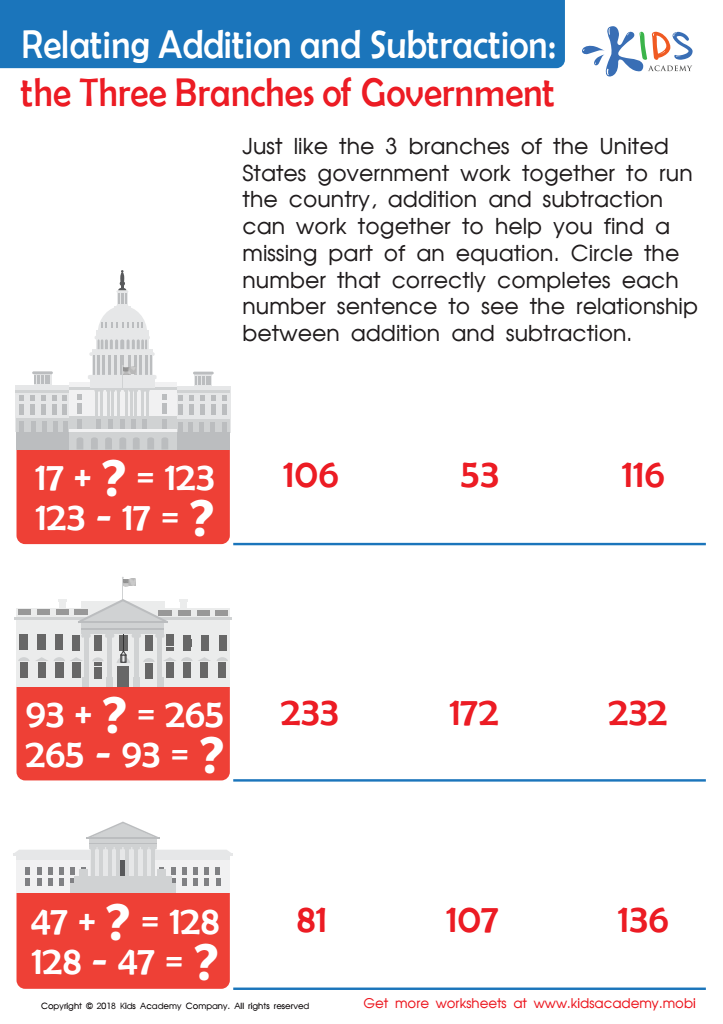
    The Three Branches of Government Worksheet
    The Three Branches of Government Worksheet
    The Three Branches of Government Worksheet

    Students learn best when they can relate ideas, like the three branches of government working together and addition and subtraction working together. This worksheet pairs math and social studies to help learners make an analogy. Help your child discover the relationship between addition and subtraction by completing the number sentences under each national landmark. This will help them solve tricky problems!
    The Three Branches of Government Worksheet
    Worksheet
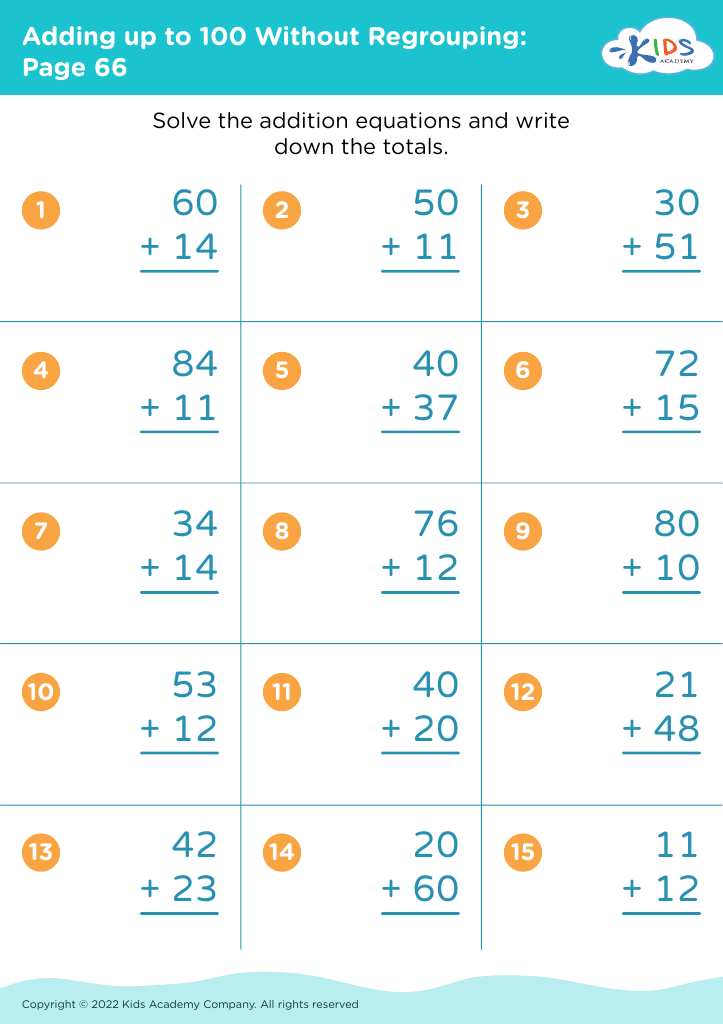
    Adding up to 100 Without Regrouping: Page 66
    Adding up to 100 Without Regrouping: Page 66
    Adding up to 100 Without Regrouping: Page 66
    Worksheet
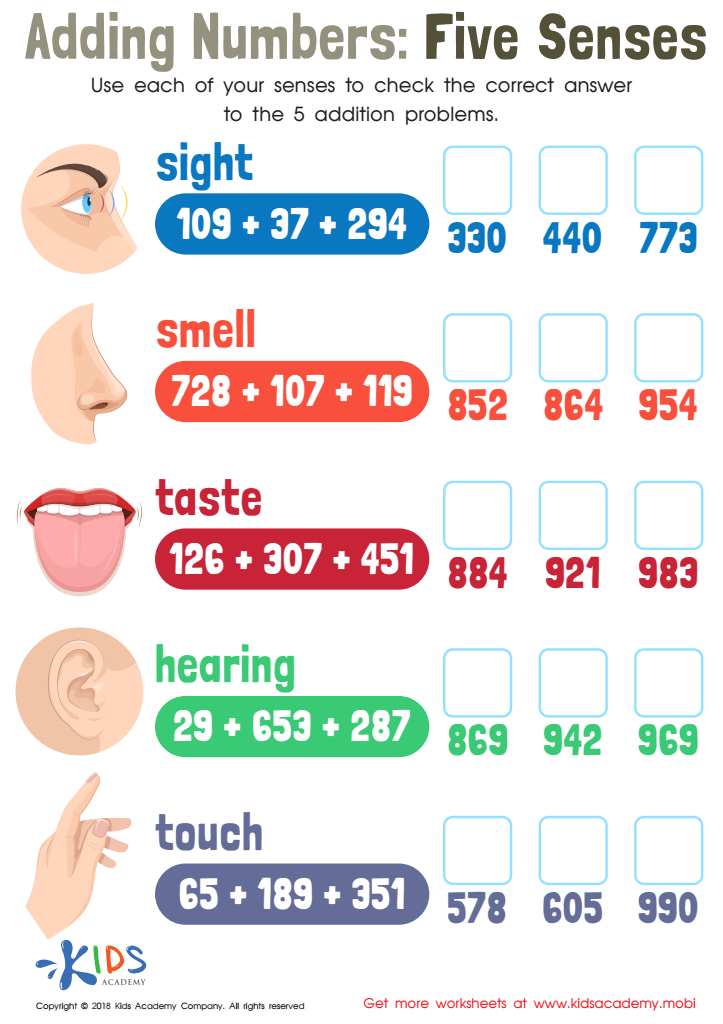
    Adding Numbers: Five Senses Worksheet
    Adding Numbers: Five Senses Worksheet
    Adding Numbers: Five Senses Worksheet
    Help your child identify the five senses on their body: eye, nose, tongue, ear, and skin. Explain that they're used for seeing, smelling, tasting, hearing and touching. Then, have them solve the five addition problems in the worksheet and check the correct answers.
    Adding Numbers: Five Senses Worksheet
    Worksheet
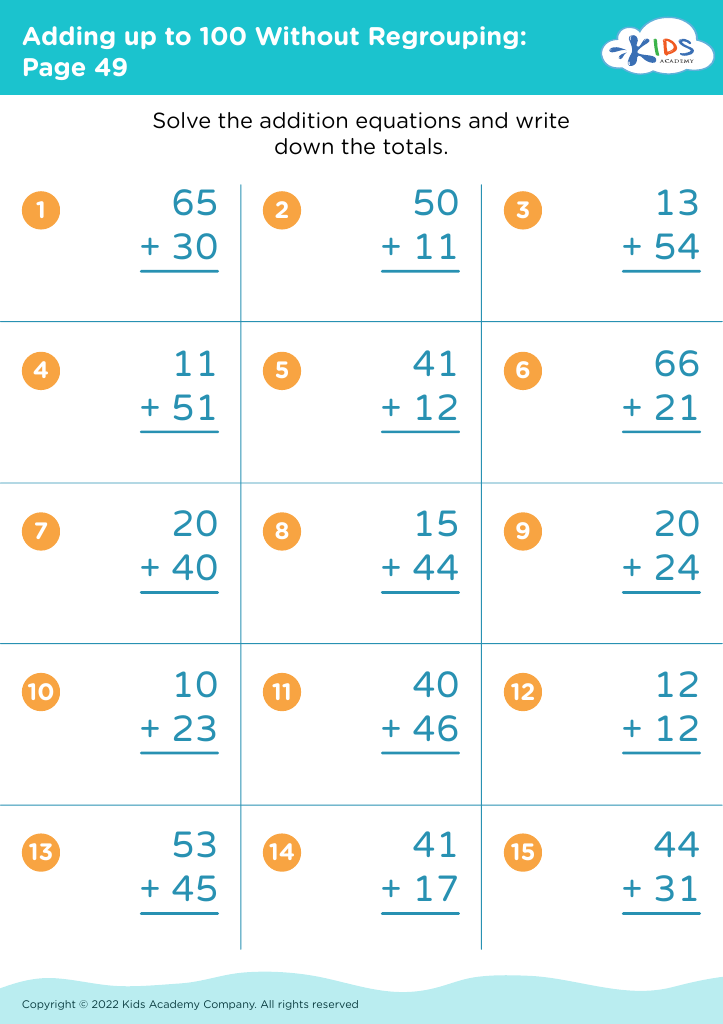
    Adding up to 100 Without Regrouping: Page 49
    Adding up to 100 Without Regrouping: Page 49
    Adding up to 100 Without Regrouping: Page 49
    Worksheet
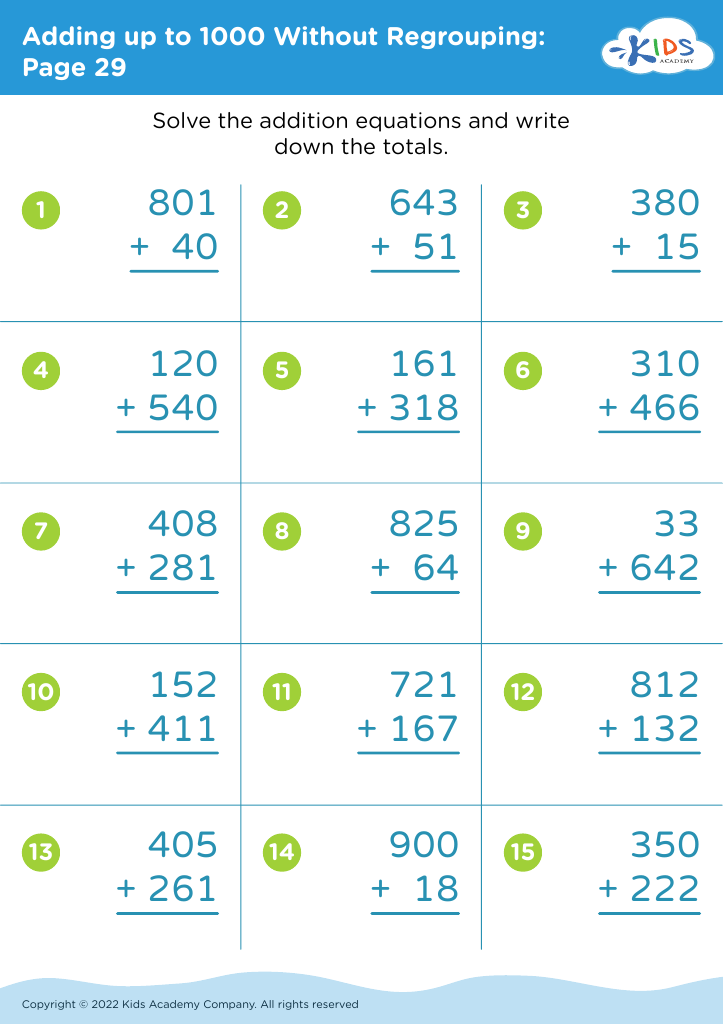
    Adding up to 1000 Without Regrouping: Page 29
    Adding up to 1000 Without Regrouping: Page 29
    Adding up to 1000 Without Regrouping: Page 29
    Worksheet
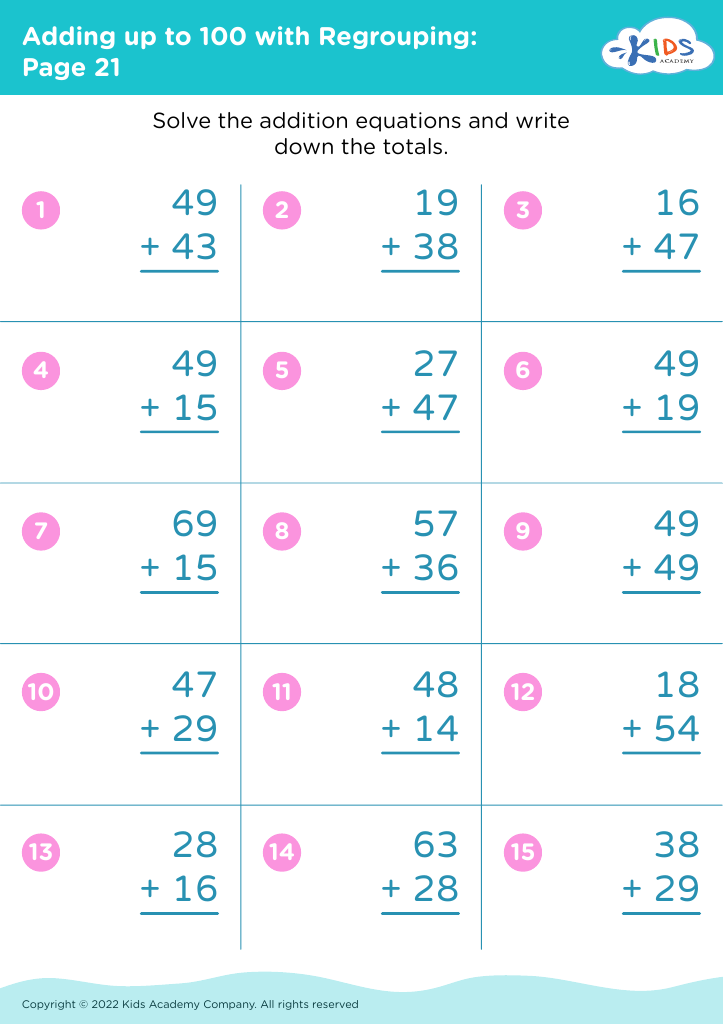
    Adding up to 100 with Regrouping: Page 21
    Adding up to 100 with Regrouping: Page 21
    Adding up to 100 with Regrouping: Page 21
    Worksheet
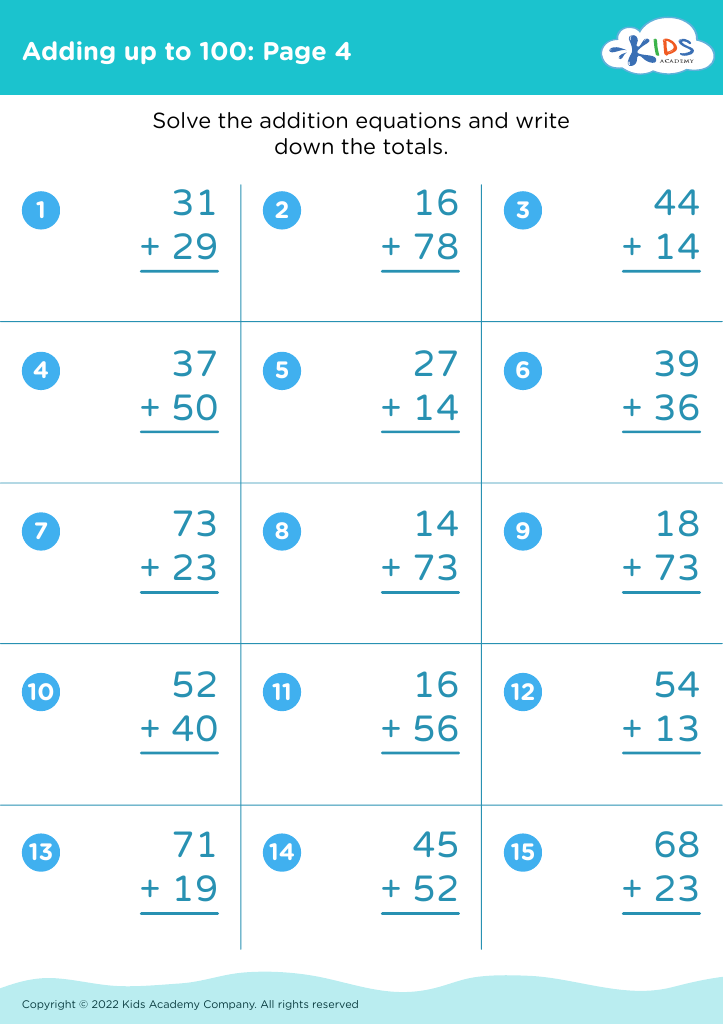
    Adding up to 100: Page 4
    Adding up to 100: Page 4

    Adding up to 100: Page 4

    Adding up to 100: Page 4
    Worksheet
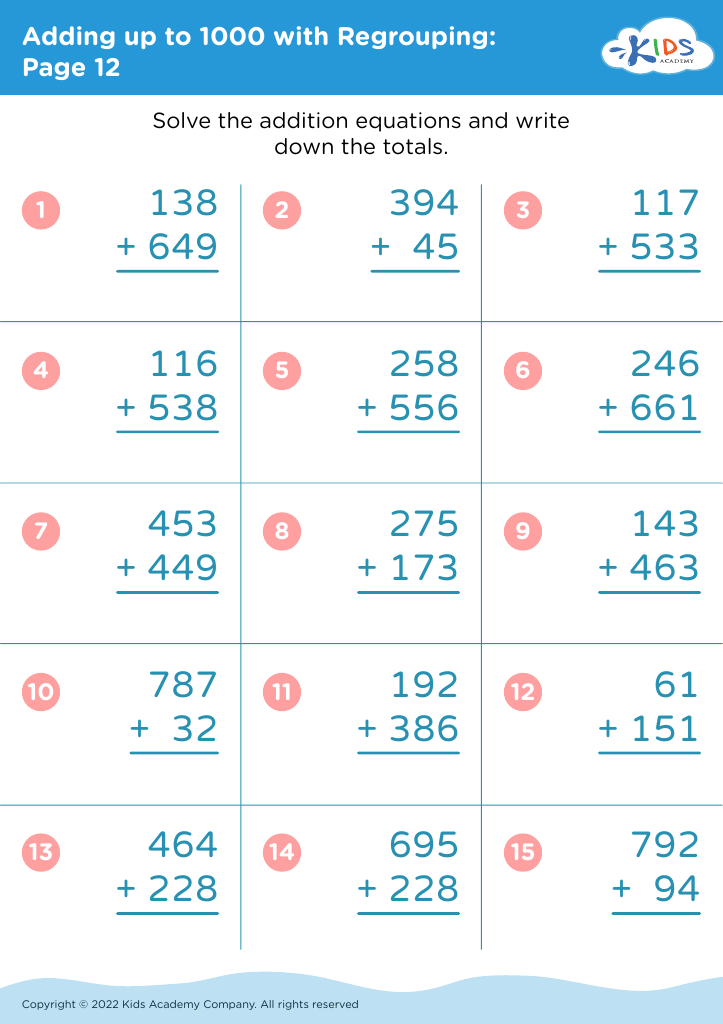
    Adding up to 1000 with Regrouping: Page 12
    Adding up to 1000 with Regrouping: Page 12
    Adding up to 1000 with Regrouping: Page 12
    Worksheet
    Addition with regrouping worksheet
    Addition with regrouping worksheet

    Addition with Regrouping Worksheet
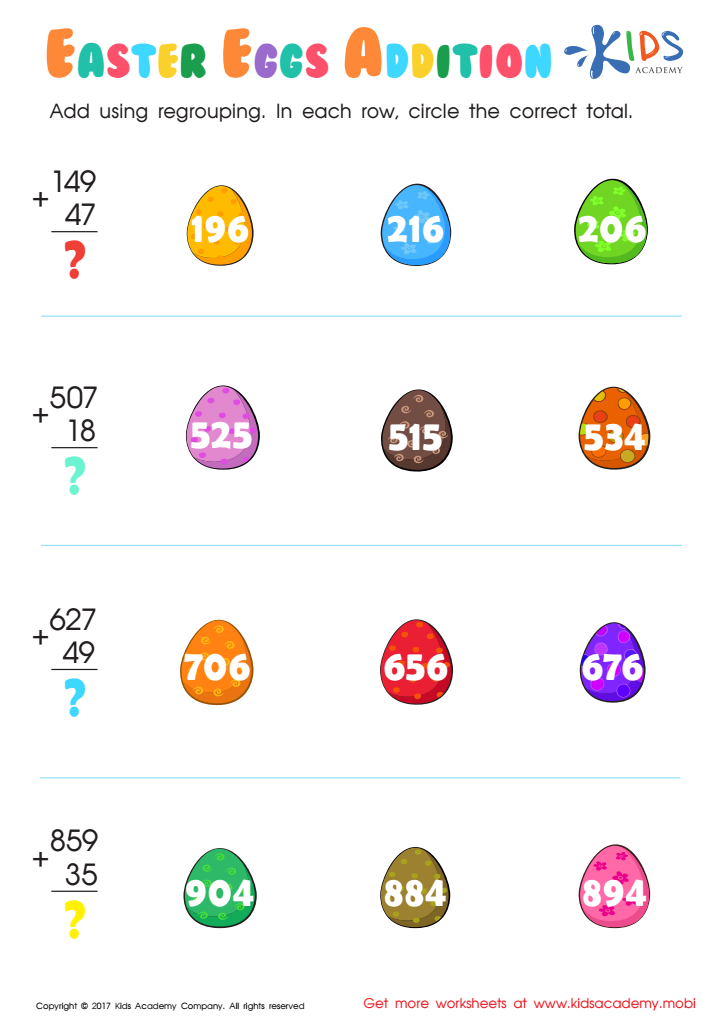
    Try this fun holiday-themed addition with regrouping worksheet! Kids can practice adding while regrouping using bright, colorful holiday images. It's a great way to make math exciting, and keep their interest piqued!
    Addition with Regrouping Worksheet
    Worksheet
    Voting Worksheet
    Voting Worksheet

    Voting Worksheet

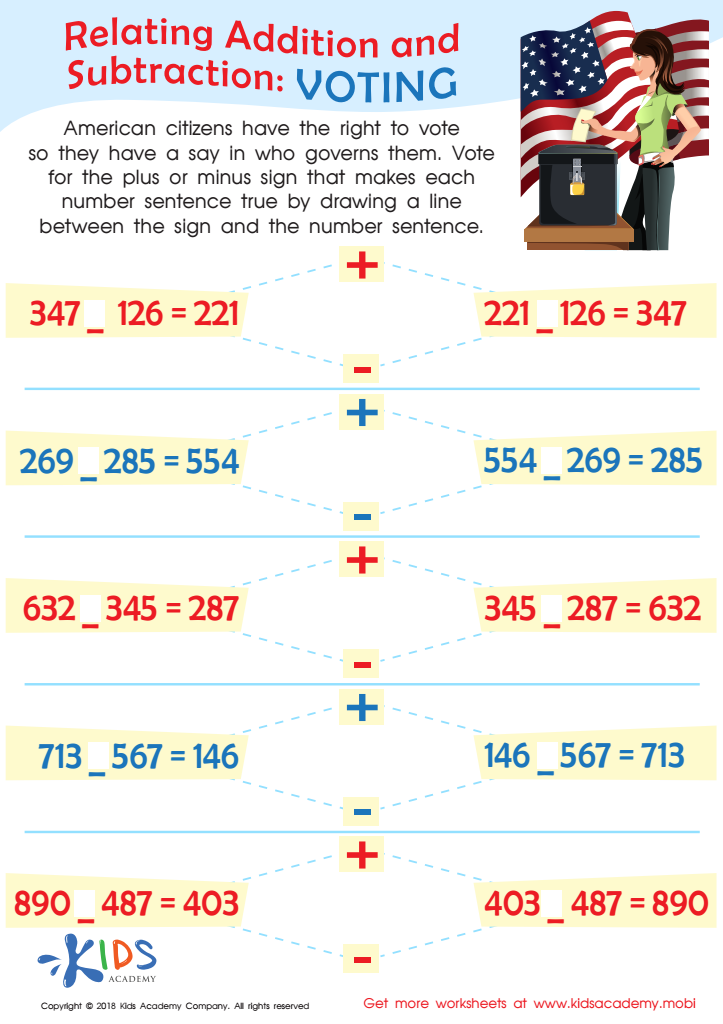
    This worksheet combines Social Studies and Math, teaching kids the democratic concept of voting. Guide learners to observe the problem, and decide if it needs a plus or minus. They "vote" for the correct answer by drawing a line from the problem to the correct operation symbol. Tally up the votes to check the answers!
    Voting Worksheet
    Worksheet
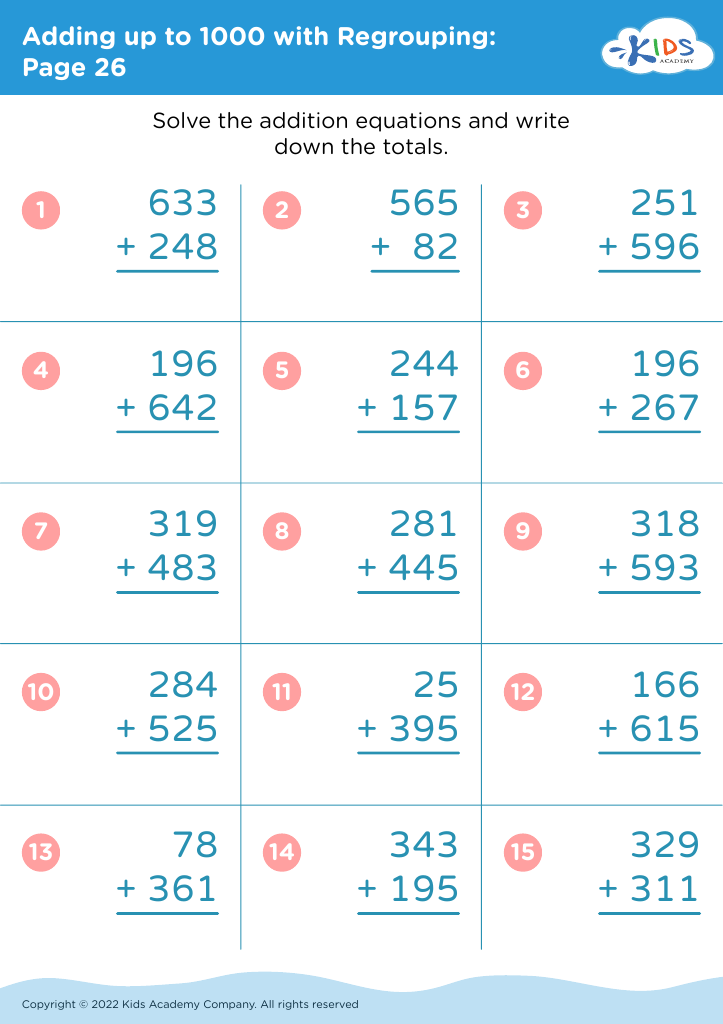
    Adding up to 1000 with Regrouping: Page 26
    Adding up to 1000 with Regrouping: Page 26
    Adding up to 1000 with Regrouping: Page 26
    Worksheet
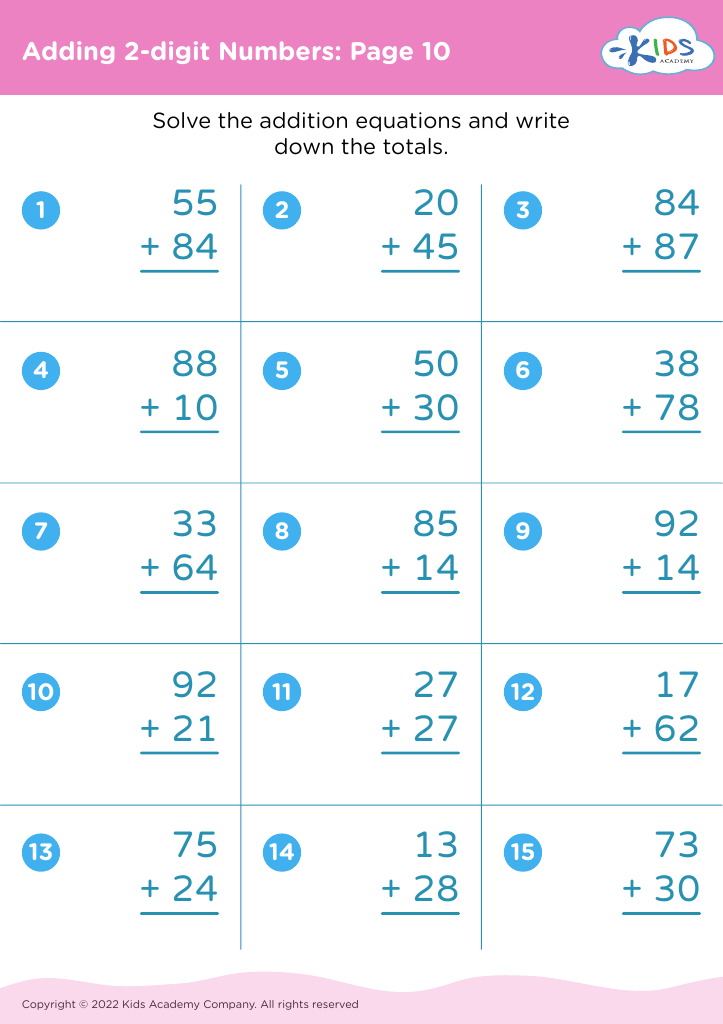
    Adding 2-digit Numbers: Page 10
    Adding 2-digit Numbers: Page 10

    Adding 2-digit Numbers: Page 10

    Adding 2-digit Numbers: Page 10
    Worksheet
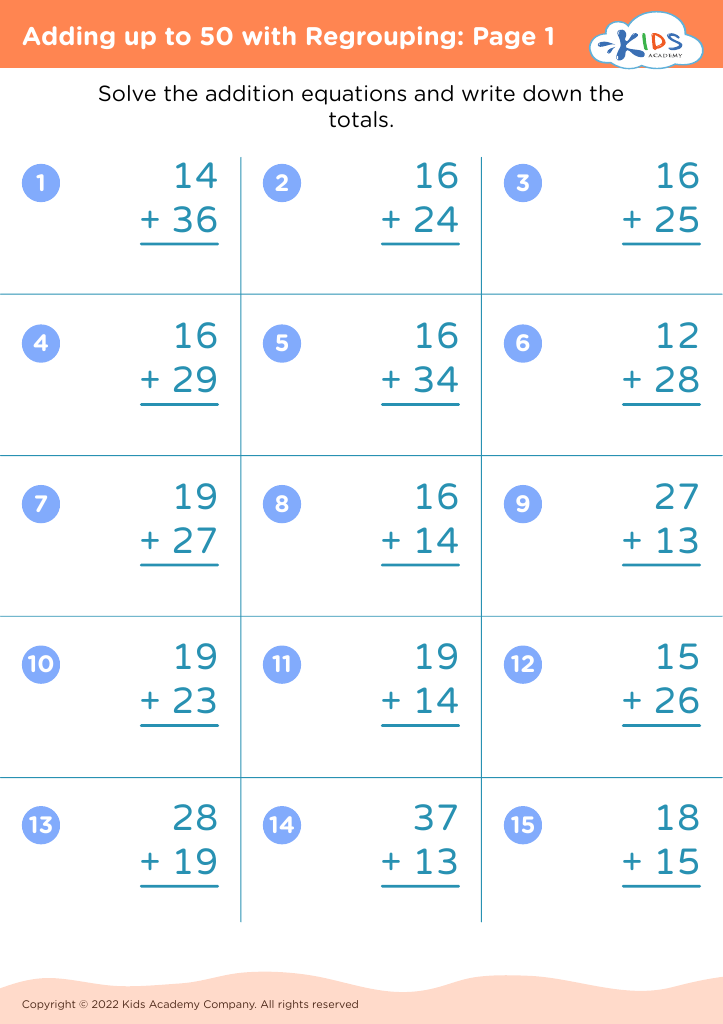
    Adding up to 50 with Regrouping: Page 1
    Adding up to 50 with Regrouping: Page 1
    Adding up to 50 with Regrouping: Page 1
    Worksheet
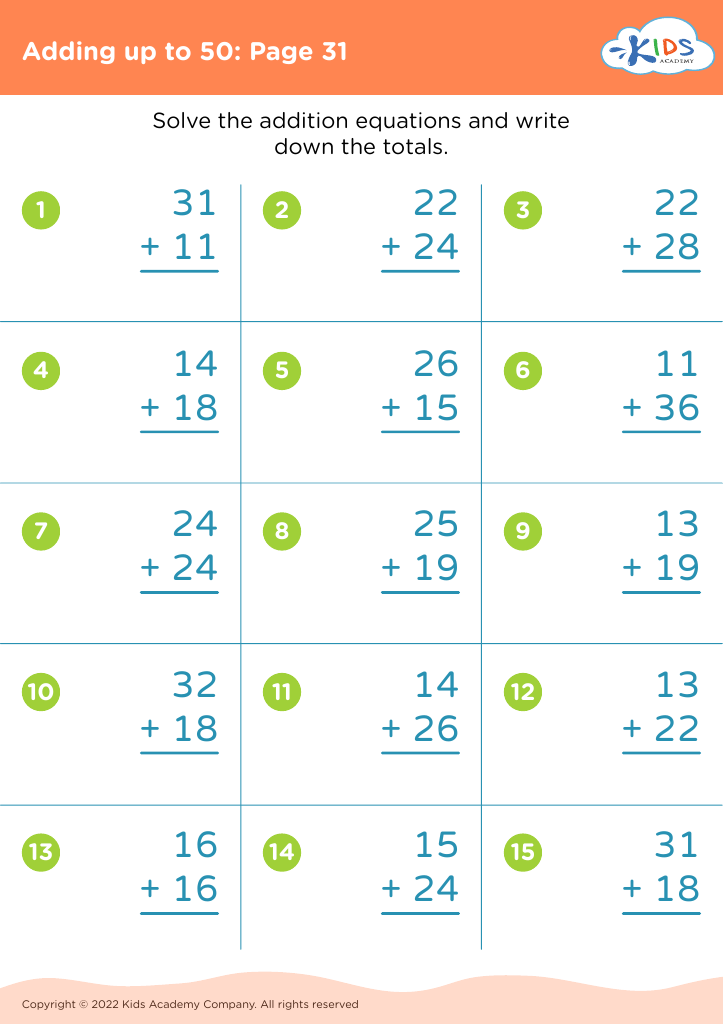
    Adding up to 50: Page 31
    Adding up to 50: Page 31

    Adding up to 50: Page 31

    Adding up to 50: Page 31
    Worksheet
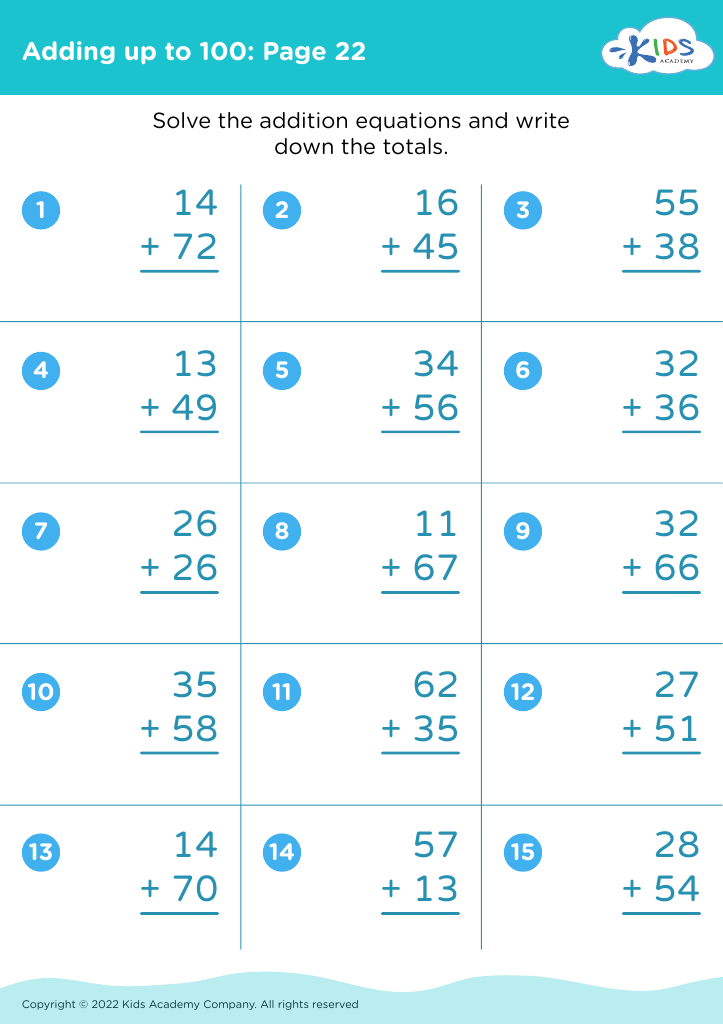
    Adding up to 100: Page 22
    Adding up to 100: Page 22

    Adding up to 100: Page 22

    Adding up to 100: Page 22
    Worksheet
    Adding up to 1000: Page 54
    Adding up to 1000: Page 54

    Adding up to 1000: Page 54

    Adding up to 1000: Page 54
    Worksheet


    Parents and teachers should prioritize teaching addition to children ages 7-9, as this foundational skill plays a crucial role in a child’s overall development. At this age, children move beyond basic computation and begin to understand more complex mathematical concepts, which can influence their academic performance and future learning. Mastering addition builds confidence and fosters a positive attitude towards math, encouraging kids to tackle more challenging subjects as they progress.

    Addition is also integral to everyday life, enabling children to handle real-world situations, from managing their allowance to playing games that require point calculations. Early proficiency in addition supports the development of critical thinking and problem-solving skills, enhancing cognitive abilities. Furthermore, it lays the groundwork for understanding other important mathematical concepts, such as subtraction, multiplication, and division.

    Incorporating engaging methods, such as games and manipulatives, can make learning addition fun and relatable, reinforcing comprehension through diverse experiences. By investing in children’s addition skills, parents and teachers help create a strong mathematical foundation that will serve them well throughout their academic journeys and beyond.