Filters

17 filtered results

Clear all filters
Favorites
With answer key
Interactive

17 filtered results

Difficulty Level

Grade


Explore our "Enhance Comprehension Addition Worksheets" designed specifically for children aged 7-9! These engaging and interactive worksheets focus on improving addition skills while boosting overall comprehension. Tailored to align with key educational standards, our resources incorporate a variety of formats, including word problems, visual aids, and real-life scenarios, making math both fun and relatable. With each worksheet, students will build confidence in their mathematical abilities, deepen their understanding of addition concepts, and develop critical thinking skills. Perfect for classroom use or at-home practice, our worksheets are designed to support young learners as they progress on their educational journey. Get started today!
Check out this FREE Trial Lesson on Addition for age 7-9!

A

Favorites
With answer key
Interactive
  • 7-9
  • Enhance comprehension
  • Addition
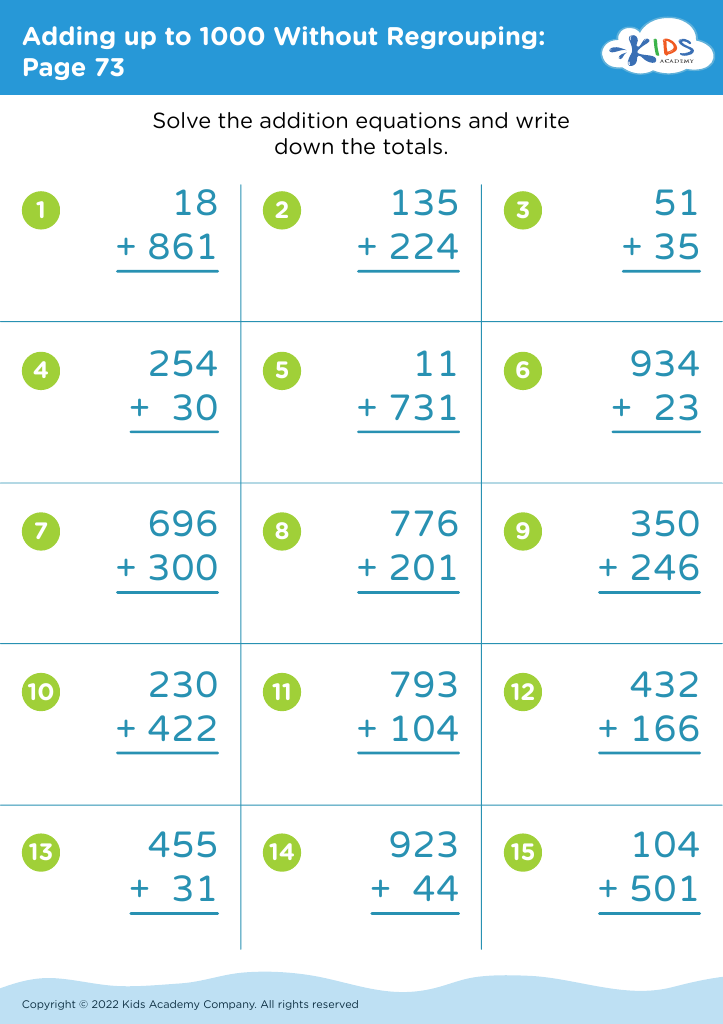
Adding up to 1000 Without Regrouping: Page 73
Worksheet
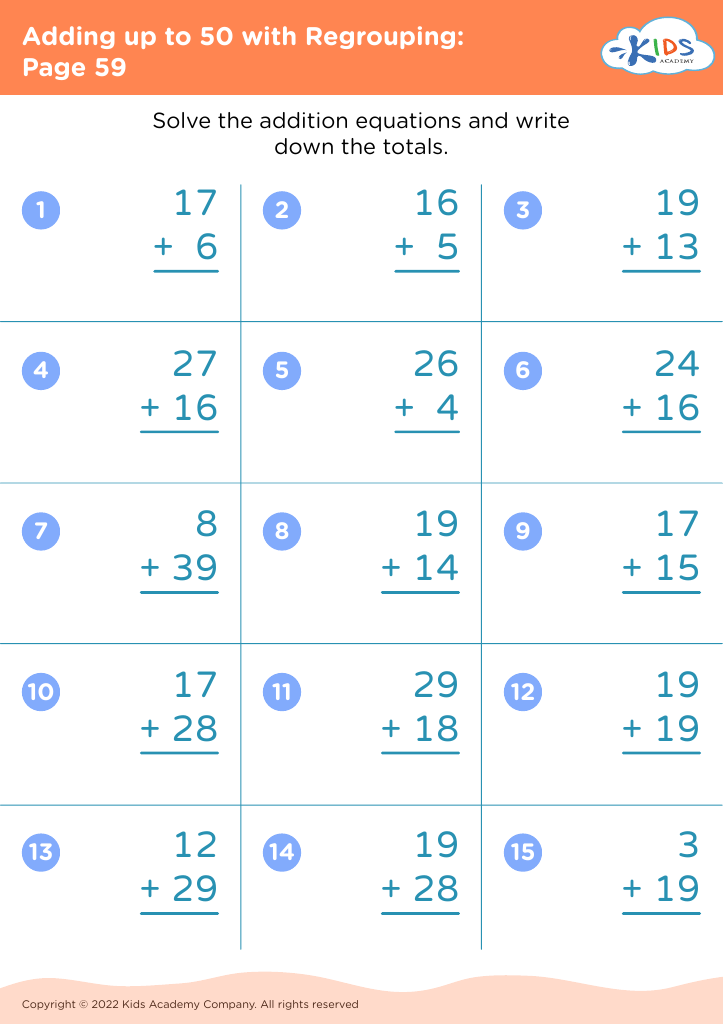
Adding up to 50 with Regrouping: Page 59
Worksheet
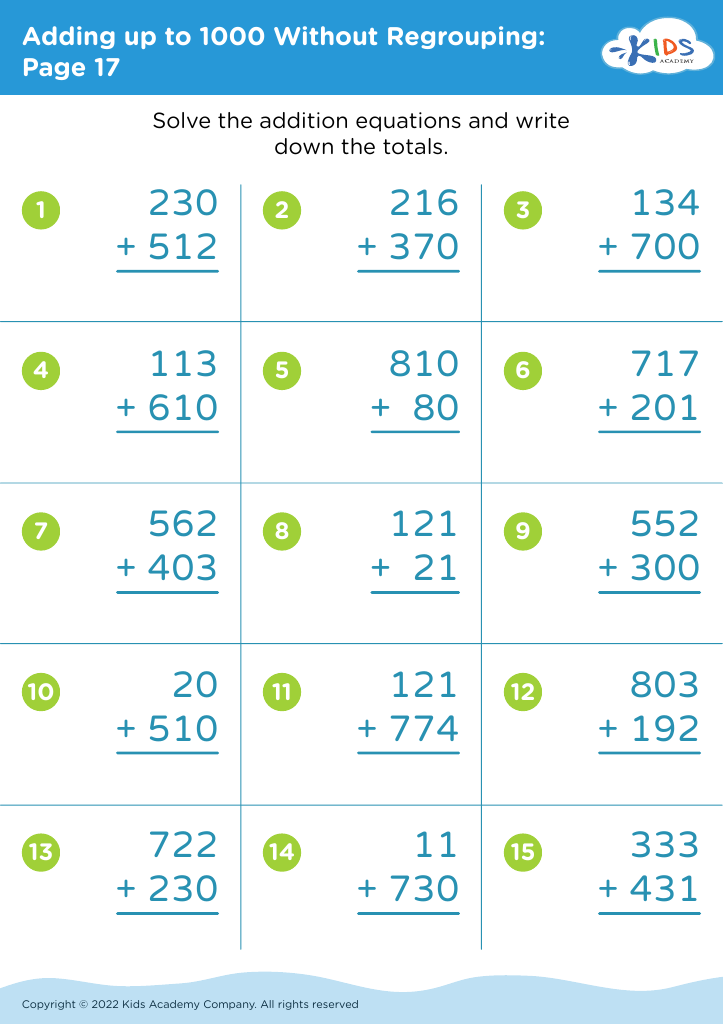
Adding up to 1000 Without Regrouping: Page 17
Worksheet
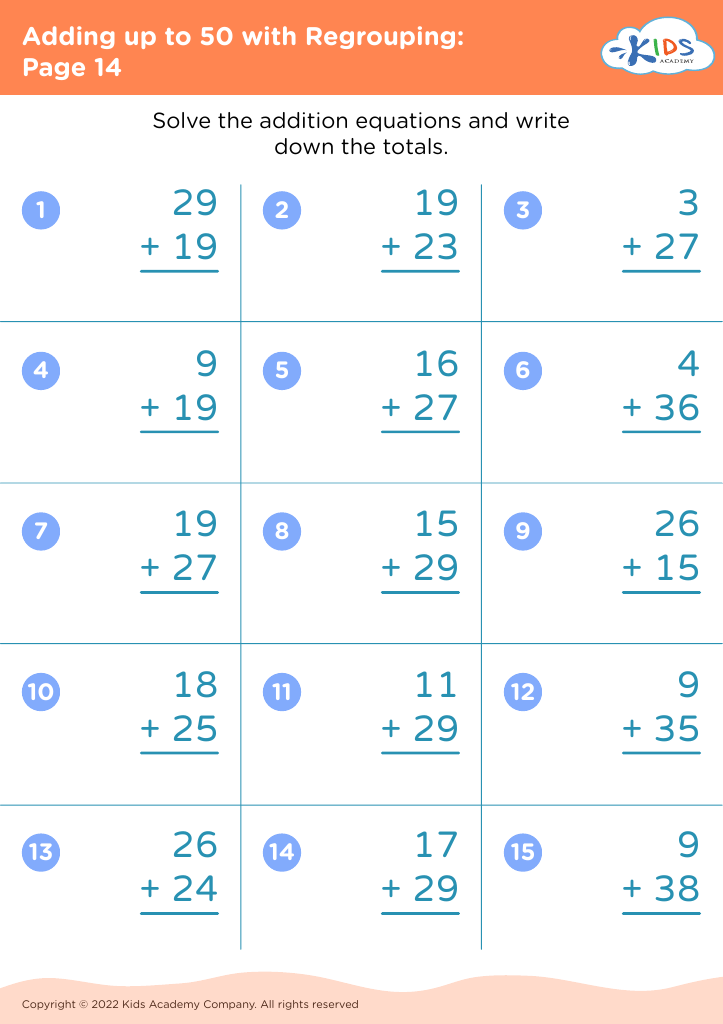
Adding up to 50 with Regrouping: Page 14
Worksheet
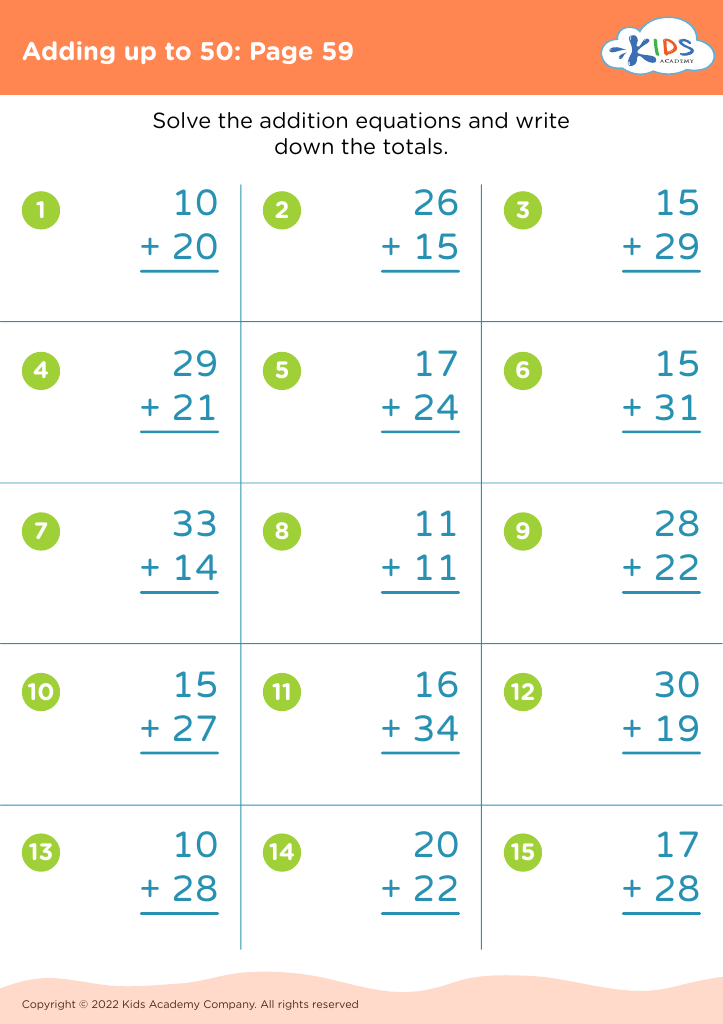
Adding up to 50: Page 59

Adding up to 50: Page 59

Adding up to 50: Page 59
Worksheet
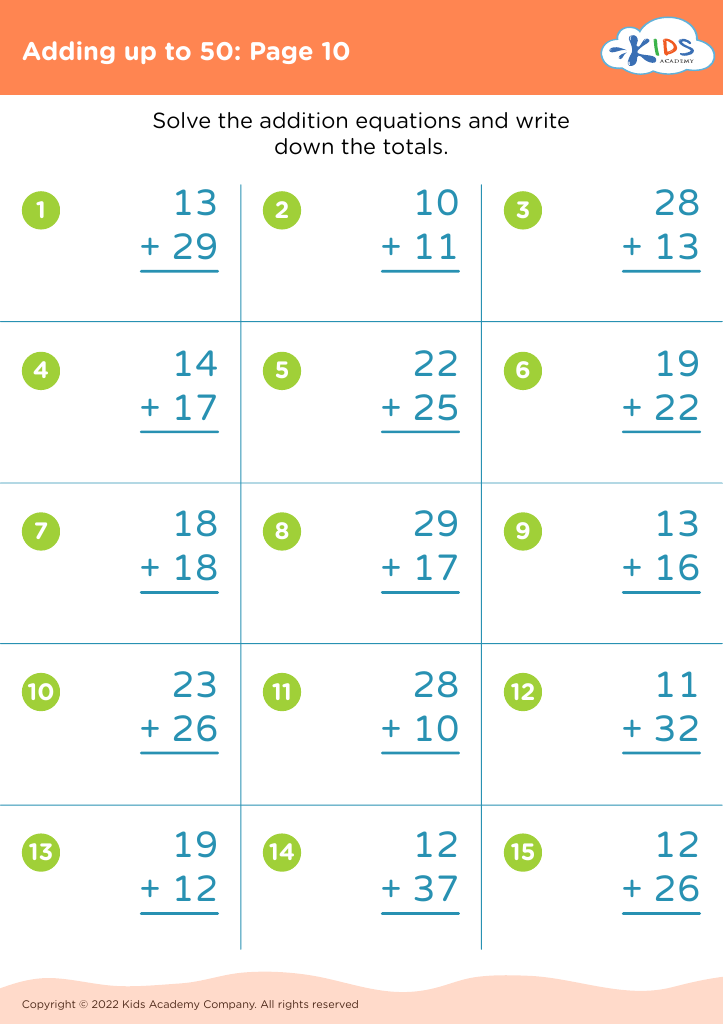
Adding up to 50: Page 10

Adding up to 50: Page 10

Adding up to 50: Page 10
Worksheet
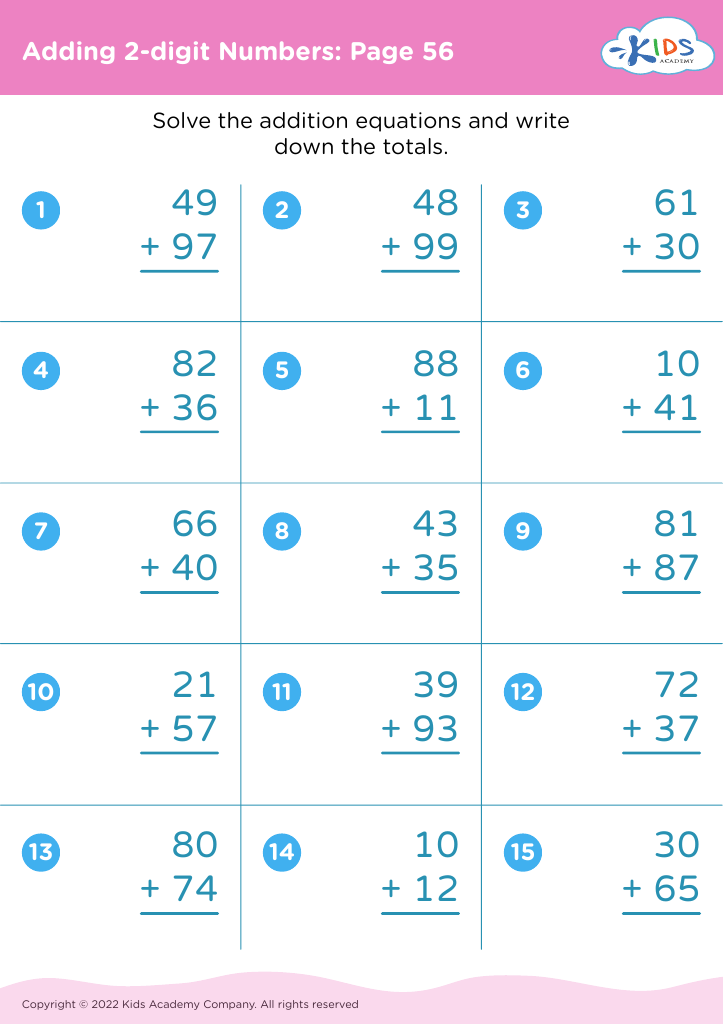
Adding 2-digit Numbers: Page 56

Adding 2-digit Numbers: Page 56

Adding 2-digit Numbers: Page 56
Worksheet
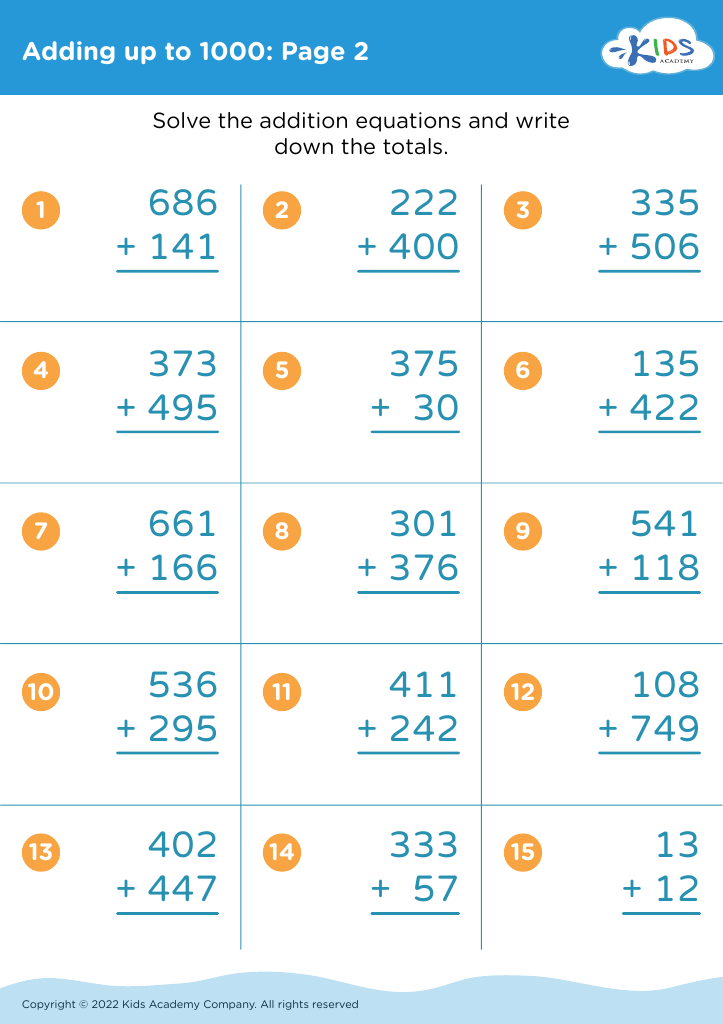
Adding up to 1000: Page 2

Adding up to 1000: Page 2

Adding up to 1000: Page 2
Worksheet
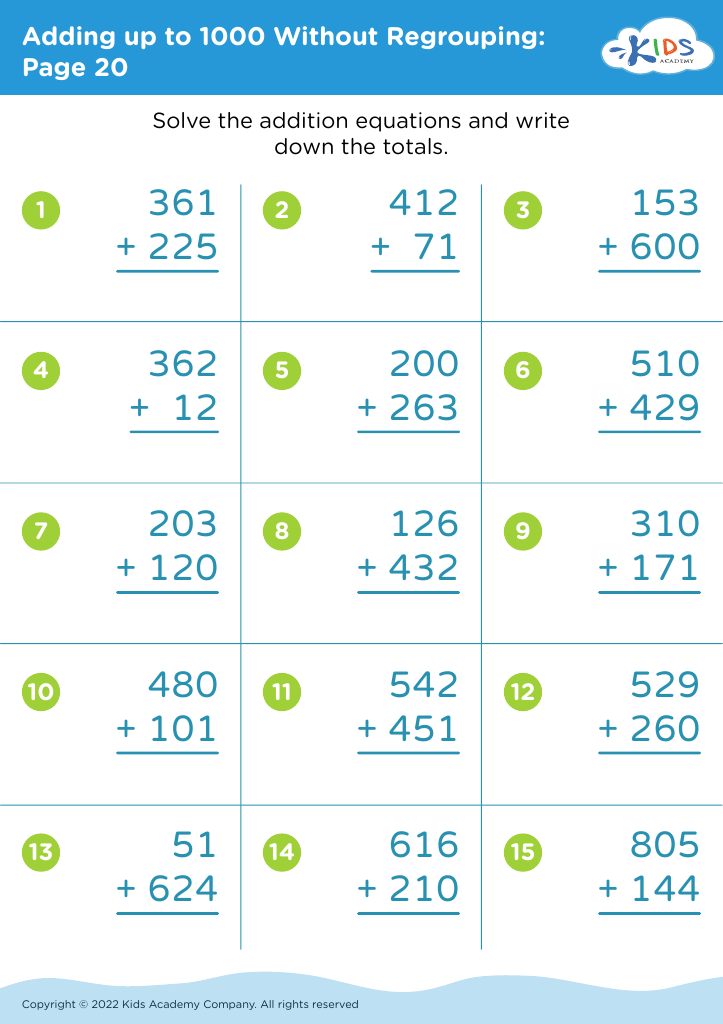
Adding up to 1000 Without Regrouping: Page 20
Worksheet
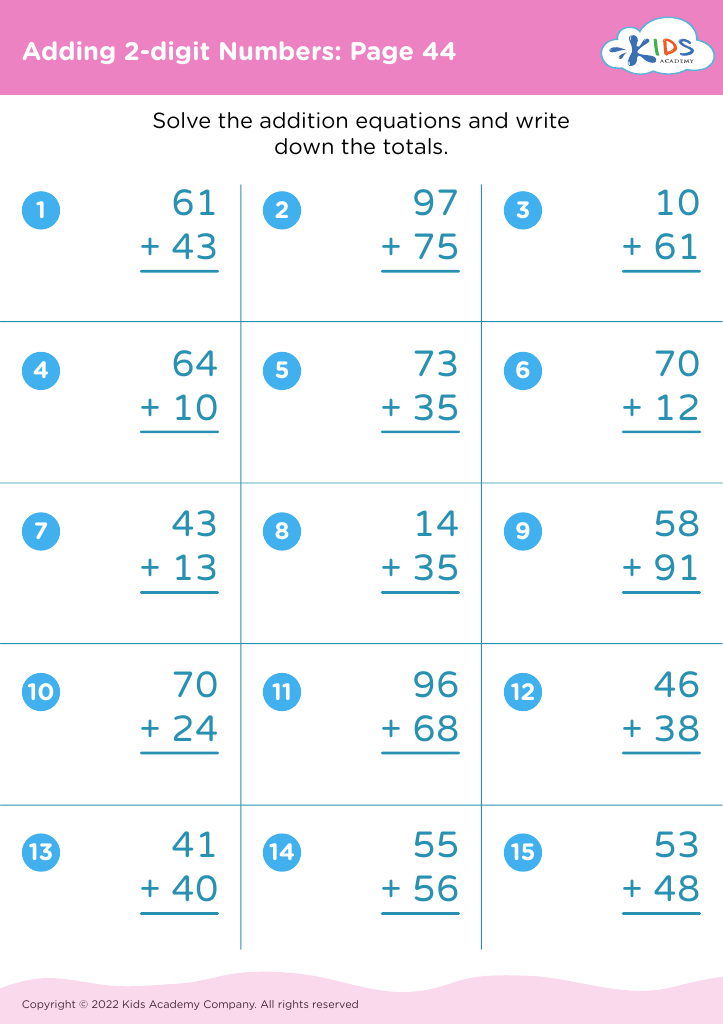
Adding 2-digit Numbers: Page 44

Adding 2-digit Numbers: Page 44

Adding 2-digit Numbers: Page 44
Worksheet
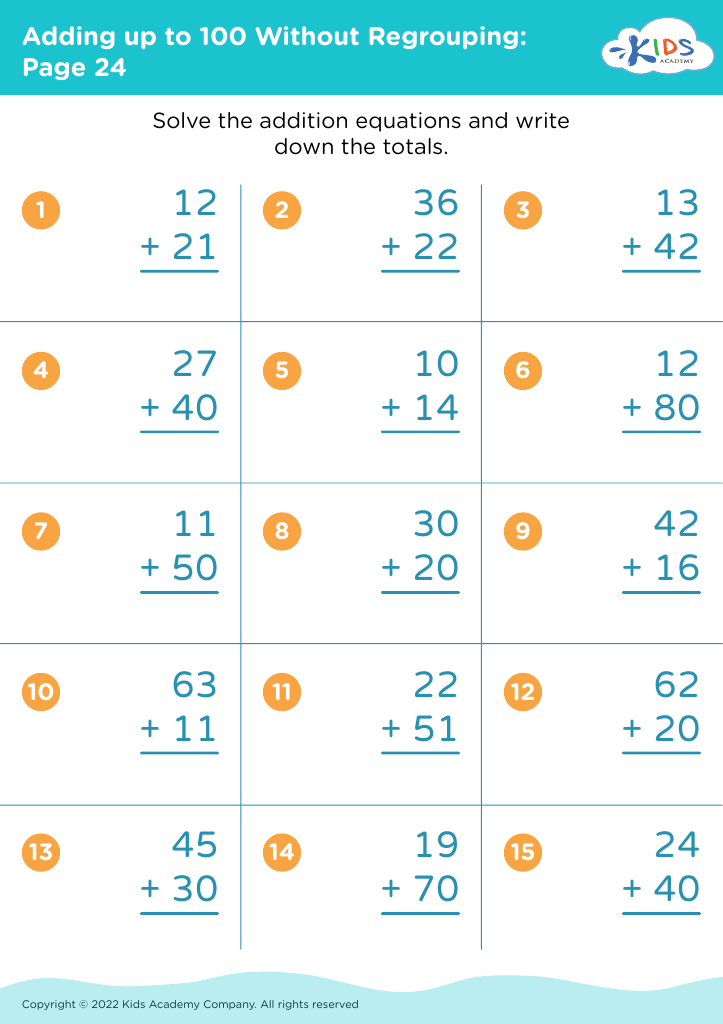
Adding up to 100 Without Regrouping: Page 24
Worksheet
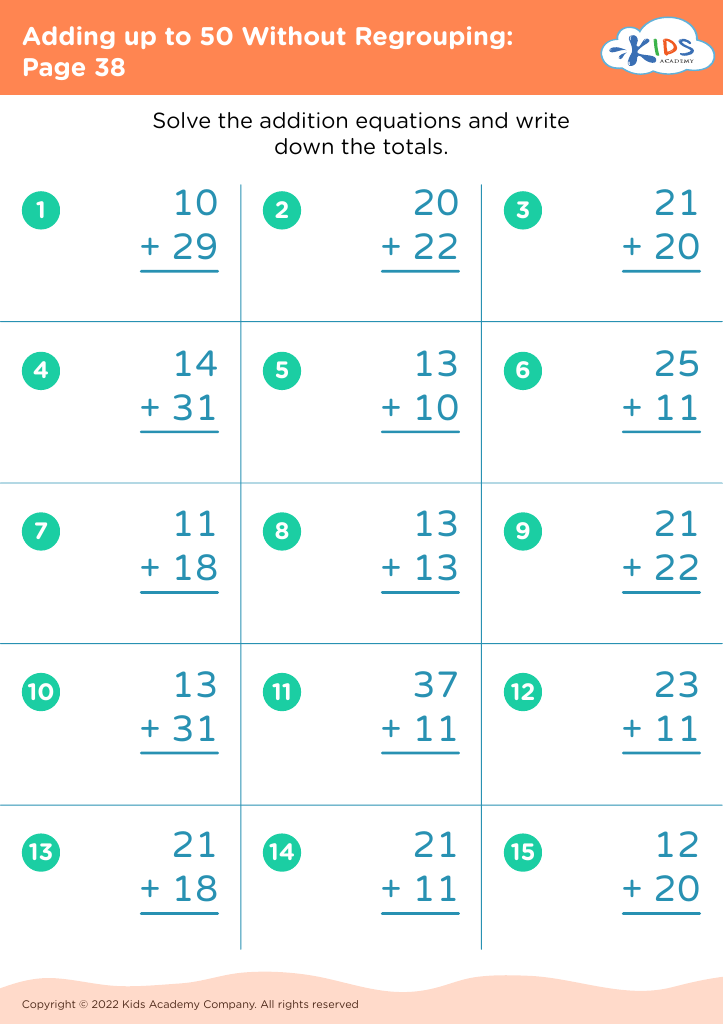
Adding up to 50 Without Regrouping: Page 38
Worksheet
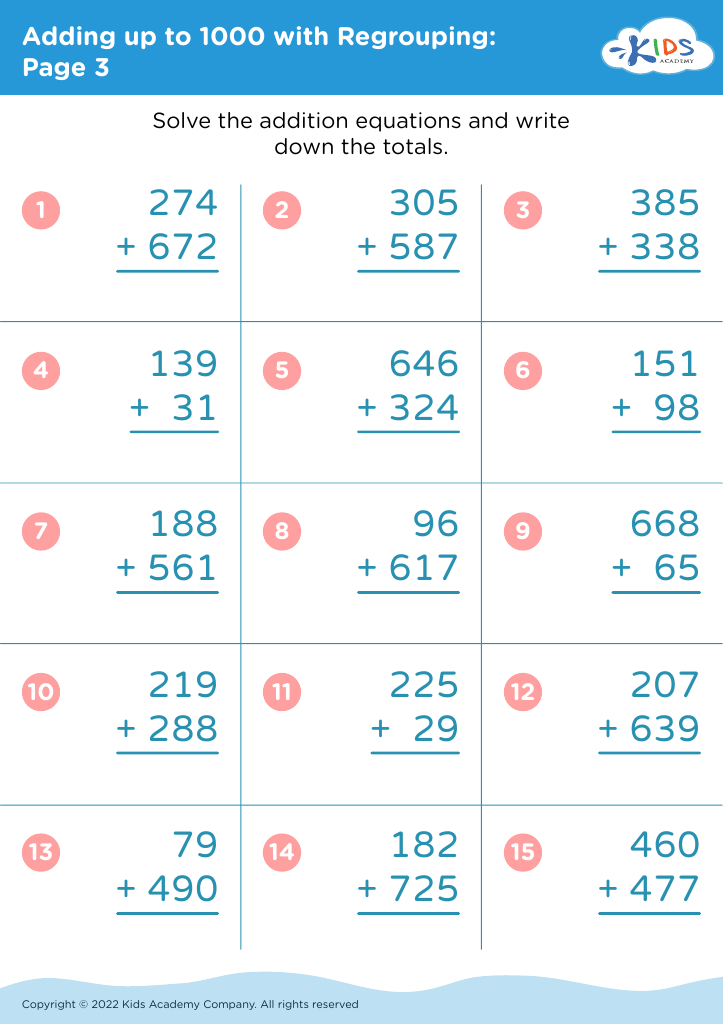
Adding up to 1000 with Regrouping: Page 3
Worksheet
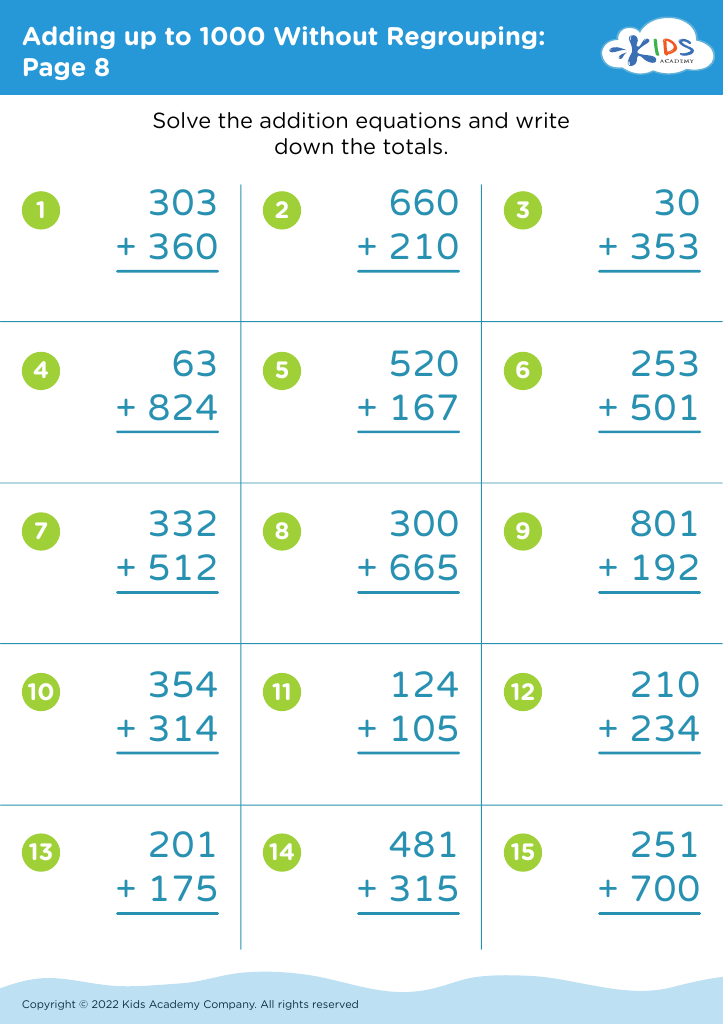
Adding up to 1000 Without Regrouping: Page 8
Worksheet
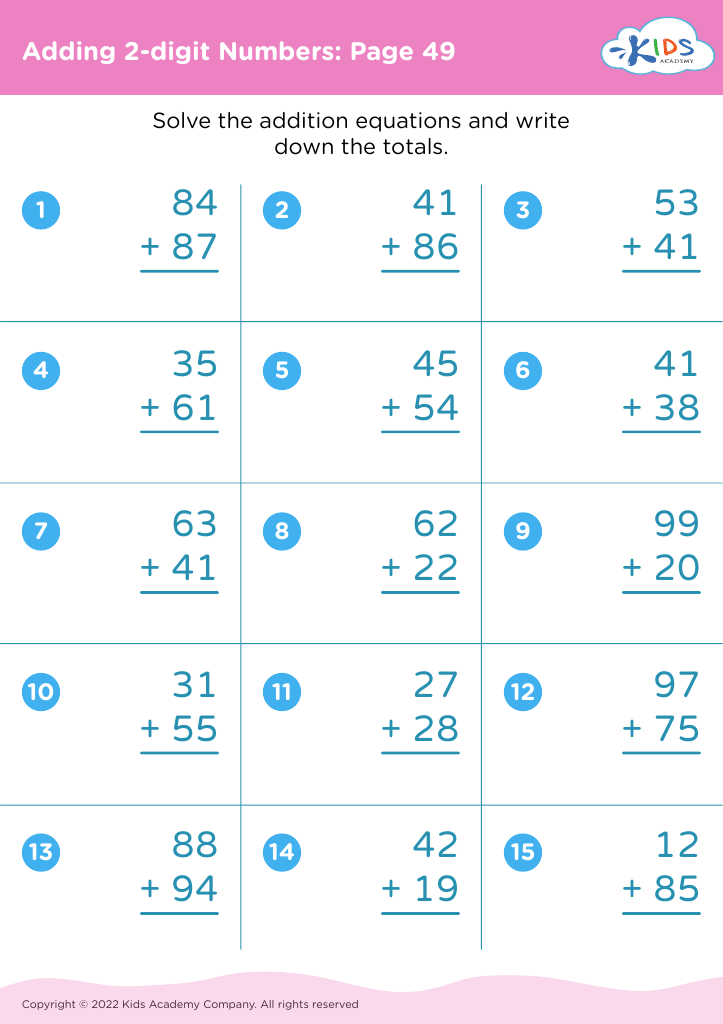
Adding 2-digit Numbers: Page 49

Adding 2-digit Numbers: Page 49

Adding 2-digit Numbers: Page 49
Worksheet
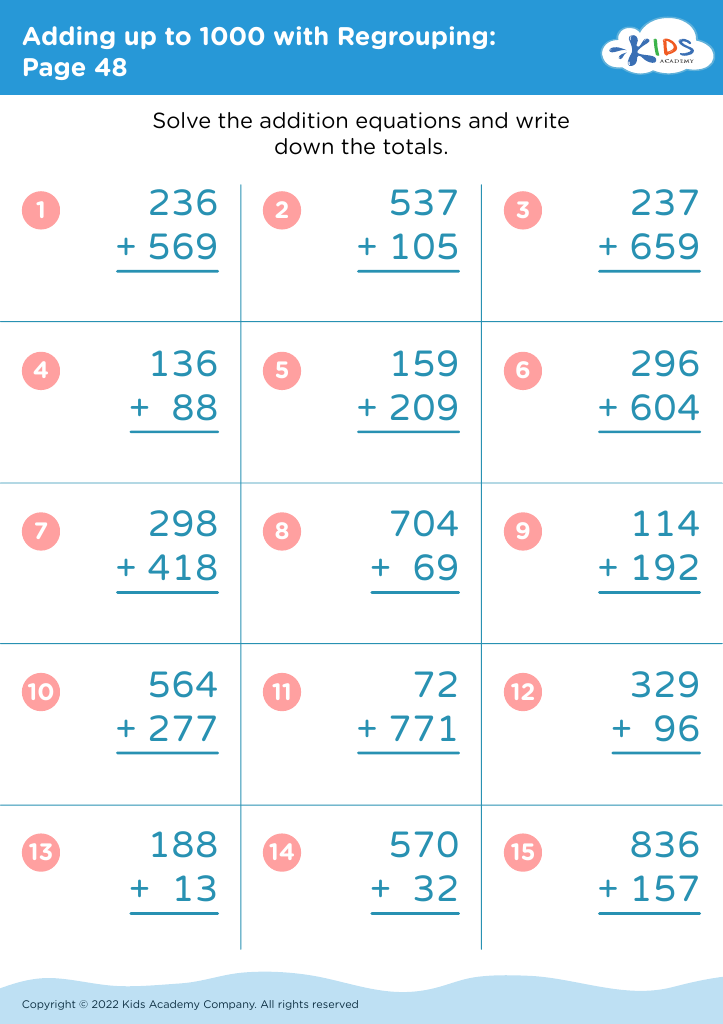
Adding up to 1000 with Regrouping: Page 48
Worksheet
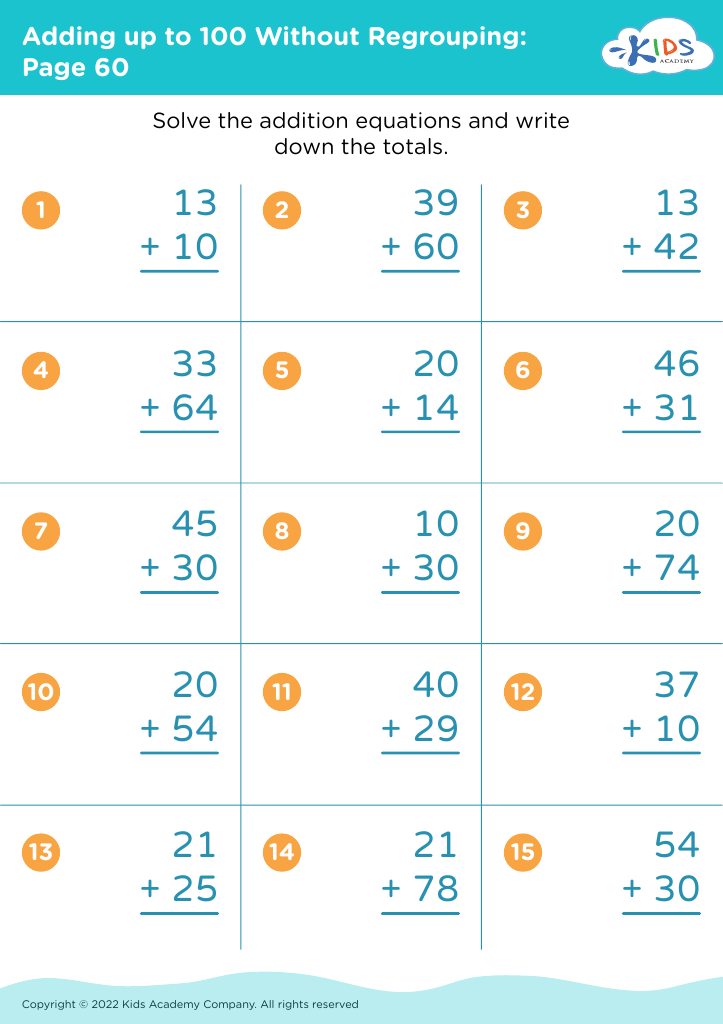
Adding up to 100 Without Regrouping: Page 60
Worksheet


Enhancing comprehension in addition for ages 7-9 is crucial for multiple reasons. At this foundational stage, children are not only learning arithmetic but also developing critical thinking and problem-solving skills. Strong comprehension of addition lays the groundwork for more complex mathematical concepts, such as subtraction, multiplication, and division, which they will encounter in the coming years.

Moreover, when students grasp the 'why' behind addition—not just the 'how'—it boosts their confidence and motivation in mathematics. This understanding helps them tackle word problems and real-life scenarios involving numbers, fostering a positive attitude towards math.

Teachers and parents play an essential role in solidifying these concepts. Effective comprehension strategies engage children, making learning meaningful and enjoyable. When children can relate math to everyday situations, they are more likely to retain information.

Furthermore, a solid grasp of addition comprehension enhances literacy skills, as children learn to decode word problems and connect numerical information to written language. Supporting children in this area promotes collaboration between home and school, ensuring that students develop a strong mathematical foundation essential for academic success and lifelong learning. In conclusion, prioritizing addition comprehension encourages well-rounded cognitive development and prepares children for future learning challenges.