Basic multiplication Geometry Worksheets for Ages 7-9
3 filtered results
-
From - To
Our "Basic Multiplication Geometry Worksheets for Ages 7-9" blend foundational math skills with engaging geometric exercises. Designed to reinforce multiplication through fun, age-appropriate geometry problems, these worksheets help deepen mathematical understanding and spatial reasoning. Perfect for young learners, our interactive tasks make mastering multiplication concepts enjoyable, offering a solid base for future math success. With vivid illustrations and clear instructions, each worksheet ensures students build confidence and proficiency in both multiplication and geometry. Ideal for classroom use or at-home practice, our expertly crafted resources support a seamless and effective learning journey for children aged 7-9.
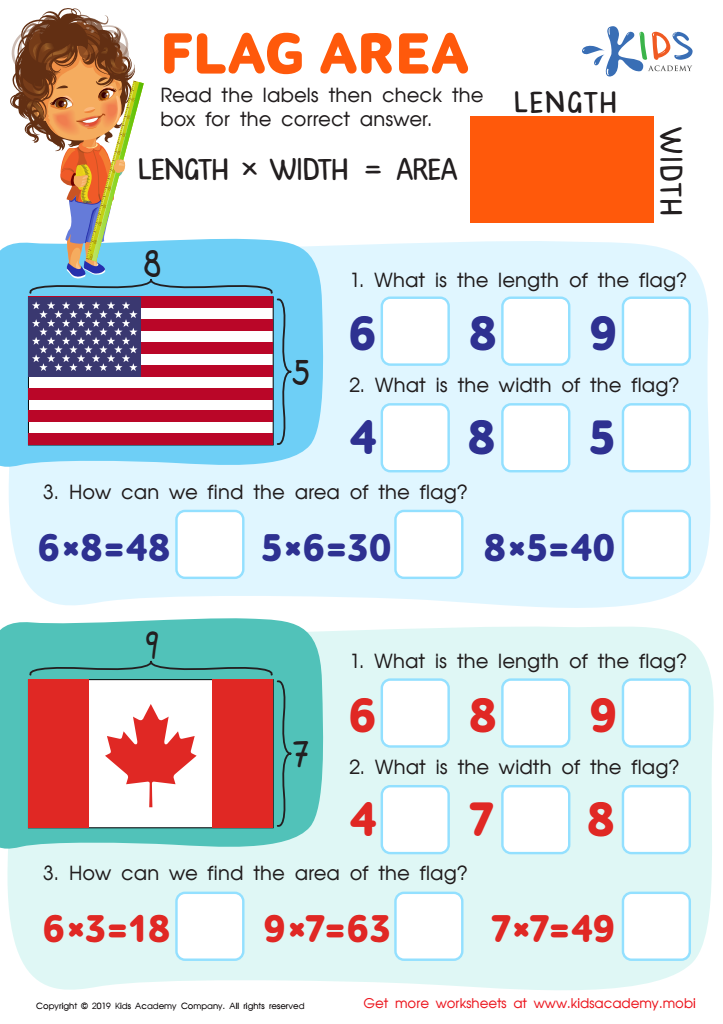
Flag Area Worksheet
 Assign to My Students











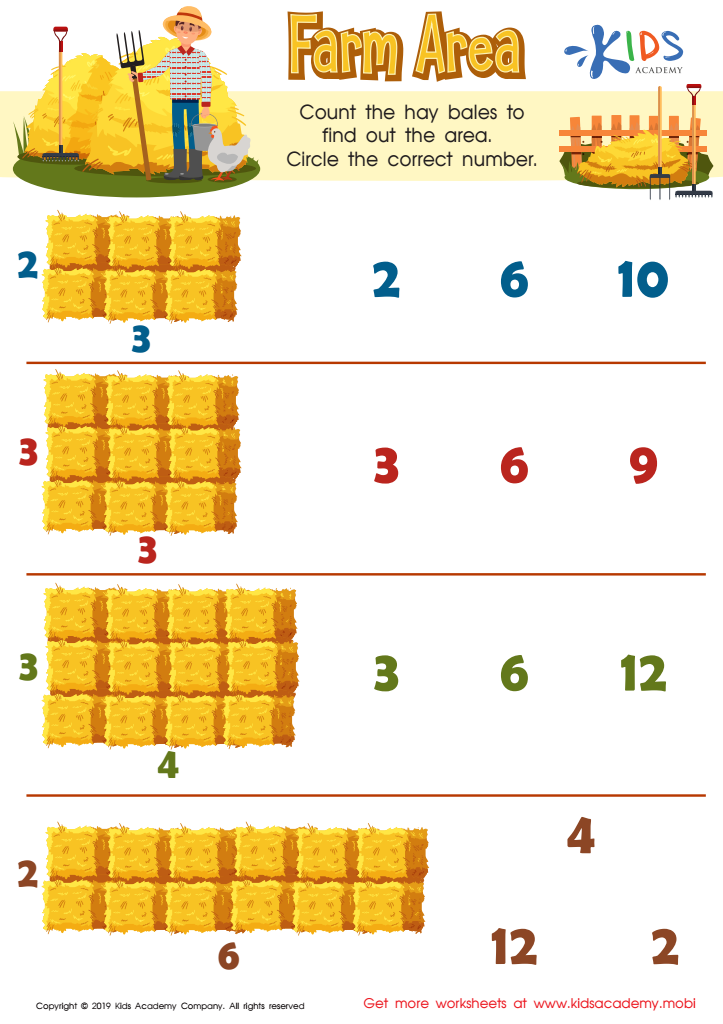
Farm Area Worksheet
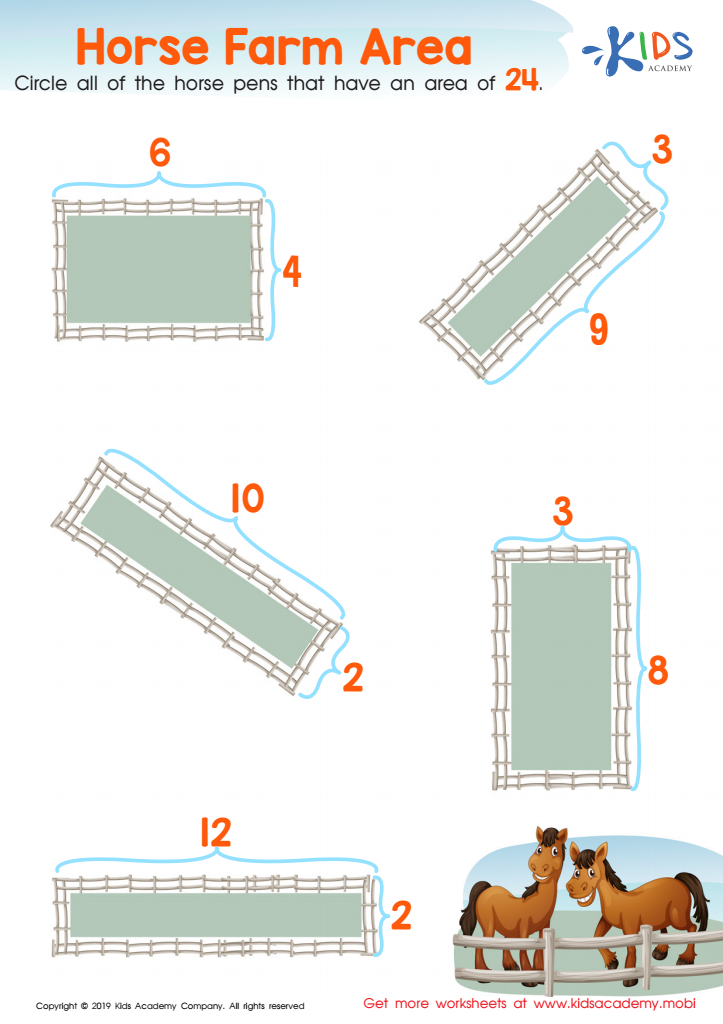
Horse Farm Area Worksheet








Understanding basic multiplication and geometry is foundational for children's mathematical development, especially between the ages of 7-9. This stage lays the groundwork for more complex mathematical concepts in the future. Multiplication is crucial because it bolsters problem-solving skills, enhances mental arithmetic, and speeds up calculations for young learners. When children grasp multiplication tables, they gain confidence and can more easily tackle division as well as higher-level math tasks.
Similarly, an understanding of basic geometry — involving shapes, sizes, spatial understanding, and properties of various geometric figures — helps children recognize and describe the world around them. Geometry encourages logical thinking and spatial reasoning, supporting growth in skills like map reading and understanding spatial relationships, which are applicable across various life tasks and academic subjects.
For parents and teachers, nurturing these skills at an early age equips children with the necessary tools for academic achievement. It can make math less intimidating and more engaging, fostering a positive attitude towards the subject. Furthermore, early proficiency in these areas often correlates with later success in STEM (Science, Technology, Engineering, and Math) disciplines, which are becoming increasingly vital in our technology-driven world. By focusing on these basics, adults can ensure that children are better prepared for both academic challenges and everyday problem-solving.








