Comparing shapes Geometry Worksheets for Ages 7-9
3 filtered results
-
From - To
Welcome to our "Comparing Shapes Geometry Worksheets" designed for children ages 7-9! These engaging worksheets help young learners explore the world of geometry through fun activities focused on recognizing, sorting, and comparing different shapes. With clear illustrations and easy-to-follow instructions, students will develop their shape identification skills and enhance their critical thinking abilities. Our materials are perfect for reinforcing classroom learning or for use at home, providing opportunities for hands-on practice. Give your child the tools they need to succeed in math while fostering a love for learning through creative and interactive geometry experiences!
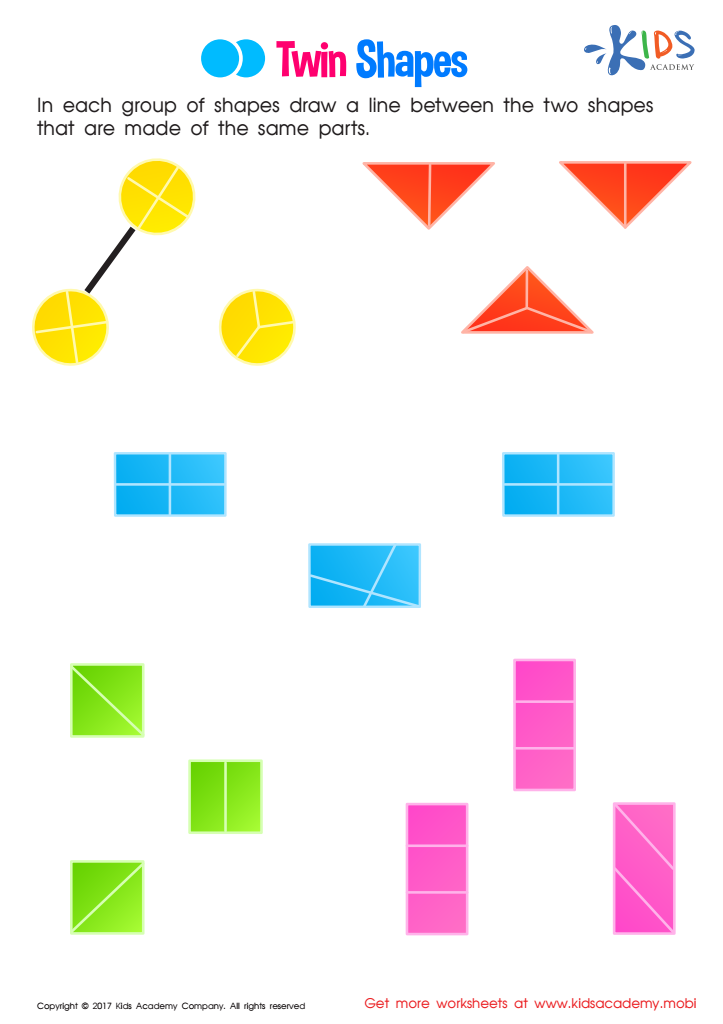
Twin Shapes Worksheet
 Assign to My Students











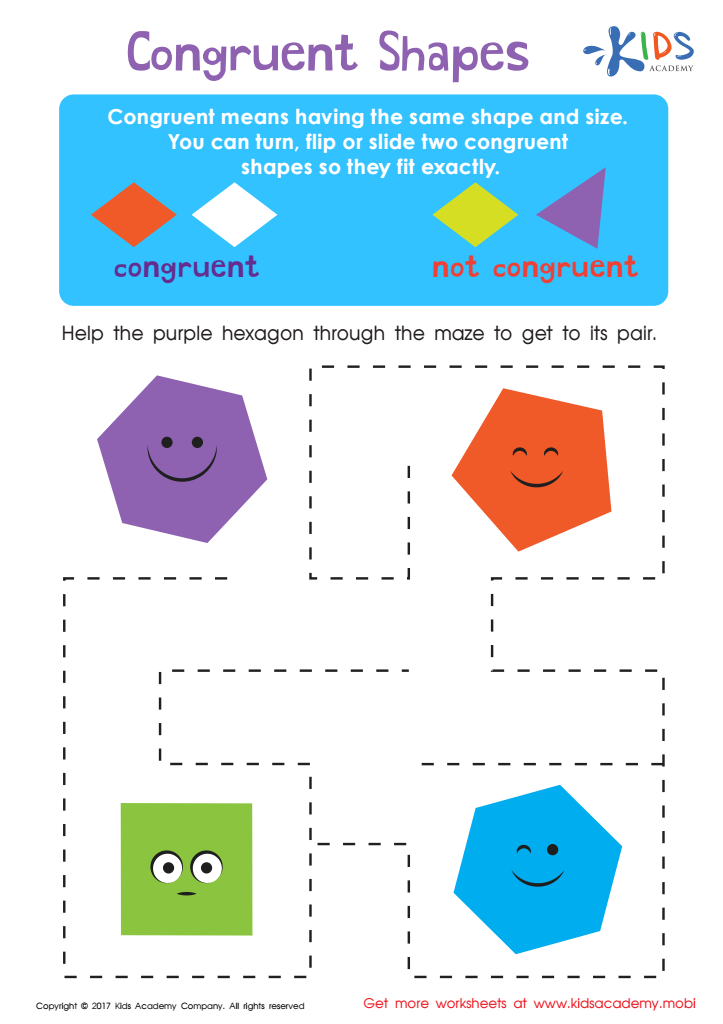
Congruent Shapes Worksheet
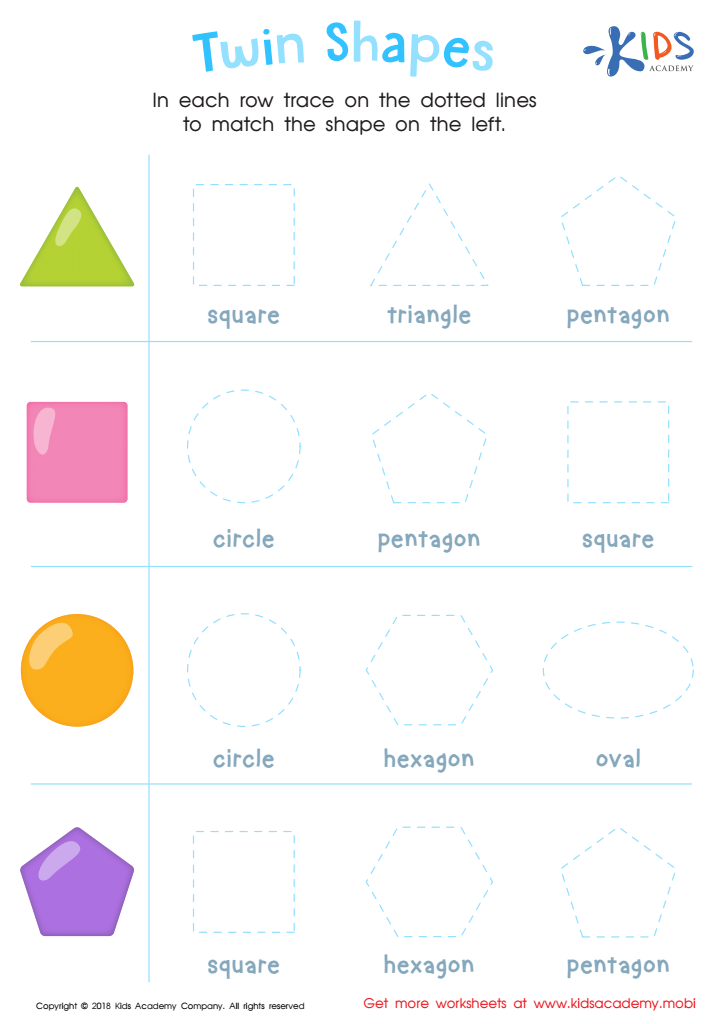
Twin Shapes Dot-to-Dot Worksheet








Parents and teachers should prioritize teaching geometry, particularly the concept of comparing shapes, to children aged 7-9 for several compelling reasons. First, understanding geometric shapes is foundational for developing spatial awareness, which is essential for problem-solving and critical thinking skills. At this age, children begin to connect concepts in mathematics with real-world applications, making geometry relevant and engaging.
Comparing shapes helps students develop skills in categorization and classification, enabling them to identify properties such as size, symmetry, and similarity. This foundational knowledge can translate into more advanced mathematical concepts later in their education. Additionally, learning to compare shapes fosters communication skills, as children will describe, explain, and reason about their observations, enhancing their ability to articulate ideas clearly.
Moreover, geometry plays a significant role in fostering creativity through art, design, and architecture, stimulating students' imagination. When parents and teachers engage in activities that focus on comparing shapes, they promote collaboration and excitement for learning. Lastly, promoting a strong foundation in geometry can ignite a lifelong interest in mathematics and science, contributing to well-rounded cognitive development and preparing children for future academic success. In this digital age, spatial skills are also increasingly valuable in various fields, making early exposure critical.








