
Following instructions Geometry Worksheets for Ages 7-9
5 filtered results
Difficulty Level
Grade
Age
-
From - To
Subject
Activity
Standards
Discover our engaging "Following Instructions Geometry Worksheets" designed for children ages 7-9. These worksheets not only enhance geometry skills but also help students develop crucial listening and comprehension abilities as they follow detailed instructions. With fun and interactive activities, children will learn to recognize shapes, understand spatial relationships, and improve their problem-solving skills. Each worksheet emphasizes clarity in instructions, allowing students to practice critical thinking while enjoying their learning experience. Perfect for both classroom and home use, our resources foster a love for math and geometry through hands-on learning. Explore our collection today and empower your child's educational journey!
Favorites
With answer key
Interactive
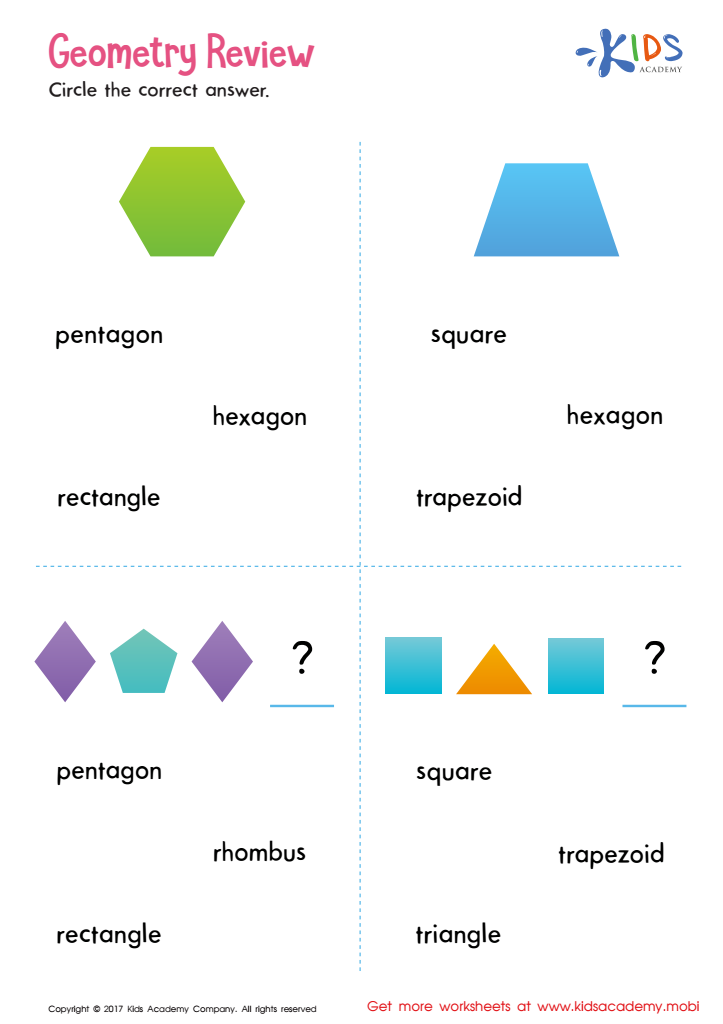
Geometry Review Printable
Repetition is key to success; give your child the practice they need with this geometry worksheet.
Geometry Review Printable
Worksheet











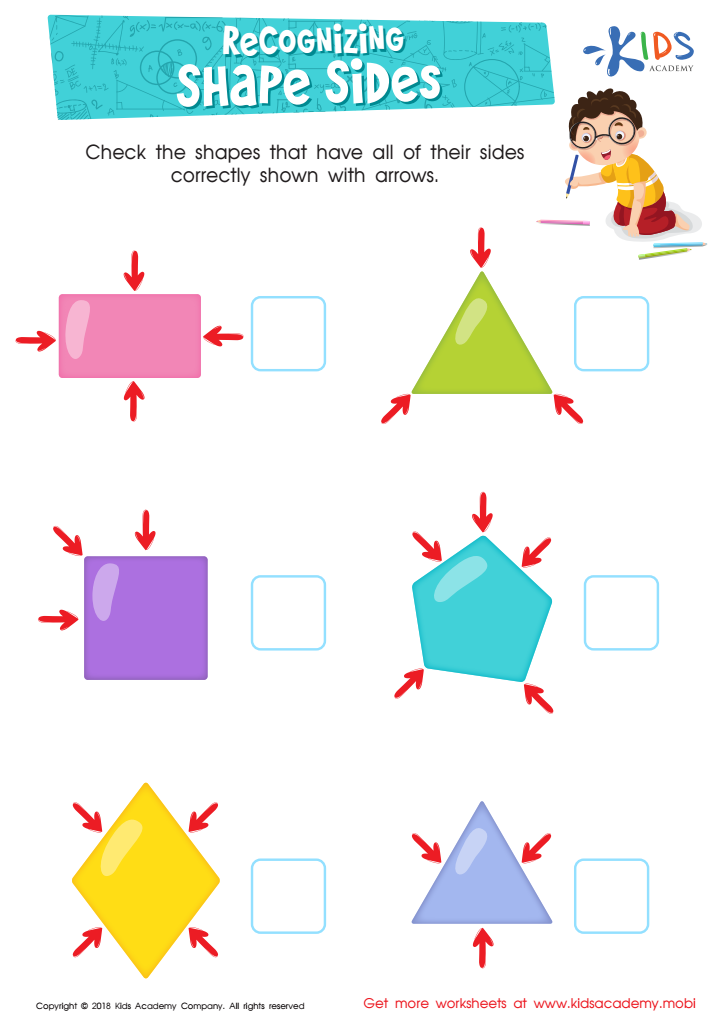
Recognizing Shape Sides Worksheet
This exercise will help your child recognize shape sides. Go over the difference between sides and angles first, then have them check the shapes with arrows to show the sides. They'll quickly get the hang of it and find it much easier after completing the colorful worksheet.
Recognizing Shape Sides Worksheet
Worksheet
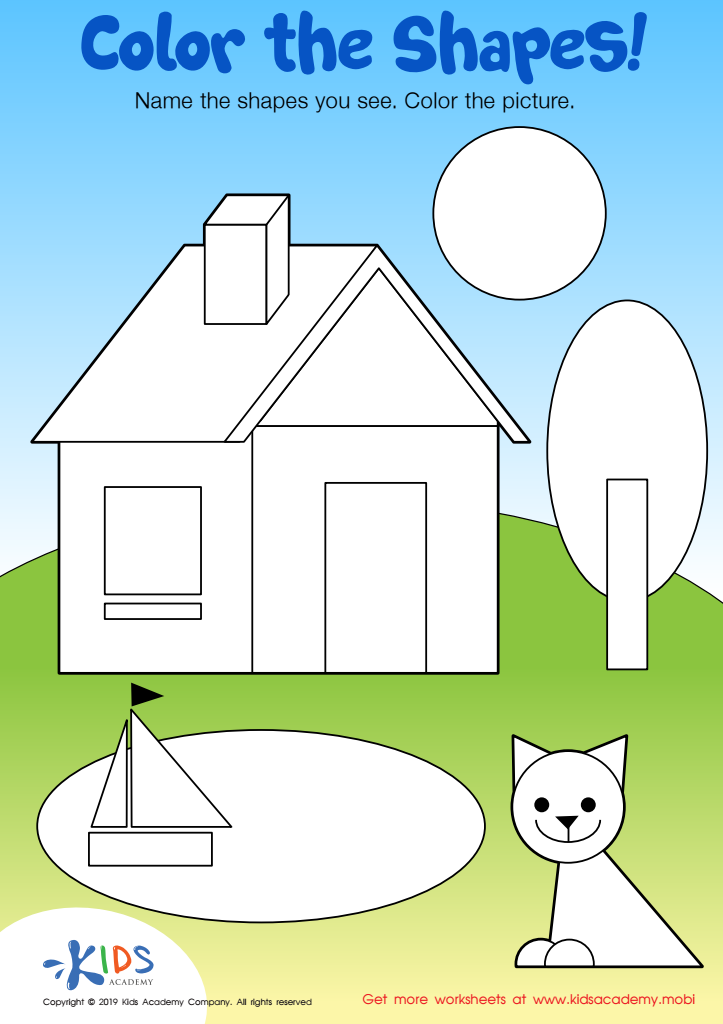
Color the Shapes Worksheet
Help your student master shape identification with this fun worksheet. Ask them to name the shapes in the picture, then color it! Ask questions like "How many squares do you see?" and "How many triangles?" to extend the learning. Identify squares, circles, triangles and rectangles with this enjoyable coloring page.
Download (PDF)
 Assign to My Students
Assign to My Students
Color the Shapes Worksheet
Worksheet
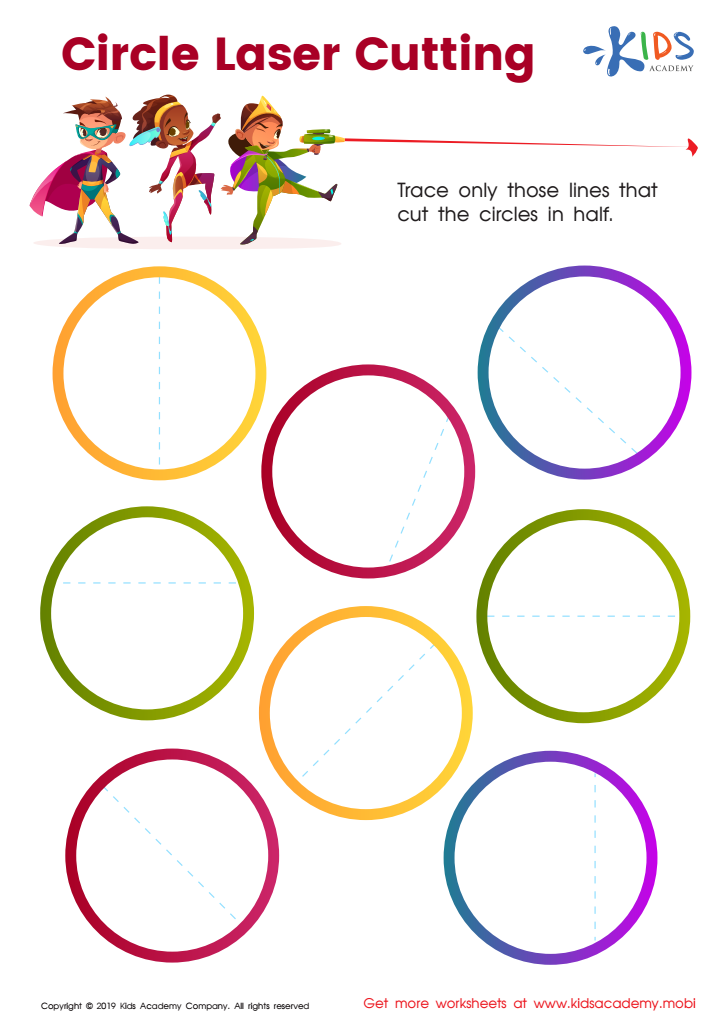
Circle Laser Cutting Worksheet
Encourage your kids to learn geometry! Remind them that when shapes are cut into two equal parts, they are called halves. Have them look at the circles in the worksheet, and trace the lines that cut the circles in half. Geometry is an essential part of education, and although it may not be exciting, it's a valuable skill to have.
Circle Laser Cutting Worksheet
Worksheet
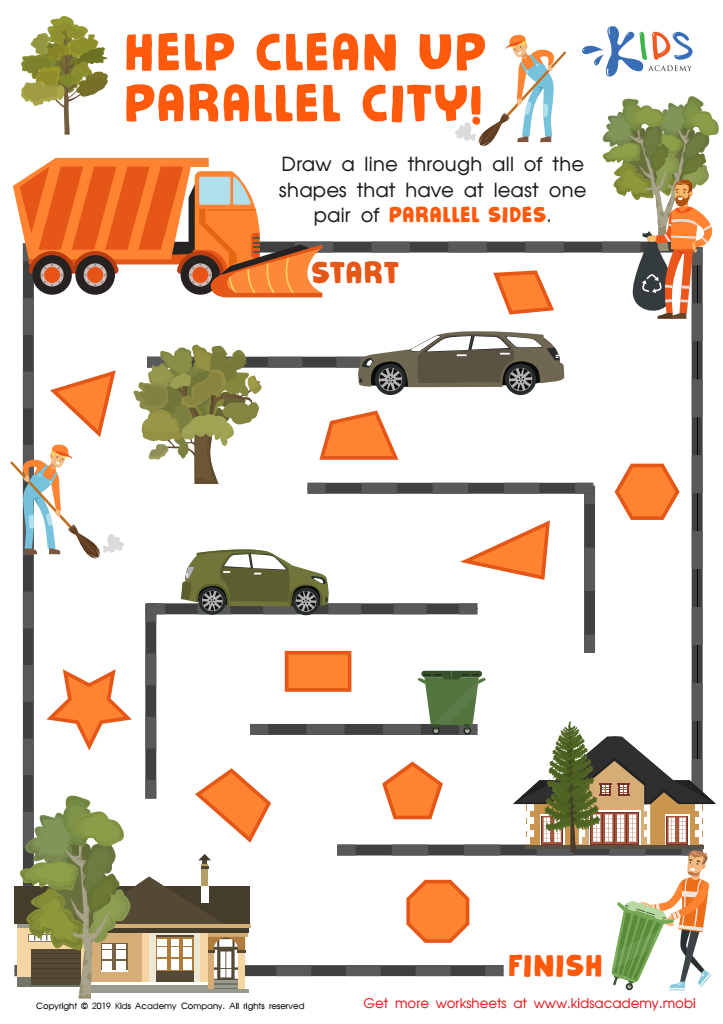
Help Clean Up Parallel City Worksheet
Explain to your kids what parallel sides are and have them identify the shapes with parallel sides in the picture. Then let them draw a line through all the shapes with at least one pair of parallel sides. This colorful worksheet will help them understand and practice this concept.
Help Clean Up Parallel City Worksheet
Worksheet
Join Kids Academy for Free
Who is primarily going to use this learning content?








Following instructions in geometry is crucial for children ages 7-9 as it lays the foundation for their mathematical understanding and problem-solving skills. At this developmental stage, children are building critical thinking abilities and learning to interpret and analyze information. Mastering the ability to follow instructions helps them grasp geometric concepts such as shapes, angles, and spatial relationships.
When parents and teachers prioritize following instructions, they foster a sense of responsibility and discipline in children. Learning to follow precise steps not only encourages focus but also illustrates the value of patience and perseverance in tackling tasks. Moreover, these skills have applications beyond geometry, benefiting students in various subjects and real-life situations, from cooking to DIY projects.
Engaging with geometry through direct instructions also enhances communication skills. Children learn to express ideas clearly and ask relevant questions when they encounter challenges. Understanding geometric principles creates opportunities for creativity, as they explore patterns and designs, further stimulating their imagination.
Ultimately, instructing children to carefully follow guidelines promotes academic success and prepares them for future learning experiences, instilling confidence in their abilities to work independently and contribute effectively in collaborative environments.








