Understanding area Geometry Worksheets for Ages 7-9
3 filtered results
-
From - To
Unlock your child's potential in math with our "Understanding Area Geometry Worksheets" designed for ages 7-9. These engaging, printable activities make exploring the concept of area fun and simple. Perfect for young learners, the worksheets cover fundamental skills like measuring and calculating area in a step-by-step manner. Included exercises help reinforce geometric concepts while enhancing analytical thinking and problem-solving abilities. Created by educational experts, these resources align with core math standards, ensuring your child gains the essential knowledge they need, all while fostering a love for learning. Download now and discover the path to math mastery!
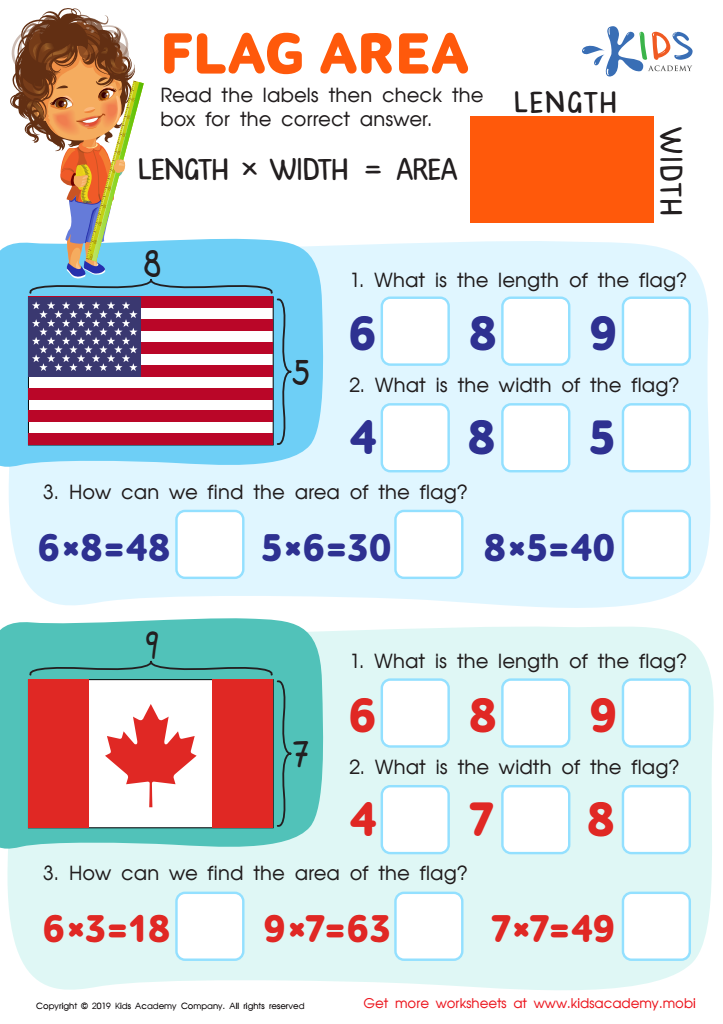
Flag Area Worksheet
 Assign to My Students











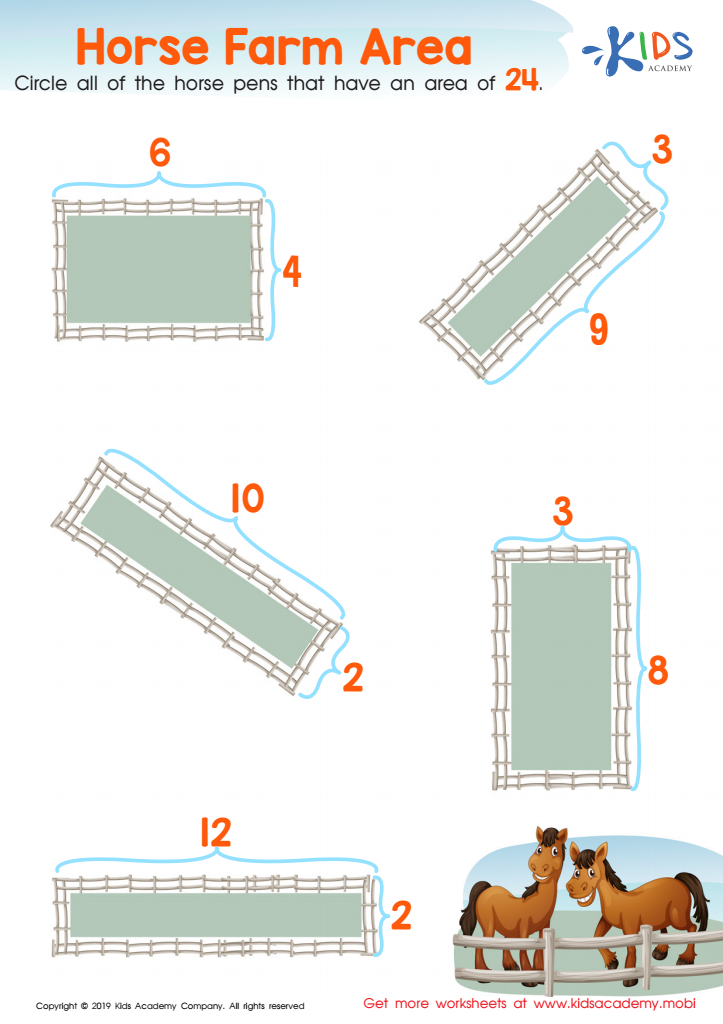
Horse Farm Area Worksheet
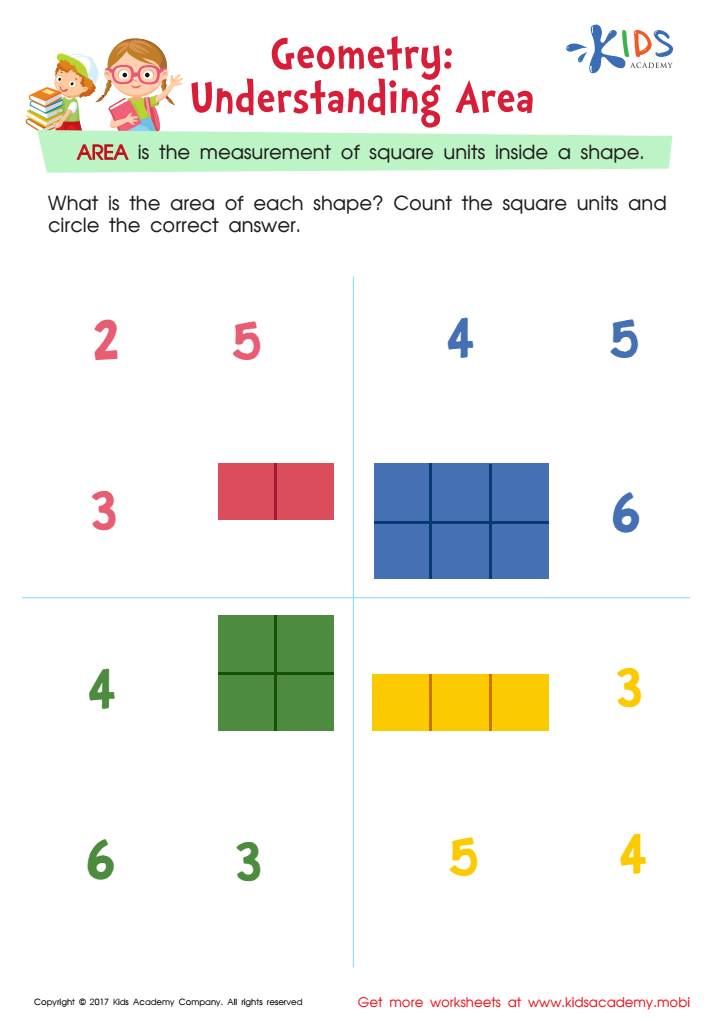
Understanding Area Worksheet








Understanding area geometry for children aged 7-9 is vital for several reasons that extend beyond mere academic achievement. Firstly, grasping the concept of area lays the foundation for more advanced mathematical topics. It's not just about knowing how to measure space, but also about developing logical thinking and problem-solving skills. These skills are crucial in everyday life scenarios, such as organizing space in a room or planning the layout of a garden.
Moreover, introducing area geometry early helps children understand abstract concepts more concretely. At this age, kids are naturally curious and open to visual and hands-on learning. Activities such as measuring objects and spaces using grids or units they are familiar with (like tiles or blocks) make learning about area engaging and meaningful.
Understanding geometry also supports the development of spatial reasoning, which is essential not just in mathematics but in everyday tasks like reading maps, playing sports, and even in artistic endeavors. Improving spatial awareness can boost confidence and competence in various subjects including science, technology, and engineering.
Finally, engaging with the concept of area supports growth in other key areas of cognitive development. It helps with organizing thoughts, enhancing memory, and even improving attention to detail. Parents and teachers should therefore be proactive in fostering an early appreciation and understanding of area geometry. It equips children with essential skills they will use for the rest of their lives.








