Understanding fractions Geometry Worksheets for Ages 7-9 - Page 2
35 filtered results
-
From - To
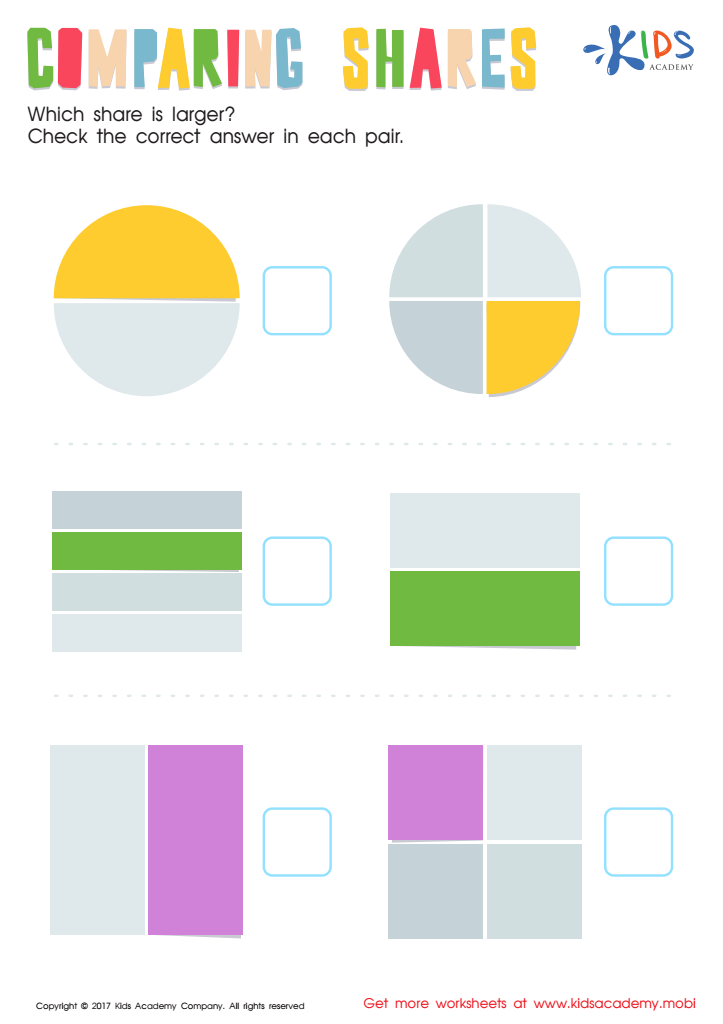
Comparing Shares Worksheet
 Assign to My Students











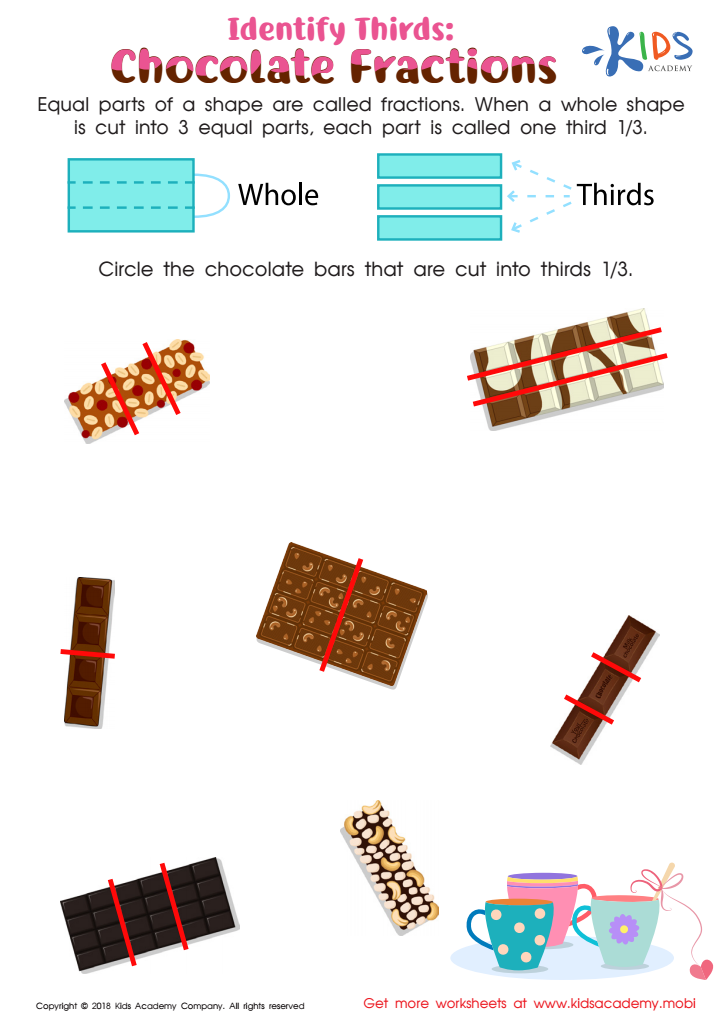
Identify Thirds: Chocolate Fractions Worksheet
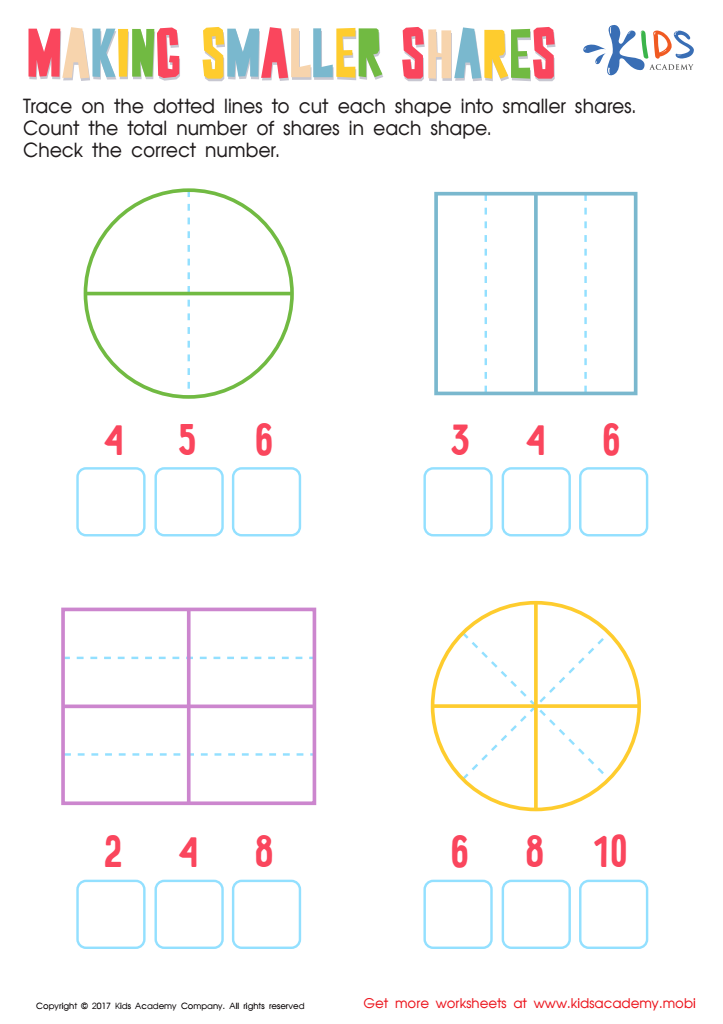
Making Smaller Shares Worksheet
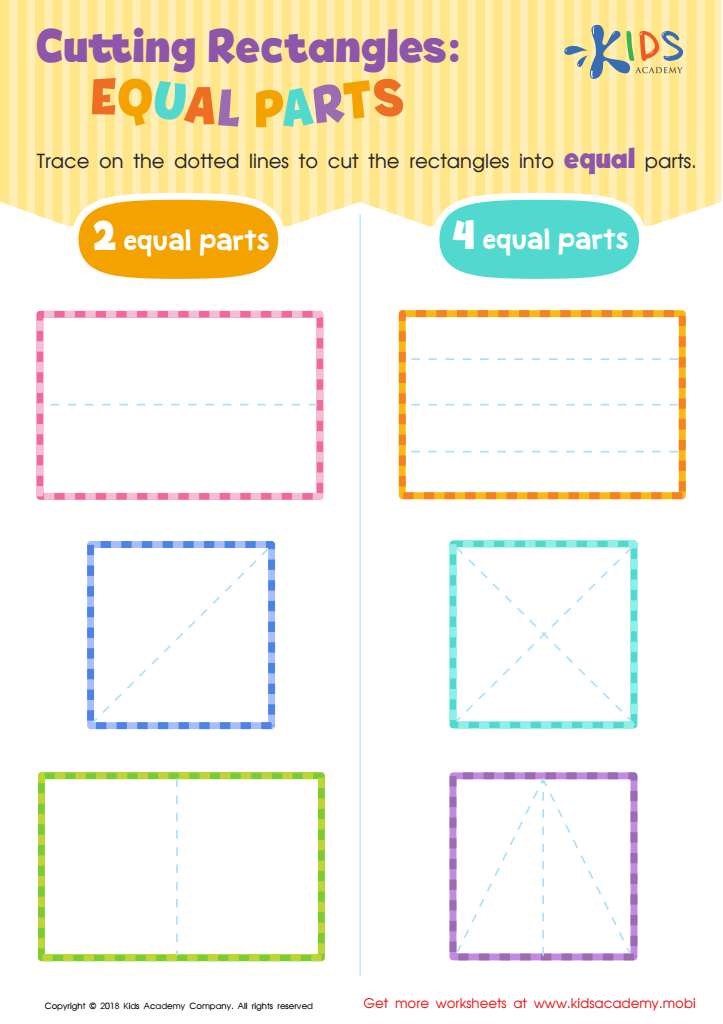
Cutting Rectangles: Equal Parts Worksheet
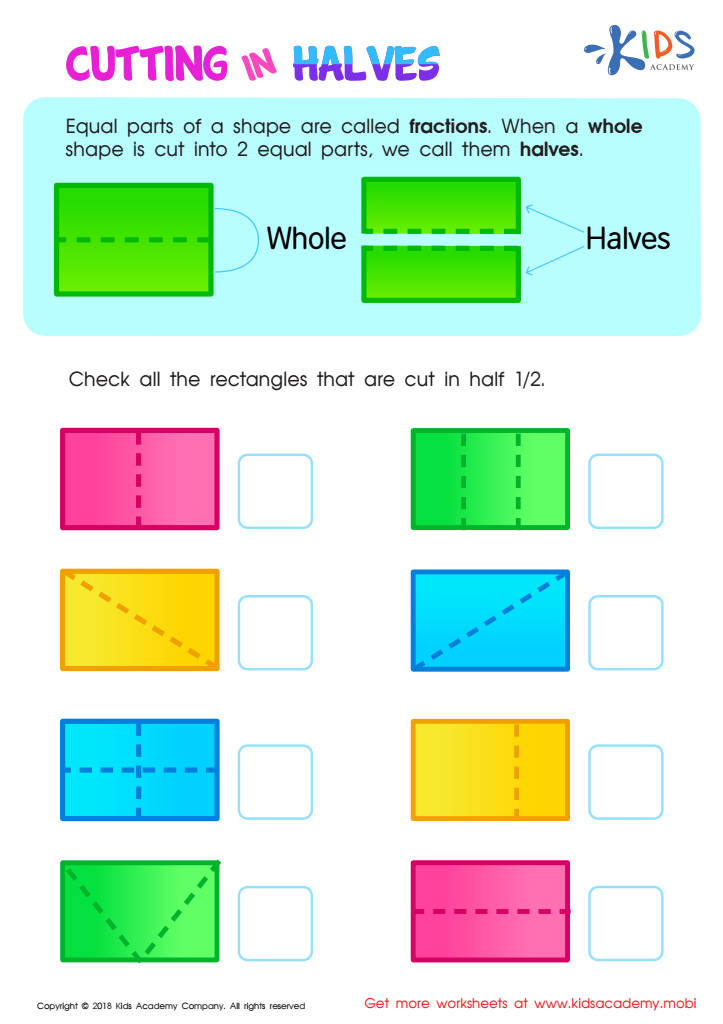
Cutting in Halves Worksheet
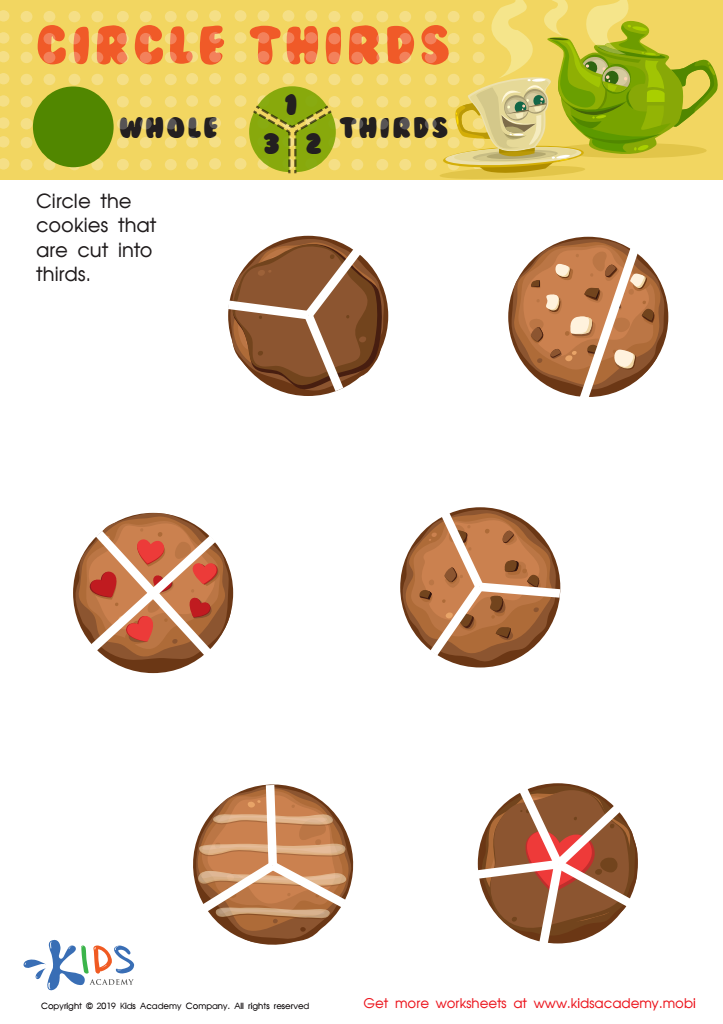
Circle Thirds Worksheet
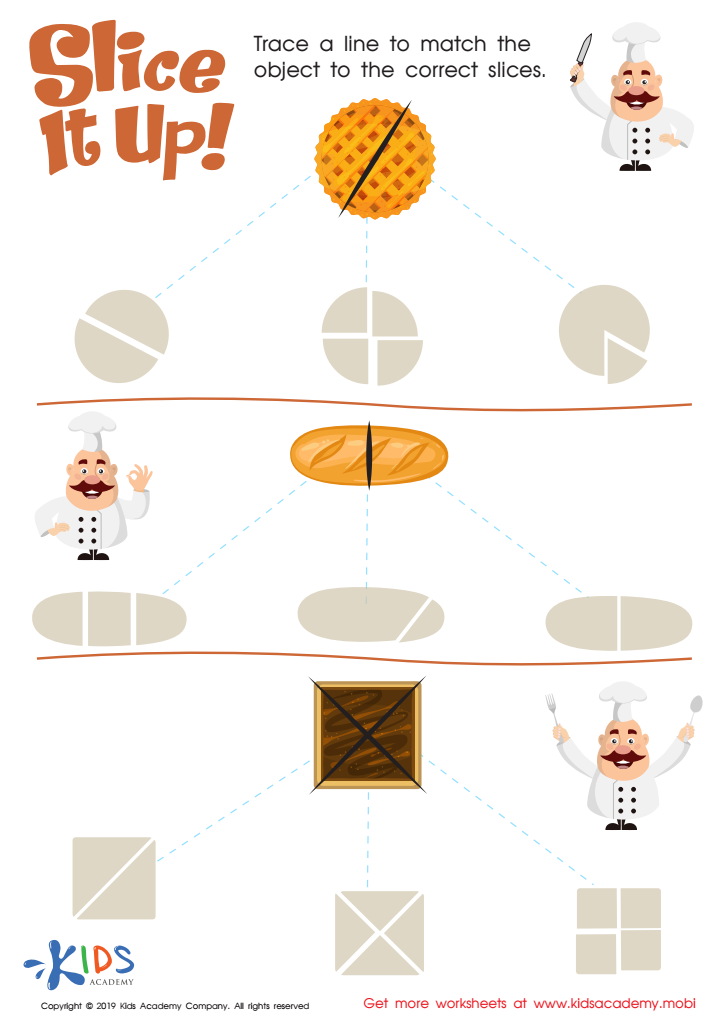
Slice It Up Worksheet
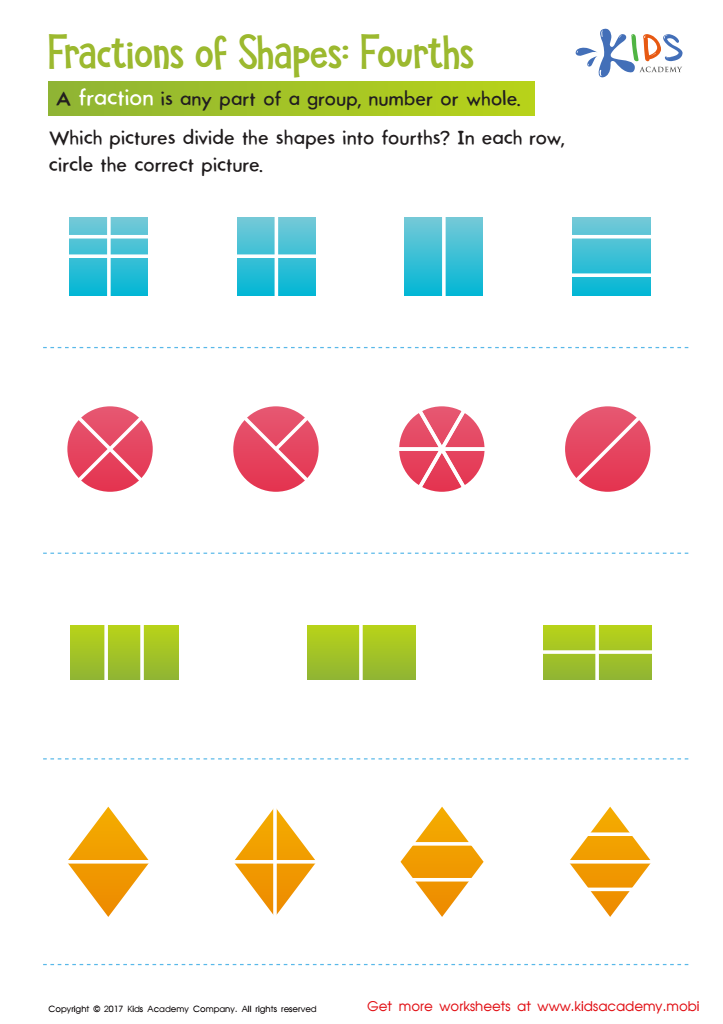
Fractions of Shapes Worksheet
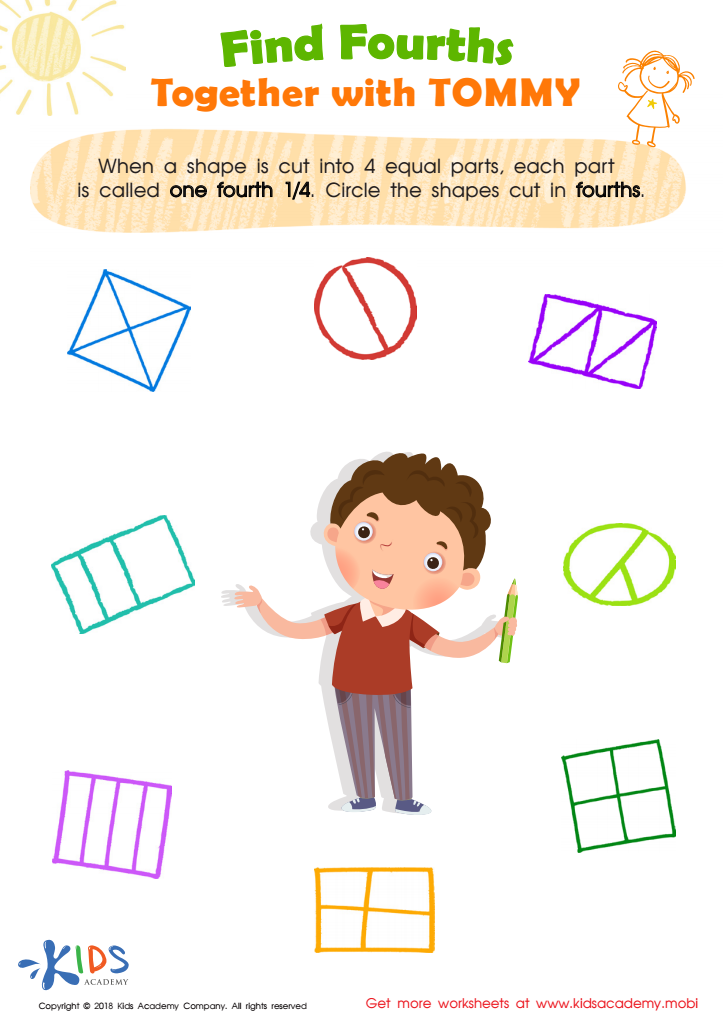
Find Fourths Together with Tommy Worksheet
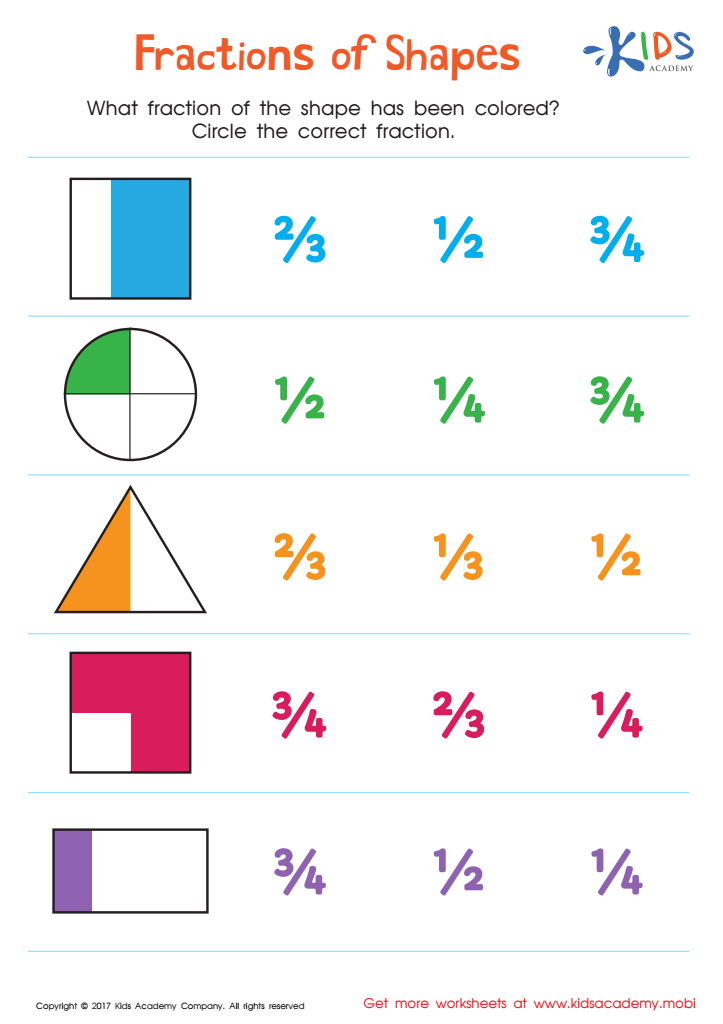
Fractions of Shapes: Math Concept Worksheet
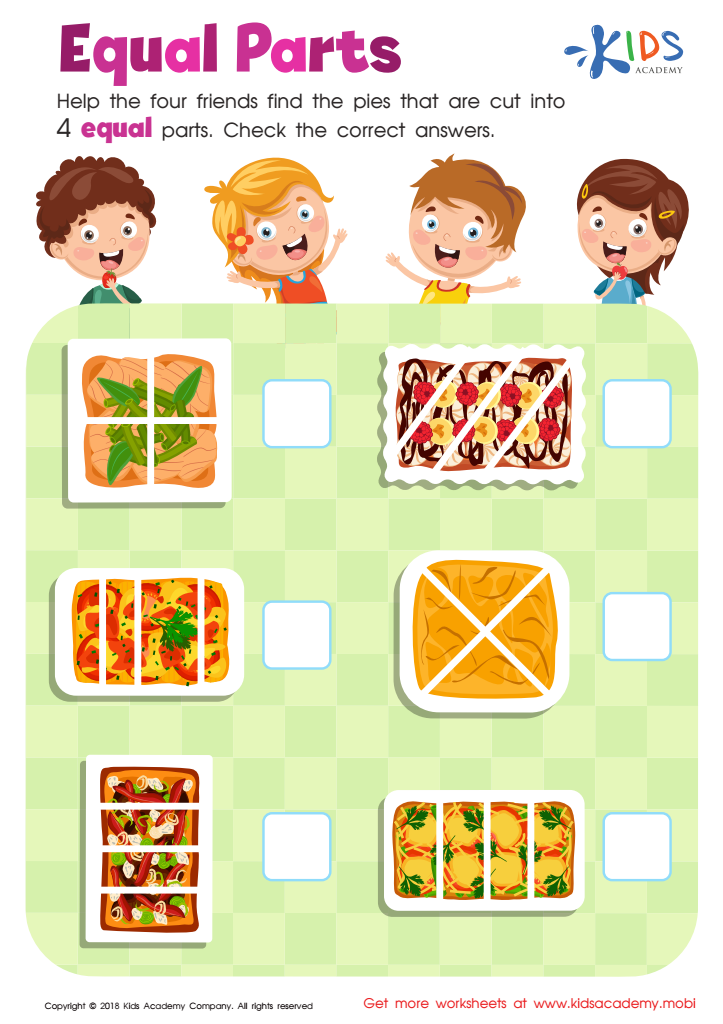
Equal Parts: Food Worksheet








Understanding fractions and geometry at ages 7-9 is crucial for developing a strong foundational math skillset. Fractions teach children the concept of part-whole relationships, which is foundational for later math topics such as decimals, percentages, and algebra. When children grasp fractions, they improve their ability to reason logically and solve problems, essential skills both in school and everyday life.
Geometry, on the other hand, helps children to visualize and understand spatial relationships. Recognizing shapes, understanding their properties, and exploring perimeter, area, and volume, spark curiosity and enhance logical thinking. This also lays ground for advanced topics, including 3D shapes and trigonometry, in higher grades.
Teachers and parents should prioritize these concepts because they extend beyond mathematics. Fractions and geometry tie into various real-life scenarios, like cooking (measuring ingredients), building (understanding dimensions), and even art (symmetric shapes). Cultivating these skills promotes better mathematical reasoning and critical thinking, providing children the tools to solve complex problems effectively. Encouragement and practice in these areas can instill a positive attitude towards math, reducing math anxiety and boosting confidence. Addressing these foundational concepts early ensures children are well-prepared for future academic challenges in math and related disciplines.








