Subtraction practice Numbers Worksheets for Ages 7-9
7 filtered results
-
From - To
Our Subtraction Practice Numbers Worksheets for ages 7-9 offer a fun and engaging way for young learners to enhance their arithmetic skills. Crafted by educational experts, these worksheets feature a variety of subtraction problems that build confidence and improve accuracy. Children will enjoy colorful illustrations and innovative challenges designed to make learning enjoyable. With focused practice, students can master core concepts and develop a solid foundation in math. Ideal for classroom or home use, our worksheets cater to different learning styles and help track progress. Unlock your child’s potential with our interactive subtraction practice tools today!
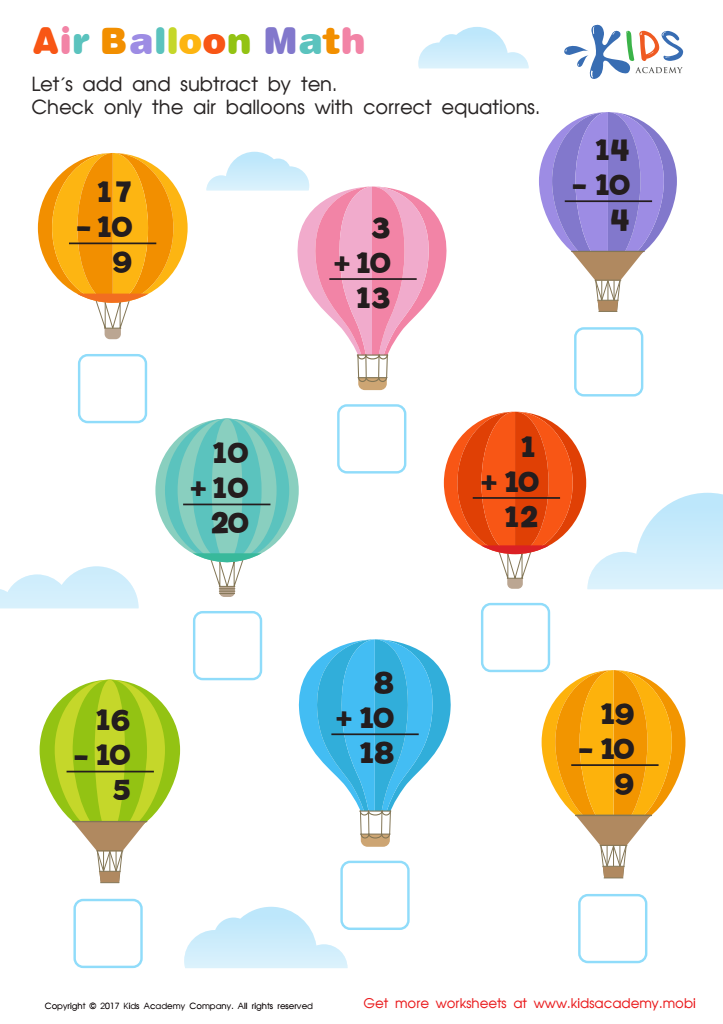
Air Balloon Math Worksheet
 Assign to My Students
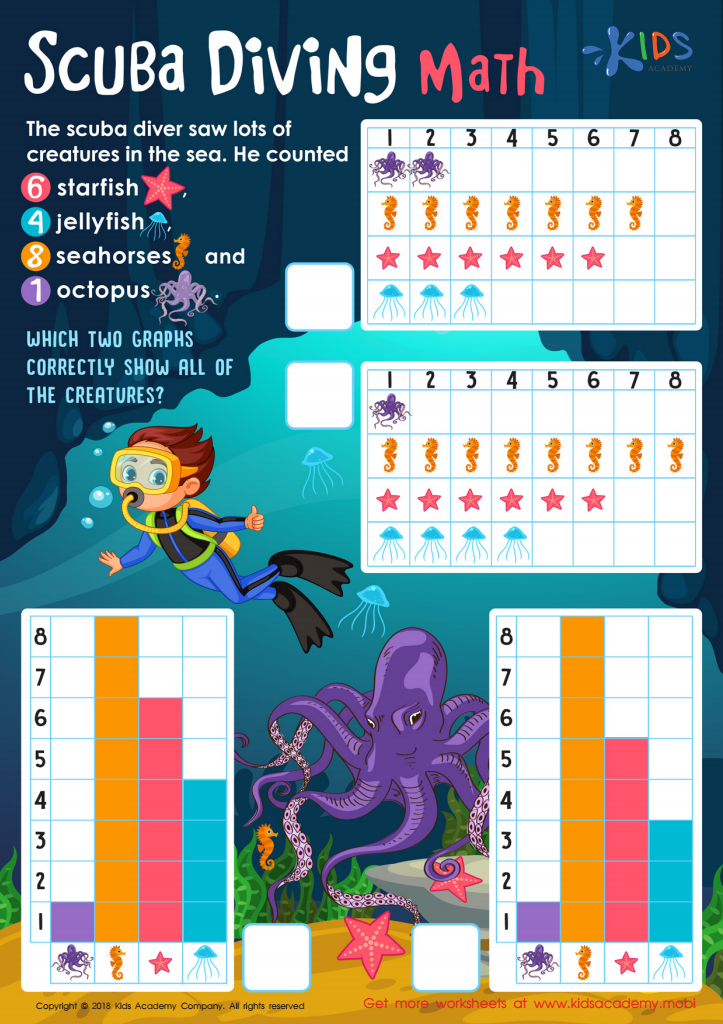
Scuba Diving Math Worksheet
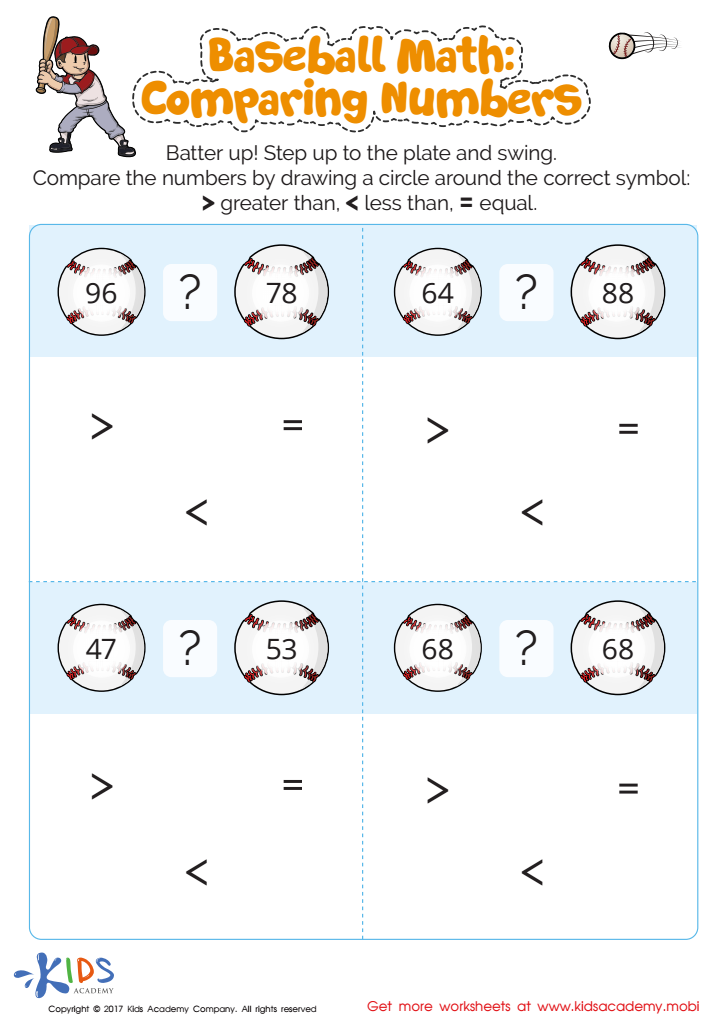
Compare Numbers Printable
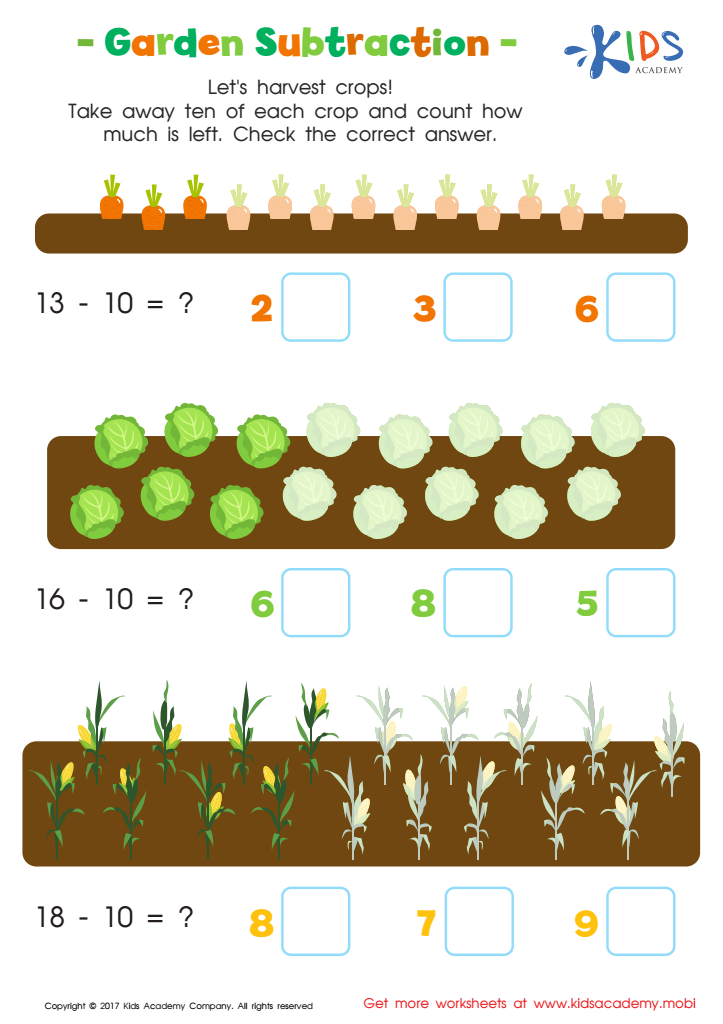
Garden Subtraction Worksheet
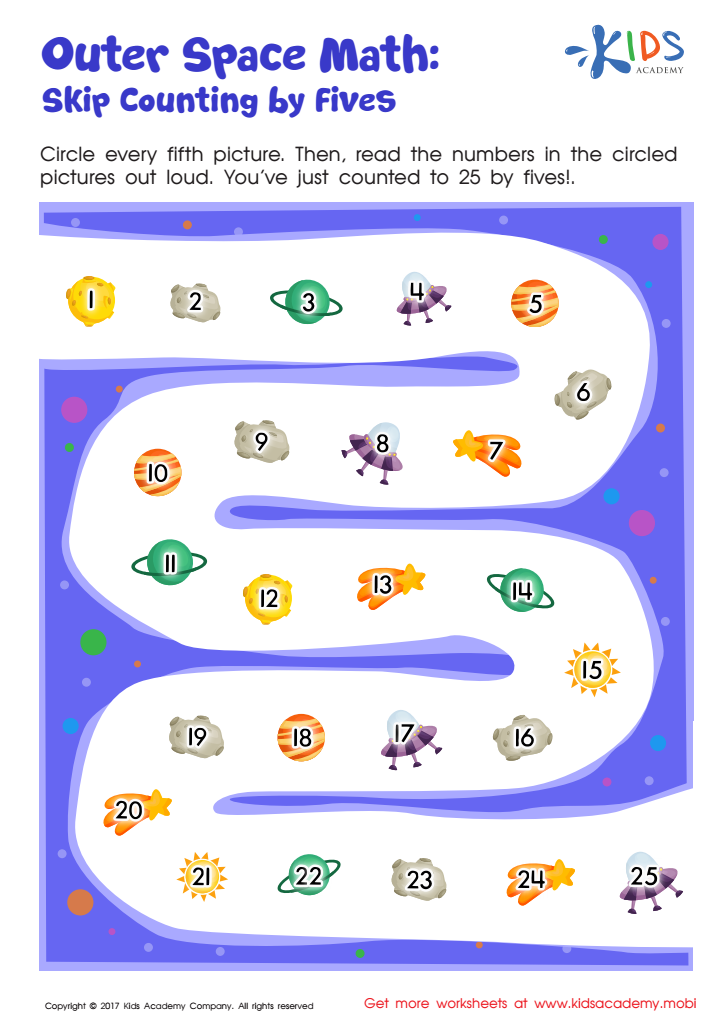
Skip Counting by 5s: Outer Space Math Printable
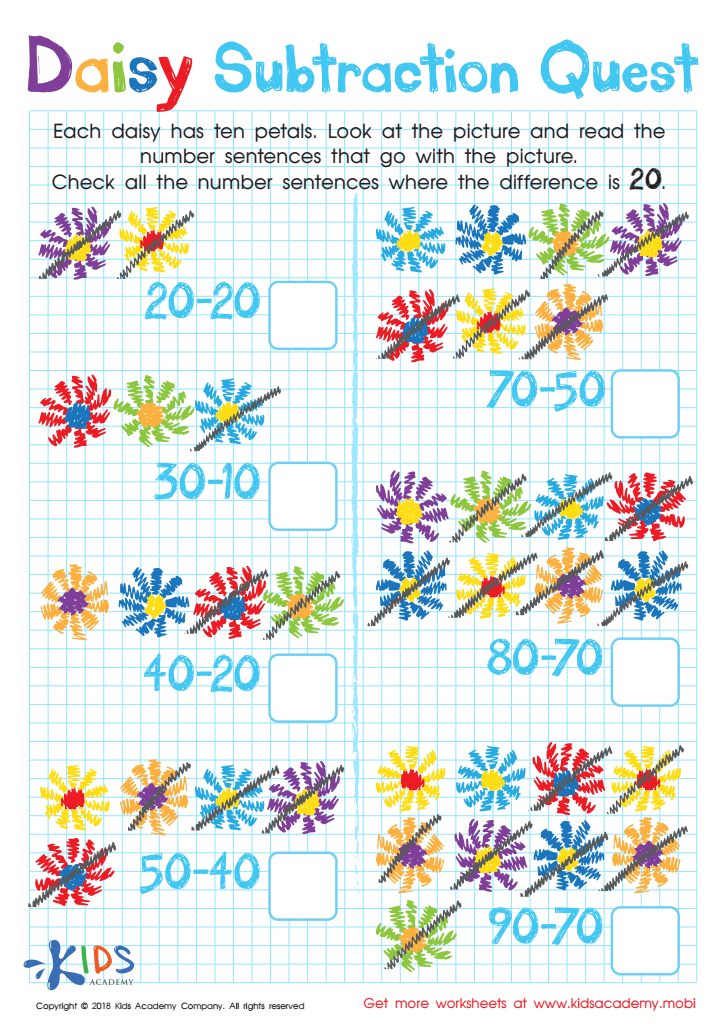
Daisy Subtraction Quest Worksheet
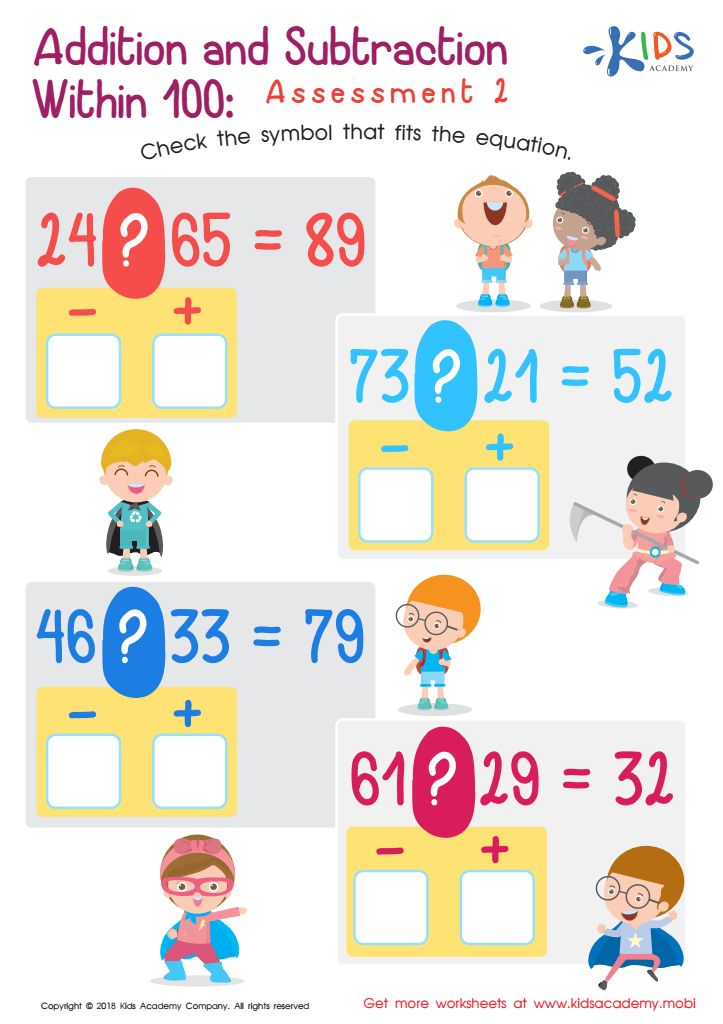
Addition and Subtraction Within 1: Assessment 2 Worksheet







Subtraction practice is crucial for children ages 7-9 because it forms a fundamental part of their early mathematical development. This age range typically encompasses second and third grades, pivotal years for building a strong arithmetic foundation. Mastery of subtraction, alongside other basic math operations, is necessary for more complex problem-solving and logical reasoning skills that children will need in higher grades.
Firstly, subtraction is more than just an arithmetic skill; it's a basis for understanding number relationships and place value. For instance, comprehending the concept of “borrowing” teaches children how numbers are composed of parts and wholes. This kind of numerical literacy is essential for their future academic growth, enhancing both math and critical thinking skills.
Secondly, continuous subtraction practice increases a child's confidence in math, making them more likely to engage actively and positively with learning. When children become proficient in subtraction, they achieve a sense of accomplishment that fosters a love for learning and reduces math anxiety.
Lastly, real-world applications of subtraction are vast—from managing money to measuring ingredients in a recipe, being adept at subtraction is a life skill. Scholastic gains in early years pave the way for children to tackle those real-world tasks effectively. Therefore, parents and teachers should prioritize and support regular subtraction practice to ensure holistic and sustained educational growth.








