Analytical skills Math Worksheets for Ages 7-9
5 filtered results
-
From - To
Discover our engaging Analytical Skills Math Worksheets designed specifically for ages 7-9! These worksheets focus on enhancing critical thinking and problem-solving abilities through fun and interactive math challenges. Tailored for young learners, each activity encourages analysis, logical reasoning, and the ability to draw conclusions. Topics include patterns, sequencing, and comparison exercises that make math enjoyable. Ideal for classroom use or at-home learning, our resources help kids develop essential skills while building confidence in their mathematical abilities. Foster a love for learning and set the foundation for future academic success with our comprehensive and free analytical skills worksheets!

Animal Features Worksheet
 Assign to My Students
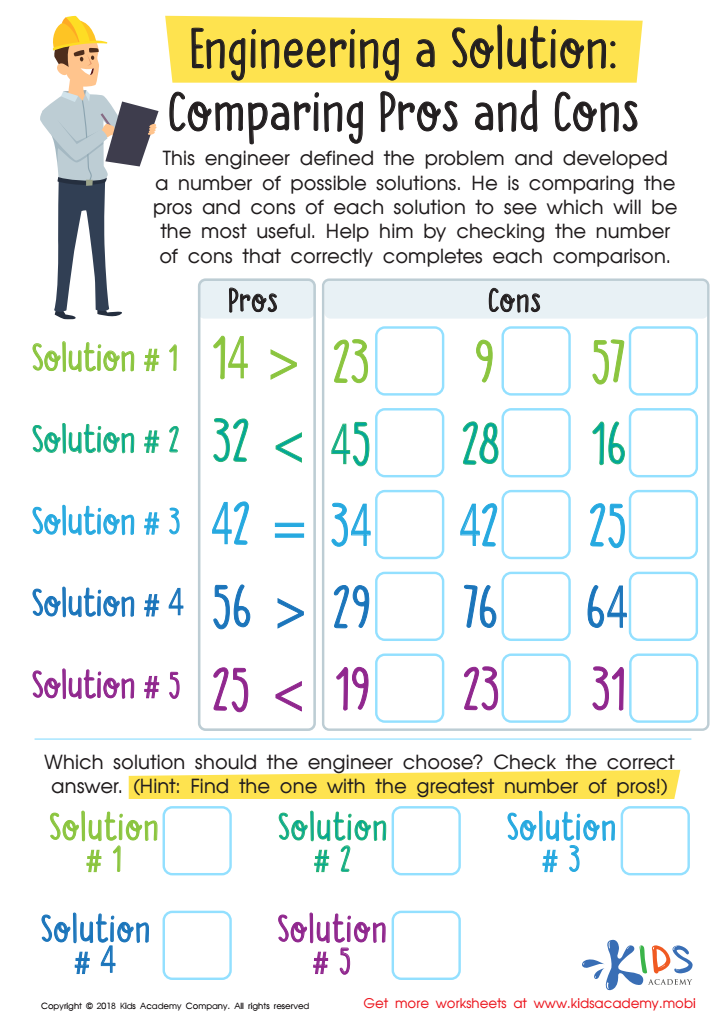
Engineering a Solution: Comparing Pros and Cons Worksheet

Stolen Cheese Case Maze Worksheet

Growing Jamestown Worksheet

3D Shapes Quest Worksheet







Parents and teachers should prioritize analytical skills in math for children aged 7-9 because these skills form the foundation for critical thinking and problem-solving abilities that are essential for future academic success and everyday life. At this age, children are beginning to grasp more complex mathematical concepts, and honing their analytical skills allows them to understand relationships between numbers, identify patterns, and make connections between different mathematical ideas.
Developing analytical skills in math fosters an inquiry-based mindset where children learn to question and explore problems rather than simply memorizing facts. This will not only boost their confidence in tackling math problems but also enhance their intuitive understanding of various subjects, such as science and technology. Moreover, these skills encourage them to articulate their thought processes, which is vital for effective communication.
Furthermore, strong analytical skills in math can lead to improved academic performance and a positive attitude towards learning. As students become adept at analyzing and solving mathematical problems, they develop resilience and perseverance. By nurturing these skills at this critical stage, parents and teachers can set children on a path toward lifelong learning and adaptability, helping them navigate an increasingly complex world.








