
Map reading skills Math Worksheets for Ages 7-9
5 filtered results
Difficulty Level
Grade
Age
-
From - To
Subject
Activity
Standards
Enhance your child's geographical and analytical abilities with our Map Reading Skills Math Worksheets, designed specifically for ages 7-9. These engaging worksheets blend math and map-reading, helping young learners develop critical thinking and spatial skills. Through fun, interactive exercises, children will learn to interpret various maps, understand scale, and use coordinates. Our carefully structured worksheets align with common core standards, ensuring comprehensive skill-building. Perfect for in-class activities or homeschool adventures, these worksheets make learning both educational and exciting. Empower your child with practical navigation skills and a love for exploration today!
Favorites
With answer key
Interactive
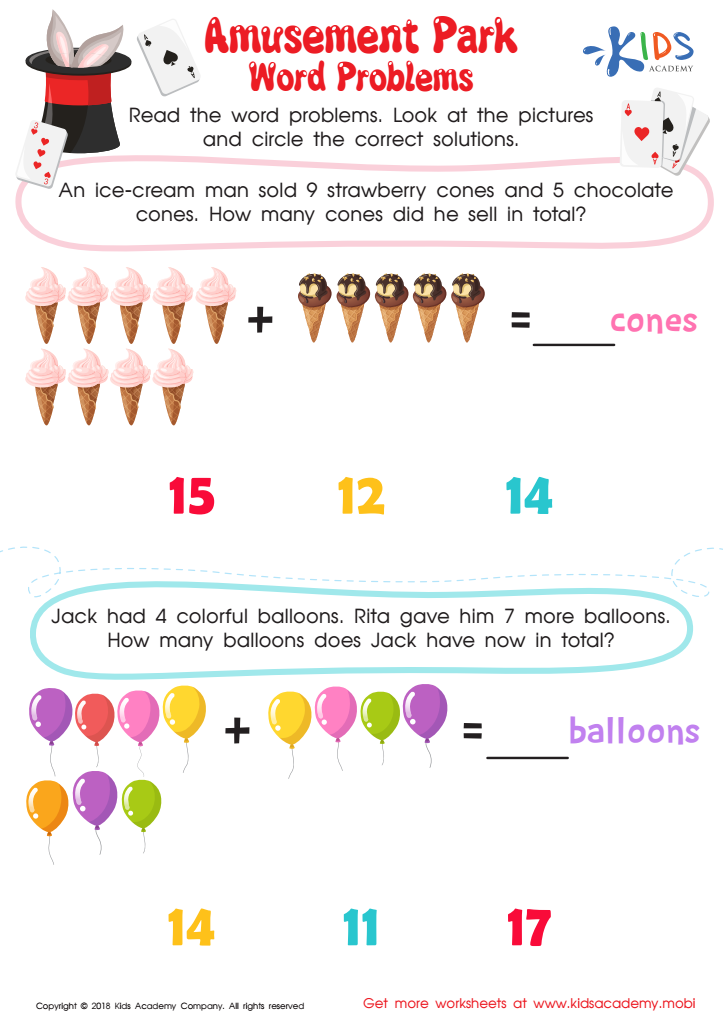
Amusement Park Word Problems Worksheet
Engage kids with math by making it realistic and incorporating manipulatives or pics they like! This worksheet helps kids understand word problems. Read the problem, note numbers and key phrases like "in total," then count the pics to find the total!
 Assign to My Students
Amusement Park Word Problems Worksheet
Worksheet
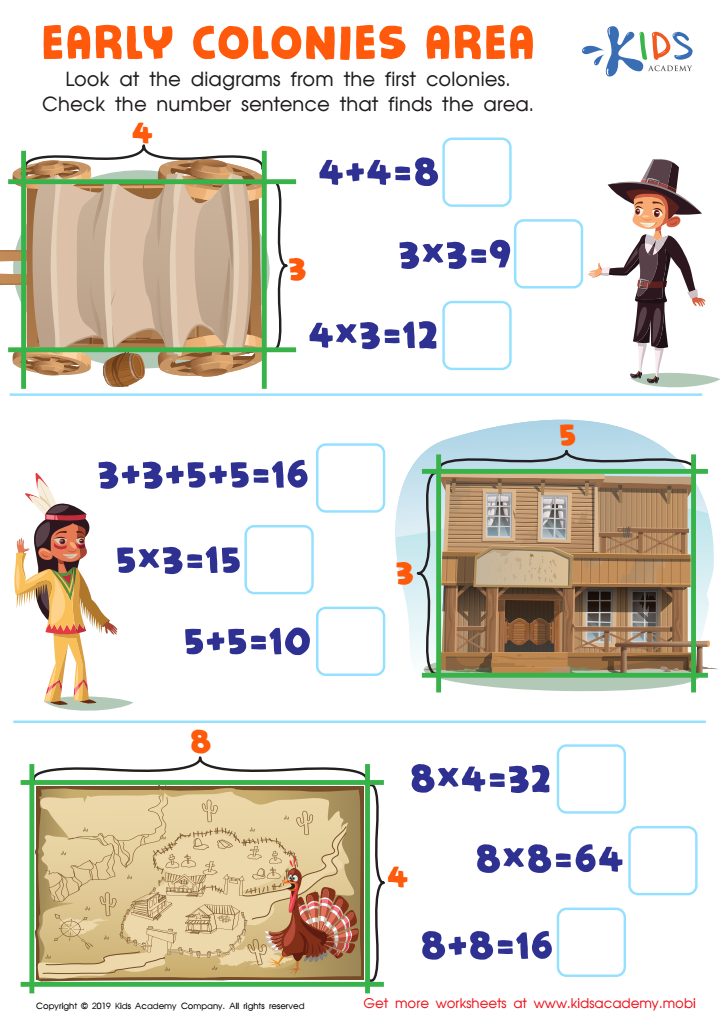
Early Colonies Area Worksheet
Before starting this worksheet, check if your kids know who the early colonizers were. Exercise their addition and subtraction skills by having them solve the equations, then look at the diagrams from the colonies. Guide them to check the number sentence to find the area.
Early Colonies Area Worksheet
Worksheet
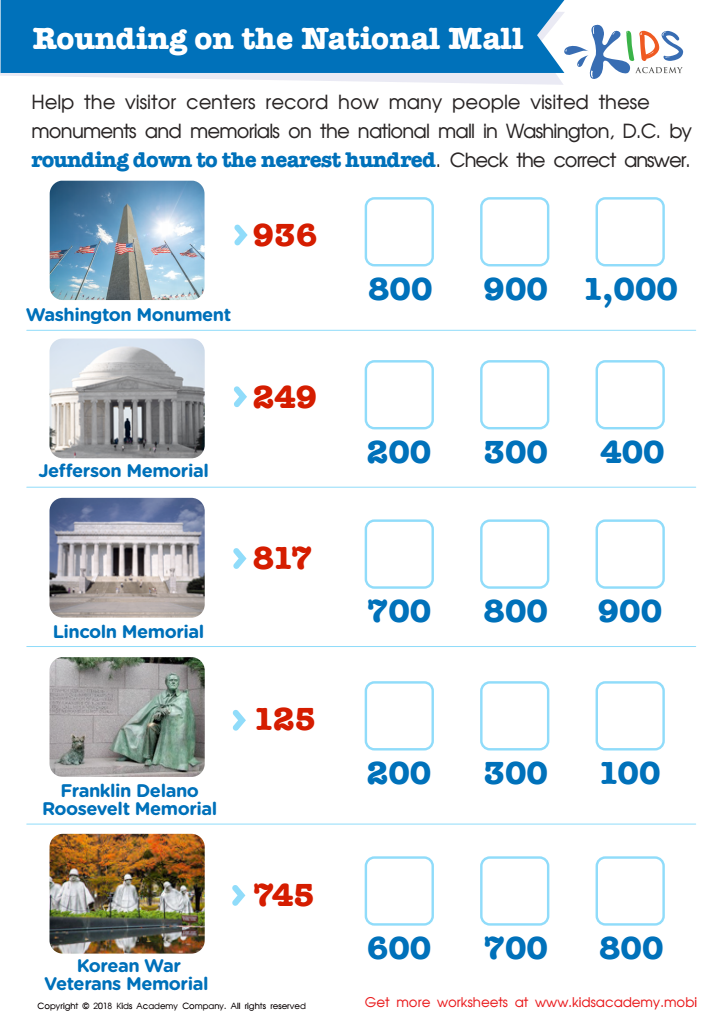
Rounding on the National Mall Worksheet
Math and social studies come together in this worksheet. Learners must round numbers to record attendance at Washington D.C. monuments and memorials. Remind them to round down to the nearest hundred. Extend the lesson by talking about each monument - a great way to teach or refresh your child's knowledge of these national landmarks!
Rounding on the National Mall Worksheet
Worksheet
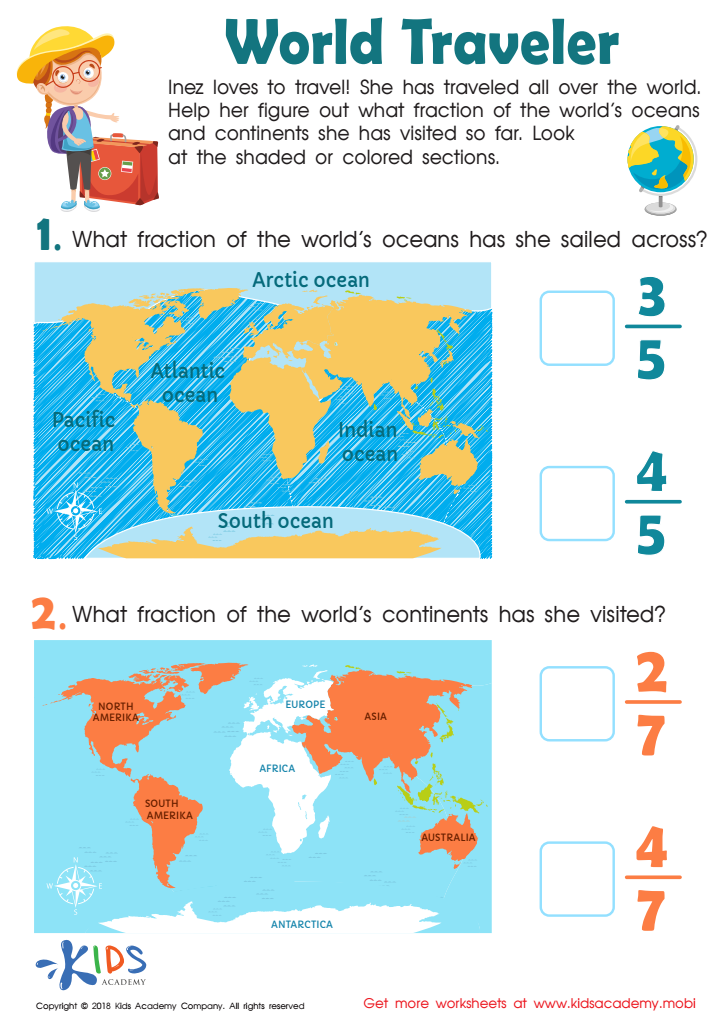
World Traveler Worksheet
Kids love exploring the world? Inez sure does! She's seen oceans and continents around the globe. Your kids can help her figure out what fraction of the world she has visited. Have them name all the countries they've been to, then look at the marked sections on the printout to find out!
World Traveler Worksheet
Worksheet
Join Kids Academy for Free
Who is primarily going to use this learning content?







Map reading skills in math are crucial for children aged 7-9 as they serve as foundational tools that enhance their spatial thinking, problem-solving abilities, and overall academic growth. At this developmental stage, kids are naturally curious about the world around them. Introducing them to maps combines that curiosity with practical learning.
Firstly, map reading enriches spatial awareness. Children learn to visualize objects, navigate spaces, and understand directional concepts like north, south, east, and west, which are essential for geography and everyday tasks. Secondly, it integrates math in a meaningful way. Concepts such as scale, distance, and coordinates allow children to apply numerical skills to real-world contexts, solidifying their understanding of measurements and proportions.
Moreover, these activities cultivate critical thinking. When kids determine routes or solve map-based tasks, they weigh different options and make decisions, fostering problem-solving skills that extend beyond the classroom. This holistic development creates a strong academic foundation.
Additionally, map reading encourages learners to interpret symbols and legends, skills transferrable to other learning areas, such as reading charts or graphs. It engages multiple learning styles — visual, kinesthetic, and logical.
In essence, by emphasizing map reading skills, parents and teachers equip children with the tools needed for more advanced academic achievements and for navigating the broader world effectively.








