Mathematical reasoning Math Worksheets for Ages 7-9 - Page 3
51 filtered results
-
From - To
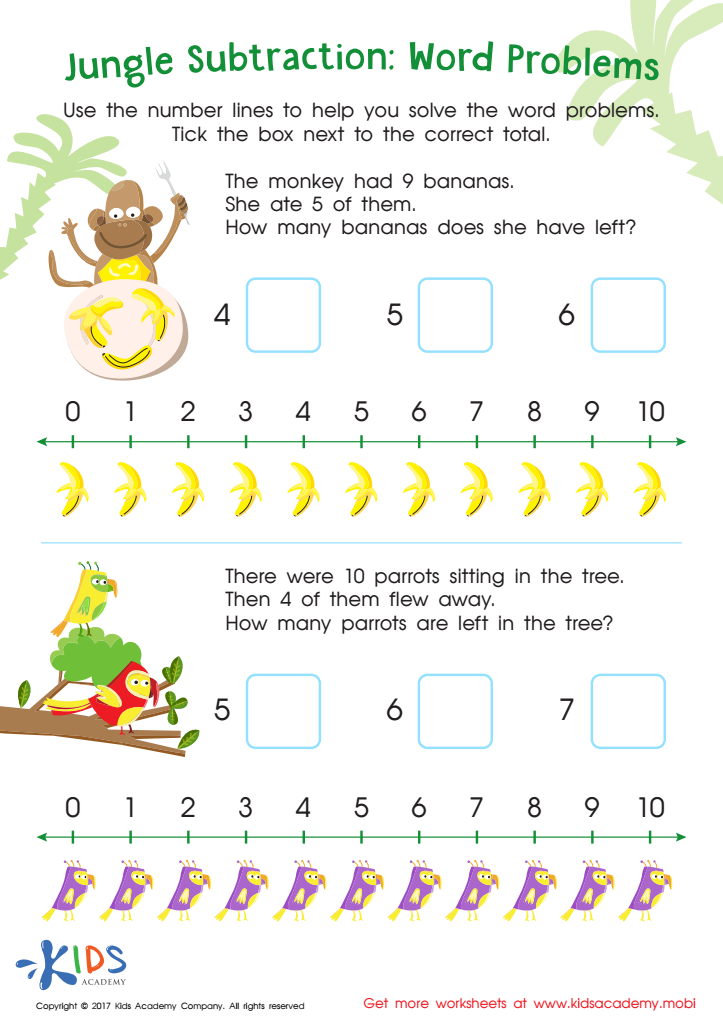
Jungle Subtraction Word Problems Substraction Worksheet
 Assign to My Students
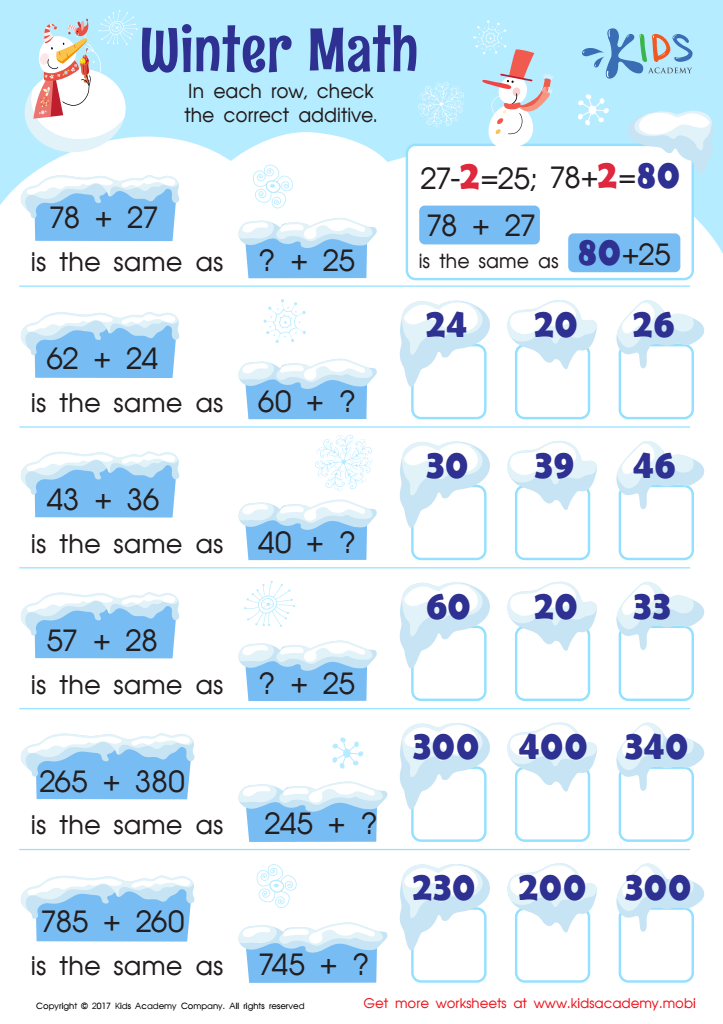
Free Addition Worksheet
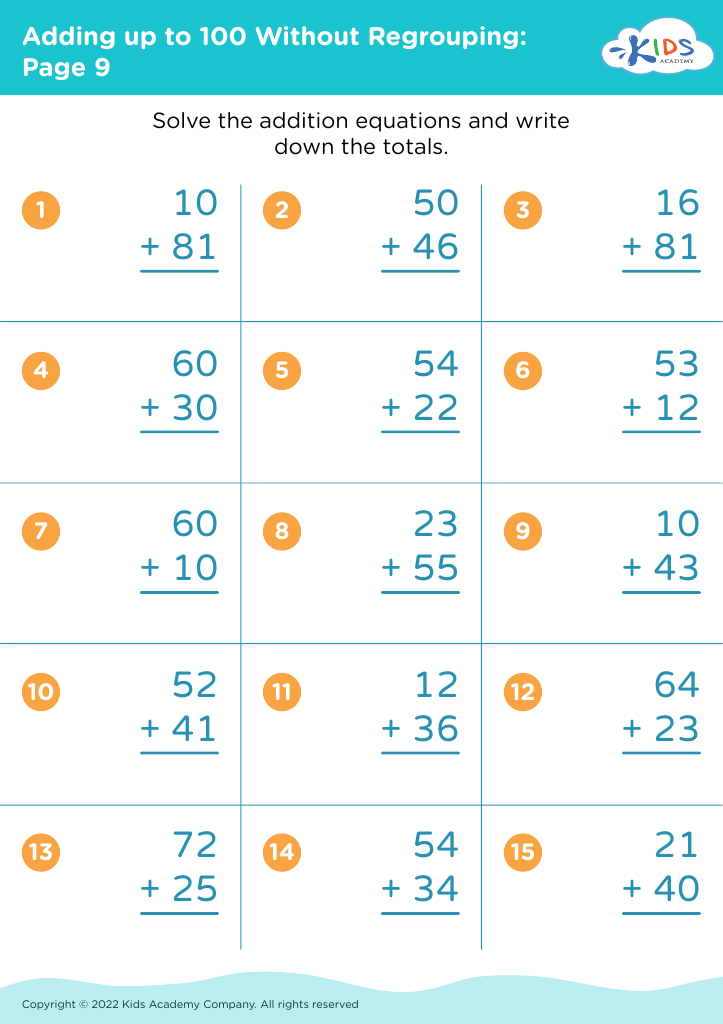




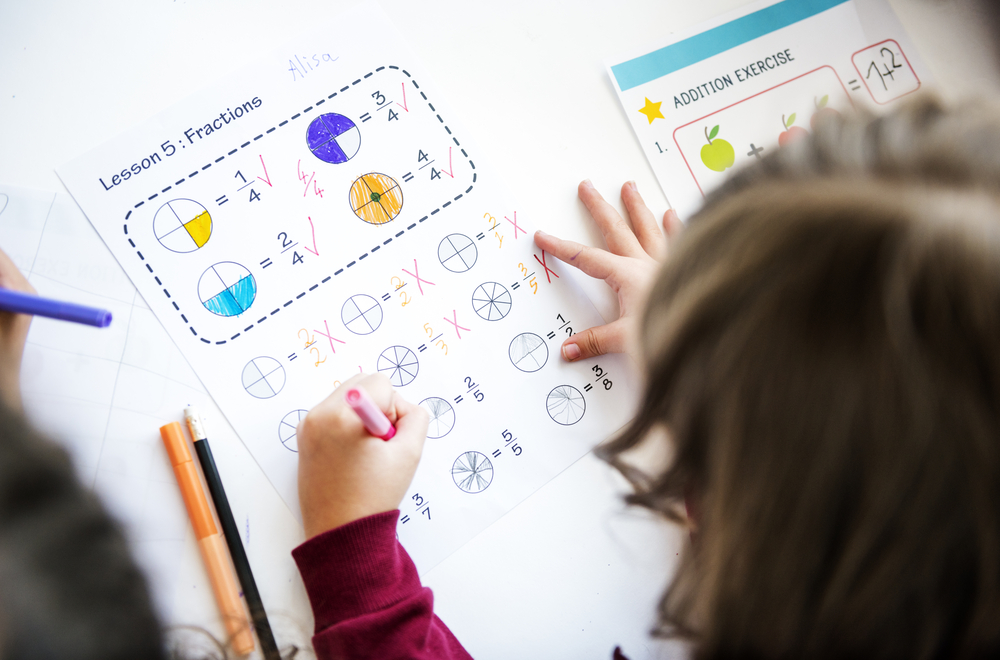



Mathematical reasoning is essential for children aged 7 to 9 as it fosters critical thinking skills that extend beyond math itself. During these formative years, children learn to analyze problems, draw conclusions, and articulate their thought processes. This academic foundation encourages confidence in tackling complex challenges, not only in mathematics but in everyday situations as well.
By nurturing mathematical reasoning, parents and teachers help students develop a deeper understanding of mathematical concepts, such as addition, subtraction, multiplication, and division. This understanding enables students to apply their knowledge to solve real-world problems, enhancing their ability to engage with various subjects over time.
Additionally, logical reasoning lays the groundwork for higher-level mathematical skills they will encounter in later grades like fractions, geometry, and basic algebra. Engaging children in discussions about their mathematical thinking promotes enthusiasm and a love for the subject, which is crucial for lifelong learning.
Moreover, promoting mathematical reasoning resonates with common core education standards and helps students perform better in assessments. By prioritizing this skill, parents and teachers play an indispensable role in developing well-rounded, proficient learners ready to embrace future academic challenges.








