Recognizing equal parts Math Worksheets for Ages 7-9
3 filtered results
-
From - To
Discover our engaging "Recognizing Equal Parts Math Worksheets" designed for children aged 7-9! These worksheets help young learners grasp the concept of fractions by identifying and understanding equal parts of various shapes and objects. With vibrant illustrations and interactive activities, students will enjoy exploring halves, quarters, and eighths. Our carefully crafted exercises build foundational math skills and boost confidence in problem-solving. Ideal for use at home or in the classroom, these worksheets make learning fractions fun and accessible. Empower your child to master recognizing equal parts and watch their enthusiasm for math grow! Download your worksheets today and ignite a love for learning!
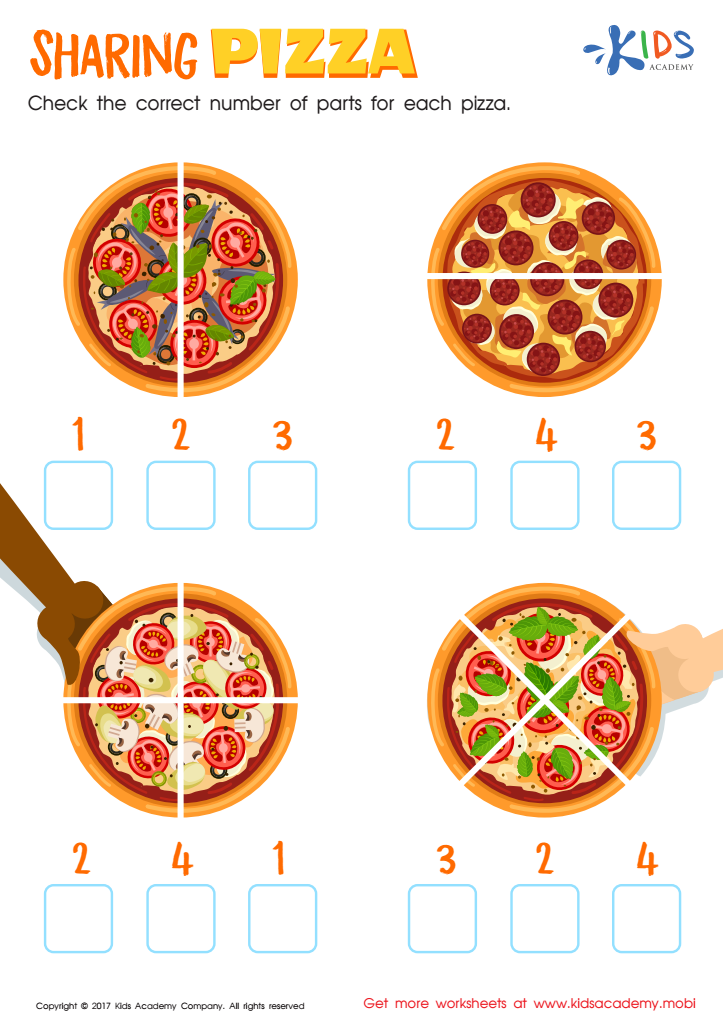
Sharing Pizza Worksheet
 Assign to My Students
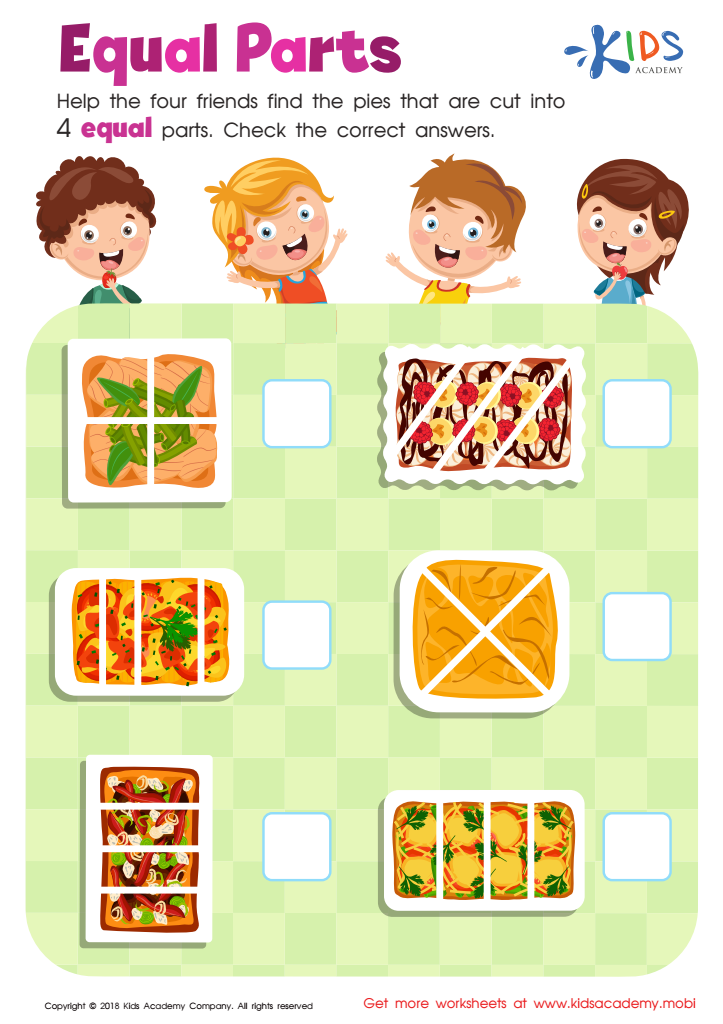
Equal Parts: Food Worksheet






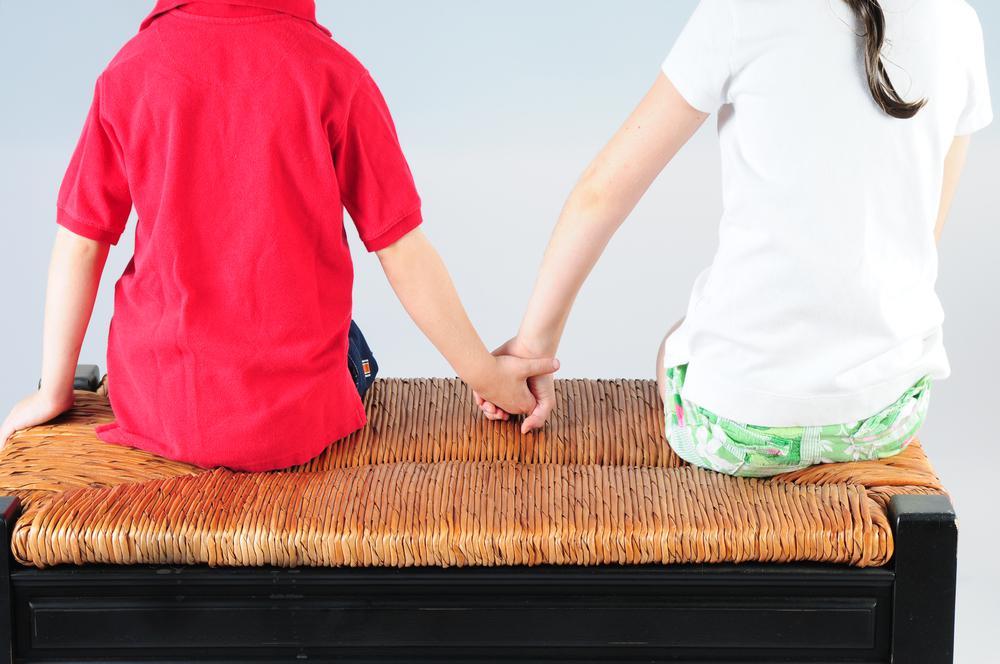
Recognizing equal parts is a fundamental concept in mathematics that significantly impacts a child's understanding of fractions and proportional reasoning. For children aged 7-9, mastering this skill lays the groundwork for more complex mathematical concepts encountered in higher grades. Parents and teachers should prioritize this area as it fosters critical thinking and problem-solving abilities.
When children learn to identify equal parts, they develop a sense of fairness and balance, which can translate into real-world applications. They start to comprehend how to share and divide items equally, promoting cooperation and social skills during group activities.
Furthermore, recognizing equal parts supports spatial awareness and helps children visualize relationships between numbers and quantities. This understanding is vital not just in math class, but across various subjects like science, where measurements and data representation are key.
Incorporating activities that encourage recognizing equal parts can make learning engaging. It creates opportunities for discussions about fractions using everyday objects, enriching a child's learning experience. By emphasizing this concept, parents and teachers enrich a child's mathematical foundation, empowering them to tackle future challenges with confidence.








