Understanding tens Math Worksheets for Ages 7-9
4 filtered results
-
From - To
Explore our "Understanding Tens" math worksheets designed specifically for children ages 7-9. These engaging and interactive resources help young learners grasp the concept of tens through a variety of fun activities and exercises. Our worksheets are tailored to foster number sense, enhance counting skills, and solidify their understanding of place value. Parents and teachers will find these materials to be valuable tools in reinforcing key math concepts while keeping students motivated. Perfect for both classroom and home use, our worksheets ensure children build a strong foundation in math, setting them up for future success. Start exploring today!
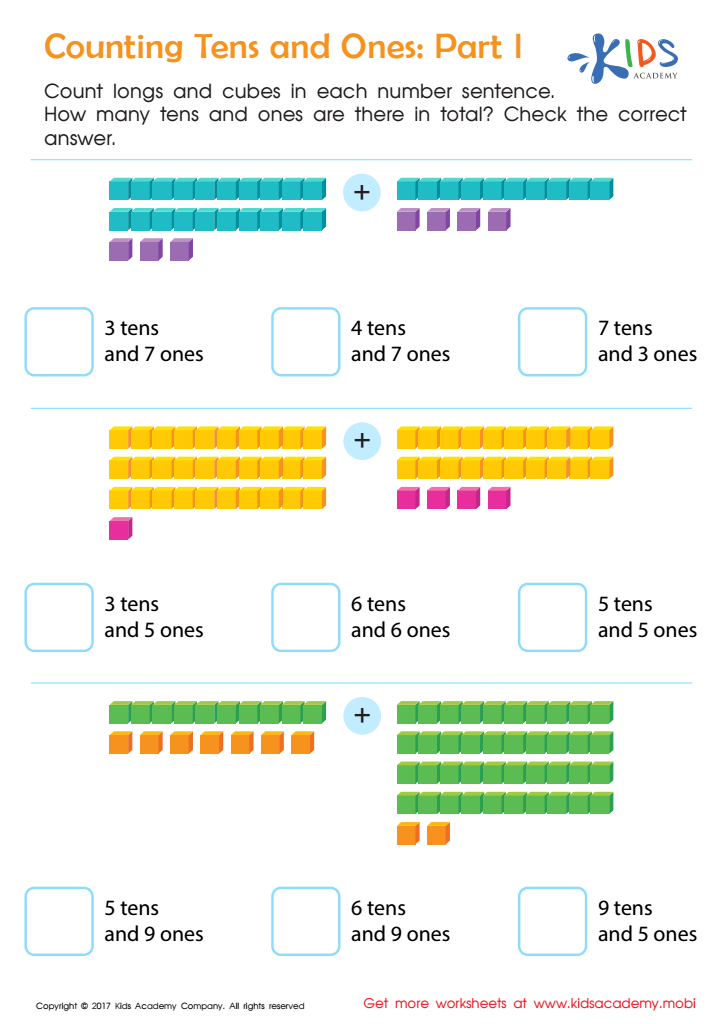
Counting Tens and Ones: Part 1 Worksheet
 Assign to My Students
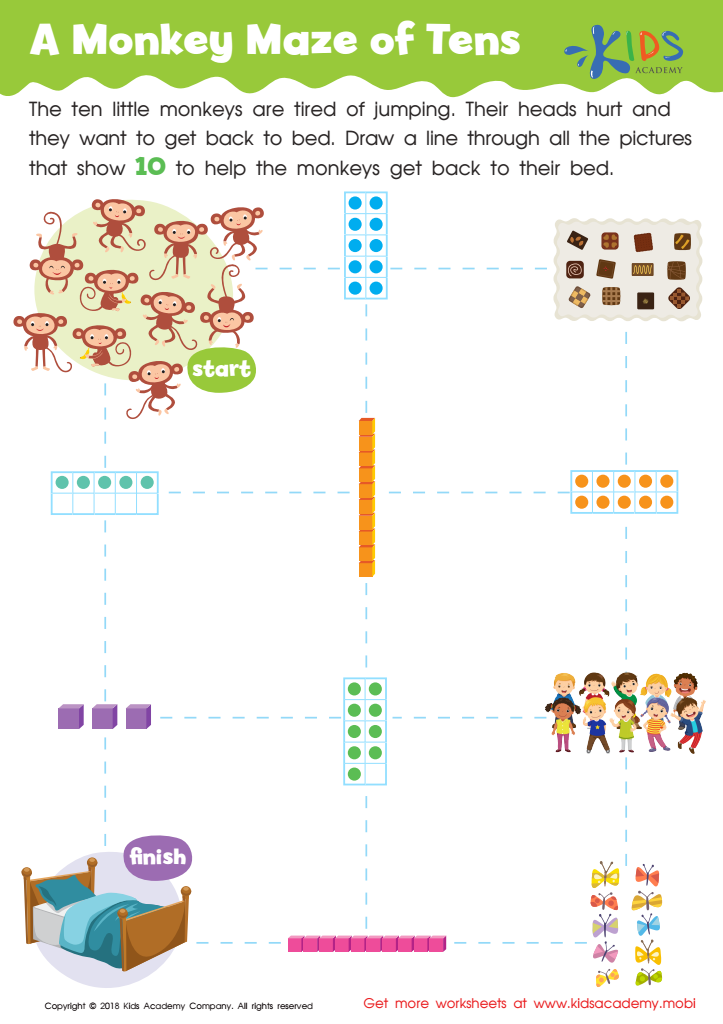
A Monkey Maze of Tens Worksheet
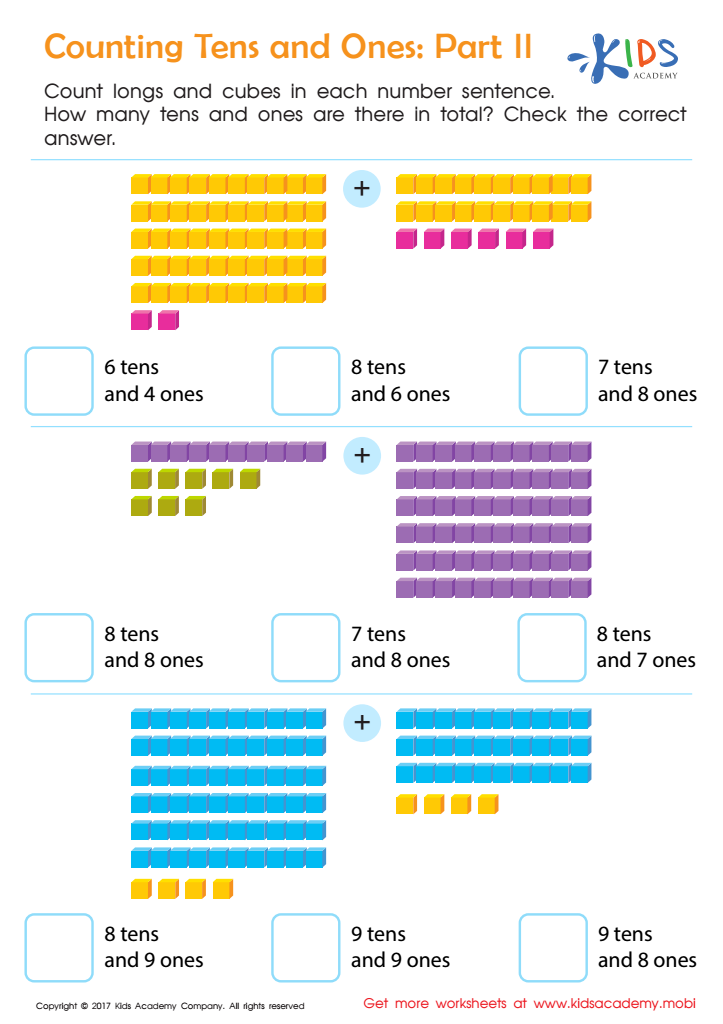
Counting Tens and Ones: Part 2 Worksheet
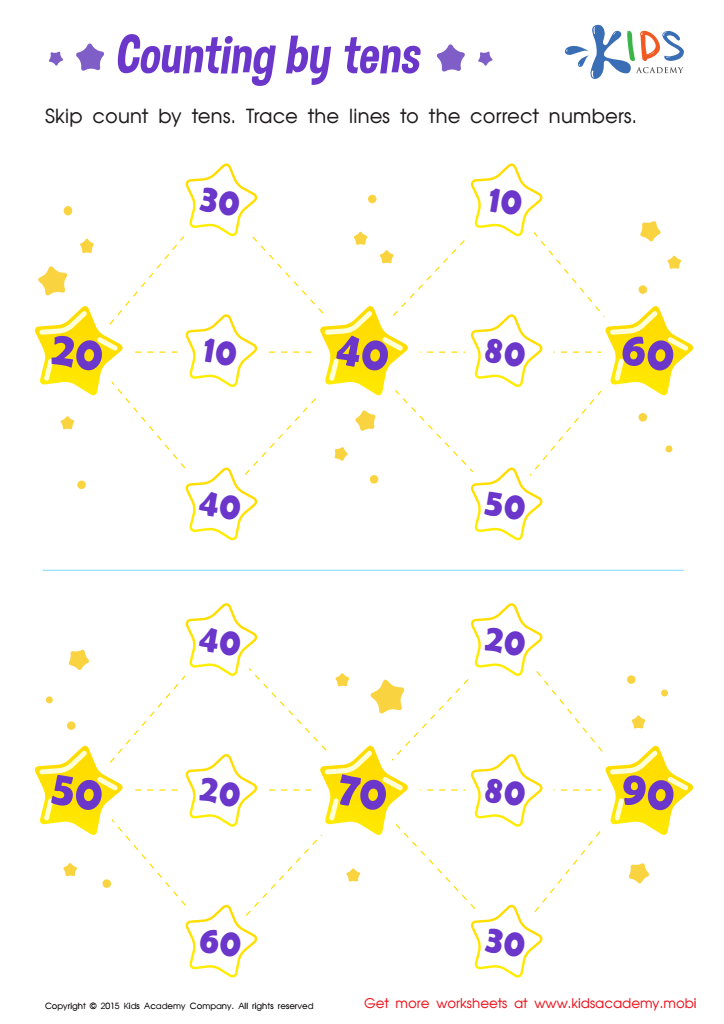
Learn Dozens: Counting by Tens Printable







Understanding tens in math is crucial for children aged 7-9 as it forms the foundation for more advanced mathematical concepts. At this stage, children are typically transitioning from basic addition and subtraction to more complex operations, such as multiplication and division. A solid grasp of the concept of tens helps them recognize patterns in numbers and enhances their ability to perform mental math.
When students understand the significance of ‘tens’—that a number can be partitioned into tens and ones—they develop strong number sense. This, in turn, aids in mastering key skills like place value, enabling them to approach larger numbers with confidence. Moreover, recognizing groups of ten can support efficient problem-solving and make mathematical concepts more intuitive.
Parents and teachers play a vital role in cultivating this understanding. Through engaging activities such as counting games, using manipulatives, and real-life examples, they can help reinforce these skills in a fun and meaningful way. By prioritizing understanding of tens in mathematics, they set students on a path to academic success in all areas of math, equipping them with essential tools they will use throughout their education and beyond. Consequently, their passion and support can significantly impact a child's confidence and competence in math.








