Shape Recognition Tracing Shapes Worksheets for Ages 7-9
5 filtered results
-
From - To
Enhance your child's geometry skills with our Shape Recognition Tracing Shapes Worksheets for Ages 7-9. Specifically designed to help young learners distinguish and remember different shapes, these fun and educational worksheets integrate both visual and hands-on learning. Children will practice tracing various geometric shapes, improving their fine motor skills while developing critical shape recognition and spatial awareness. Perfect for homeschooling or classroom use, our worksheets cater to the unique learning styles of each child, instilling confidence in their ability to identify and replicate shapes accurately. Foster a love for math and make learning engaging with these expertly crafted resources.
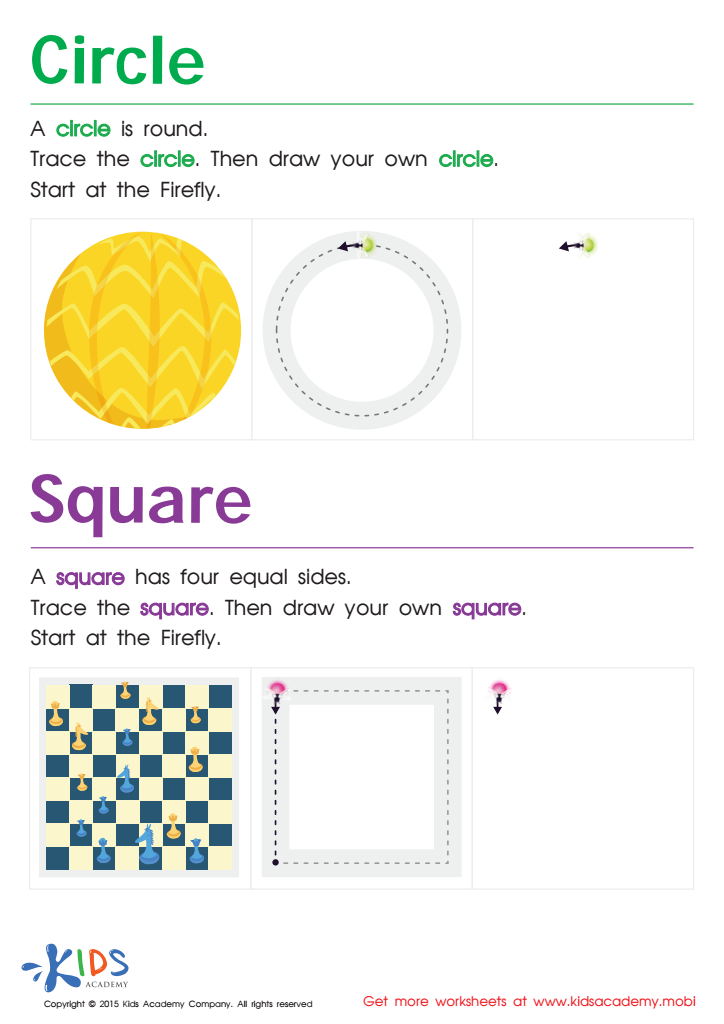
Trace And Draw a Circle And a Square Worksheet
 Assign to My Students
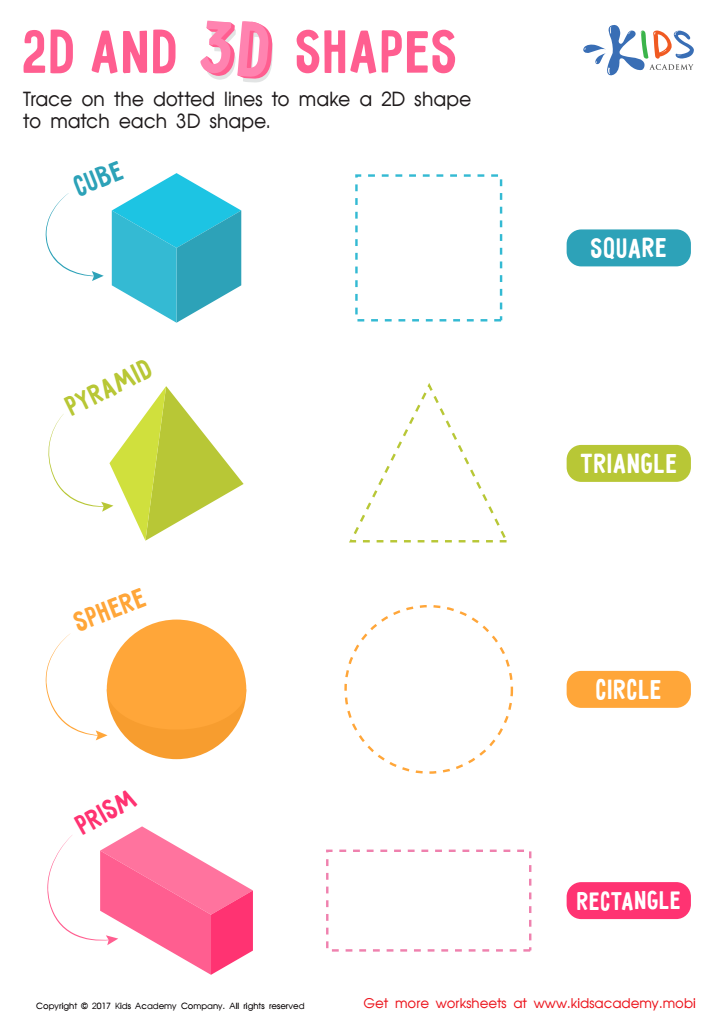
2D and 3D Shapes Worksheet
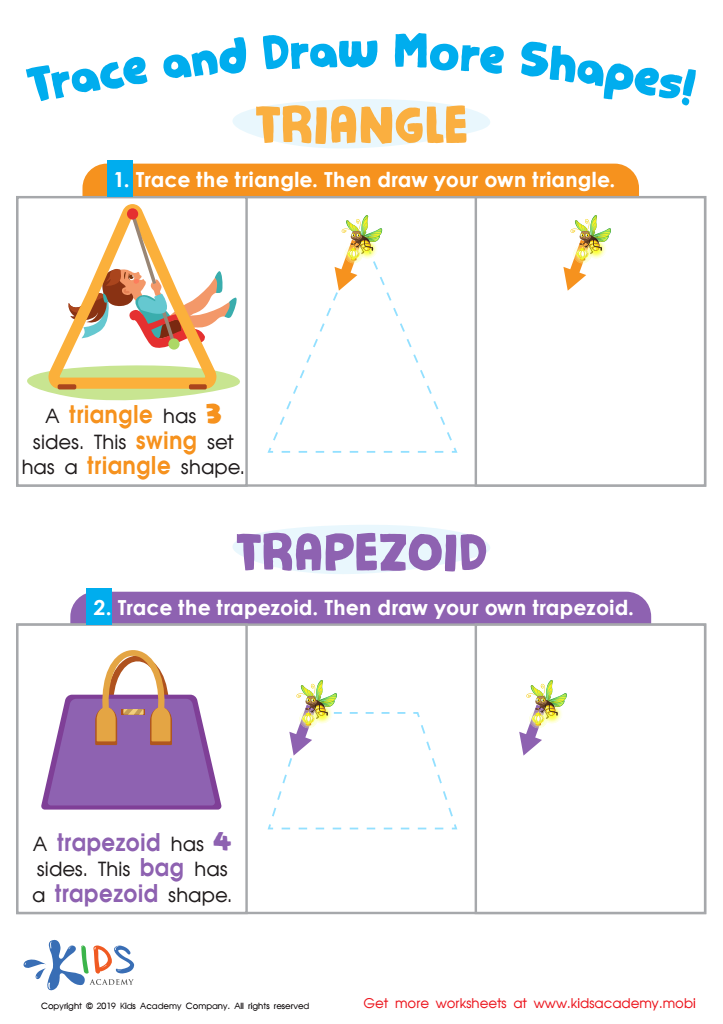
Trace and Draw More Shapes Worksheet
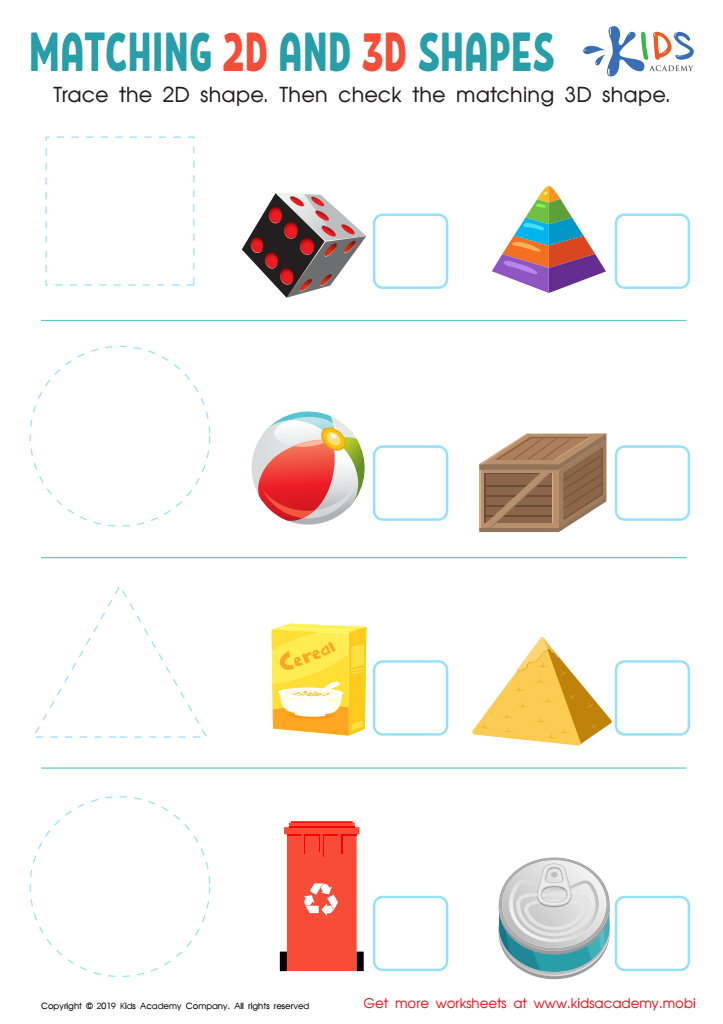
Matching 2D and 3D Shapes Worksheet
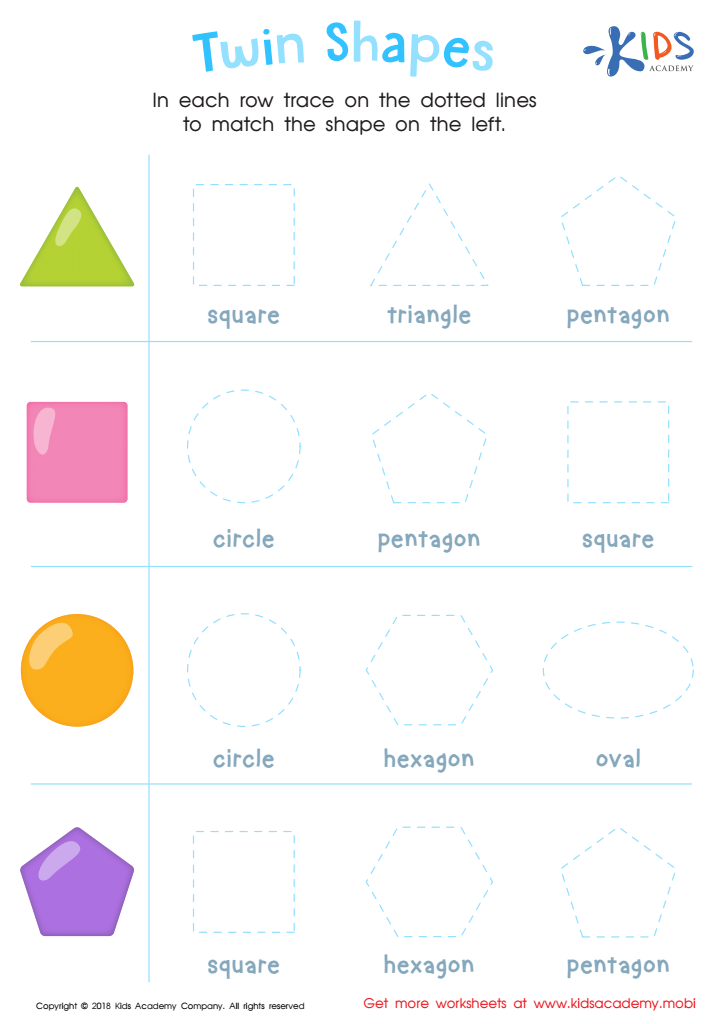
Twin Shapes Dot-to-Dot Worksheet








Shape recognition and tracing shapes are fundamental skills for children aged 7-9 as they play a crucial role in cognitive and motor development. Engaging in shape recognition helps children to categorize and identify different forms, bolstering their visual-spatial awareness. This skill is invaluable in diverse areas, such as reading, where recognizing letters and words involves identifying shapes, and in mathematics, where understanding geometric concepts is essential.
Tracing shapes, on the other hand, significantly enhances fine motor skills and hand-eye coordination. When children trace shapes, they practice and refine their ability to control writing instruments, which directly impacts their handwriting quality. It also boosts their concentration and attention to detail, aiding in overall academic performance.
Moreover, shape activities enhance problem-solving skills. Recognizing shapes involves comparing and contrasting different forms, fostering critical thinking. This skill transcends to patterns recognition in daily life, improving logical reasoning.
For teachers and parents, incorporating shape recognition and tracing activities can make learning more interactive and enjoyable. It’s an easy, effective way to stimulate young minds, making abstract concepts more accessible through practical, hands-on activities. Overall, nurturing these skills sets a strong foundation for future learning, development, and critical thinking.