Improve reading comprehension Building Vocabulary Worksheets for Ages 7-9
3 filtered results
-
From - To
Unlock your child's potential with our "Improve Reading Comprehension and Building Vocabulary Worksheets," designed specifically for ages 7-9. These engaging, interactive worksheets enhance vocabulary skills while fostering a deeper understanding of texts. Each activity is crafted to challenge young readers, promoting critical thinking and enhancing their ability to analyze and summarize information. Our resources support various learning styles, ensuring every child can thrive. Not only do these worksheets build vocabulary, but they also lay the groundwork for improved reading comprehension skills essential for academic success. Explore our collection and watch your child become a confident, fluent reader!
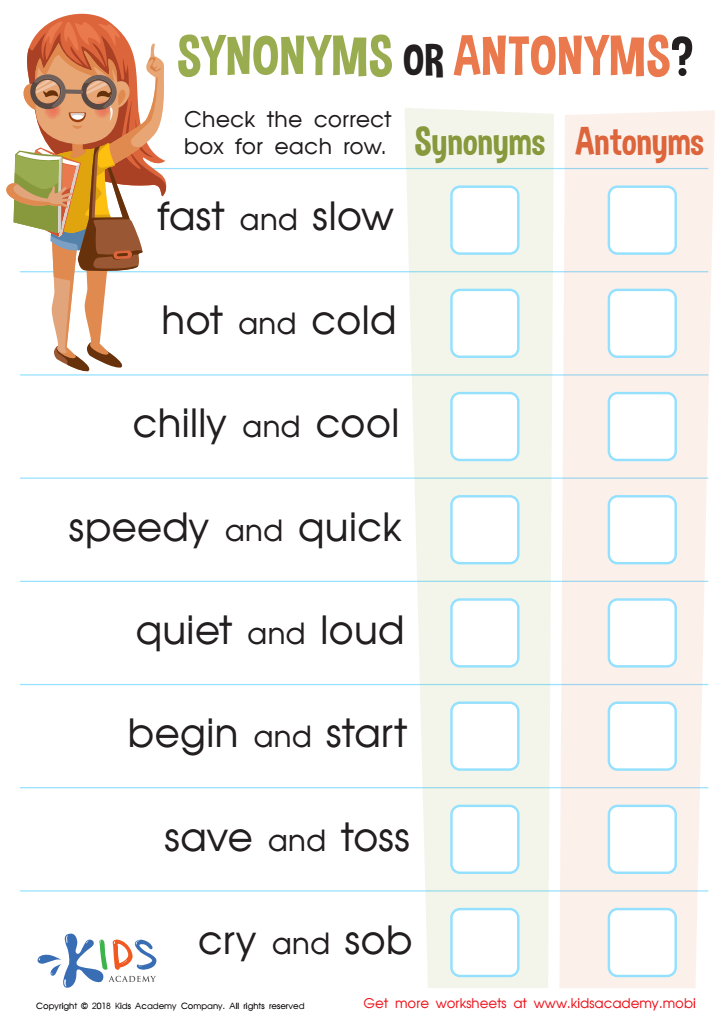
Synonyms or Antonyms: Assessment Worksheet
 Assign to My Students











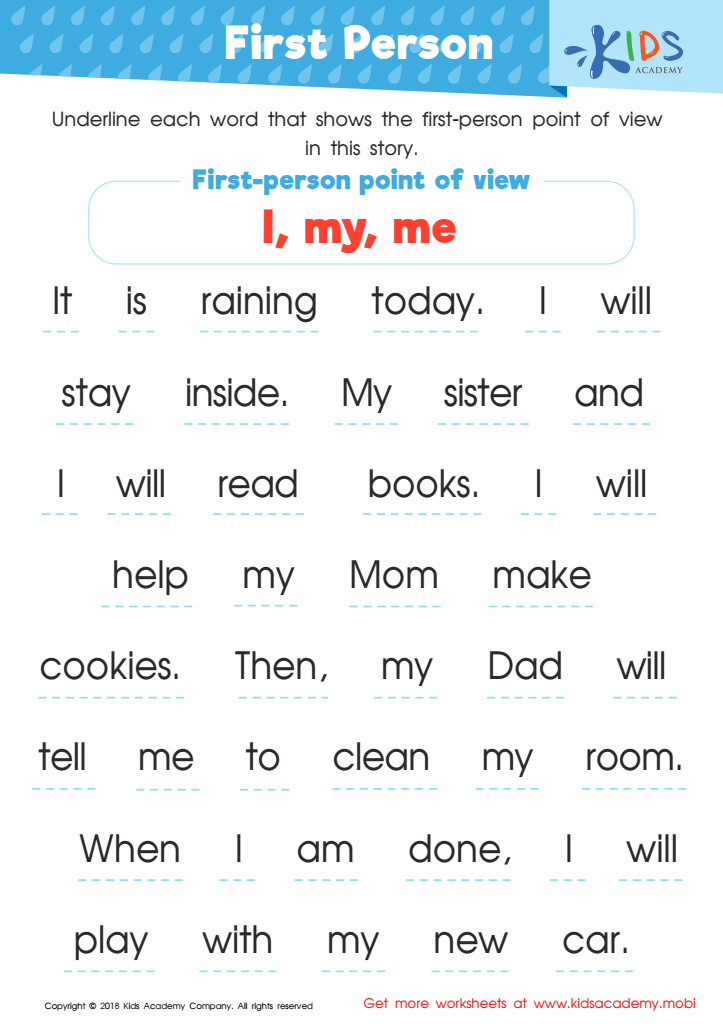
First Person Worksheet
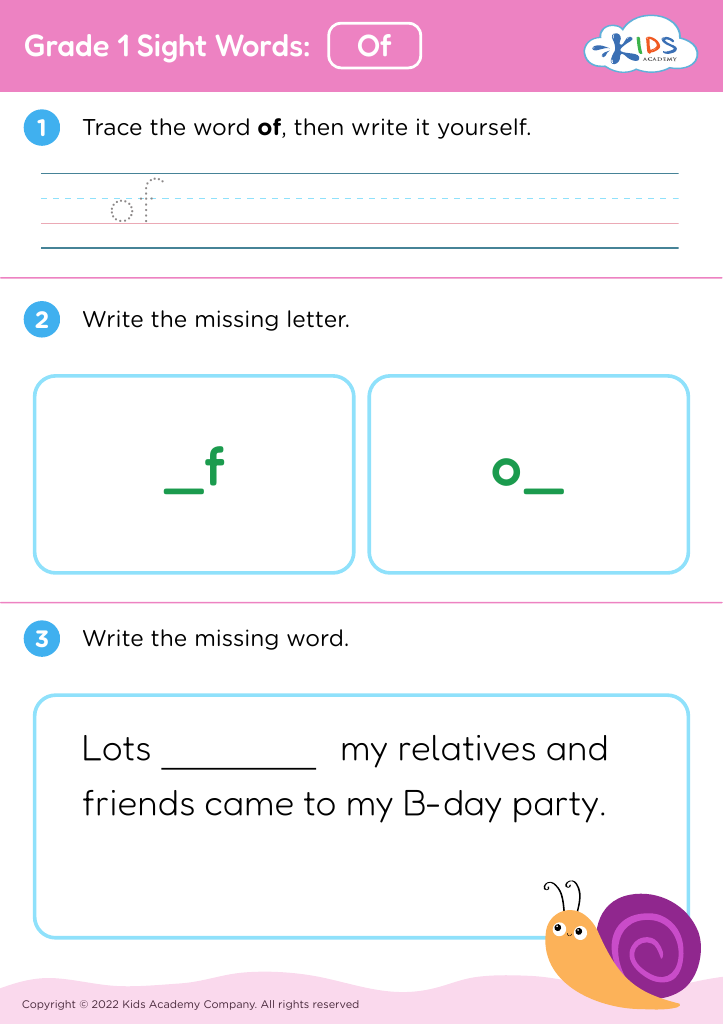








Improving reading comprehension and building vocabulary for children aged 7-9 is crucial for their overall academic success and development. At this age, children are transitioning from learning to read to reading to learn. A strong foundation in reading comprehension enables them to understand and analyze texts, which is essential for all subjects, including science and social studies.
When children build a robust vocabulary, they can express their thoughts more clearly and understand instructions better. This enhances their ability to engage in conversations, participate in discussions, and explain their reasoning during problem-solving activities.
Additionally, strong reading comprehension skills foster a love for reading, encouraging children to explore diverse genres—creating lifelong learners and critical thinkers. Schools increasingly highlight standardized tests that assess reading skills, so proficiency in this area can significantly impact a child's academic trajectory and self-esteem.
Moreover, well-developed reading skills can boost confidence and curiosity, making learning enjoyable. For parents and teachers, investing in literacy activities such as reading aloud, engaging in discussions about books, and encouraging writing can nurture these essential skills, setting the groundwork for a successful educational journey. Prioritizing reading comprehension and vocabulary development is a vital step toward empowering children for the future.








