Identifying story elements Reading Worksheets for Ages 7-9
3 filtered results
-
From - To
Enhance your child's reading comprehension with our "Identifying Story Elements" worksheets, designed for ages 7-9. These engaging resources help young learners grasp essential narrative components, including characters, setting, plot, conflict, and resolution. Each worksheet encourages critical thinking and creativity, making reading fun while promoting analytical skills. Perfect for classroom use or at-home learning, our worksheets include a variety of interactive activities, from fill-in-the-blanks to illustrated prompts. Instill a love for storytelling in your child and watch their confidence grow as they explore the magical world of narratives. Download your free worksheets today and unlock your child's potential!
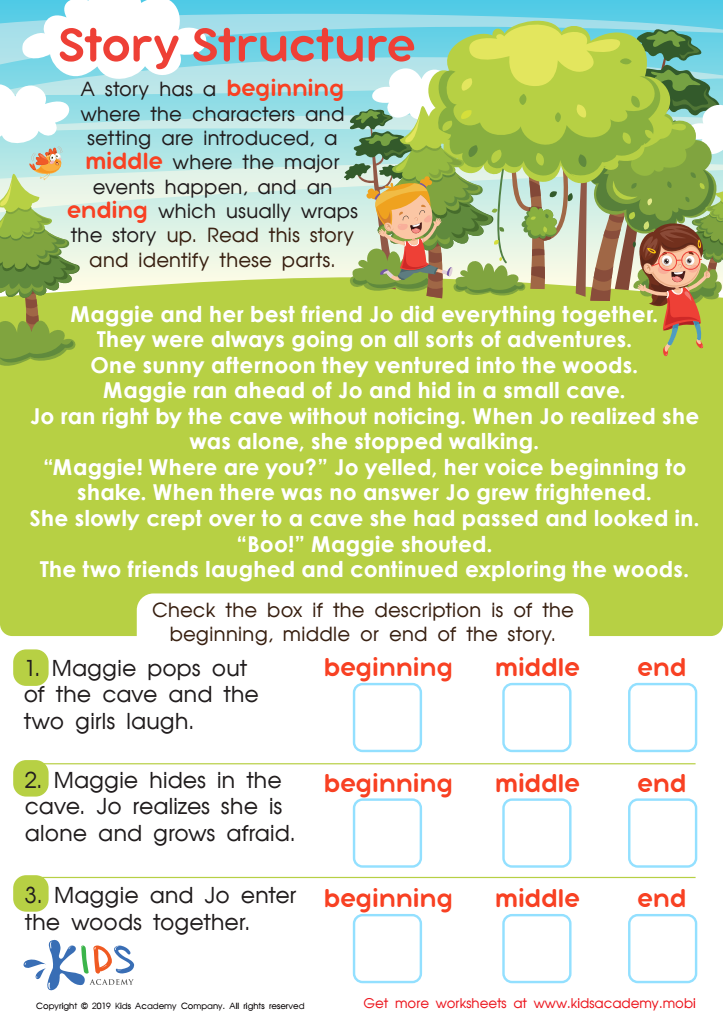
Story Structure Worksheet
 Assign to My Students
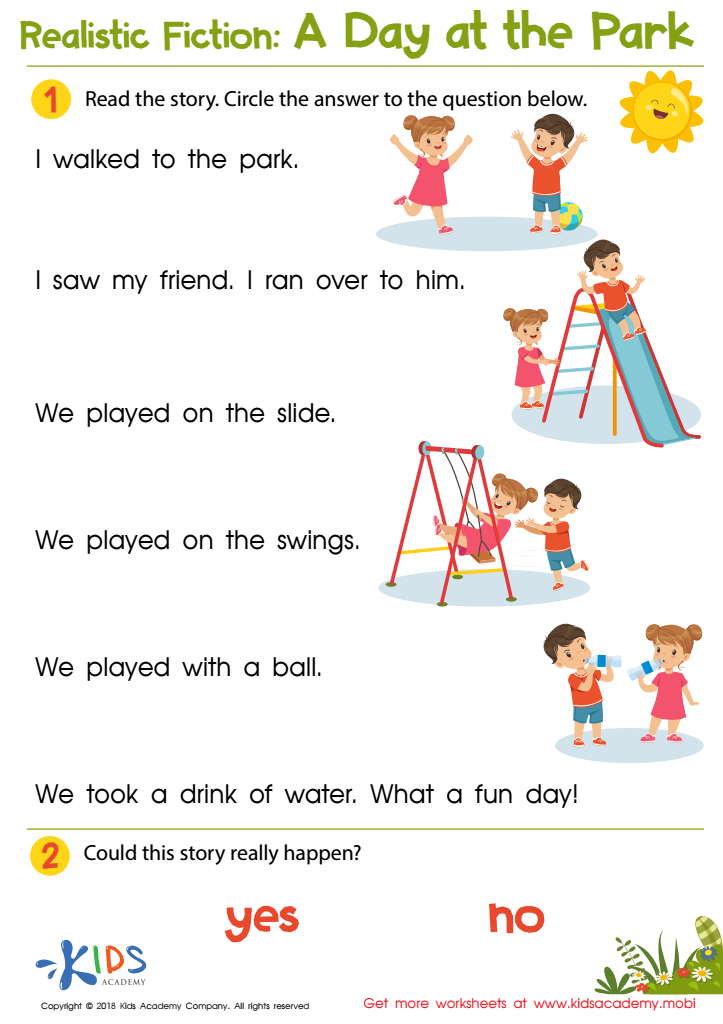
A Day at the Park Worksheet
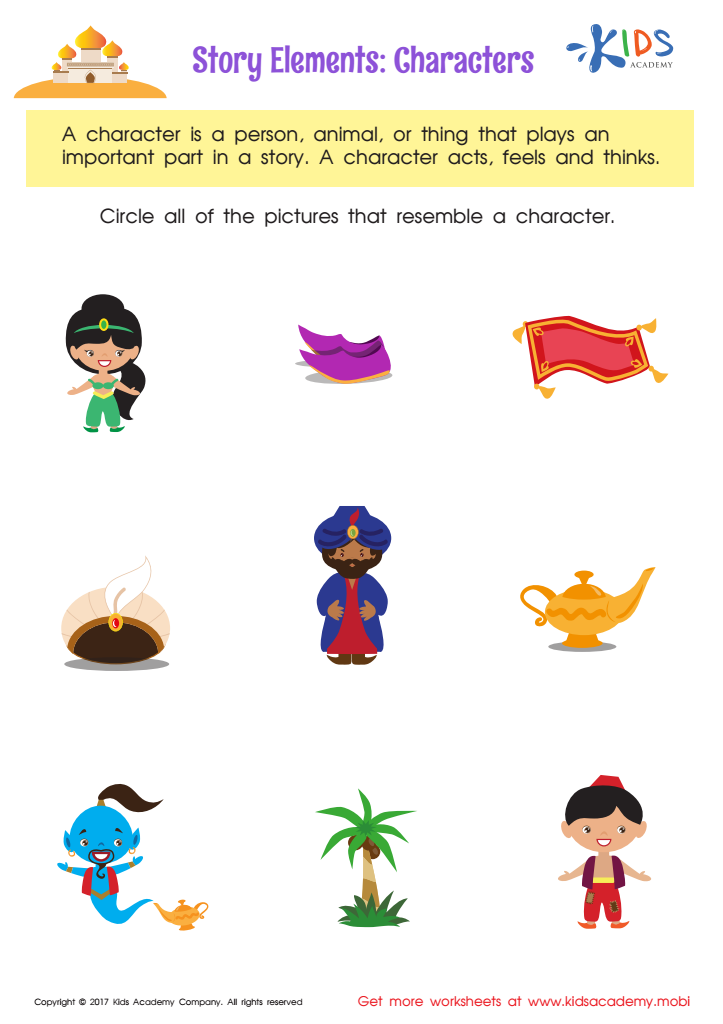
Story Elements Printable




.jpg)


Identifying story elements is essential for children ages 7-9 as it significantly enhances their reading comprehension skills. At this developmental stage, children begin to grasp more complex narratives, making it vital for parents and teachers to foster their understanding of key story components like characters, setting, plot, conflict, and resolution. By recognizing these elements, children can engage more deeply with the text, allowing them to make predictions, draw connections, and visualize the story in their minds.
This ability fosters critical thinking and analytical skills that are useful not just in reading but across all areas of learning. It encourages discussions about motivations and consequences, helping children develop empathy and moral reasoning. Furthermore, identifying story elements can aid in their own writing skills, as children learn to construct coherent narratives with structured plots.
For parents and teachers, supporting this process can create opportunities for meaningful conversations about what children read, thus fostering a lifelong love for literature. Ultimately, promoting this skill not only aids academic achievement but also cultivates imagination and creativity, empowering children to express themselves and understand the world around them better. Therefore, investing time in identifying story elements is crucial for their overall growth and development.








