
Story analysis Reading Worksheets for Ages 7-9
3 filtered results
Difficulty Level
Grade
Age
-
From - To
Subject
Activity
Standards
Discover our engaging Story Analysis Reading Worksheets designed specifically for children aged 7-9! These worksheets help young readers enhance their comprehension skills by delving into narratives. They explore essential elements such as characters, settings, plots, and themes, encouraging critical thinking and deeper understanding of the stories they read. Our resources promote creativity and expression, asking children to analyze and interpret stories while honing their writing abilities. Perfect for classroom use or at-home learning, these worksheets make reading a fun and interactive experience. Join us in fostering a love for literature and empowering early learners with essential reading skills!
Favorites
With answer key
Interactive
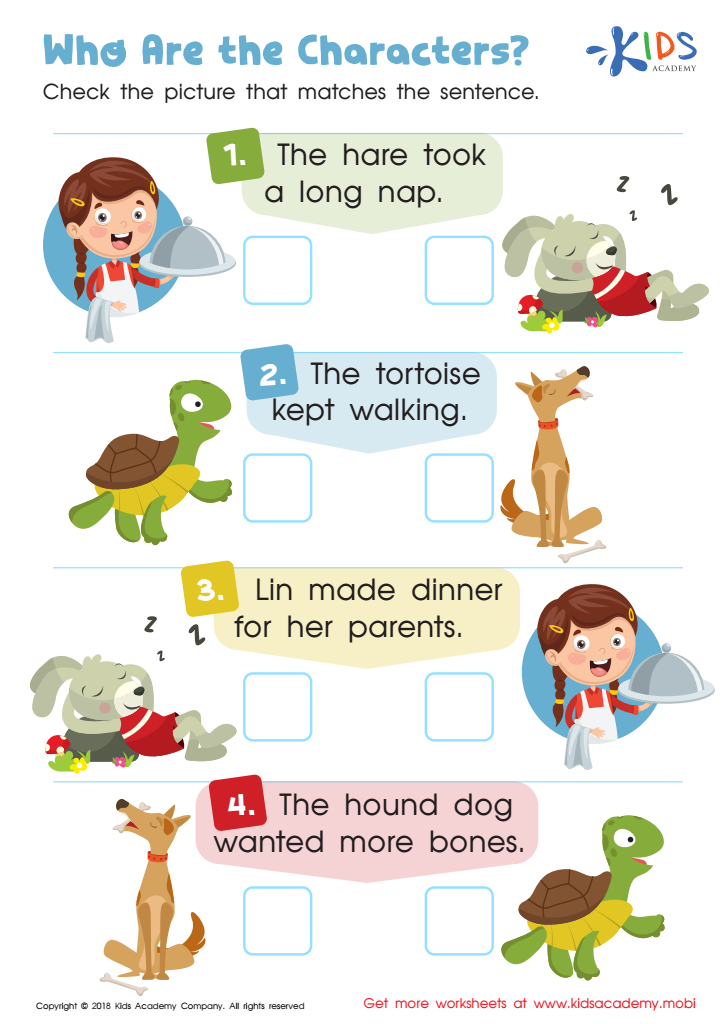
Who Are The Characters Worksheet
This worksheet tests your child's reading skills. Read each sentence out loud with them, then ask which of the two pictures match it. Help them check, then repeat this for the other sentences.
 Assign to My Students
Who Are The Characters Worksheet
Worksheet
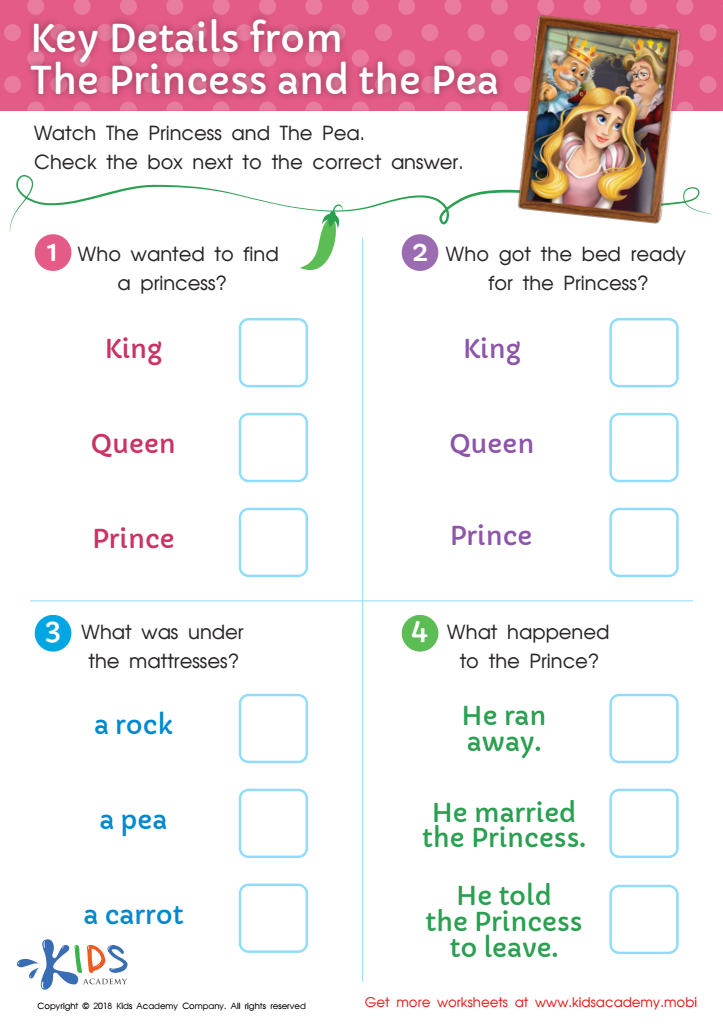
Key Details from the Princess and the Pea Worksheet
After reading The Princess and the Pea, ask your students questions to assess their comprehension of the story. Check their knowledge of key details. This printable can be used to help evaluate their understanding. Encouraging the recall of story events helps build important reading skills.
Key Details from the Princess and the Pea Worksheet
Worksheet
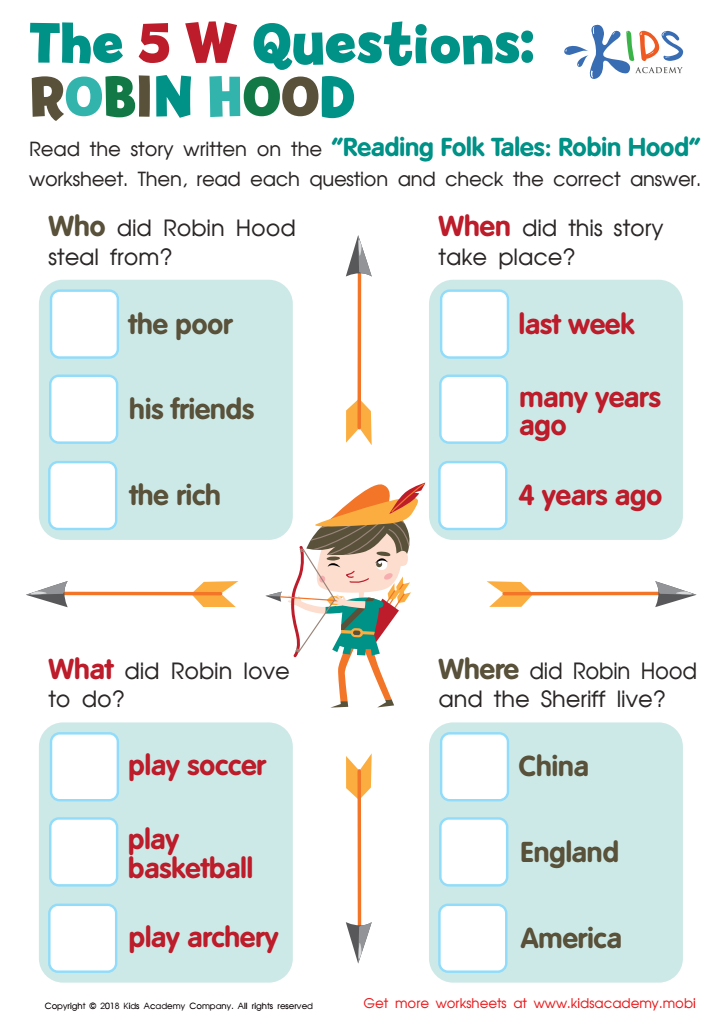
The 5 W Questions: Robin Hood Worksheet
Before embarking on this Robin Hood adventure, ensure your child reads and comprehends the 'Reading Folk Tales: Robin Hood' worksheet. Have them consider the story's lessons, and observe the details. Read the questions and help your kids select the correct answers.
The 5 W Questions: Robin Hood Worksheet
Worksheet
Join Kids Academy for Free
Who is primarily going to use this learning content?







Story analysis reading for children ages 7-9 is essential as it enhances critical thinking, comprehension, and communication skills. At this age, children are developing their ability to analyze plot, character motivations, and themes, which fosters deeper engagement with texts. When parents and teachers promote story analysis, they empower children to go beyond surface-level understanding, allowing them to draw connections between the story and their own experiences. This practice cultivates empathy, as children consider various perspectives within a story.
Moreover, early story analysis sets the stage for advanced literacy skills in later years. Engaging with narratives at this level encourages children to express their interpretations, nurturing confident communication and articulation of ideas. Additionally, it can spark a lifelong love for reading by making stories more relatable and meaningful, rather than merely transactional.
Parents who participate in story analysis with their children can help reinforce the learning and draw them into a richer dialogue about books. Teachers, on the other hand, can integrate story analysis into lesson plans, facilitating collaborative discussions and a deeper understanding of literature. Overall, fostering story analysis paves the way for developing thoughtful, informed, and imaginative individuals.








