Moral understanding Reading Comprehension Worksheets for Ages 7-9
5 filtered results
-
From - To
Help your child develop strong moral values with our "Moral Understanding Reading Comprehension Worksheets for Ages 7-9." Our engaging and age-appropriate materials focus on vital life lessons, encouraging young minds to reflect on important ethical concepts. Through interesting stories and targeted questions, kids will enhance their reading comprehension skills while understanding the importance of honesty, fairness, kindness, and responsibility. By learning to navigate moral dilemmas and consider multiple perspectives, your child will build critical thinking and empathy. Ideal for both classroom and home use, these worksheets support a balanced approach to literacy and character education.
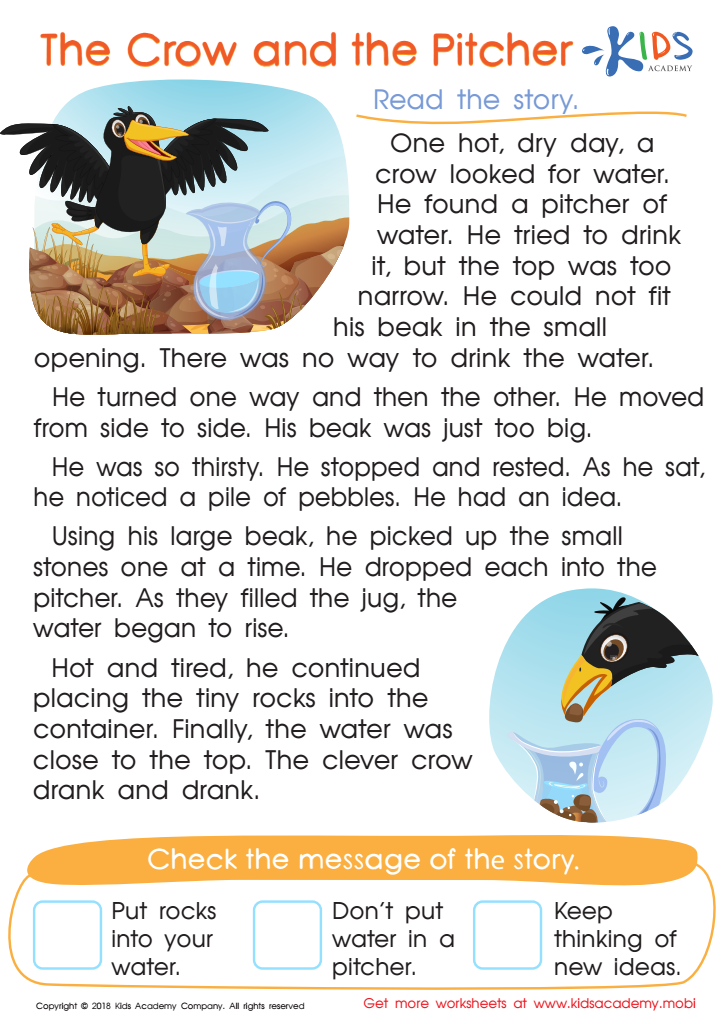
The Crow and the Pitcher Worksheet
 Assign to My Students
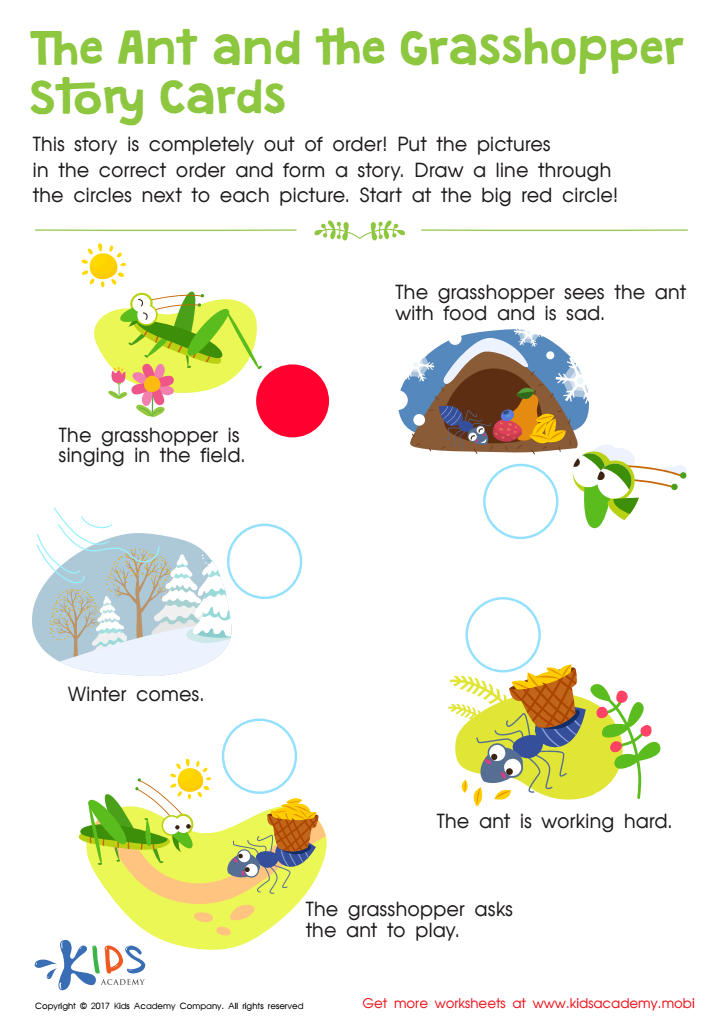
The Ant and The Grasshopper Worksheet
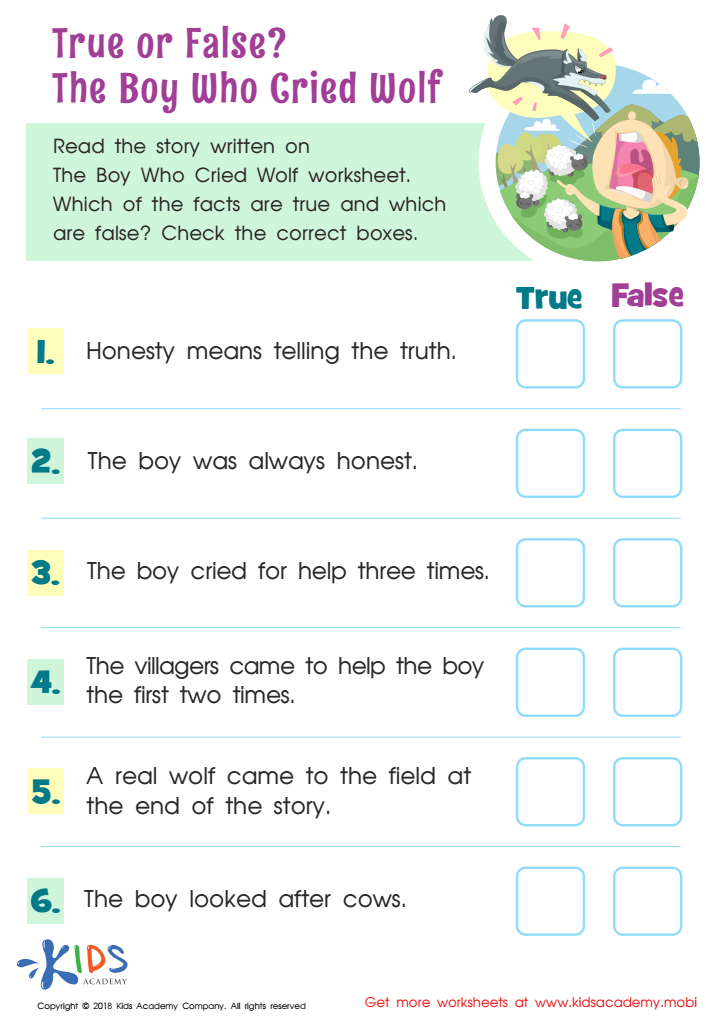
True or False? The Boy Who Cried Wolf Worksheet
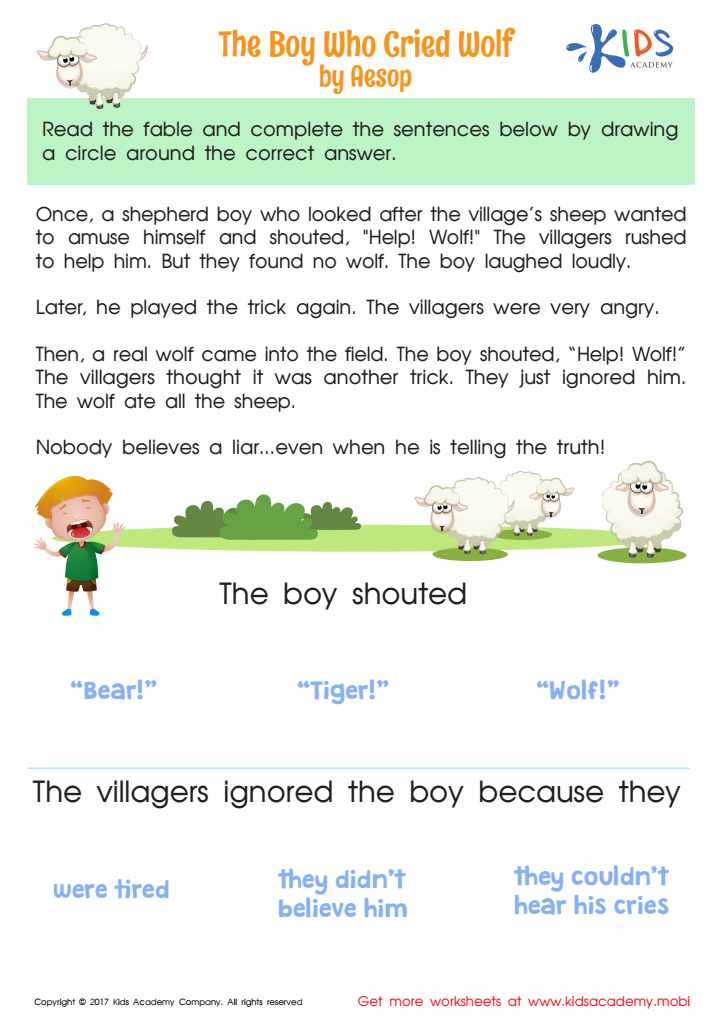
The Boy Who Cried Wolf Worksheet
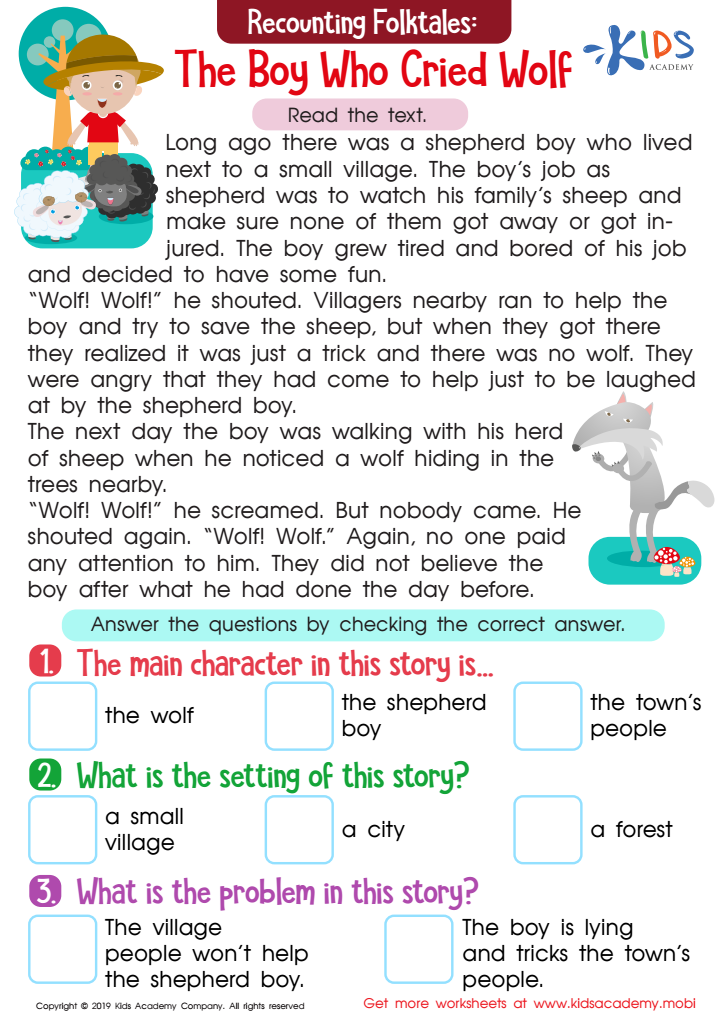
The Boy Who Cried Wolf Part 1 Worksheet







Parents and teachers play a critical role in the development of children’s moral understanding and reading comprehension, especially in the crucial ages of 7-9. At this developmental stage, children are beginning to form a sense of right and wrong and are becoming more aware of the impact of their actions on others. Stories with moral lessons help children grasp key ethical principles such as fairness, honesty, and kindness. When children read or listen to stories and discuss them, they improve their ability to empathize with different characters, thus enhancing their social and emotional intelligence.
Simultaneously, these activities bolster their reading comprehension skills, which are foundational for academic success. Engaging with diverse texts broadens children's vocabularies, exposes them to new concepts, and hones their critical thinking abilities. By asking questions about the motives, feelings, and actions of characters, children learn to make inferences and draw conclusions, propelling their understanding and interpretation of stories.
Therefore, focusing on moral understanding in reading comprehension not only cultivates a well-rounded individual but also prepares students to navigate their academic and social worlds more effectively. It encourages a holistic approach where cognitive skills go hand in hand with emotional and moral development, creating a strong foundation for future learning and interpersonal relationships.








