Filters

30 filtered results

Clear all filters
Favorites
With answer key
Interactive

30 filtered results

Difficulty Level

Grade


Check out this FREE Trial Lesson on Reading Comprehension for age 7-9!

Use Context to Confirm or Self-Correct Word Recognition and Understanding, Rereading as Necessary

Favorites
With answer key
Interactive
  • 7-9
  • Vocabulary expansion
  • Reading Comprehension
Adjectives in Sentences Worksheet

Adjectives in Sentences Worksheet

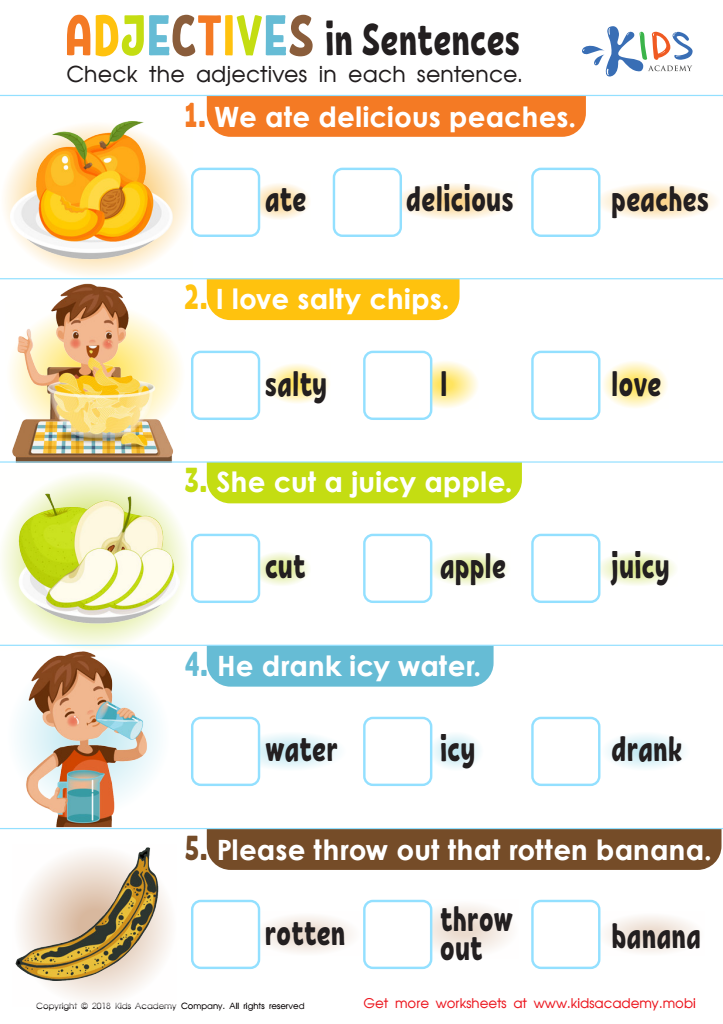
Our learners can find it hard to use writing to add detail, but adjectives can help. With this fun worksheet, kids can identify adjectives that describe food and drink. Guide them through each sentence, discussing the words and having them choose the one that gives information about the food/drink.
Adjectives in Sentences Worksheet
Worksheet
Finding the Adverbs Worksheet

Finding the Adverbs Worksheet

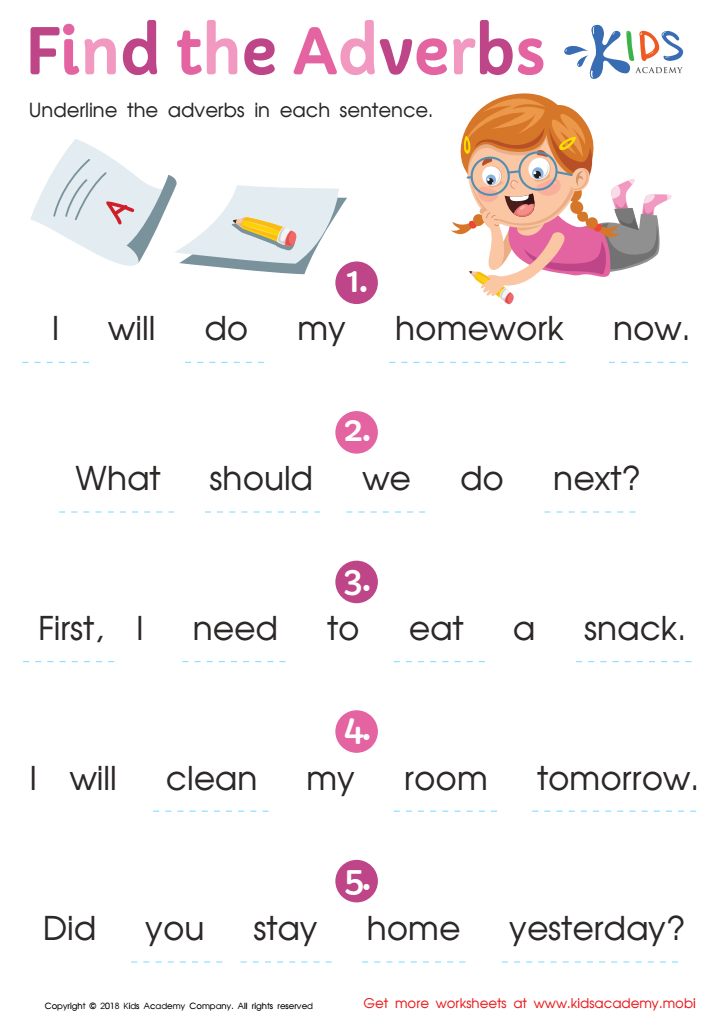
Before starting, ensure your kids know nouns & verbs, then explain adverbs give more meaning to verbs. Give examples & read each sentence with them, helping to underline the adverbs. 80 words
Finding the Adverbs Worksheet
Worksheet
Synonyms: The Tortoise and Hare Worksheet

Synonyms: The Tortoise and Hare Worksheet

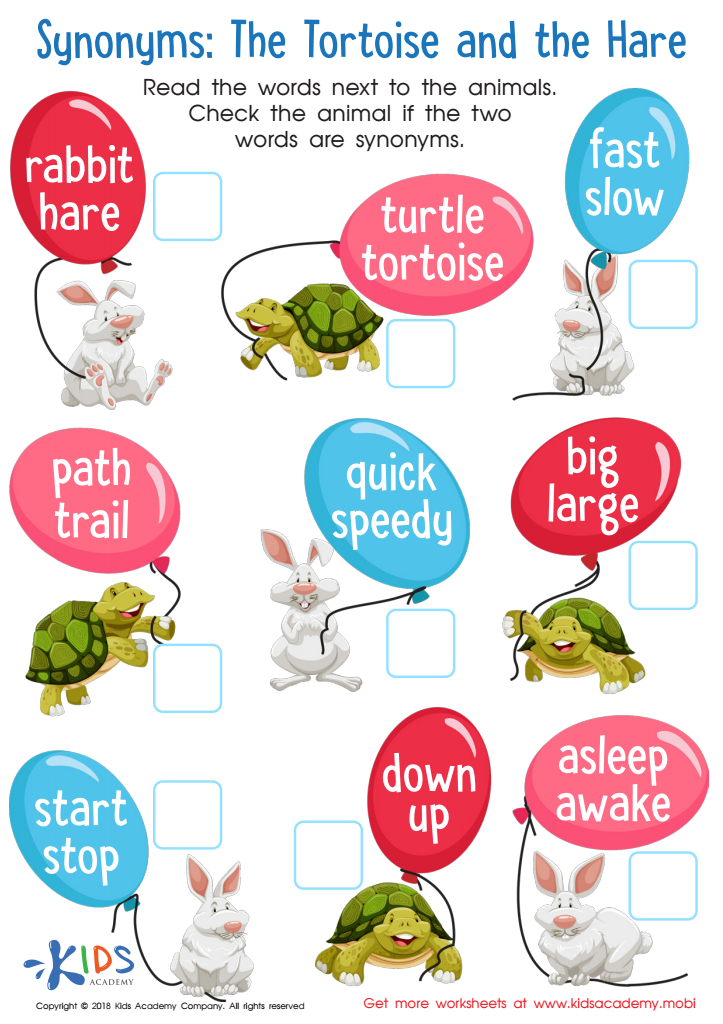
Help your kids identify words with similar meanings with this worksheet featuring a colourful picture of the Tortoise and the Hare. Show them how to check the boxes of animals with words that have similar meaning, then let them find more on their own. They'll love the challenge and you'll appreciate the educational value.
Synonyms: The Tortoise and Hare Worksheet
Worksheet
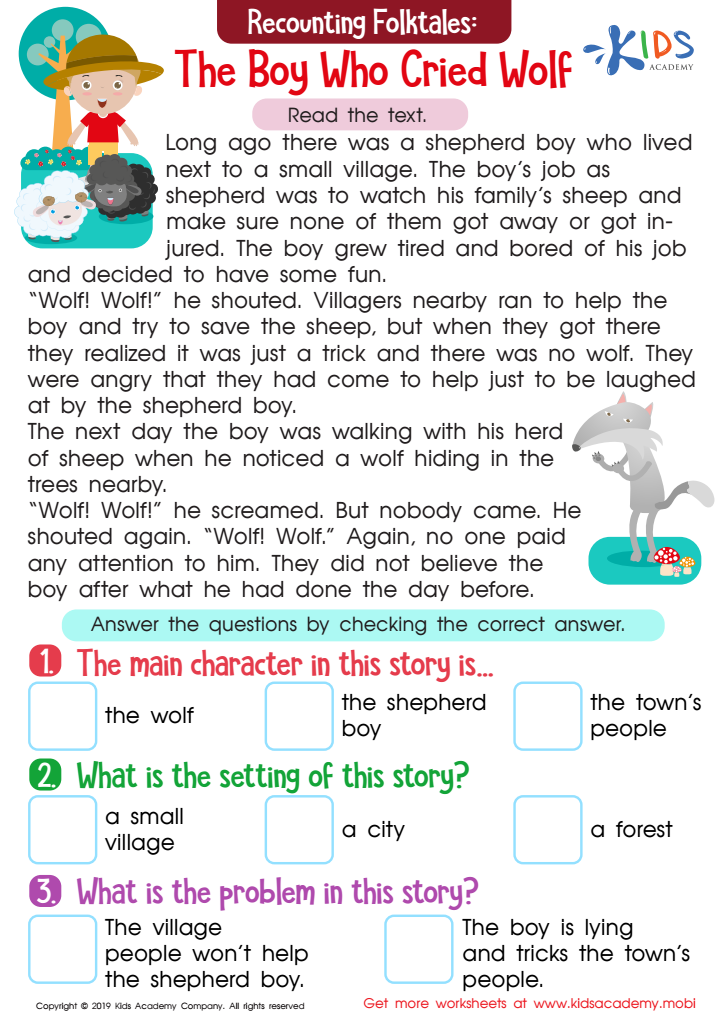
The Boy Who Cried Wolf Part 1 Worksheet

The Boy Who Cried Wolf Part 1 Worksheet

Storytime can be your kid's favorite part of the day. Ask them what their favorite stories are, then read the text in the printout. Read along with them, making sure they understand each word. At the end, go over the questions and have them check the correct answers.
The Boy Who Cried Wolf Part 1 Worksheet
Worksheet
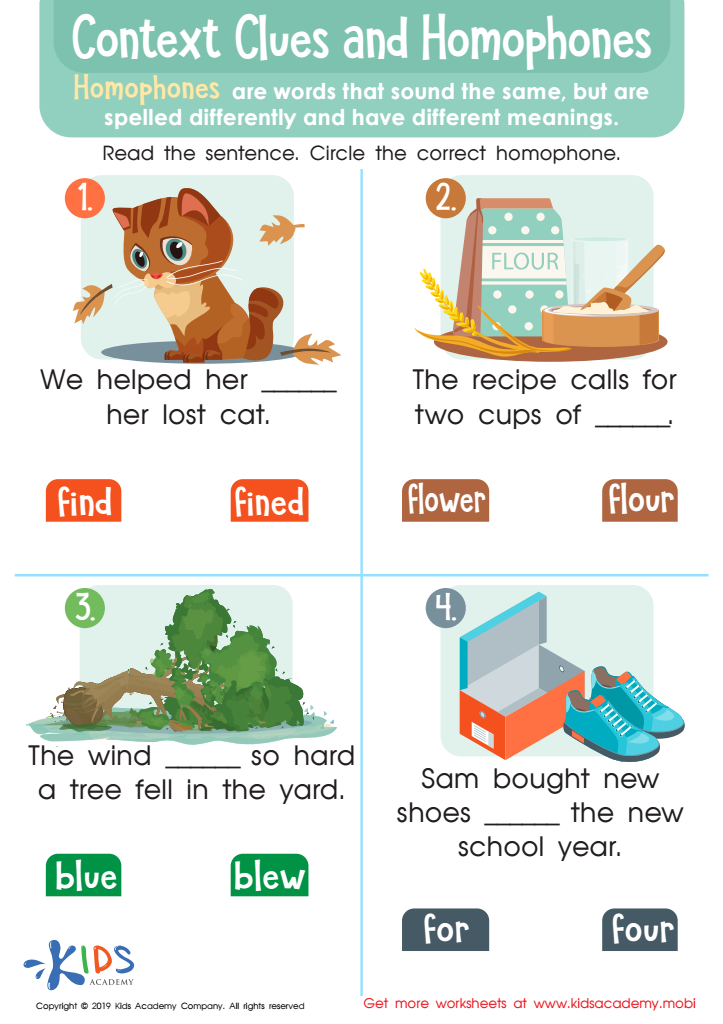
Context Clues and Homophones Worksheet

Context Clues and Homophones Worksheet

Make sure kids understand what homophones are (words that sound the same, different spellings, meanings). Give examples and look at the printout. Read each sentence and sound out words. Help them pick the right one and circle it.
Context Clues and Homophones Worksheet
Worksheet
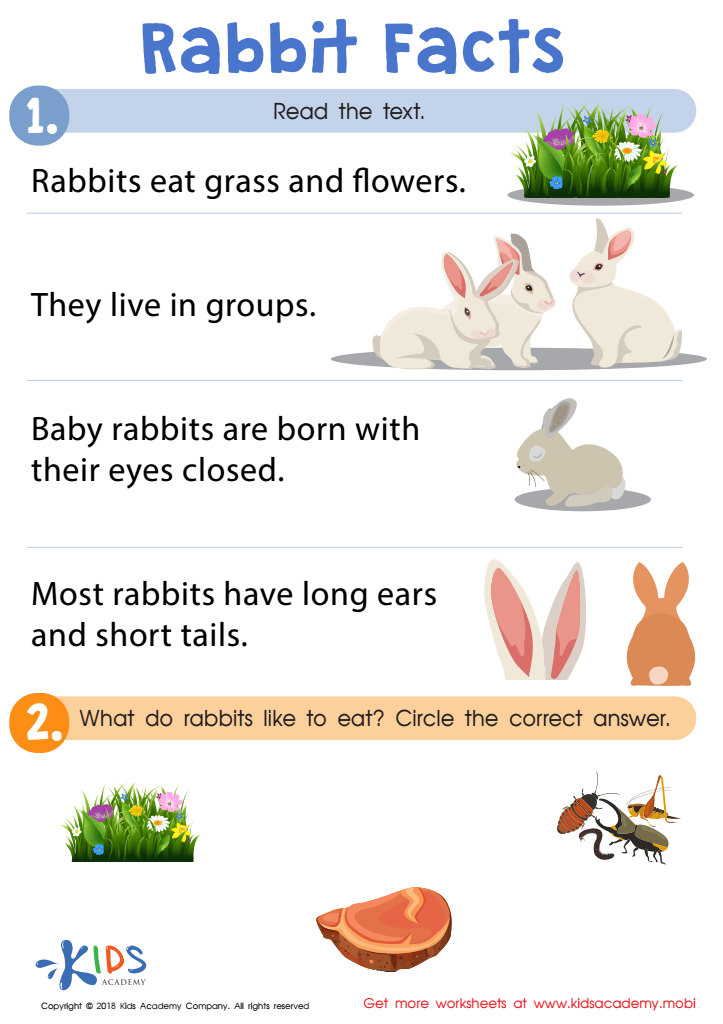
Rabbit Facts Worksheet

Rabbit Facts Worksheet

Informational texts offer great learning opportunities. Kids Academy's reading worksheet helps children read and recall important details from a text about bunnies. Kids will love it! Simply read the rabbit facts and circle the correct pictures to answer the questions.
Rabbit Facts Worksheet
Worksheet


Vocabulary expansion and reading comprehension are crucial for children aged 7-9, as these skills directly influence their academic success and lifelong learning. At this stage, children are transitioning from learning to read to reading to learn, making it essential to build a robust vocabulary. A rich vocabulary not only enhances their ability to understand and interpret texts but also empowers them to express their thoughts and ideas more clearly.

When children possess a strong vocabulary, they are better equipped to grasp complex concepts across subjects, engage in meaningful discussions, and tackle challenging texts. This leads to improved reading comprehension, enabling them to identify main ideas, make inferences, and summarize content effectively.

Moreover, vocabulary expansion fosters critical thinking and curiosity. When children encounter new words, they are encouraged to explore their meanings and contexts, promoting deeper cognitive skills. This exploration is vital for fostering a love of reading and learning, which serves as a foundation for future educational endeavors.

Parents and teachers play a pivotal role in this development by incorporating diverse reading materials, interactive discussions, and vocabulary-building activities into daily routines. By prioritizing vocabulary and comprehension, they help children unlock the full potential of their literacy skills, ultimately setting the stage for lifelong learning success.