Understanding life cycles Animals Worksheets for Ages 7-9
4 filtered results
Difficulty Level
Grade
Age
-
From - To
Subject
Activity
Standards
Our “Understanding Life Cycles Animals Worksheets for Ages 7-9” offer engaging activities designed to teach children about the different stages of animal life cycles. Ideal for both classroom and home learning, these worksheets cover a variety of animals, illustrating their growth from birth to adulthood. The activities foster critical thinking, enhance comprehension, and make learning science fun. Perfect for young learners, our worksheets align with educational standards, helping children build foundational knowledge in biology. Dive into the wonders of nature and embark on an educational adventure with our detailed, easy-to-understand life cycle worksheets. Explore today!
Favorites
With answer key
Interactive
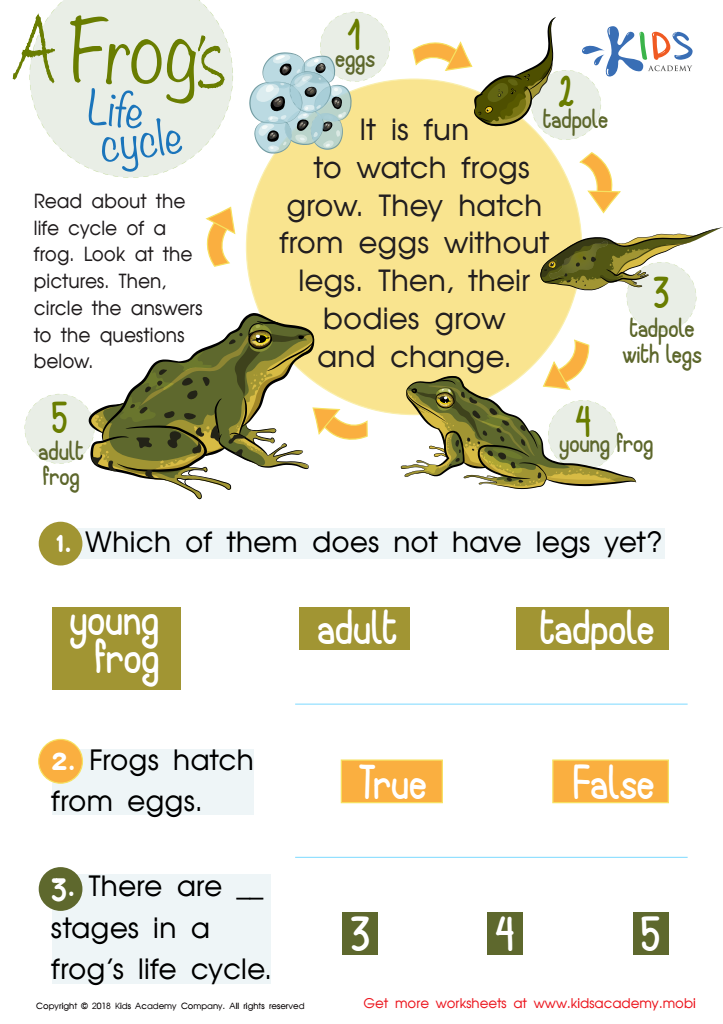
A Frog’s Life Cycle Worksheet
Encourage your kids to learn about frogs! Ask them to tell you some features, then read and discuss the text that explains the frog's life cycle. Show them the pictures to help them visualize it. Finish by helping them answer the questions at the bottom of the worksheet.
 Assign to My Students
A Frog’s Life Cycle Worksheet
Worksheet
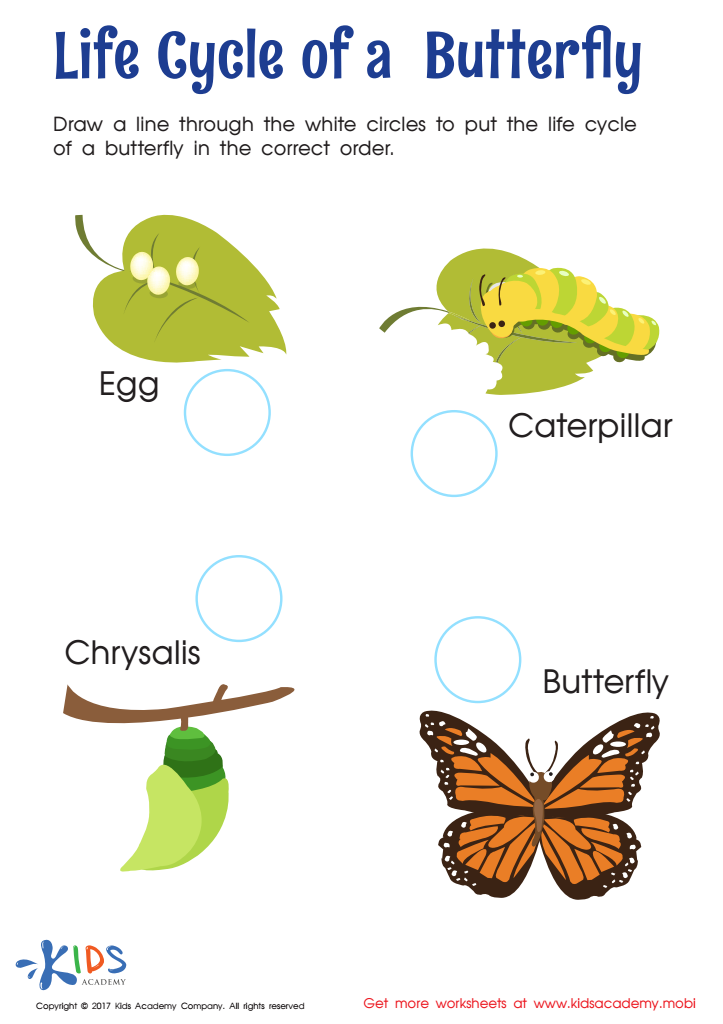
Life Cycle of Butterfly Worksheet
Kids Academy offers an exciting activity – a Life Cycle of a Butterfly Worksheet PDF. It shows four stages in the lifecycle of a butterfly with vivid pictures. Kids put the stages in the correct order to study the lifecycle.
Life Cycle of Butterfly Worksheet
Worksheet
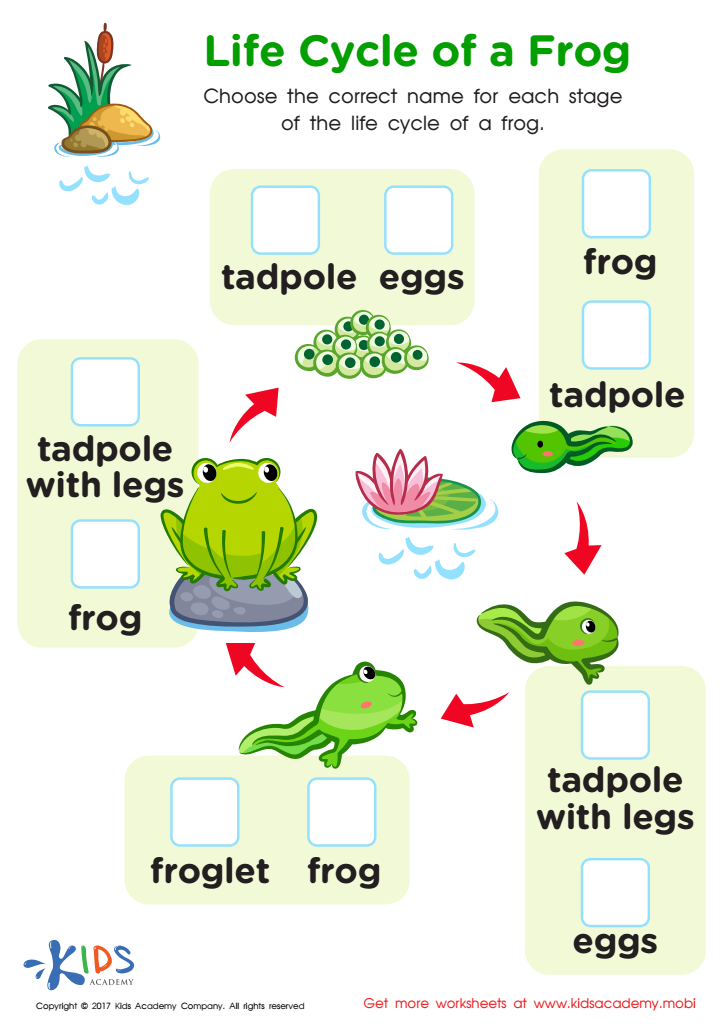
Life Cycle Frog Printable
Kids can explore the life cycle of frog with this fun worksheet! Draw lines from one stage to the next to follow the transformation from tadpole to frog and learn about the cycle of life.
Life Cycle Frog Printable
Worksheet
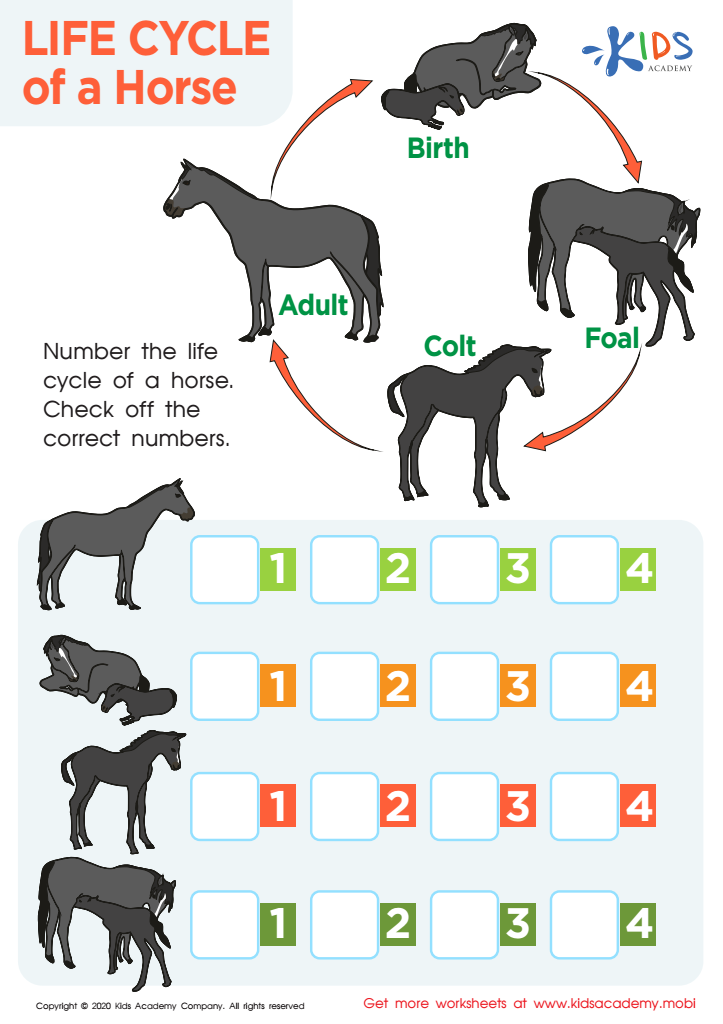
Life Cycle of a Horse Worksheet
Kids Academy's science worksheet on horses' lifecycles offers an engaging way for kids to learn! They'll study the diagram and label each stage of life, from birth to adulthood, and then number the pictures to mark the correct sequence. Fun and educational - a perfect way to get your kids learning!
Life Cycle of a Horse Worksheet
Worksheet
Join Kids Academy for Free
Who is primarily going to use this learning content?








Understanding animal life cycles is a vital part of science education for children aged 7-9, and there are several compelling reasons why parents and teachers should prioritize this topic. Firstly, learning about life cycles fosters a sense of curiosity and respect for nature. It helps children appreciate the diversity of life forms and the intricate processes that sustain them. This foundational understanding encourages them to be more environmentally conscious and responsible from a young age.
Secondly, studying life cycles aligns with key developmental milestones. At this age, children are naturally curious and eager to categorize and organize their world. Learning about metamorphosis in butterflies or the stages of a frog’s development provides tangible examples of growth and change, concepts that are central to their cognitive development.
Additionally, animal life cycles can be engaging and interactive. Hands-on activities, like raising caterpillars or watching tadpoles transform at school, bring learning to life and make abstract concepts more concrete. Such experiences are memorable and can spark a lifelong interest in biology and natural sciences.
Furthermore, understanding life cycles integrates well with other subjects like math (e.g., counting stages, measuring growth rates) and literacy (e.g., reading about different animals, writing reports). This interdisciplinary approach helps reinforce various skills and knowledge, making learning more holistic and comprehensive.
In summary, understanding animal life cycles enriches children’s knowledge, nurtures their natural curiosity, and supports their overall academic and personal development.