
Animal identification Science Worksheets for Ages 7-9
6 filtered results
Difficulty Level
Grade
Age
-
From - To
Subject
Activity
Standards
Explore our engaging Animal Identification Science Worksheets designed specifically for children aged 7-9! These educational resources introduce young learners to a variety of animal species, their characteristics, and habitats. Through fun activities like matching games, coloring sheets, and quizzes, students will develop critical thinking skills while deepening their understanding of biodiversity. Ideal for home or classroom settings, these worksheets not only make learning enjoyable but also enhance observation skills and promote curiosity about the natural world. Dive into our collection today and empower your child to become an animal expert while fostering a love for science! Perfect for budding naturalists!
Favorites
With answer key
Interactive
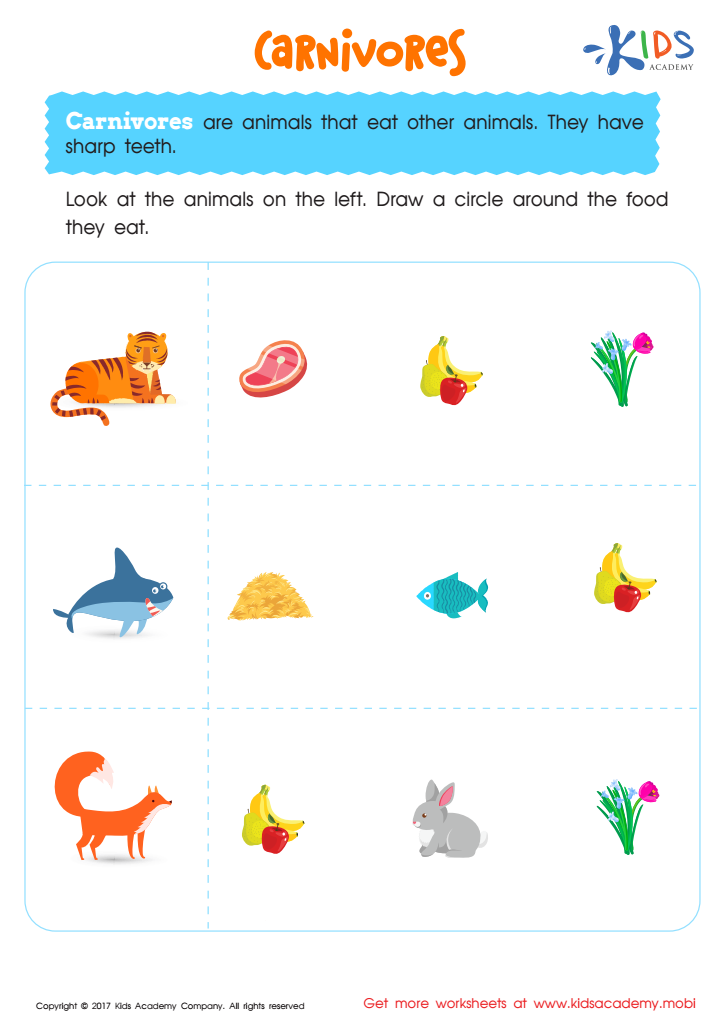
Carnivores Worksheet
Boost their vocabulary and help them explore the incredible world of carnivores.
 Assign to My Students
Carnivores Worksheet
Worksheet
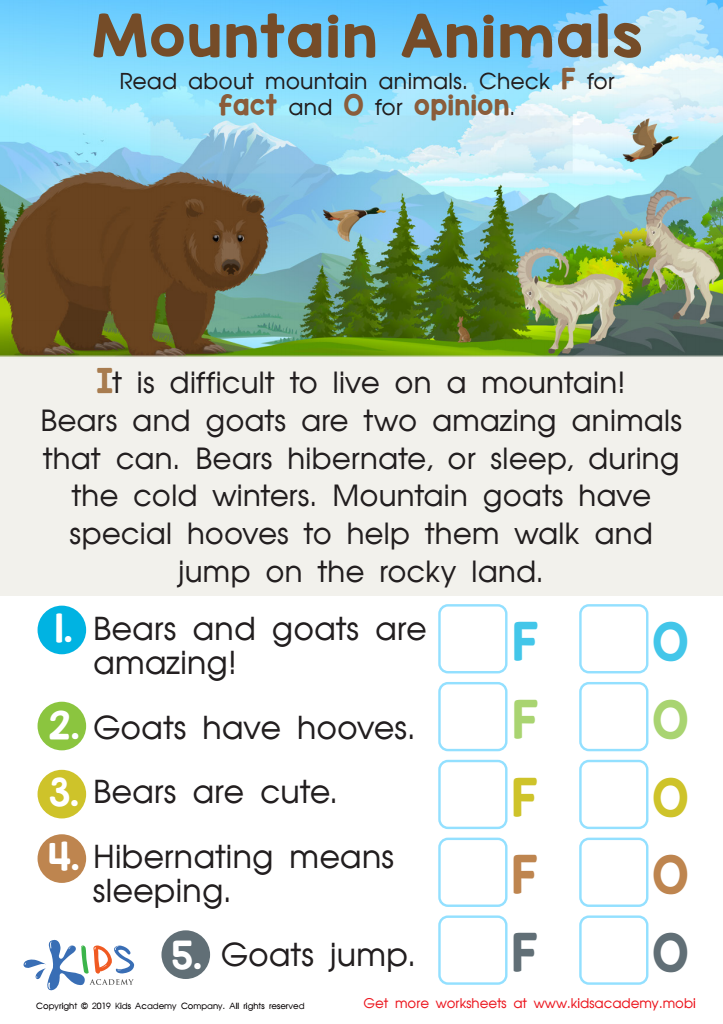
Mountain Animals Worksheet
Is mountain wildlife amazing? Fact or fiction? Help your child sharpen critical-thinking skills with this engaging worksheet. Featuring a fun nonfiction passage about animals like bears and goats, your child will read through the text and identify each statement as fact or fiction. Perfect for boosting reading comprehension and analytical abilities!
Mountain Animals Worksheet
Worksheet
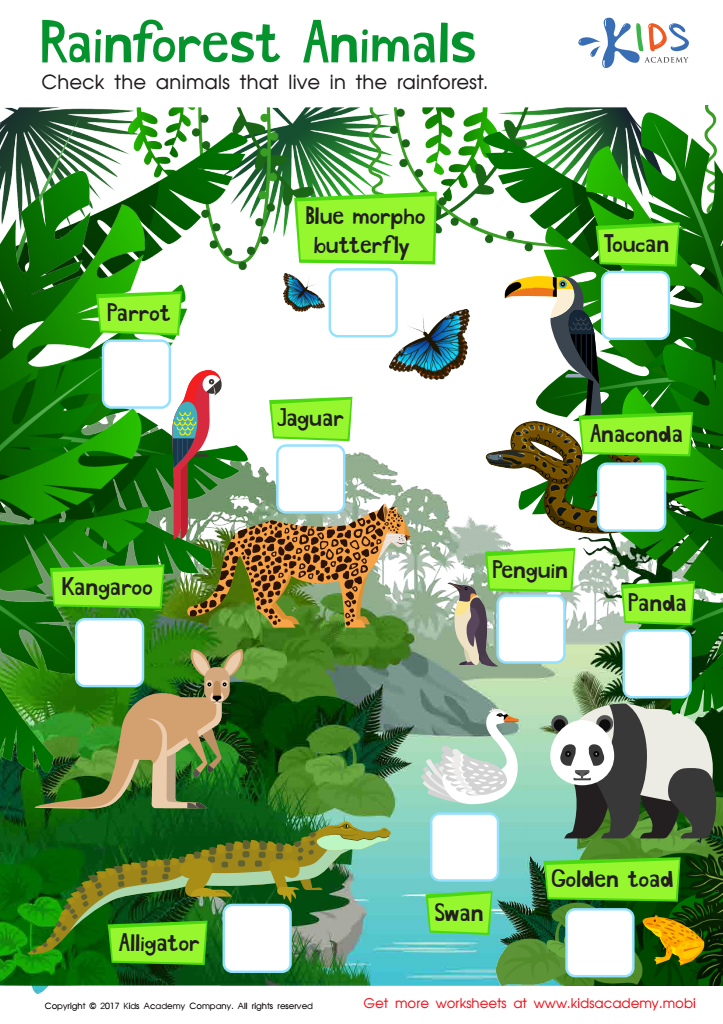
Rainforest Animals Worksheet
Kids love the bright, vivid pics of rainforest animals in this worksheet. It fuels their interest in life science and brings joy to their learning. It encourages them to study these animals in detail.
Rainforest Animals Worksheet
Worksheet
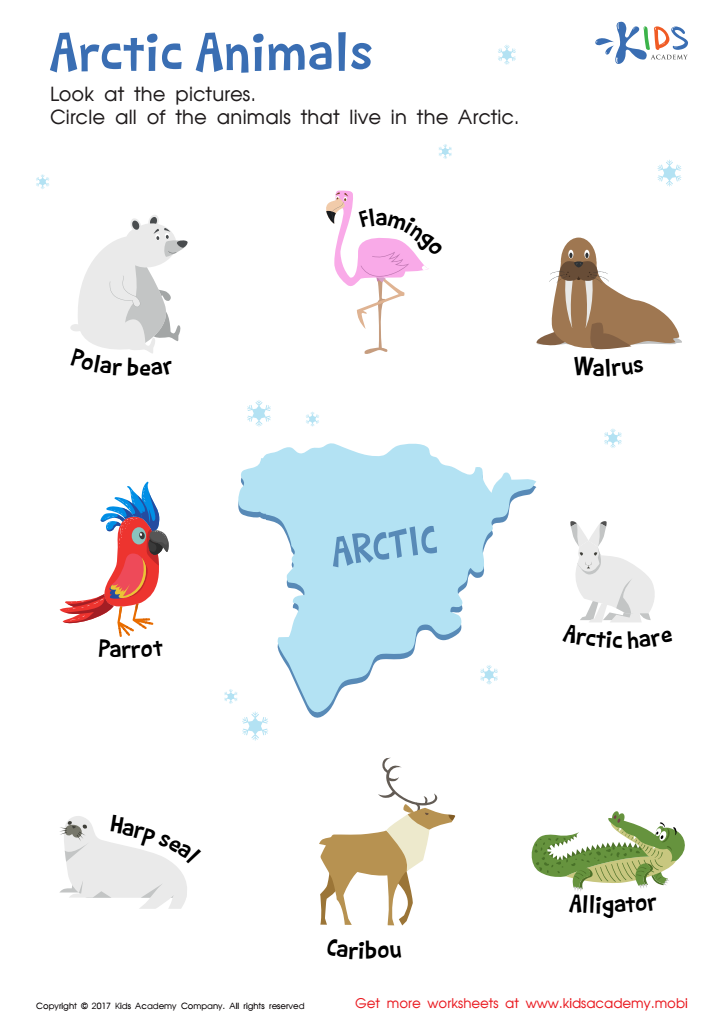
Arctic Animals Worksheet
Kids love animals and this worksheet is a great way to teach them where they live. It reinforces classification skills and introduces new animals, like the Arctic hare. Use it to discuss the Arctic climate and how these animals live, then ask your child where other animals live to keep the conversation going.
Arctic Animals Worksheet
Worksheet
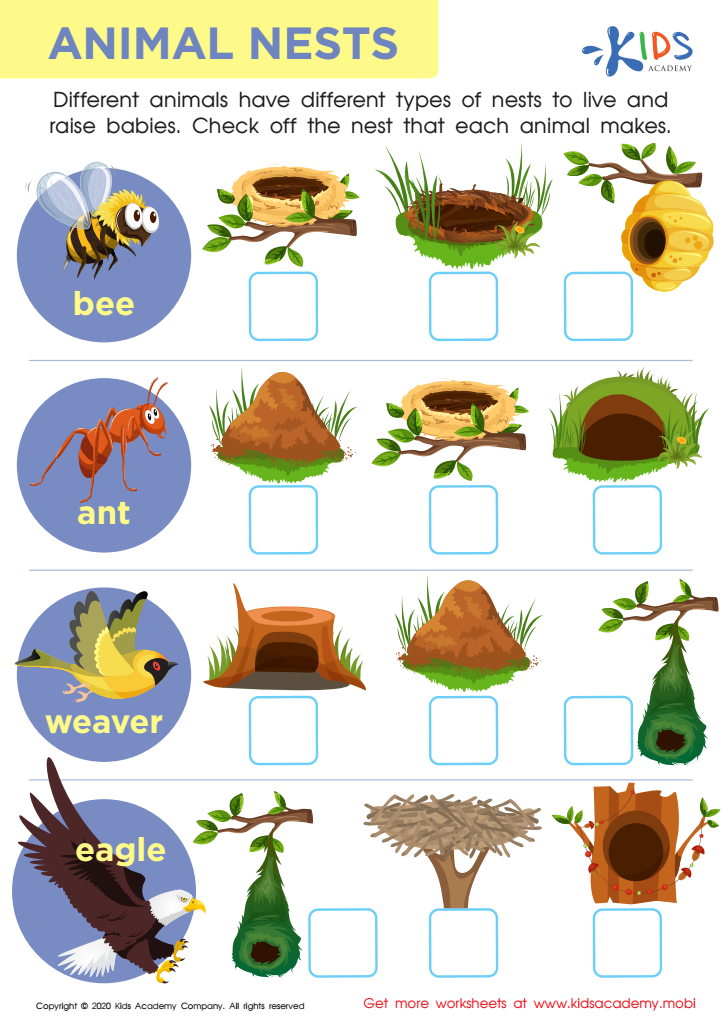
Animal Nests Worksheet
Animals need homes to sleep and stay safe. Look at the animal on the left and examine the nests and hives to the right. Check off the correct one for each animal to complete the worksheet! From birds to bees, it's a great way to show different types of homes animals make!
Animal Nests Worksheet
Worksheet
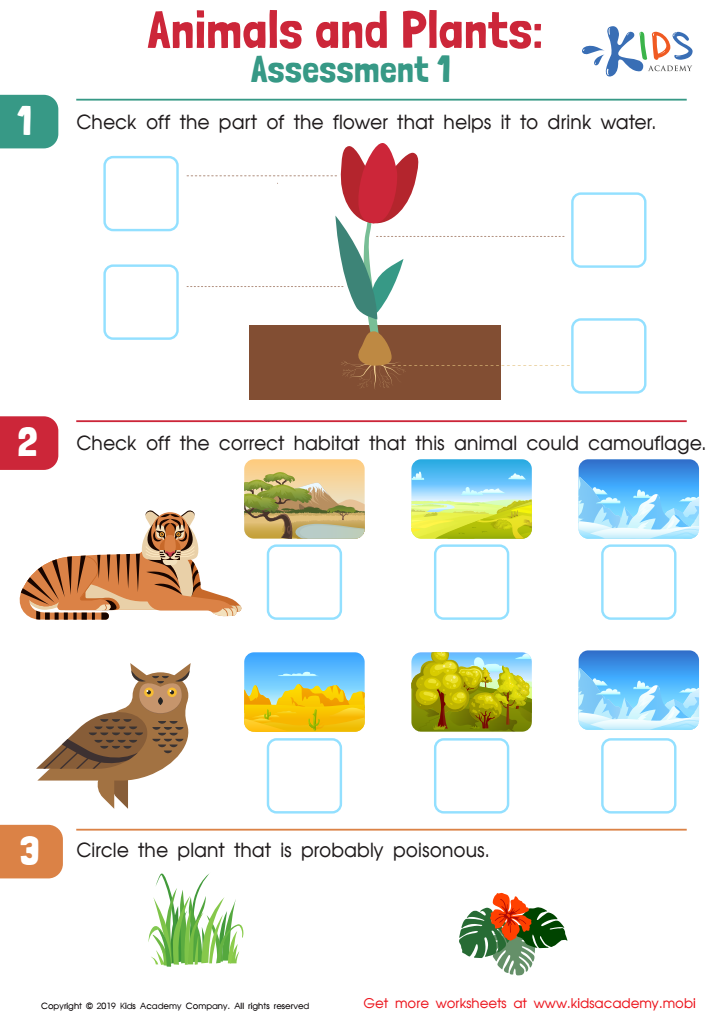
Animals and Plants: Assessment 1 Worksheet
Do you want to easily assess your child's understanding of basic science concepts? This colorful PDF offers a free opportunity for them to test their knowledge about parts of a flower, poisonous plants, animal habitats and more! Bright pictures make it fun and easy for you to see what they know.
Animals and Plants: Assessment 1 Worksheet
Worksheet
Join Kids Academy for Free
Who is primarily going to use this learning content?







.jpg)
Animal identification science is crucial for children ages 7-9 as it nurtures their curiosity and fosters a love for the natural world. Understanding how to identify different species aids in developing observational skills, critical thinking, and a sense of responsibility towards animals and their habitats. By learning to recognize various animals, children also comprehend the importance of biodiversity and the roles these creatures play in ecosystems.
Furthermore, animal identification enhances literacy and numeracy skills through engaging activities, such as gathering data about local wildlife or creating simple field guides. This process encourages teamwork and collaboration when they engage in group projects or nature walks.
Parents and teachers should prioritize animal identification science as it instills empathy and respect for living beings, promoting kindness and understanding toward the environment. In a time of increasing environmental challenges, instilling respect for biodiversity can inspire the next generation to become responsible stewards of the planet.
Additionally, these activities often spark an interest in science, encouraging children to explore further education in biology and environmental studies, ultimately related to informed citizenship and advocacy for conservation efforts. Engaging children with animal identification prepares them to appreciate and protect the world around them.







