Reading practice Science Worksheets for Ages 7-9
5 filtered results
-
From - To
Nurture your child's curiosity with our "Reading Practice Science Worksheets for Ages 7-9." These engaging, grade-specific worksheets combine reading and science, helping young learners enhance their literacy skills while exploring scientific concepts. Perfectly suited for children ages 7 to 9, each worksheet offers passages filled with fascinating topics, followed by questions that reinforce comprehension and critical thinking. From understanding ecosystems to learning about weather patterns, our resources cultivate a love for reading and a passion for science. Support your child's education journey by making learning an adventurous and fruitful experience with printable worksheets from Kids Academy.
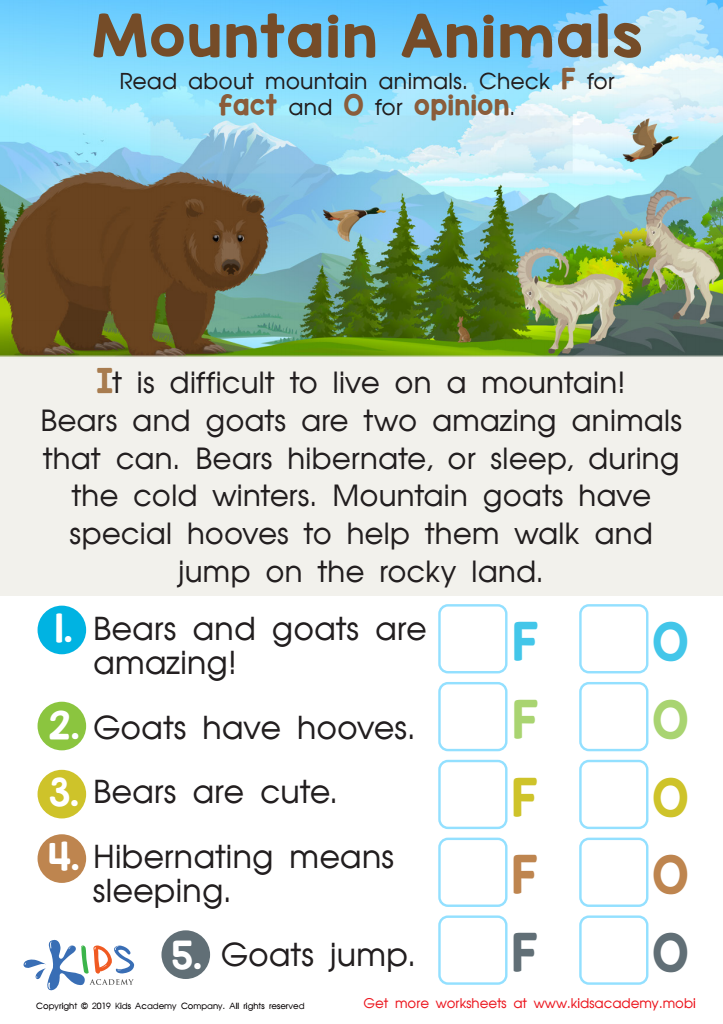
Mountain Animals Worksheet
 Assign to My Students
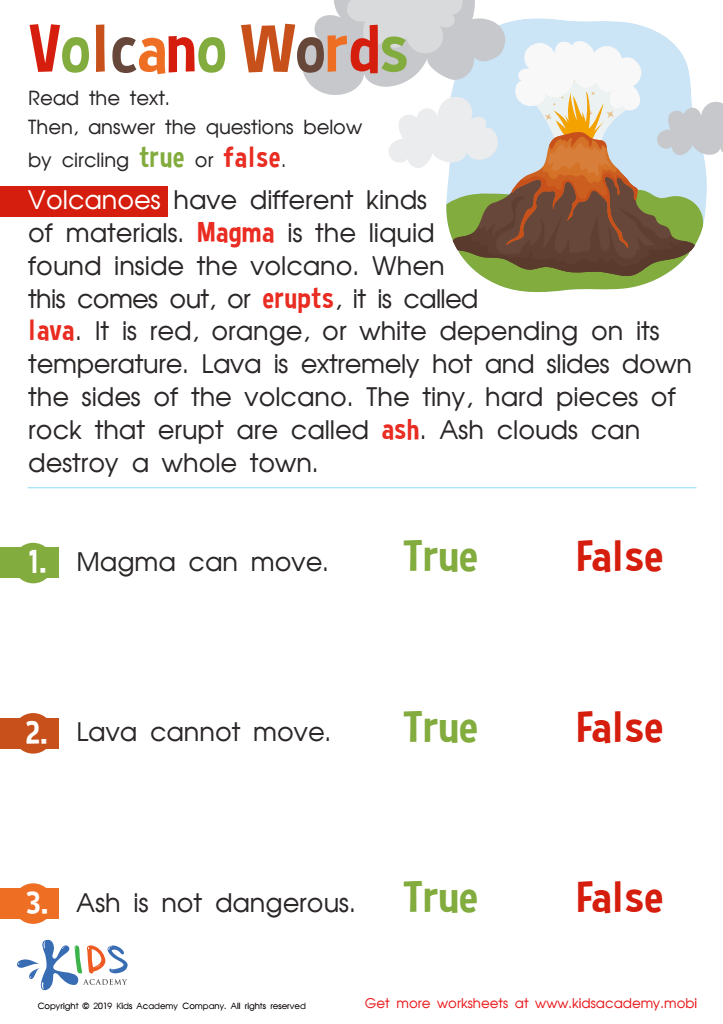
Volcano Words Worksheet
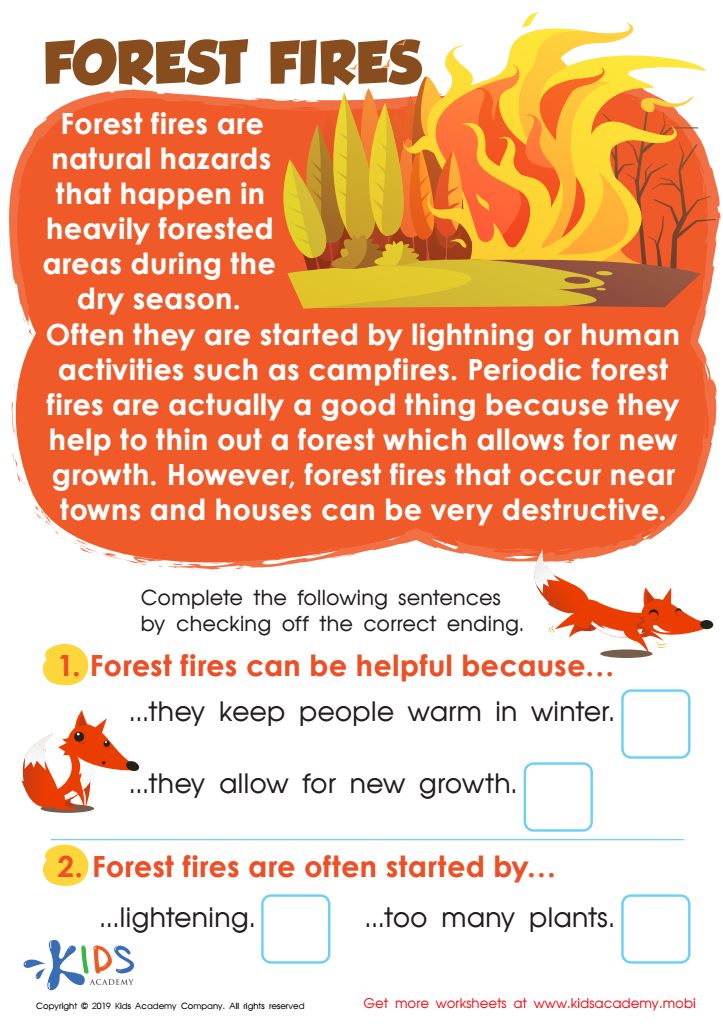
Forest Fires Worksheet
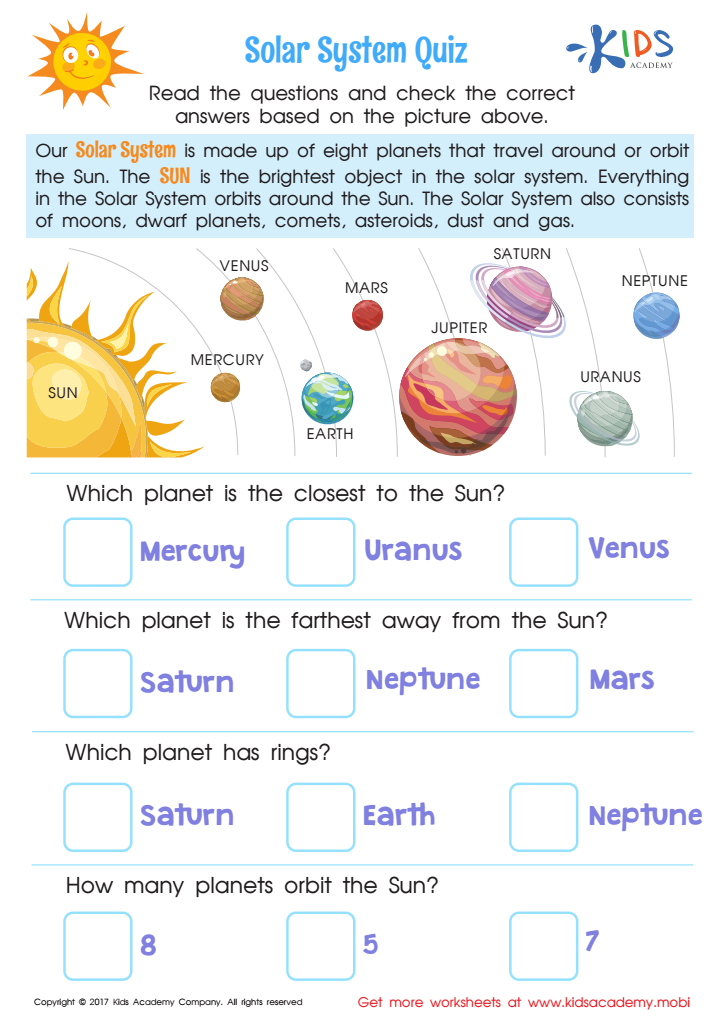
Solar System Quiz Printable






Reading practice science for children aged 7-9 is pivotal for several compelling reasons. Firstly, this age window is crucial for cognitive development. Engaging with scientific reading material enhances critical thinking, problem-solving, and analytical skills. When children explore scientific concepts through stories and experiments, they build curiosity and a love for learning that can motivate lifelong education.
Secondly, reading science helps children learn to question the world around them. It nurtures their innate curiosity, encouraging them to become inquisitive thinkers. This practice aligns seamlessly with early education standards that prioritize not only literacy but also foundational knowledge in STEM (Science, Technology, Engineering, Math), which is invaluable in our increasingly technological world.
Moreover, integrating science into reading practices strengthens language skills. Scientific terms and explanatory texts expand their vocabulary and comprehension. This dual focus enriches both their scientific understanding and their command over language.
Kids in this age group are also developing social skills and learning to work in groups. Group science activities teach collaboration, sharing, and communicating ideas—all critical skills for future academic and real-world settings.
By fostering an early interest in science through reading, parents and teachers can empower children with the skills, knowledge, and enthusiasm needed to thrive in various academic areas and beyond.







