
Understanding light sources Science Worksheets for Ages 7-9
6 filtered results
Difficulty Level
Grade
Age
-
From - To
Subject
Activity
Standards
Discover the fascinating world of illumination with our "Understanding Light Sources Science Worksheets for Ages 7-9!" Designed specifically for young learners, these engaging worksheets help children explore different light sources, their properties, and their importance in our daily lives. Featuring fun activities, vibrant illustrations, and interactive exercises, these resources enhance comprehension and retention while catering to curious minds. Perfect for both classroom and home settings, our worksheets make learning about natural and artificial light enjoyable and educational. Equip your young scientists with the knowledge they need to shine! Download now and spark a curiosity for science.
Favorites
With answer key
Interactive
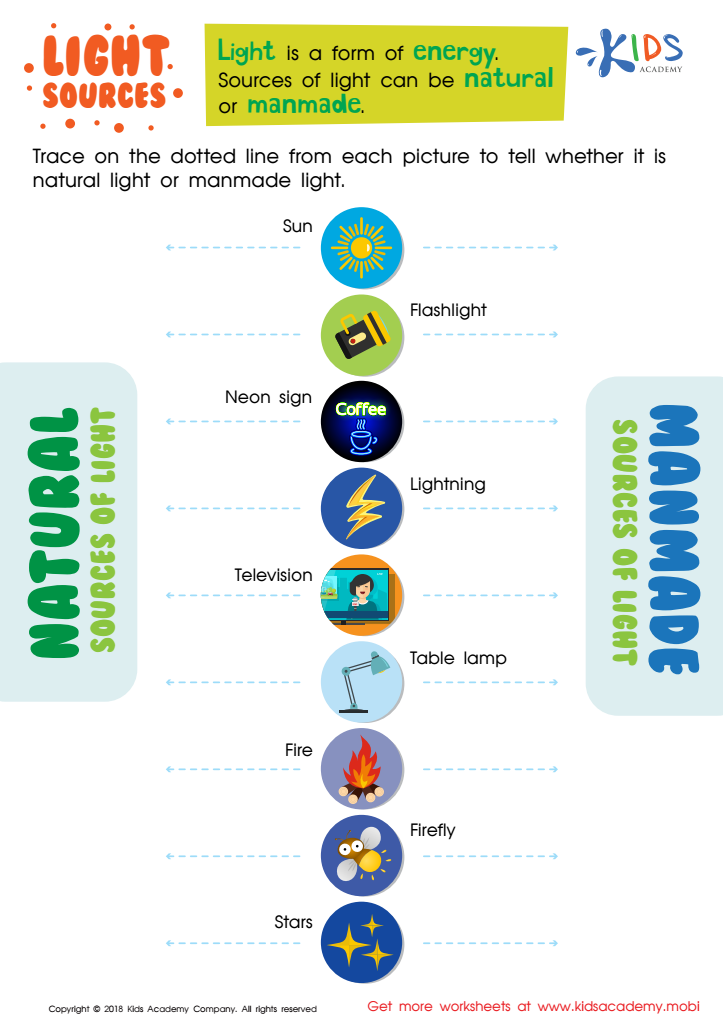
Natural and Manmade Light Sources Worksheet
Have your child learn about natural and manmade light sources with this fun worksheet! They'll distinguish the sun, fireflies and more as either natural or artificial sources. Brighten up their knowledge with this engaging activity!
 Assign to My Students
Natural and Manmade Light Sources Worksheet
Worksheet
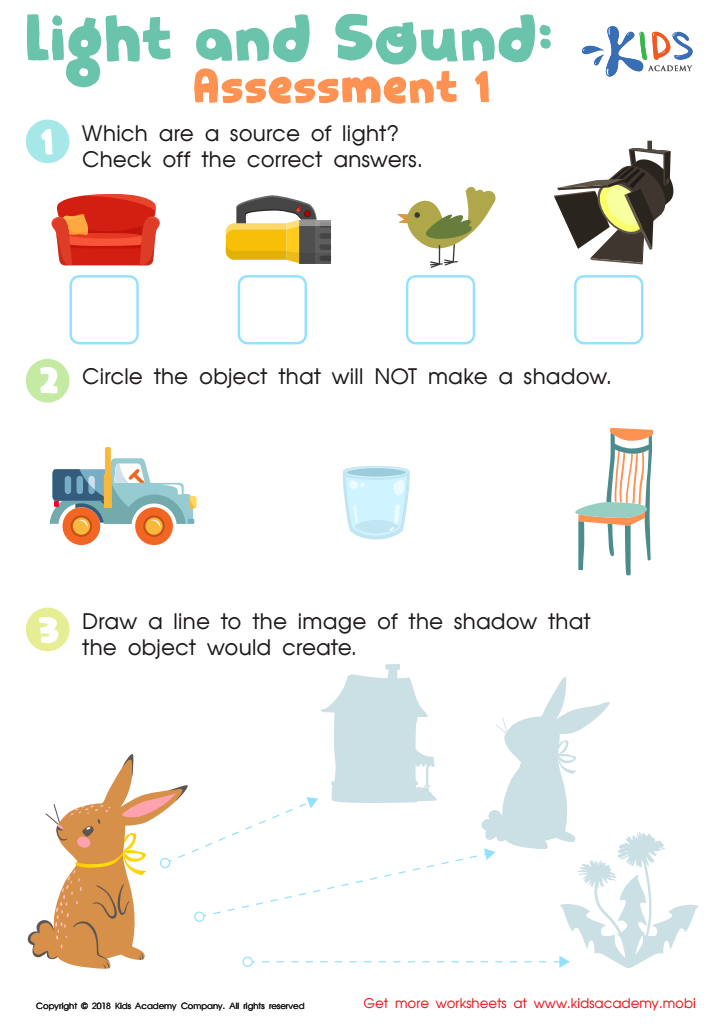
Light and Sound: Assessment 1 Worksheet
Can your kids name a light source? Challenge them to name the sun and moon, then point out objects they use when the sun sets. Look through the worksheet with them and ask them to identify the light sources. Help them check off the correct answers.
Light and Sound: Assessment 1 Worksheet
Worksheet
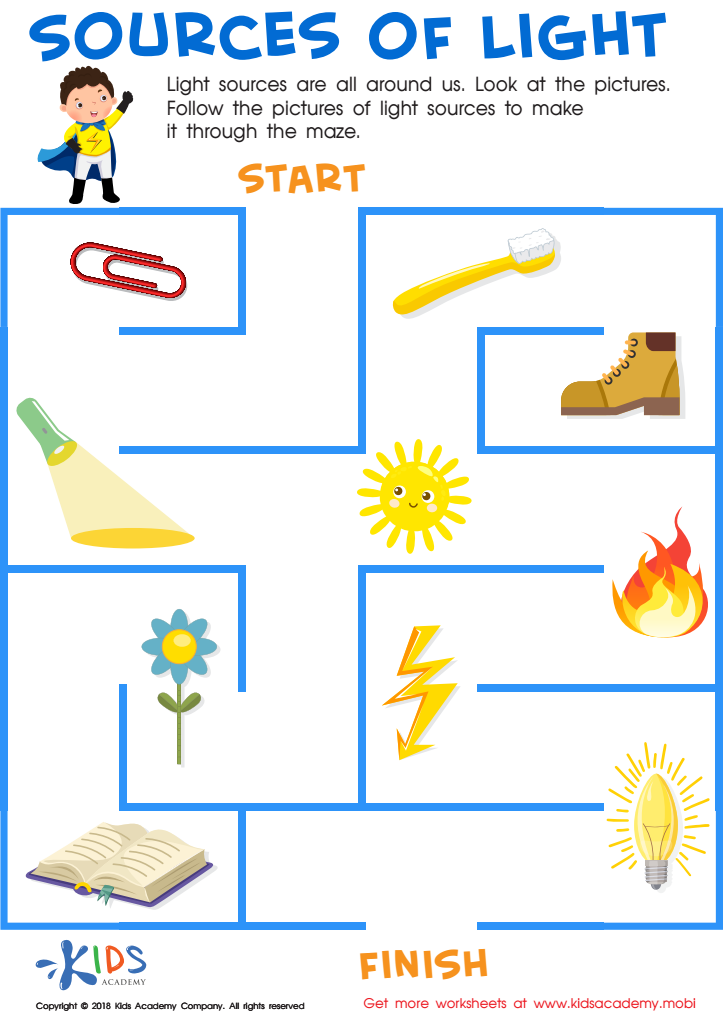
Sources of Light Worksheet
Help your child explore sources of light with this printout exercise. Ask them if they know the sun is the reason for day and night. Then point out other common light sources, then work together to guide them through the maze from start to finish.
Sources of Light Worksheet
Worksheet
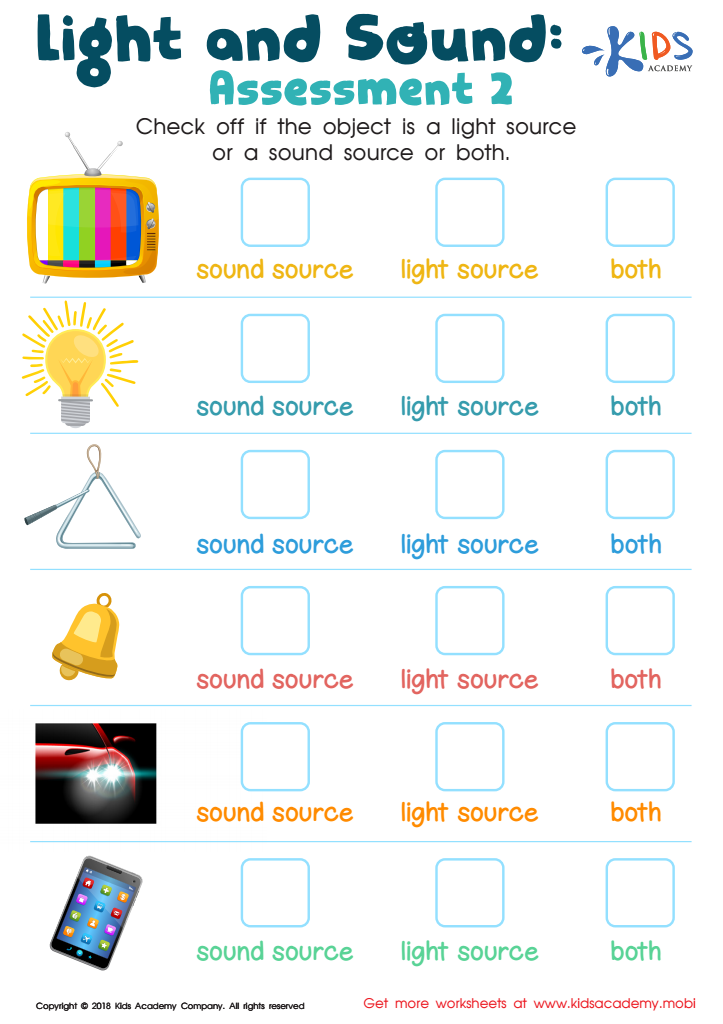
Light and Sound: Assessment 2 Worksheet
This worksheet introduces your kids to light and sound, with common sources of each. Identify the objects and help them check if it's a light source, a sound source, or both. Colourful and simple, it's a great way to teach your little ones! (80 words)
Light and Sound: Assessment 2 Worksheet
Worksheet
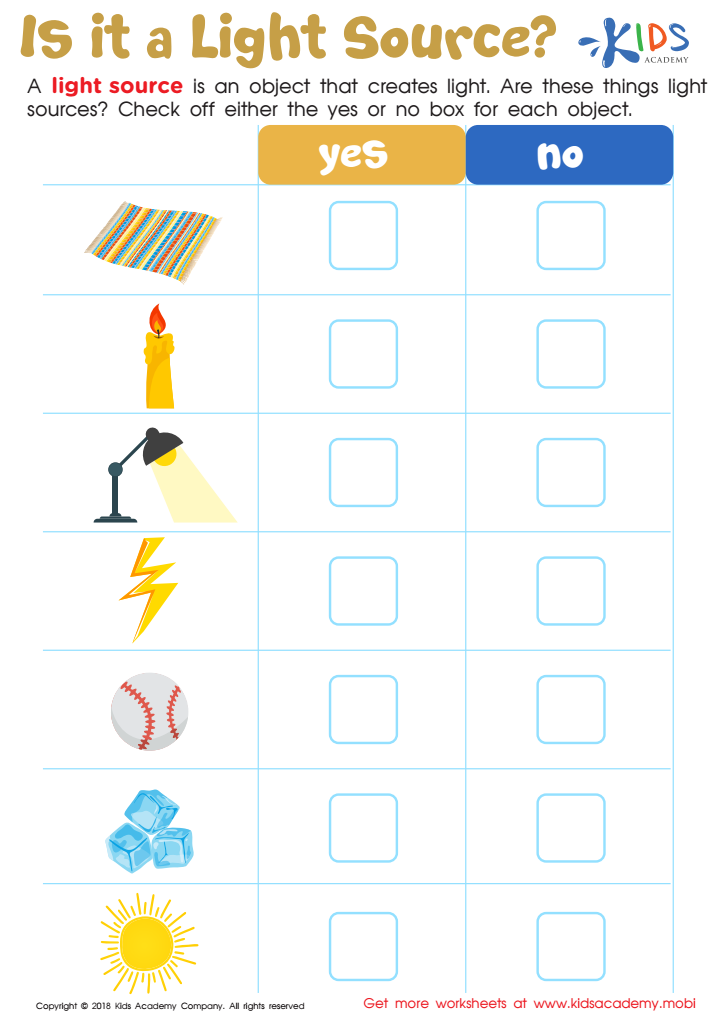
Is It a Light Source? Worksheet
This worksheet is a fun way to teach kids about light sources. Children must identify natural sources like the sun and lightning, and man-made sources such as candles and lamps. Ask them to look at each object and check the box to indicate if it's a light source or not.
Is It a Light Source? Worksheet
Worksheet
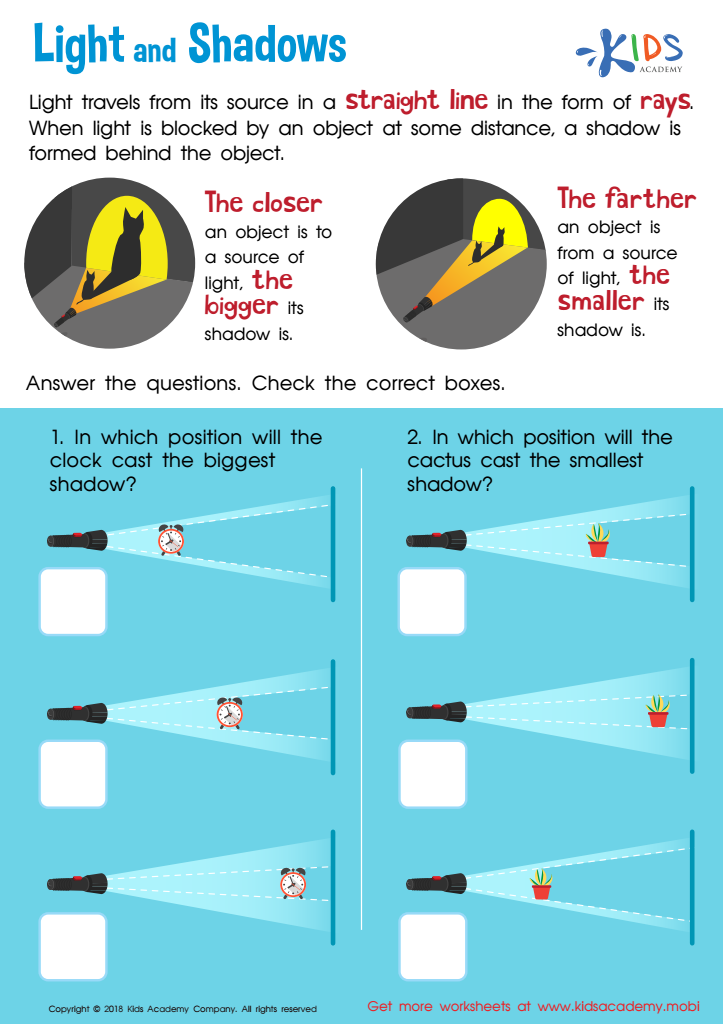
Light and Shadow Worksheet for Grade 3
Kids are often scared of shadows, but they can learn that they're not so scary! This worksheet helps grade 3 kids understand how light rays and objects create shadows, and how they can be large or small. Teach your child with this interesting worksheet!
Light and Shadow Worksheet for Grade 3
Worksheet
Learning Skills
Join Kids Academy for Free
Who is primarily going to use this learning content?








Understanding light sources is fundamental for young children aged 7-9 as it lays the groundwork for critical thinking and scientific inquiry. At this age, kids are naturally curious about their environment, making it an optimal time to introduce basic scientific concepts. Light sources, such as the sun, lamps, and even fireflies, capture children’s imaginations and help them understand the world around them.
First and foremost, comprehending light sources aids in safety. Children learn why they shouldn’t stare directly at the sun, play with matches, or misuse flashlights. This awareness can prevent accidents and promote responsible behavior.
Moreover, the study of light sources ties into multiple scientific disciplines. It introduces kids to physics through concepts like brightness, shadows, and the speed of light. These ideas prepare them for more complex topics they'll encounter later, such as energy and optics. Understanding how light interacts with objects also nurtures observational skills and logical reasoning.
Additionally, exploring light sources can improve literacy and numeracy skills. When children examine and discuss how different sources of light work, they practice reading comprehension, vocabulary, and basic math.
In conclusion, teaching children about light sources at an early age enriches their education by fostering curiosity, enhancing safety, and building a foundation for lifelong learning in science and beyond.







