Understanding weather Science Worksheets for Ages 7-9
3 filtered results
-
From - To
Introducing our "Understanding Weather" science worksheets for ages 7-9! Specifically designed to engage young learners, these worksheets dive into the fascinating world of weather, teaching essential concepts such as temperature, precipitation, and seasonal changes. By combining interactive activities with easy-to-understand explanations, children develop a stronger grasp of how weather patterns work. Whether in the classroom or at home, these resources promote critical thinking and scientific exploration, laying a strong foundation for future STEM learning. Ideal for parents and teachers seeking to enhance their science curriculum with practical, enjoyable, and educational content. Explore the wonders of weather today!
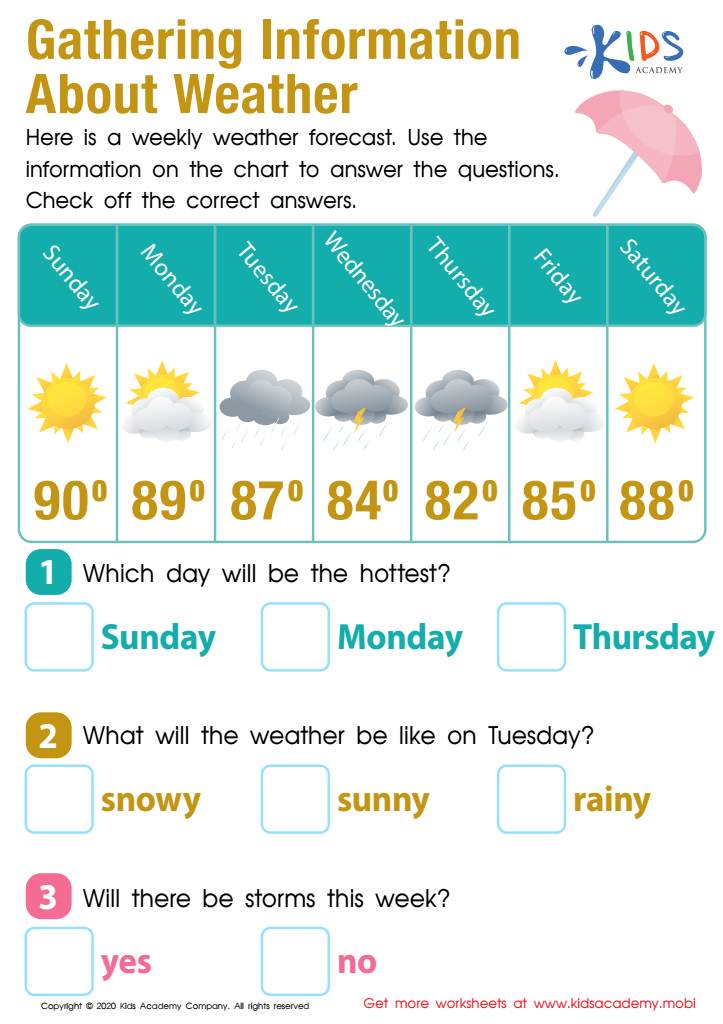
Gathering Information About the Weather Worksheet
 Assign to My Students
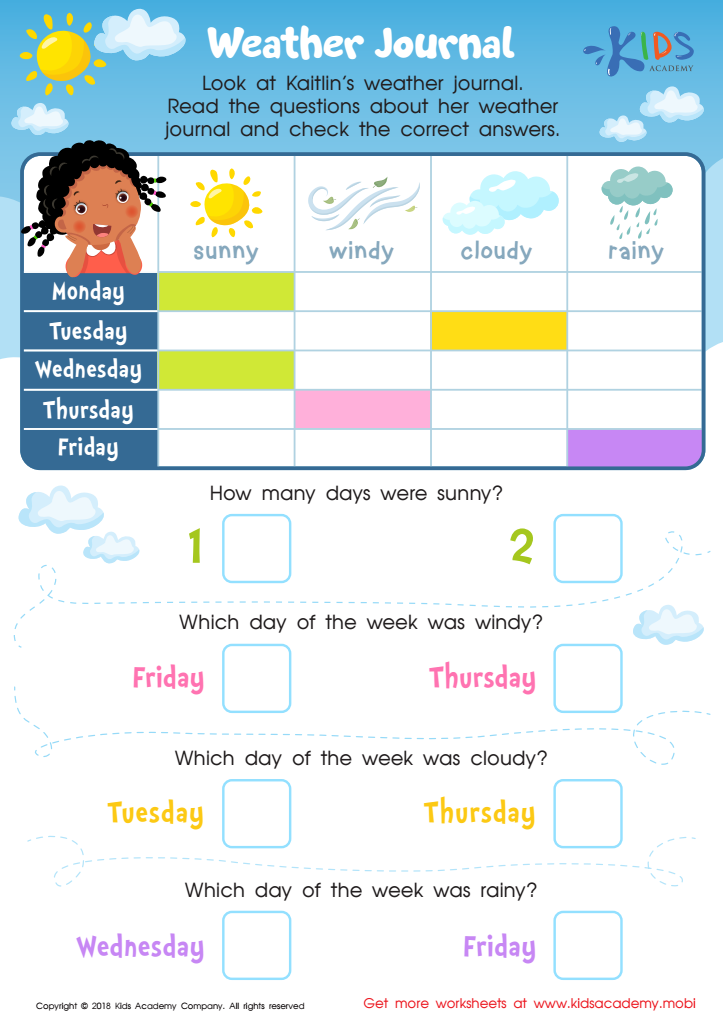
Weather Journal Worksheet
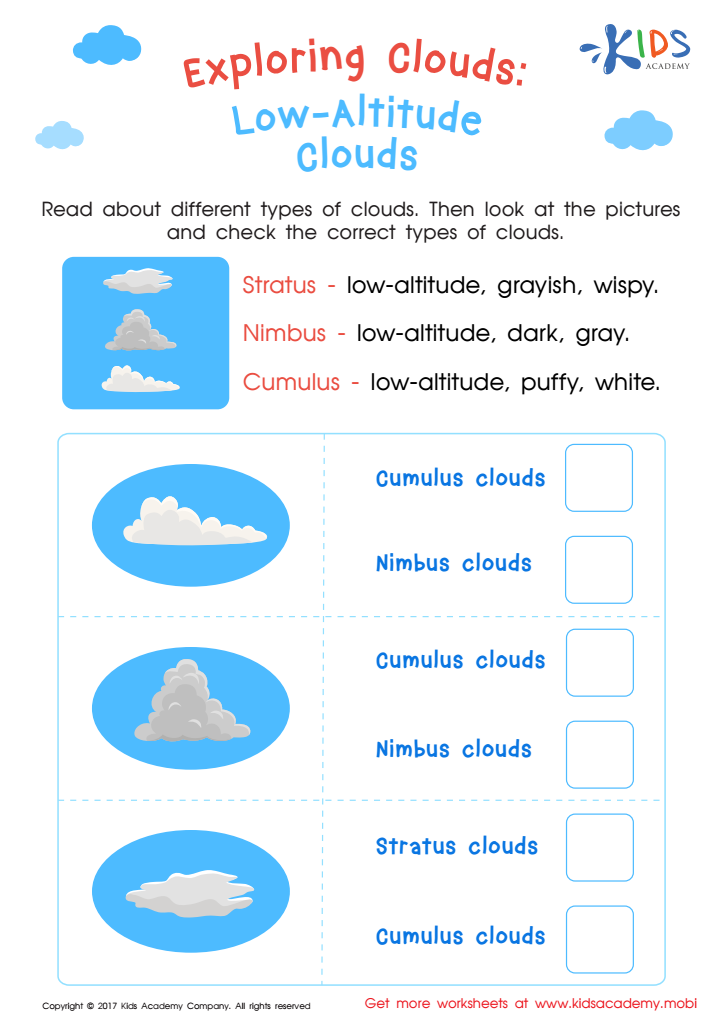
Exploring Clouds: Low Altitude Clouds Printable





.jpg)

Understanding weather science is crucial for children ages 7-9 because it fosters an early awareness of their natural environment. At this formative age, children are naturally curious about the world around them. When they learn about weather systems, seasons, and phenomena, they not only get answers to their everyday questions but also build a foundation in scientific thinking and inquiry. These lessons promote critical observation skills, helping children notice patterns, make predictions, and understand cause-and-effect relationships.
Additionally, weather science education can enhance children's safety and preparedness. Knowing how to interpret weather reports and recognize signs of impending severe weather, like thunderstorms or heavy snowfall, empowers them to take appropriate actions for their safety and understand the importance of emergency responses.
Moreover, integrating weather science into early education aligns well with interdisciplinary learning. Topics like math (measuring temperatures), geography (understanding climate zones), and reading (following daily forecasts) naturally blend with weather studies, making education more cohesive and engaging.
For parents and teachers, instilling an understanding of weather not only enriches a child’s academic knowledge but also nurtures a sense of wonder and responsibility toward the Earth. This early interest might even spark lifelong passions in scientific fields, fostering the next generation of meteorologists, environmental scientists, and informed citizens.







