Analyzing data Our Planet and Environment Worksheets for Ages 7-9
5 filtered results
-
From - To
Explore our engaging "Analyzing Data: Our Planet and Environment Worksheets" tailored for children ages 7-9. These worksheets are designed to foster critical thinking and enhance analytical skills through fun, interactive activities centered around Earth and environmental themes. Young learners will engage with graphs, charts, and real-world examples, encouraging them to interpret data related to climate, ecosystems, and conservation. Perfect for classroom or home use, these resources make learning about our planet enjoyable while developing essential data literacy. Help your child make sense of their world and encourage a sense of responsibility towards our environment with these educational tools!
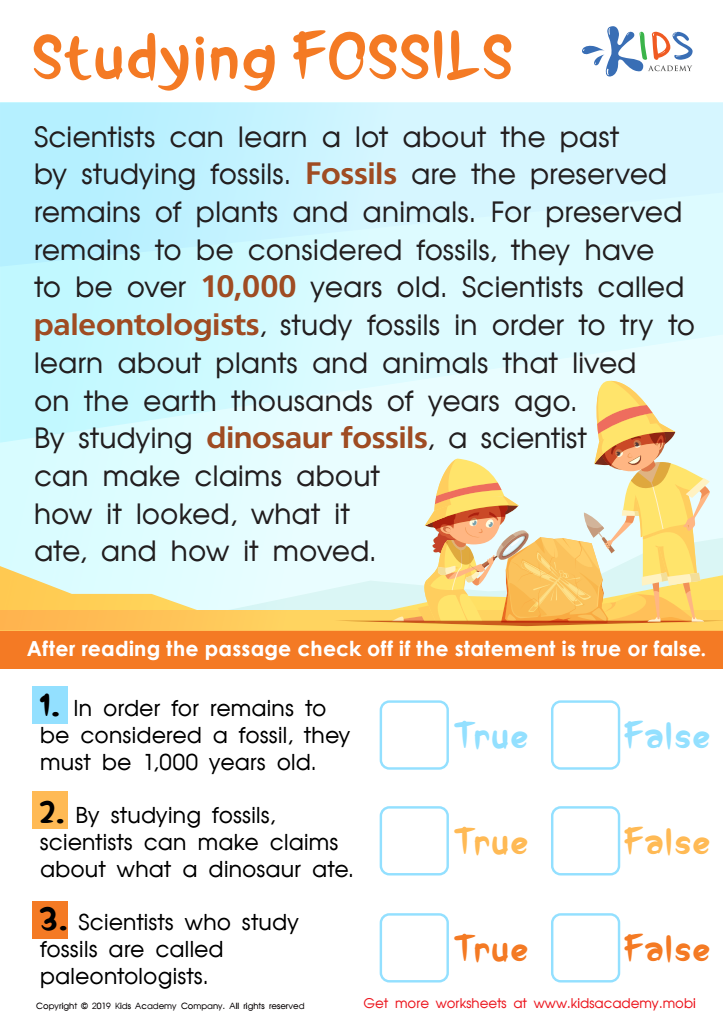
Studying Fossils Worksheet
 Assign to My Students
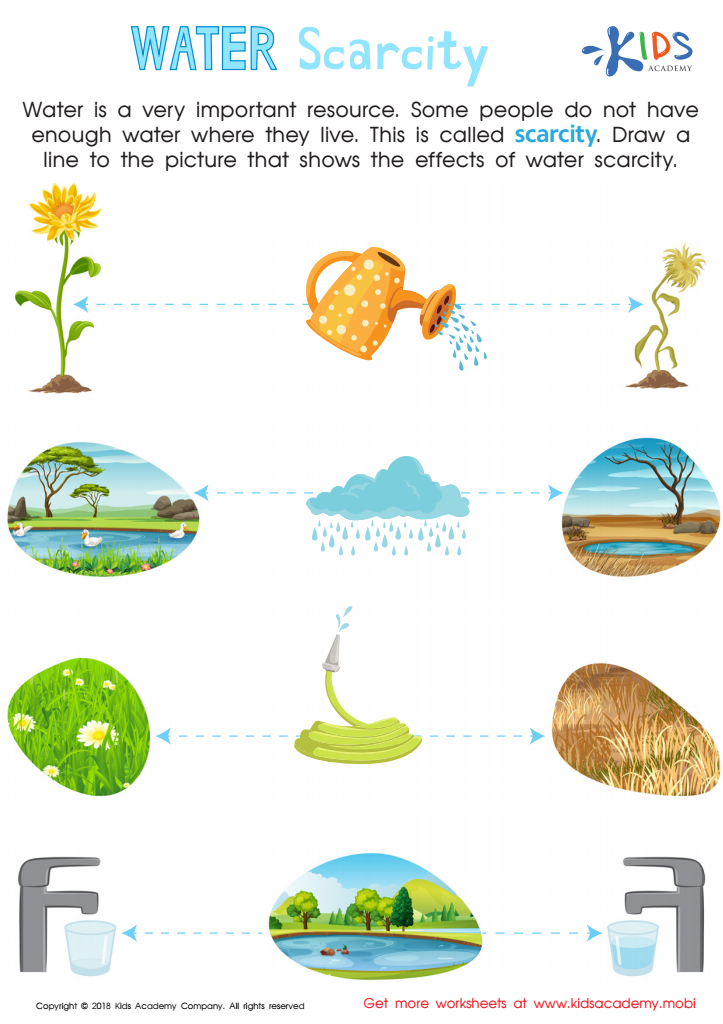
Water Scarcity Worksheet
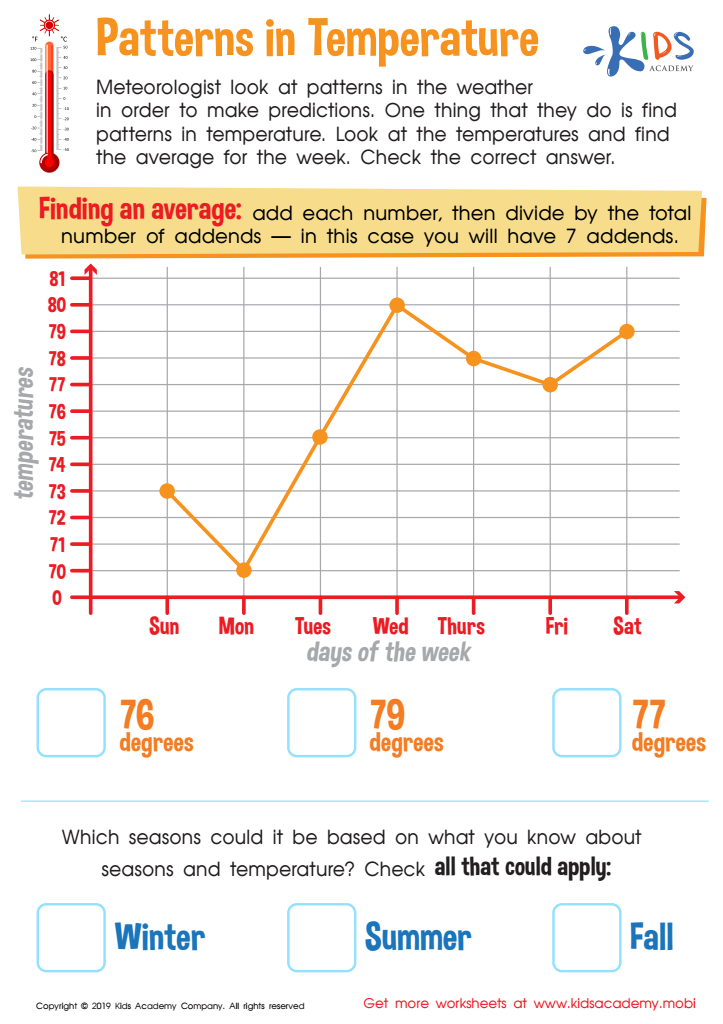
Patterns in Temperature Worksheet
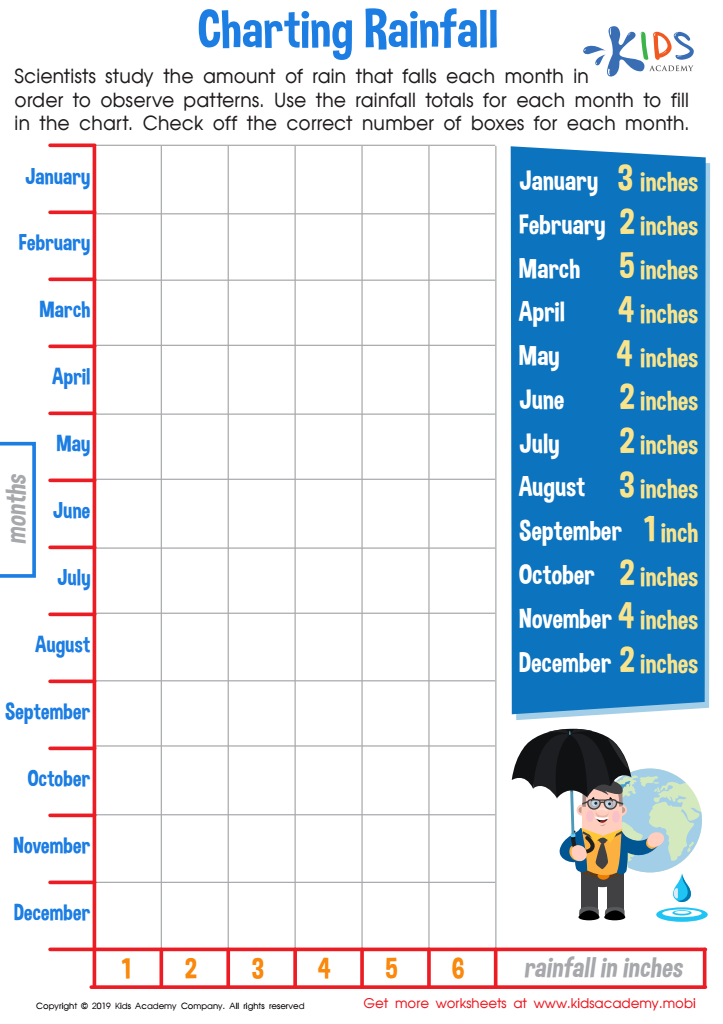
Charting Rainfall Worksheet
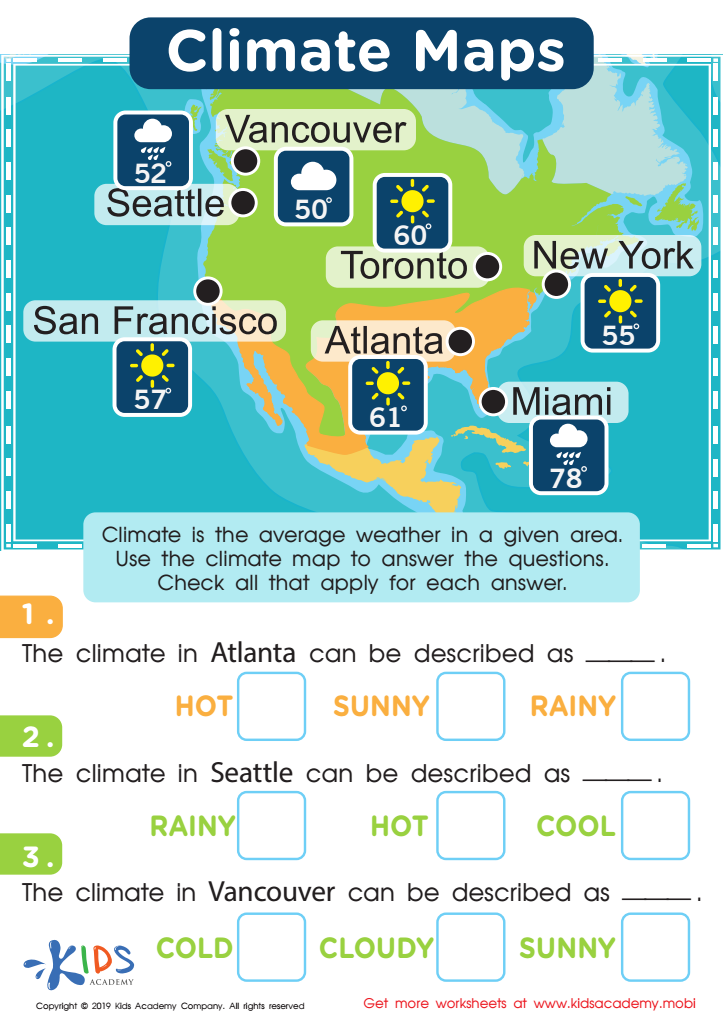
Climate Maps Worksheet








Analyzing data about our planet and environment is essential for children aged 7-9, as it cultivates awareness and responsibility for the world they inhabit. At this age, children are naturally curious and begin to understand their role in society. Engaging them in data analysis helps develop critical thinking skills, encouraging them to ask questions, recognize patterns, and draw conclusions based on evidence.
By studying environmental data, children can learn about pressing issues such as climate change, deforestation, and pollution. This knowledge empowers them to make informed decisions and fosters a sense of stewardship towards the planet. Moreover, it promotes collaborative learning, as educators and parents can work together to create interactive lessons that explore real-world problems.
Furthermore, introducing environmental literacy at an early age can inspire a generation of environmentally conscious citizens. Understanding data visualization—like graphs and charts—enhances their mathematical skills while also connecting concepts across subjects. Ultimately, when parents and teachers emphasize the importance of analyzing environmental data, they prepare children to become proactive problem solvers, equipped with the knowledge and skills to contribute positively to society and the planet's future. This education lays the foundation for lifelong environmental awareness and action.







