Categorizing objects Physical Science Worksheets for Ages 7-9
3 filtered results
-
From - To
Introduce your young learners to the intriguing world of physical science with our "Categorizing Objects" worksheets, designed specifically for ages 7-9. These engaging, printable activities help children develop essential critical thinking and organizational skills as they explore various objects and their characteristics. Through colorful illustrations and interactive exercises, students will learn to group items based on size, shape, color, and material. This fun and educational resource fosters curiosity and promotes a deeper understanding of the physical world around them. Enhance your classroom activities and support your child's learning journey with our carefully crafted worksheets, perfect for early science enthusiasts!
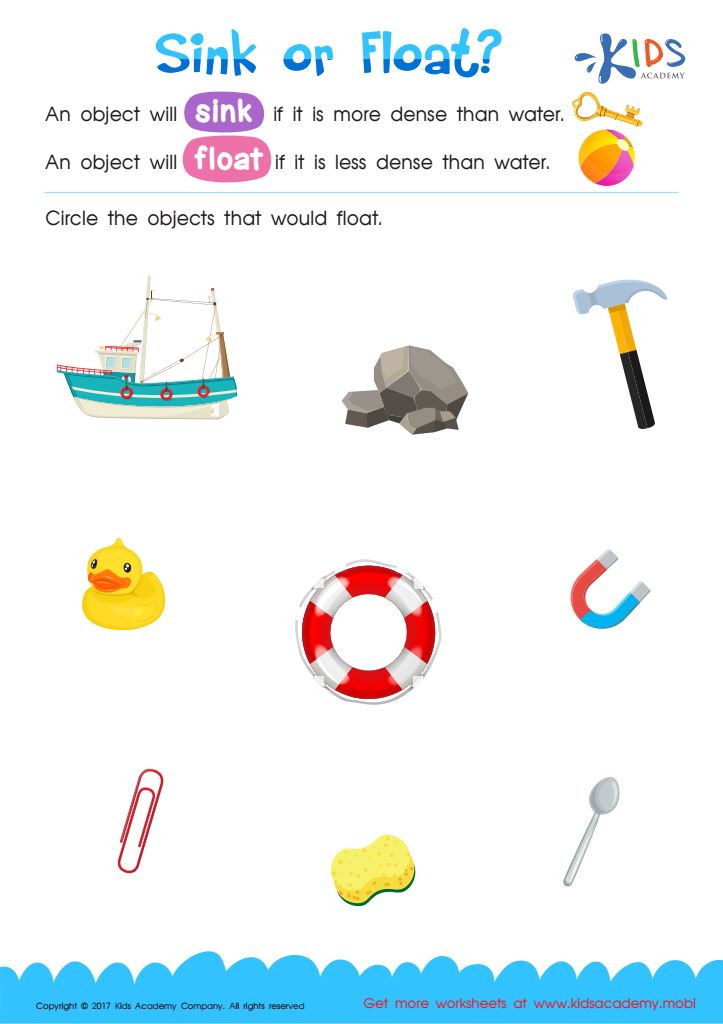
Sink or Float Printable
 Assign to My Students
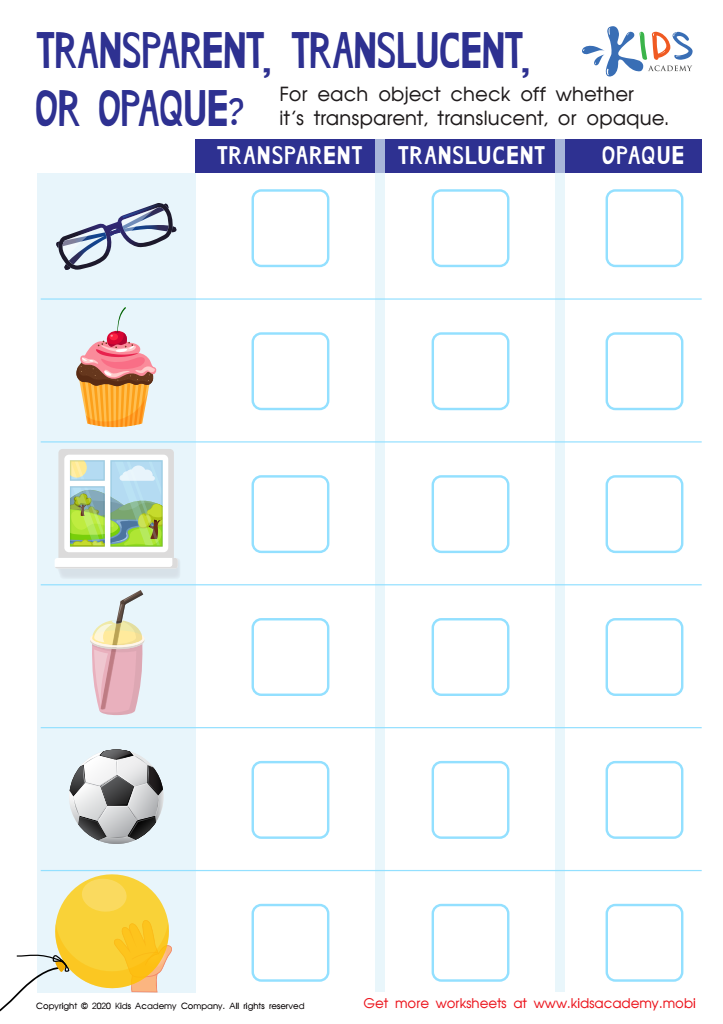
Transparent, Translucent, or Opaque Worksheet
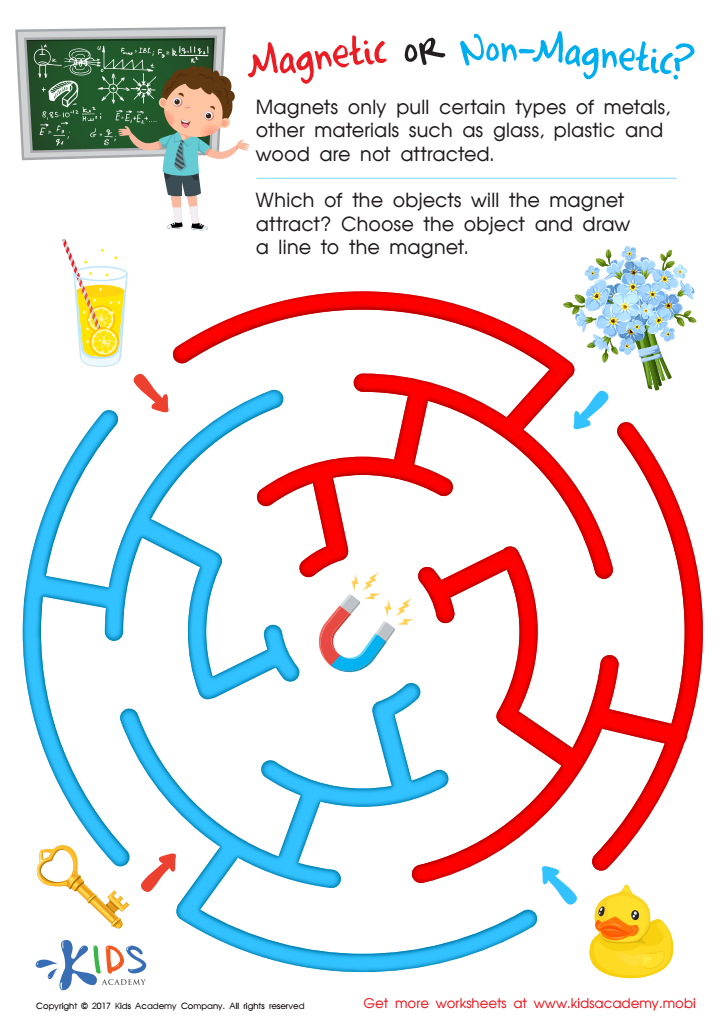
Magnetic or Non–Magnetic Worksheet







Categorizing objects is an essential aspect of physical science, especially for children aged 7-9, as it lays the foundational skills for critical thinking and scientific inquiry. At this age, children's cognitive abilities are rapidly developing, enabling them to begin making sense of the world around them. Engaging them in categorization helps them learn how to observe, compare, and classify objects based on various attributes—such as size, color, shape, material, or function.
Parents and teachers should care about this foundational practice because it fosters essential scientific skills such as observation, reasoning, and problem-solving. Categorization encourages curiosity about natural phenomena and stimulates children’s desire to explore not just science but their environment. Moreover, it enhances language development, as students will learn new vocabulary related to different categories and their characteristics.
Additionally, categorization supports the development of organizational skills and creativity, as children devise their own systems of classification. This practice builds a framework for more complex concepts encountered in later studies, forming a bridge to more advanced inquiry-based learning in science. Ultimately, nurturing these skills helps cultivate a generation of informed, inquisitive individuals equipped with the foundational knowledge of the scientific method.







