Understanding magnetism Physical Science Worksheets for Ages 7-9
4 filtered results
-
From - To
Discover the world of magnetism with our engaging Physical Science Worksheets, designed for ages 7-9. These printable worksheets make learning about magnetism fun and interactive, enabling children to explore key concepts through hands-on activities and experiments. Our carefully crafted lessons cover topics like magnetic fields, attraction and repulsion, and the differences between various magnets. Enhance your child’s understanding of this fundamental science topic, laying a solid foundation for future scientific learning. Perfect for both classroom use and homeschooling, our resources aim to spark curiosity and foster a love for science in young learners.
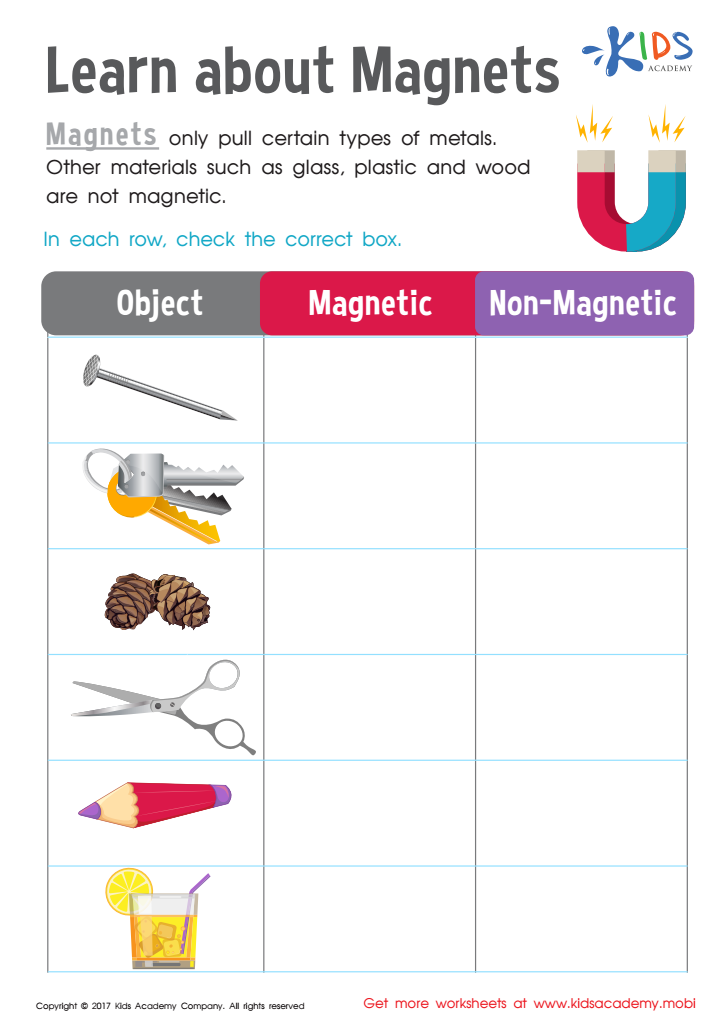
Magnetic Or Not Worksheet
 Assign to My Students
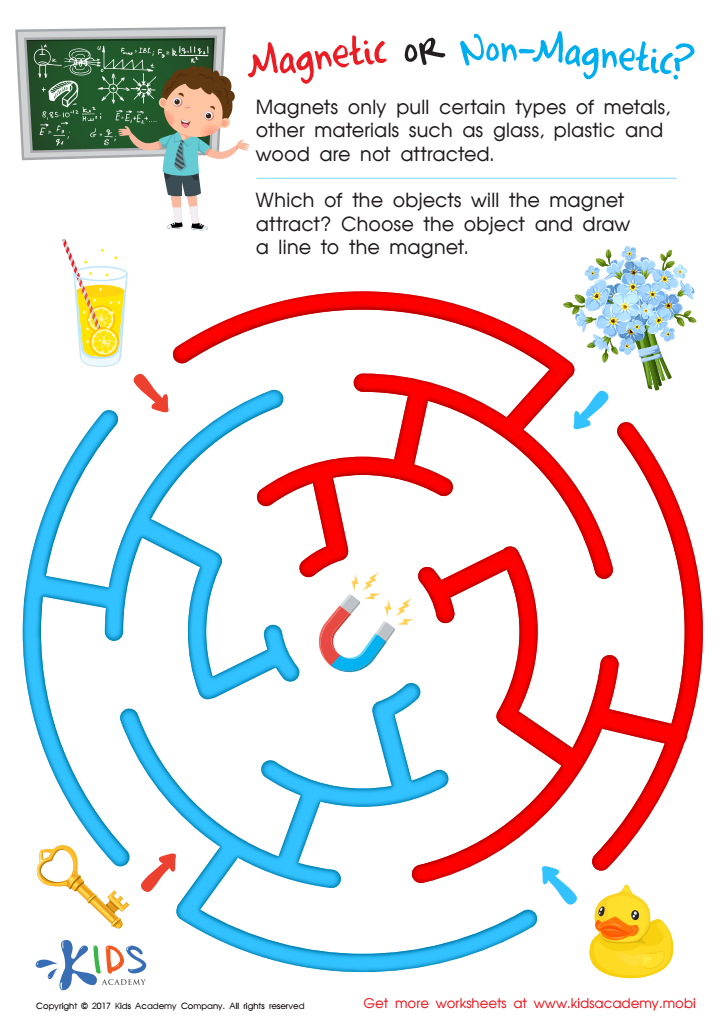
Magnetic or Non–Magnetic Worksheet
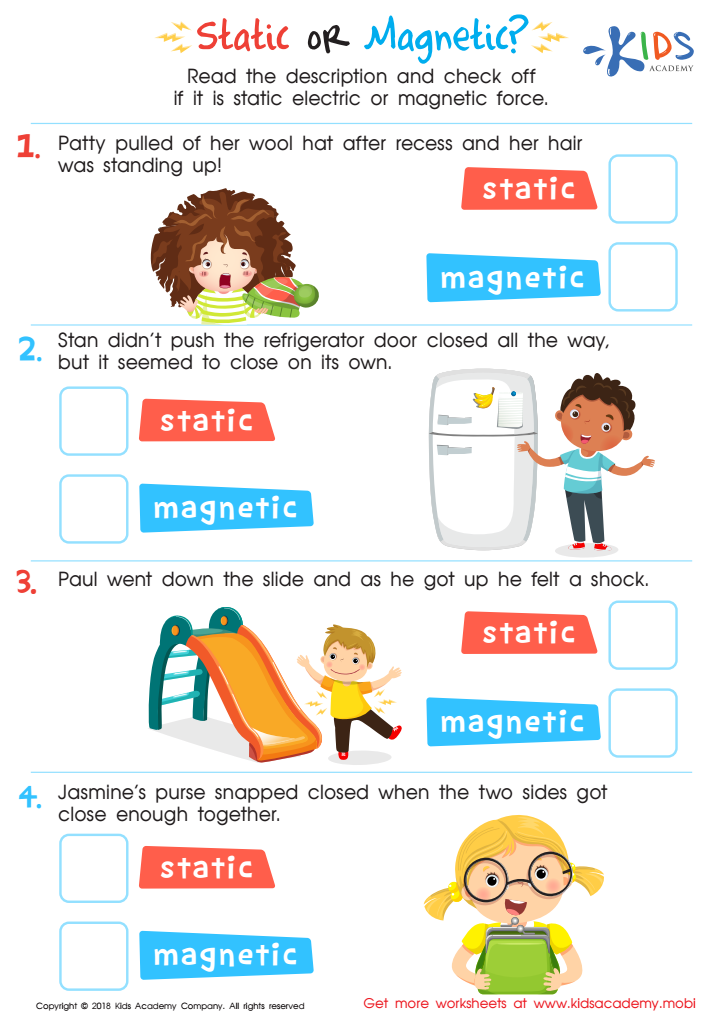
Static or Magnetic Printable Worksheet
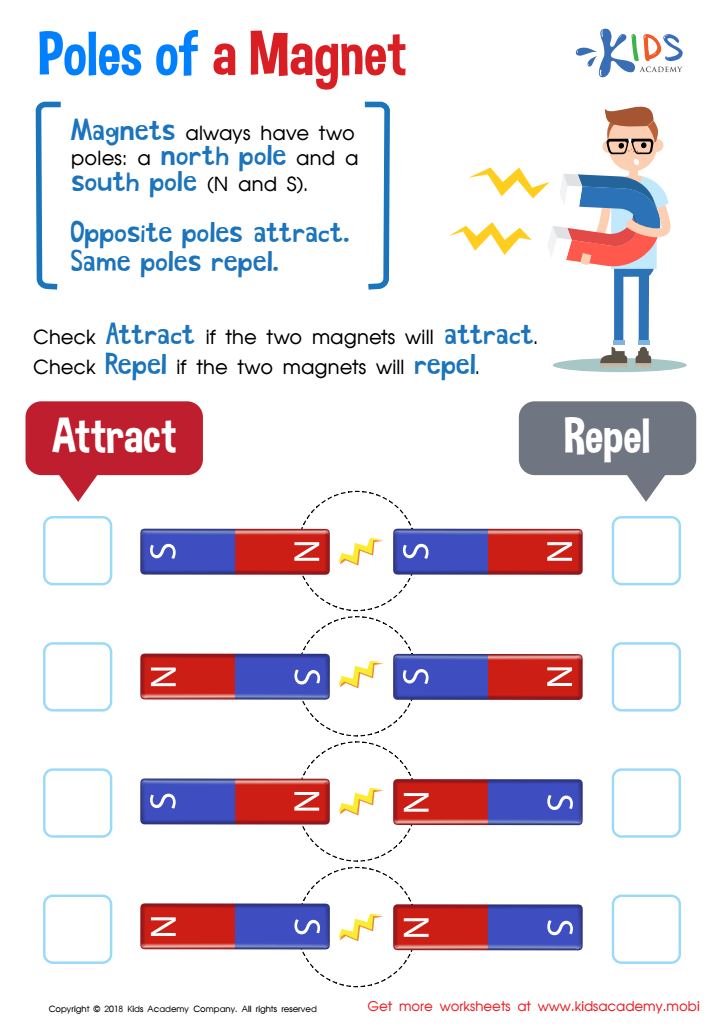
Magnet Poles Attract or Repel Worksheet







.jpg)
Understanding magnetism in physical science at ages 7-9 helps develop curiosity and critical thinking skills in young minds. By learning about magnets, children discover essential scientific concepts such as force, attraction, and repulsion. These principles serve as foundations for understanding more advanced topics in physics, chemistry, and even biology later in their academic journeys.
Additionally, exploring magnetism fosters hands-on learning and experimentation. This age group greatly benefits from interactive and tactile experiences. For instance, using magnets to move objects without touching them can appear magical, sparking wonder and encouraging them to ask questions and seek answers. This so-called "magical" effect makes abstract concepts tangible and memorable.
Understanding magnetism also has practical applications. Magnets are part of everyday items like refrigerators, compasses, and electronic devices. Relating classroom learning to real-world applications helps children see the relevance of science in their daily lives, making education meaningful and interesting.
Moreover, in a rapidly advancing technological society, a grasp of basic scientific principles equips future generations with problem-solving skills crucial for innovation. Therefore, both parents and teachers should prioritize teaching magnetism to instill a lifelong love for science, support cognitive development, and prepare children for future academic and real-world challenges.







